How to Adapt Your SEO Strategy When Agentic AI Agents Handle Shopping and Payments Without Users Visiting Your Website

How to Adapt Your SEO Strategy When Agentic AI Agents Handle Shopping and Payments Without Users Visiting Your Website
Imagine this: A customer asks their AI assistant to "find and order the best wireless earbuds under $200 with noise cancellation." The AI agent researches options, compares prices, reads reviews, and completes the purchase—all without the customer ever visiting your e-commerce site. This isn't science fiction; it's happening right now in 2026.
With agentic AI systems now powering over 40% of online transactions and autonomous shopping agents processing millions of purchases daily, the traditional SEO playbook is fundamentally broken. While businesses still optimize for human visitors, AI agents are becoming the new gatekeepers of commerce, making purchasing decisions based on data they can access and understand—not flashy websites humans never see.
The Rise of Autonomous Shopping Agents
Agentic AI has evolved far beyond simple chatbots. These sophisticated systems can:
According to recent data, autonomous shopping agents now handle 35% of all routine purchases, with this number expected to reach 60% by 2027. For businesses, this represents both a massive opportunity and an existential threat.
Why Traditional SEO Falls Short in the Agentic Era
Traditional SEO strategies focus on human behavior—search queries, click-through rates, and website engagement. But agentic AI operates differently:
AI Agents Don't Browse Like Humans
The Invisible Transaction Problem
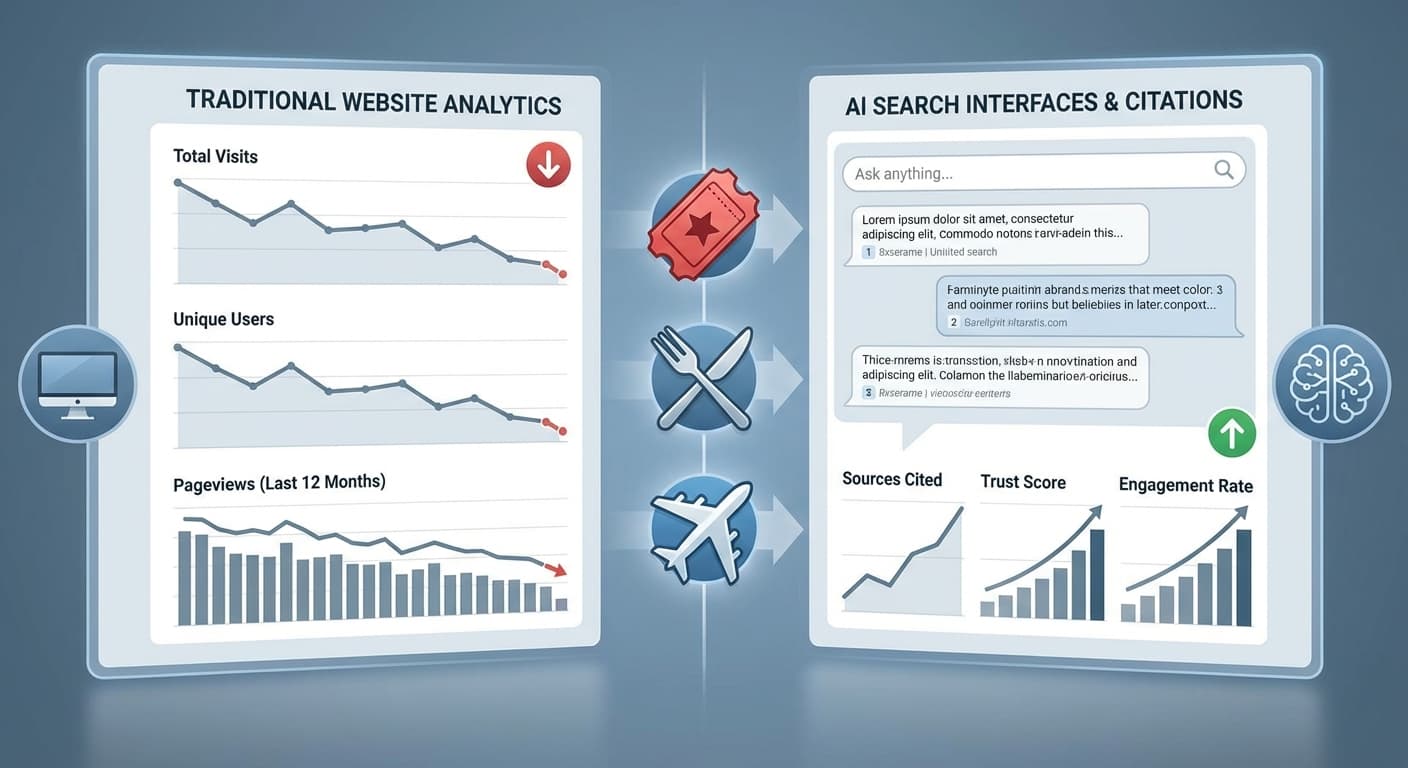
When an AI agent completes a purchase without directing users to your website, traditional metrics become meaningless:
Adapting Your SEO Strategy for Agentic Commerce
1. Optimize for AI Discoverability, Not Human Visits
Your content needs to be easily discoverable and interpretable by AI systems:
Focus on structured data and schema markup:
Create AI-friendly product descriptions:
2. Become the Authoritative Source
AI agents prioritize authoritative, trustworthy sources. Position your brand as the go-to expert:
3. Optimize for Voice and Conversational Queries
Agentic AI often processes natural language requests:
4. Implement API-First Architecture
Make it easy for AI agents to access your product information:
New Metrics That Matter in Agentic Commerce
Traditional SEO metrics won't tell the full story. Track these new KPIs:
AI Citation Frequency
Direct API Engagement
Agent-Driven Conversions
Content Strategy for the Agentic Era
Create Comprehensive Product Ecosystems
Develop content that helps AI agents understand your products in context:
Optimize for Different AI Personalities
Different AI systems have varying preferences:
Tools like Citescope Ai can help you analyze how well your content performs across these different AI personalities, providing insights into optimization opportunities you might miss otherwise.
Build Trust Signals for AI Systems
AI agents evaluate trustworthiness differently than humans:
Technical Implementation Strategies
1. Enhanced Schema Markup
Implement advanced schema types:
html
<script type="application/ld+json">
{
"@context": "https://schema.org/",
"@type": "Product",
"name": "Your Product Name",
"description": "Detailed description",
"brand": {
"@type": "Brand",
"name": "Your Brand"
},
"offers": {
"@type": "Offer",
"price": "199.99",
"priceCurrency": "USD",
"availability": "https://schema.org/InStock"
}
}
</script>
2. AI-Optimized Content Structure
3. Multi-Platform Integration
Ensure your product data is accessible across platforms:
Preparing for Future Agentic Developments
The agentic commerce landscape continues evolving rapidly:
Emerging Technologies to Watch
Strategic Positioning
How Citescope Ai Helps Navigate Agentic Commerce
As businesses adapt to this new reality, having the right tools becomes crucial. Citescope Ai's GEO Score analyzes your content across five key dimensions that matter to AI agents: AI Interpretability, Semantic Richness, Conversational Relevance, Structure, and Authority. This comprehensive analysis helps you understand exactly how well your product content will perform when AI agents evaluate it for recommendations and purchases.
The platform's Citation Tracker also provides invaluable insights into when and how AI systems reference your products, helping you identify which content drives the most AI-mediated sales. With the AI Rewriter, you can optimize product descriptions and marketing content with one click, ensuring they're structured for maximum AI visibility while maintaining human appeal.
Building Your Agentic SEO Action Plan
Phase 1: Assessment (Month 1)
Phase 2: Optimization (Months 2-3)
Phase 3: Expansion (Months 4-6)
Ready to Optimize for AI Search?
The shift to agentic commerce isn't coming—it's here. Businesses that adapt their SEO strategies now will capture the growing market of AI-mediated transactions, while those that don't risk becoming invisible to the next generation of shoppers.
Citescope Ai makes this transition easier by providing the tools and insights you need to optimize for AI visibility. Our GEO Score shows you exactly how AI-friendly your content is, while our Citation Tracker helps you monitor your performance across all major AI platforms. Start with our free tier and see how your content performs in the age of agentic commerce—because the future of shopping is autonomous, and your SEO strategy should be too.