How to Allocate Marketing Budget Between Traditional SEO and Answer Engine Optimization When Most Analytics Platforms Can't Track AI Citation ROI
How to Allocate Marketing Budget Between Traditional SEO and Answer Engine Optimization When Most Analytics Platforms Can't Track AI Citation ROI
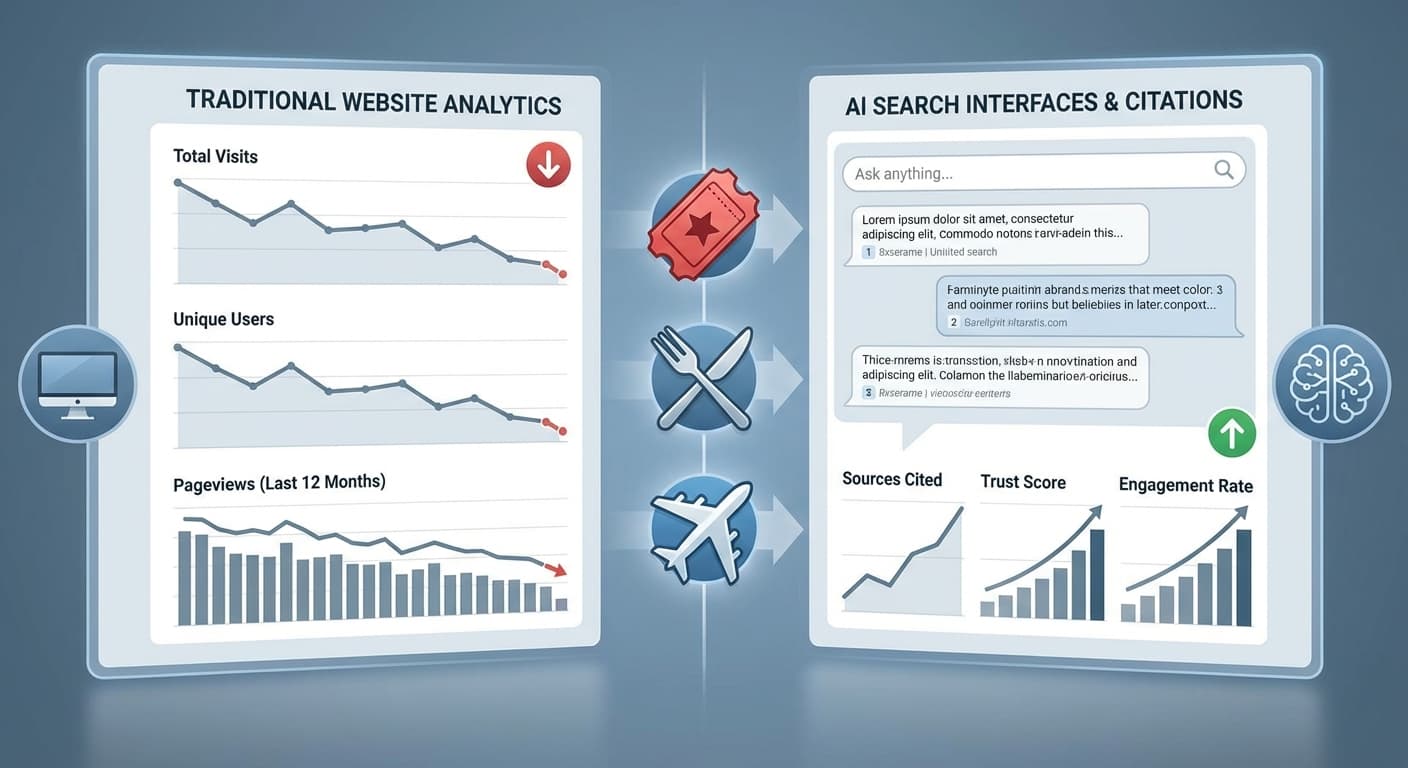
73% of marketing teams are struggling with budget allocation decisions in 2026, caught between doubling down on traditional SEO and investing in the rapidly growing world of AI search optimization. With ChatGPT processing over 500 million queries weekly and Perplexity seeing 400% growth in enterprise usage, the question isn't whether to optimize for AI search engines—it's how much of your budget should shift there when most analytics platforms can't even track citations properly.
This measurement gap has created one of the biggest challenges in modern content marketing: how do you justify budget allocation when traditional ROI metrics don't apply to answer engine optimization?
The Current State of AI Search vs Traditional Search
The search landscape has fundamentally shifted in the past year. While Google still dominates with 90% market share, AI-powered search experiences now account for over 30% of all queries. More telling is the demographic split:
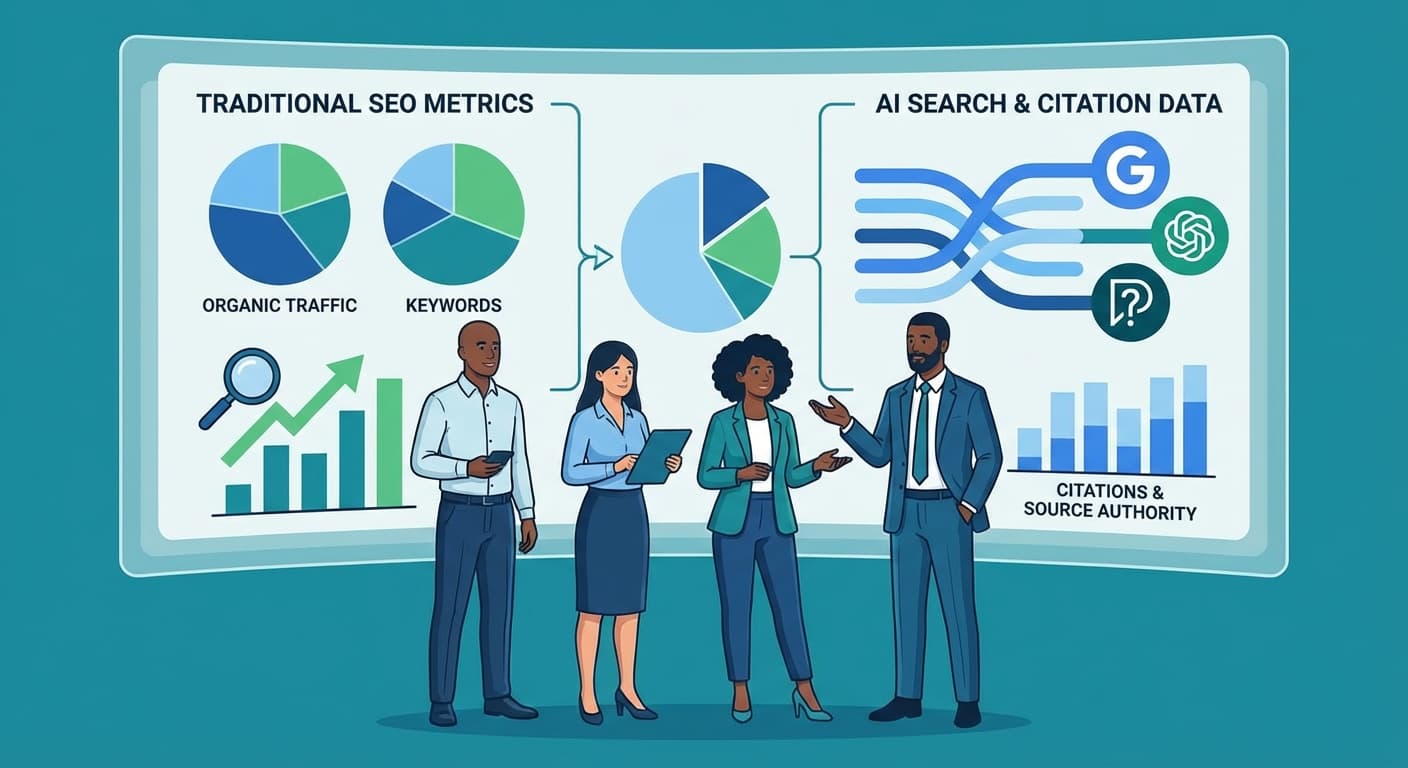
Traditional SEO metrics like organic traffic, keyword rankings, and backlinks tell only part of the story. When someone asks ChatGPT "What are the best project management tools for remote teams?" and your content gets cited as a source, that's valuable brand exposure that doesn't show up in Google Analytics.
Why Traditional Analytics Fall Short for AI Citations
The Attribution Problem
Most analytics platforms weren't designed for the AI search era. Here's what they're missing:
The ROI Measurement Gap
Without proper tracking, marketing teams face several challenges:
A Framework for Budget Allocation
The 70-20-10 Approach for 2026
Based on current market data and successful case studies, here's a framework many forward-thinking companies are using:
70% Traditional SEO (maintain your foundation)
20% Answer Engine Optimization (strategic investment)
10% Experimentation (future-proofing)
Industry-Specific Adjustments
B2B SaaS Companies: Consider shifting to 60-30-10, as business users heavily rely on AI for research
E-commerce: Maintain 75-20-5, as traditional search still drives most purchase intent
Professional Services: Try 65-25-10, as AI search is becoming crucial for expertise positioning
Content Publishers: Experiment with 50-40-10, as AI citations can significantly boost authority
Proxy Metrics for Measuring AEO Success
Until analytics platforms catch up, use these indicators to gauge your answer engine optimization performance:
Brand Monitoring Signals
Content Performance Indicators
Competitive Intelligence
Building Your AEO Budget Case
Step 1: Establish Baseline Metrics
Before shifting budget, document your current performance:
Step 2: Set Proxy KPIs
Define success metrics that align with business goals:
Step 3: Start Small and Scale
Begin with a 90-10 split (traditional SEO vs AEO), then gradually increase AEO investment based on results.
Step 4: Document Everything
Track all activities and correlations, even without perfect attribution. This data becomes valuable for future decisions.
Practical Implementation Strategies
Phase 1: Foundation (Months 1-3)
Phase 2: Optimization (Months 4-6)
Phase 3: Scale (Months 7-12)
How Citescope Ai Helps Bridge the Analytics Gap
While most analytics platforms struggle with AI citation tracking, specialized tools are emerging to fill this gap. Citescope Ai addresses several critical measurement challenges:
This visibility helps marketing teams make data-driven budget allocation decisions rather than guessing at AEO effectiveness.
Common Budget Allocation Mistakes to Avoid
Over-investing Too Quickly
Don't shift 50% of your SEO budget to AEO overnight. The traditional search ecosystem still drives significant results.
Ignoring Content Quality
AEO isn't just about technical optimization—it requires genuinely helpful, authoritative content that AI engines want to cite.
Focusing Only on AI Tools
Remember that humans still consume the content AI engines cite. Optimize for both AI readability and human engagement.
Neglecting Measurement
Even with limited analytics, track everything you can. Patterns emerge over time, providing valuable insights.
Future-Proofing Your Strategy
As AI search continues evolving, consider these trends for 2026 and beyond:
Ready to Optimize for AI Search?
Navigating budget allocation between traditional SEO and answer engine optimization doesn't have to be a shot in the dark. With the right measurement tools and strategic approach, you can make informed decisions that drive results across both channels.
Citescope Ai helps marketing teams track AI citations, optimize content for answer engines, and measure the ROI of their AEO investments. Start with our free tier to analyze your content's AI readiness and see which pieces are already getting cited by AI search engines.
Try Citescope Ai free today and discover how your content performs in the age of AI search. Get your first GEO Score analysis and start building a data-driven AEO strategy that justifies every budget dollar.