AI & SEO

How to Audit and Optimize Your Bot Management Strategy for Agentic AI Crawlers in 2026
April 7, 20267 min read
How to Audit and Optimize Your Bot Management Strategy for Agentic AI Crawlers in 2026

How to Audit and Optimize Your Bot Management Strategy for Agentic AI Crawlers in 2026

With over 500 million weekly ChatGPT users and AI search now accounting for 35% of all queries in early 2026, the way search engines discover and index content has fundamentally changed. Yet here's a startling reality: 47% of websites are still operating with outdated robots.txt policies designed for traditional crawlers, while agentic AI systems like GPT-4, Claude, and Gemini's web crawlers require entirely different optimization approaches.

The surge in LLMs.txt adoption—up 340% since late 2024—signals a critical shift in how content creators communicate with AI systems. But are you ready for this new paradigm?

The New Reality of AI Crawling in 2026

Traditional SEO assumed search engines would crawl, index, and rank your content for human searchers. Today's agentic AI crawlers operate differently:

  • Context-aware crawling: AI crawlers analyze semantic relationships and content quality in real-time

  • Dynamic content preferences: They prioritize structured, conversational, and citation-worthy content

  • Multi-modal understanding: Modern AI crawlers process text, images, and multimedia contextually

  • Real-time fact-checking: They cross-reference information across multiple sources during crawling
  • This shift means your 2023-era bot management strategy might be actively hindering your AI visibility.

    Understanding LLMs.txt vs. Traditional Robots.txt

    What LLMs.txt Offers

    LLMs.txt is a new standard that allows websites to communicate directly with AI training systems and crawlers. Unlike robots.txt, which simply blocks or allows access, LLMs.txt provides:

  • Content licensing specifications: Define how AI systems can use your content

  • Attribution requirements: Specify citation preferences and requirements

  • Content categorization: Help AI systems understand your content's purpose and authority

  • Update frequencies: Indicate how often content changes to optimize crawling efficiency
  • The Problem with Outdated Robots.txt Policies

    Many websites still use robots.txt files from 2022-2023 that:

  • Block legitimate AI crawlers alongside spam bots

  • Fail to distinguish between training crawlers and search crawlers

  • Use overly restrictive crawl delays that hurt AI discovery

  • Don't account for agentic AI's need for contextual content access
  • Conducting Your Bot Management Audit

    Step 1: Analyze Your Current Robot Policies

    Start by examining your robots.txt file:


    Example of outdated policy


    User-agent: *
    Crawl-delay: 10
    Disallow: /admin/
    Disallow: /api/
    Disallow: /search/


    Look for:

  • Excessive crawl delays (anything over 1-2 seconds may hurt AI crawling)

  • Blanket bot blocking that might include AI crawlers

  • Missing sitemap references for AI systems

  • Outdated user-agent specifications
  • Step 2: Identify AI Crawler Traffic

    In your analytics, look for these common AI crawler user agents:

  • GPTBot (OpenAI)

  • ChatGPT-User (ChatGPT browsing)

  • ClaudeBot (Anthropic)

  • Bingbot (Microsoft/Bing Chat)

  • PetalBot (Huawei AI)
  • Analyze their crawling patterns:

  • Frequency: How often do they visit?

  • Content preferences: Which pages do they crawl most?

  • Bounce patterns: Are they finding what they need?
  • Step 3: Evaluate Content Accessibility

    Agentic AI crawlers need access to:

  • Author information and credentials

  • Publication dates and update timestamps

  • Source citations and references

  • Related content and internal linking

  • Structured data markup
  • Use tools like Citescope Ai's GEO Score analyzer to evaluate how well your content serves AI crawlers across these dimensions.

    Optimizing for Agentic AI Crawlers

    Implementing Smart Bot Management

    1. Create Tiered Access Policies

    Differentiate between crawler types:


    AI Training Crawlers


    User-agent: GPTBot
    Crawl-delay: 1
    Allow: /blog/
    Allow: /resources/
    Disallow: /private/

    Search AI Crawlers


    User-agent: ChatGPT-User
    Crawl-delay: 1
    Allow: /

    Traditional Search


    User-agent: Googlebot
    Crawl-delay: 1
    Allow: /


    2. Implement LLMs.txt

    Create an LLMs.txt file that specifies:

  • Allowed uses: Training, search, citation

  • Attribution requirements: How you want to be cited

  • Content categories: Educational, commercial, opinion

  • Licensing terms: Usage permissions and restrictions
  • 3. Optimize Server Response Times

    AI crawlers often make multiple rapid requests. Ensure:

  • Sub-1-second response times for critical pages

  • Efficient caching strategies

  • CDN optimization for global AI crawler access

  • Compressed content delivery
  • Content Structure Optimization

    Make Content AI-Crawler Friendly:

  • Use clear headings (H1, H2, H3) that indicate content hierarchy

  • Include author bylines with credentials and expertise indicators

  • Add publication and update dates prominently

  • Implement structured data markup for articles, FAQs, and reviews

  • Create internal linking that helps AI understand content relationships
  • Enhance Semantic Richness:

  • Write in conversational tones that match how people query AI

  • Include question-answer formats that AI can easily extract

  • Use specific examples and concrete details rather than vague statements

  • Provide authoritative sources and citations within your content
  • Advanced Strategies for 2026

    1. Dynamic Content Serving

    Implement systems that can serve different content versions based on the crawler:

  • Full context for AI training crawlers

  • Optimized summaries for search AI crawlers

  • Traditional format for conventional search engines
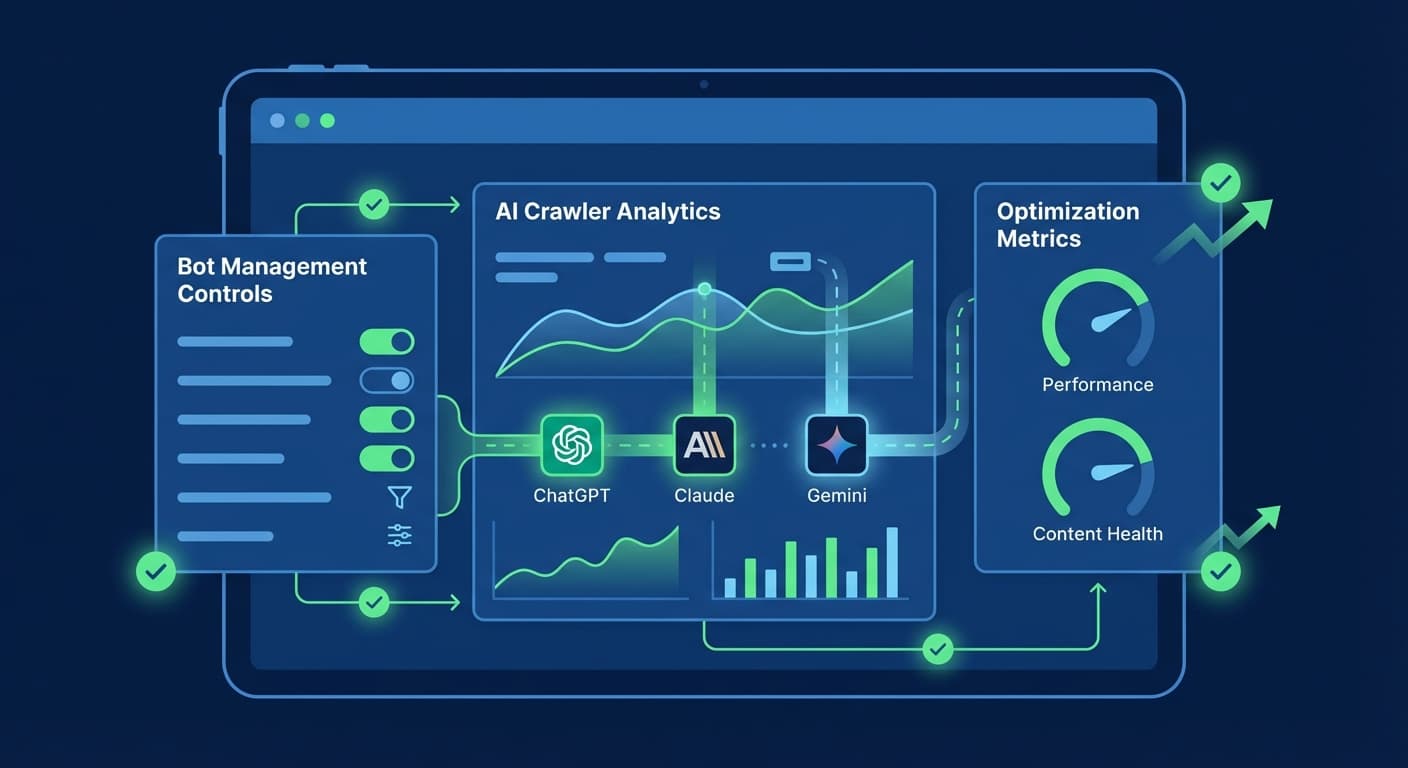
  • 2. AI Crawler Analytics

    Set up specialized tracking for AI crawler behavior:

  • Content engagement patterns

  • Citation success rates

  • Crawling efficiency metrics

  • Content gap identification
  • 3. Proactive Content Signals

    Use emerging signals to help AI crawlers understand your content:

  • Content freshness indicators

  • Expertise, authority, trust markers

  • Fact-checking and verification badges

  • Related content recommendations
  • How Citescope Ai Helps

    Citescope Ai's platform addresses the complexities of AI crawler optimization through:

  • GEO Score Analysis: Evaluates your content across AI Interpretability, Semantic Richness, Conversational Relevance, Structure, and Authority—the five dimensions that matter most to AI crawlers

  • AI Rewriter: One-click optimization that restructures content to better serve agentic AI systems while maintaining human readability

  • Citation Tracker: Monitors when your optimized content gets cited by ChatGPT, Perplexity, Claude, and Gemini, helping you understand which optimization strategies work

  • Multi-format Export: Ensures your optimized content works across different platforms and crawler expectations
  • The platform's analytics help you understand which pages AI crawlers prefer and why, enabling data-driven optimization decisions.

    Common Pitfalls to Avoid

  • Over-restricting legitimate AI crawlers while trying to block spam

  • Ignoring server performance under increased AI crawler load

  • Failing to update policies as new AI crawlers emerge

  • Not monitoring crawler behavior and content performance

  • Using outdated SEO practices that don't serve AI systems
  • Measuring Success

    Track these key metrics to gauge your bot management optimization:

  • AI crawler visit frequency and depth

  • Content citation rates in AI search results

  • Server performance under AI crawler load

  • Content discoverability in AI-powered search

  • User engagement from AI-referred traffic
  • Looking Ahead: Future-Proofing Your Strategy

    As agentic AI systems become more sophisticated, expect:

  • More granular crawler policies with specific use-case permissions

  • Real-time content quality assessment by AI crawlers

  • Increased emphasis on authority signals and expert attribution

  • Integration with content verification systems
  • The websites that adapt their bot management strategies now will have a significant advantage as AI search continues to grow.

    Ready to Optimize for AI Search?

    The shift to agentic AI crawlers isn't just coming—it's here. With 47% of websites still using outdated bot management strategies, now is the time to audit and optimize your approach.

    Citescope Ai makes this transition seamless with comprehensive analysis tools, one-click optimization, and real-time citation tracking. Start with our free tier to analyze your first 3 pieces of content and see how well they serve today's AI crawlers.

    [Try Citescope Ai Free →]

    Don't let outdated bot policies hold back your AI visibility. The future of search is here—make sure your content is ready for it.
    AI crawlersbot managementLLMs.txtrobots.txtAI SEO

    Track your AI visibility

    See how your content appears across ChatGPT, Perplexity, Claude, and more.

    Start for Free