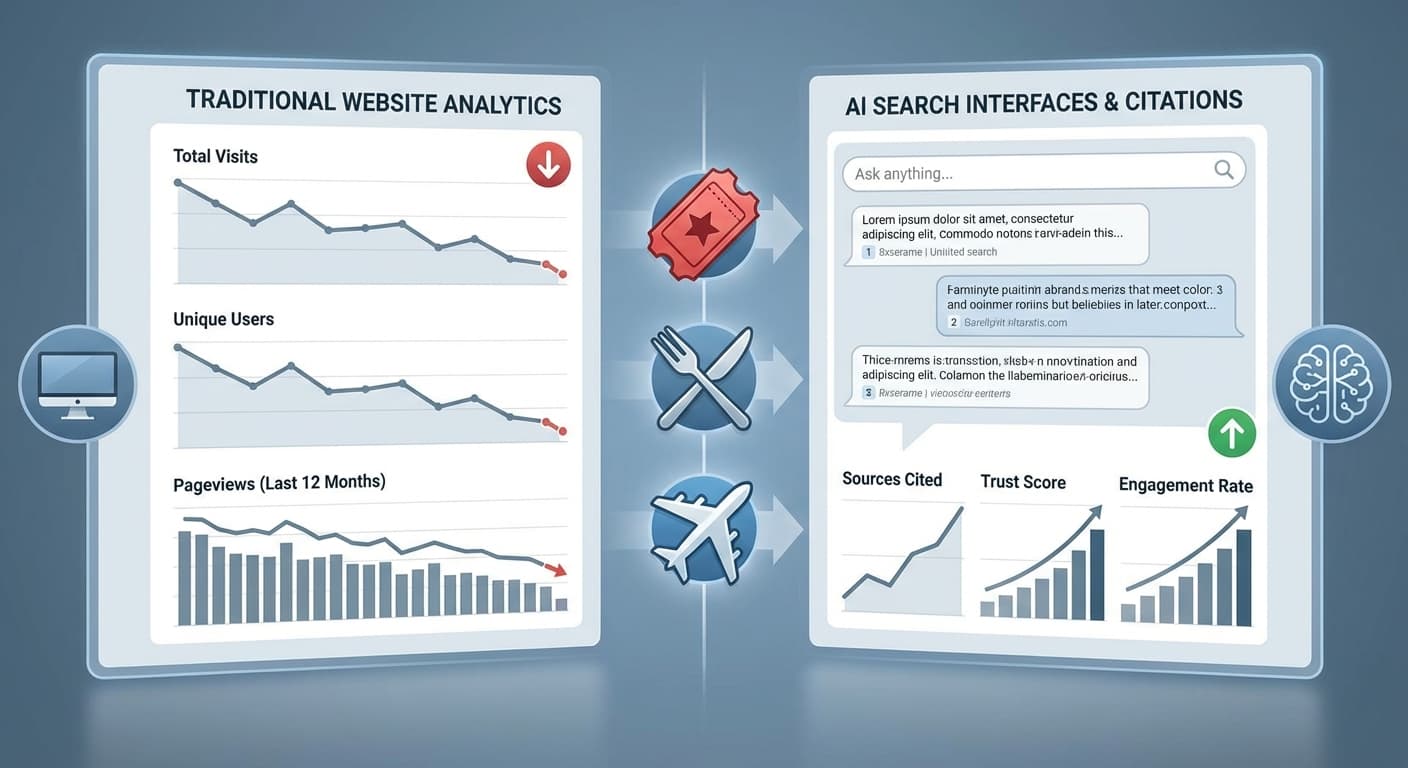
How to Audit Your Content for AI Search Cannibalization: When Multiple Pages Compete for the Same Citation Slot
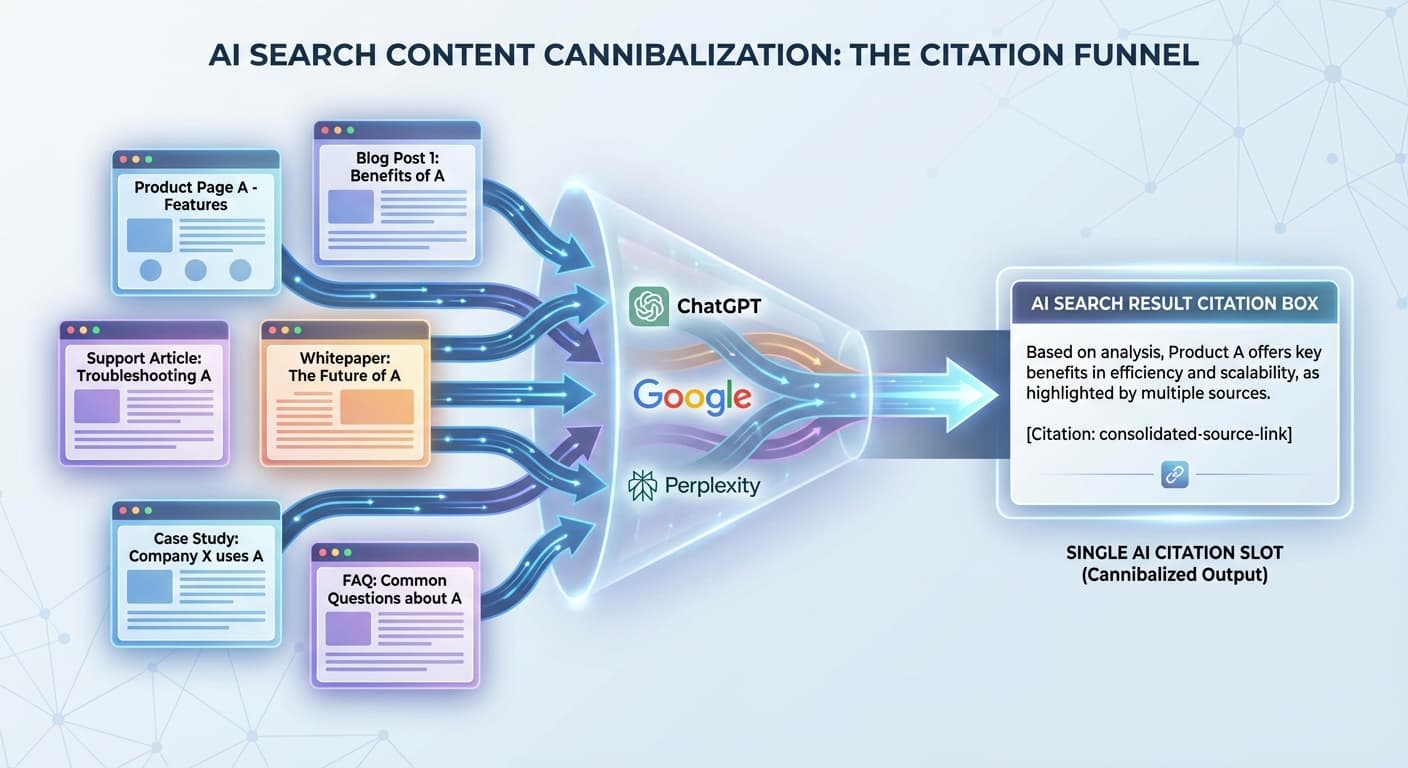
How to Audit Your Content for AI Search Cannibalization: When Multiple Pages Compete for the Same Citation Slot
Did you know that 73% of websites in 2025 have multiple pages competing for the same AI citation opportunities, effectively canceling each other out? With Google's AI Overviews now appearing in 40% of search results and ChatGPT processing over 600 million queries weekly, content cannibalization has evolved beyond traditional SEO into a critical AI visibility issue.
When your own content competes against itself for AI citations, you're not just losing search rankings—you're missing out on the massive opportunity to be the definitive source that AI engines recommend to millions of users.
Understanding AI Search Cannibalization in 2026
AI search cannibalization occurs when multiple pages on your website target the same topic or answer the same question, causing AI engines to struggle with which page to cite. Unlike traditional keyword cannibalization, AI engines look for the most authoritative, comprehensive, and contextually relevant answer—not just keyword matches.
This creates unique challenges:
The Current State of AI Citation Competition
Recent data from 2025 shows that:
Step-by-Step Content Cannibalization Audit
1. Identify Competing Content
Start by mapping your content universe:
Create a Content Inventory
Use AI Search Testing
2. Analyze Citation Patterns
Track Current Performance
Evaluate Content Overlap
3. Assess Page Authority and Quality
Not all competing pages are created equal. Evaluate:
Content Quality Metrics
AI Optimization Factors
Common Cannibalization Scenarios to Watch For
Scenario 1: Blog Posts vs. Landing Pages
Your comprehensive service page competes with multiple blog posts covering the same topic. AI engines can't determine which is the primary resource.
Solution: Consolidate blog insights into the main service page and redirect or update blog posts to cover specific subtopics.
Scenario 2: Outdated vs. Updated Content
Older, well-linked pages compete with newer, more accurate content, confusing AI engines about which version to trust.
Solution: Update older content with current information or redirect to the newer version while preserving link equity.
Scenario 3: Different Formats, Same Information
Podcast transcripts, video summaries, and written articles all cover identical ground without adding unique value.
Solution: Create a comprehensive hub page and position other formats as supporting content with internal links.
Advanced Audit Techniques
Content Gap Analysis
Identify opportunities where cannibalization actually reveals content gaps:
Semantic Analysis
Use tools to understand how AI engines interpret your content:
Citation Attribution Tracking
Monitor how AI engines currently cite your content to understand preferences and patterns. Tools like Citescope Ai's Citation Tracker provide real-time insights into when and how your content gets referenced across ChatGPT, Perplexity, Claude, and Gemini.
Creating Your Resolution Strategy
Option 1: Consolidation
Combine multiple competing pages into one comprehensive resource:
Option 2: Differentiation
Make each page target distinct user intents:
Option 3: Content Hierarchy
Establish clear primary and supporting content relationships:
Measuring Success After Resolution
Track these metrics to validate your cannibalization fixes:
AI Citation Metrics
Traditional SEO Metrics
Business Impact
How Citescope Ai Helps Solve Cannibalization
Identifying and resolving AI search cannibalization requires specialized tools designed for the AI search era. Citescope Ai's platform provides:
GEO Score Analysis: Evaluate multiple pages across AI Interpretability, Semantic Richness, Conversational Relevance, Structure, and Authority to identify which content performs best with AI engines.
Citation Tracking: Monitor exactly when and how ChatGPT, Perplexity, Claude, and Gemini cite your content, helping you identify cannibalization patterns and successful consolidations.
AI Rewriter: Optimize consolidated content with one-click restructuring that improves AI visibility while maintaining your brand voice and expertise.
Multi-format Export: Seamlessly publish optimized, non-competing content across your website using Markdown, HTML, or WordPress blocks.
Ready to Optimize for AI Search?
Don't let your own content compete against itself in the AI search era. Start identifying and resolving cannibalization issues today with Citescope Ai's comprehensive audit and optimization tools. Try our free tier with 3 optimizations per month, or upgrade to Pro for unlimited AI content optimization at just $39/month. Transform your competing content into a unified, citation-worthy resource that AI engines love to reference.