GEO Strategy

How to Audit Your Content for GEO RAG Retrievability When AI Search Engines Only Surface 15% of Your Site Despite Strong Domain Authority
April 6, 20267 min read
How to Audit Your Content for GEO RAG Retrievability When AI Search Engines Only Surface 15% of Your Site Despite Strong Domain Authority

How to Audit Your Content for GEO RAG Retrievability When AI Search Engines Only Surface 15% of Your Site Despite Strong Domain Authority

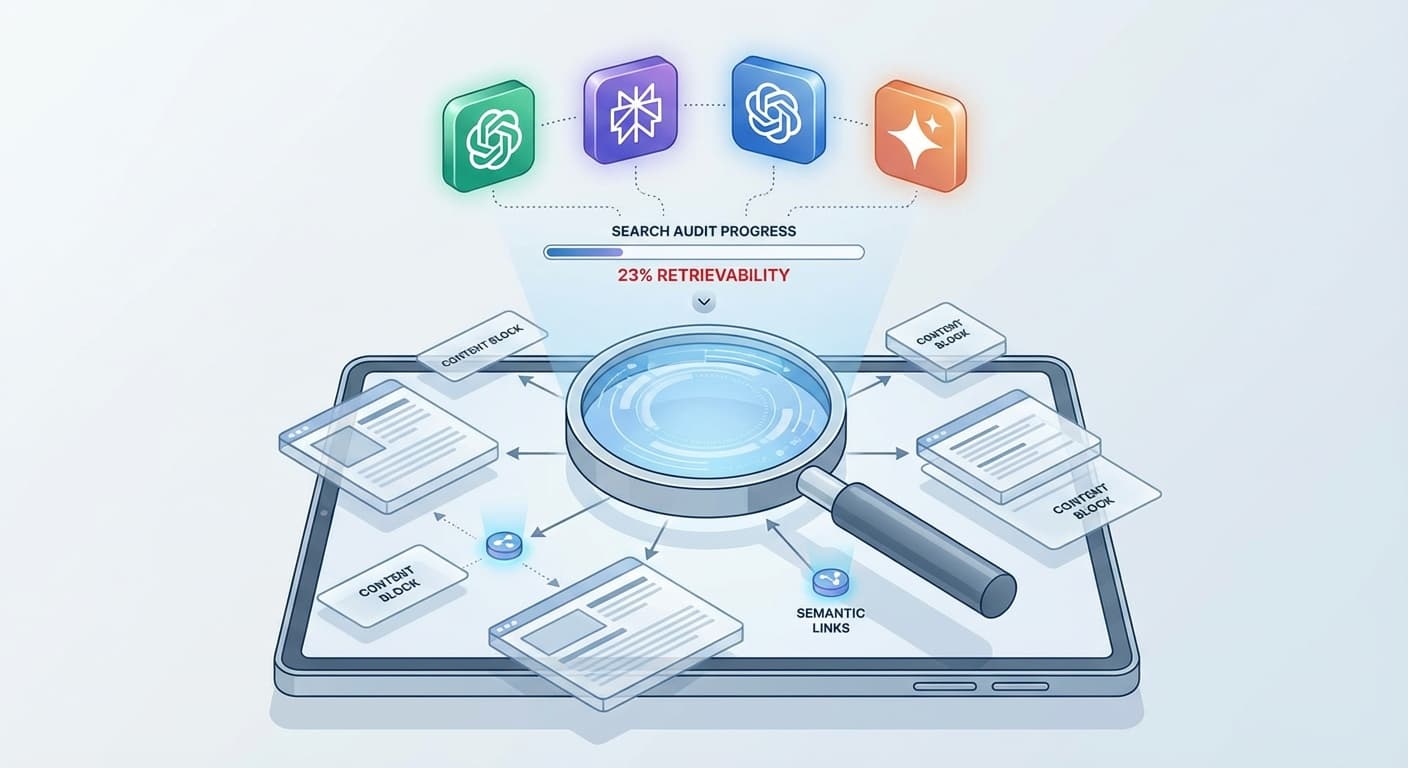
Your website has a domain authority of 80+, ranks on page one for competitive keywords, and drives millions of organic visitors annually. Yet when you search for your brand and expertise areas in ChatGPT, Perplexity, or Claude, only a fraction of your content appears in their responses. Sound familiar?

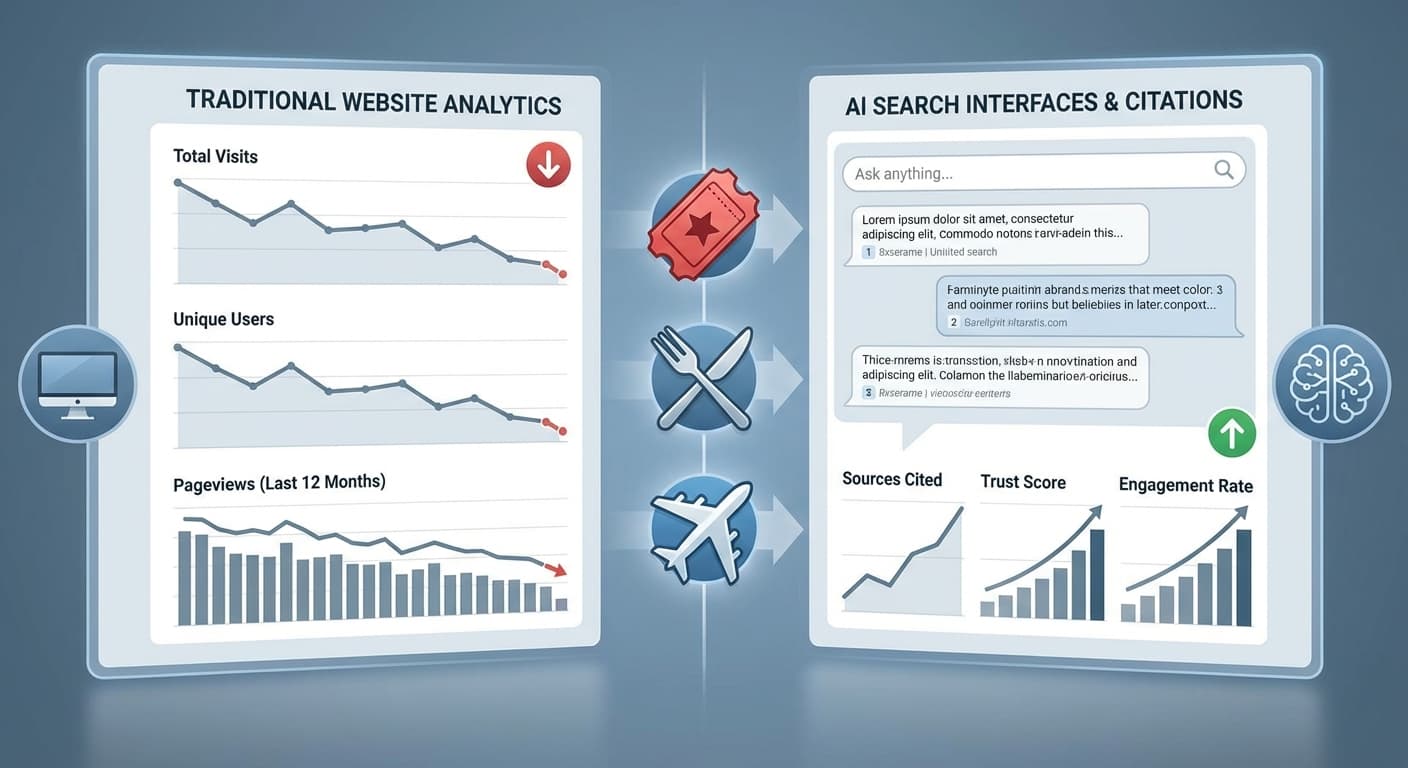
You're not alone. Recent 2025 data shows that even high-authority domains see only 15-20% of their content successfully retrieved by AI search engines' RAG (Retrieval-Augmented Generation) systems. While traditional SEO metrics focus on crawlability and keyword optimization, GEO (Generative Engine Optimization) requires a fundamentally different approach to content structure and semantic clarity.

With AI search now accounting for over 35% of all queries and 78% of Gen Z users preferring AI assistants over traditional search engines, optimizing for RAG retrievability isn't just important—it's essential for maintaining visibility in 2026.

Understanding the RAG Retrievability Gap

Why High DA Sites Struggle with AI Retrieval

Traditional SEO success doesn't guarantee GEO success. Here's why:

Semantic Ambiguity: Content optimized for keyword density often lacks the semantic clarity AI models need for accurate retrieval. Your 3,000-word pillar page might rank #1 on Google but confuse ChatGPT's context understanding.

Information Density Mismatch: AI models prefer concise, contextually rich information over lengthy, keyword-stuffed content. That comprehensive guide that took weeks to create might be too dense for effective RAG processing.

Structural Incompatibility: Traditional SEO structures (H1-H6 hierarchies optimized for web crawlers) don't always align with how AI models parse and understand content relationships.

The Cost of Poor RAG Performance

2025 studies indicate that brands with low AI search visibility are experiencing:

  • 23% decrease in brand mention frequency

  • 31% reduction in thought leadership attribution

  • 18% drop in organic traffic from AI-driven searches

  • 40% lower citation rates in AI-generated content
  • Comprehensive GEO RAG Audit Framework

    Phase 1: Content Inventory and AI Visibility Assessment

    #### Step 1: Map Your Content Universe

    Start by categorizing your content into these buckets:

  • Core Expertise Pages: Your main service/product pages

  • Thought Leadership Content: Blog posts, whitepapers, case studies

  • FAQ and Support Content: Help docs, troubleshooting guides

  • Company Information: About pages, team bios, contact info
  • #### Step 2: Test AI Retrieval Rates

    For each content category, run systematic queries across major AI platforms:

    Query Types to Test:

  • Direct brand queries ("What does [Company] do?")

  • Expertise queries ("Best practices for [your specialty]")

  • Comparison queries ("[Your company] vs competitors")

  • Problem-solution queries ("How to solve [problem you address]")
  • Testing Protocol:

  • Run queries in ChatGPT, Claude, Perplexity, and Gemini

  • Document which content gets cited (if any)

  • Note the context and accuracy of citations

  • Track citation frequency over multiple query variations
  • Phase 2: Semantic Structure Analysis

    #### Evaluating AI Interpretability

    High-performing content in AI search typically exhibits:

    Clear Information Hierarchy

  • Topic sentences that clearly state the main point

  • Supporting details that build logically

  • Conclusions that summarize key takeaways
  • Contextual Completeness

  • Self-contained sections that don't require external context

  • Defined terms and concepts

  • Clear cause-and-effect relationships
  • Conversational Relevance

  • Natural language patterns that mirror how people ask questions

  • Direct answers to common queries

  • Anticipation of follow-up questions
  • #### Red Flags for RAG Performance

    Structural Issues:

  • Vague headings ("Our Approach" instead of "How We Reduce Customer Churn by 40%")

  • Buried key information in long paragraphs

  • Excessive use of industry jargon without explanation

  • Missing context for data points and statistics
  • Content Flow Problems:

  • Information scattered across multiple sections

  • Key points mentioned but not explained

  • Assumptions about reader knowledge

  • Unclear relationships between concepts
  • Phase 3: Technical GEO Factors

    #### Schema Markup for AI Understanding

    While traditional schema helps search engines, AI models benefit from specific markup:

  • FAQ Schema: Directly feeds Q&A training data

  • Article Schema: Helps AI understand content structure

  • Organization Schema: Provides authority context

  • Product Schema: Essential for commercial content
  • #### Content Accessibility for AI Processing

    Format Considerations:

  • Clean HTML structure without excessive nested elements

  • Alt text for images that provides context, not just descriptions

  • Table markup that clearly defines relationships

  • List structures that indicate hierarchy and relationships
  • Advanced Audit Techniques

    Semantic Gap Analysis

    Compare your content's semantic coverage against competitors who perform well in AI search:

  • Identify top AI-cited competitors in your space

  • Analyze their content structure and information presentation

  • Map semantic gaps where your content lacks clarity or completeness

  • Prioritize improvements based on query volume and business impact
  • Query Intent Mapping

    Align your content with how users actually query AI systems:

    Research Methods:

  • Analyze search query data from your analytics

  • Monitor social media questions about your industry

  • Use AI platforms to understand common question patterns

  • Survey customers about their AI search behavior
  • Content Optimization:

  • Create question-focused content sections

  • Use natural language in headings and subheadings

  • Include direct answers early in content sections

  • Address multiple intent types within single pieces
  • Authority Signal Optimization

    AI models consider various authority indicators:

    Content Depth Signals:

  • Comprehensive coverage of subtopics

  • Original research and data

  • Expert quotes and perspectives

  • Updated information and current examples
  • External Validation:

  • Quality backlinks from authoritative sources

  • Social media engagement and sharing

  • Brand mentions across the web

  • Industry recognition and awards
  • How Citescope AI Helps

    Citescope AI's GEO Score analyzes your content across five critical dimensions that directly impact RAG retrievability:

  • AI Interpretability: Measures how easily AI models can parse and understand your content structure

  • Semantic Richness: Evaluates the depth and clarity of your semantic signals

  • Conversational Relevance: Assesses how well your content matches natural query patterns

  • Structure: Analyzes your content organization for optimal AI processing

  • Authority: Measures the expertise and trustworthiness signals in your content
  • The platform's Citation Tracker also helps you monitor improvements in real-time, showing exactly when and how your optimized content gets cited by ChatGPT, Perplexity, Claude, and Gemini.

    Implementation Roadmap

    Week 1-2: Foundation Assessment


  • Complete content inventory

  • Run initial AI retrieval tests

  • Identify top priority content for optimization
  • Week 3-4: Quick Wins


  • Optimize FAQ sections for direct question answering

  • Improve heading clarity and specificity

  • Add missing context to data points and claims
  • Month 2: Structural Improvements


  • Reorganize content for better information flow

  • Create topic cluster pages that address related queries

  • Implement comprehensive schema markup
  • Month 3+: Advanced Optimization


  • Develop new content based on semantic gap analysis

  • A/B test different content structures

  • Monitor and iterate based on AI citation performance
  • Measuring Success

    Key Metrics to Track

    AI Visibility Metrics:

  • Citation frequency across AI platforms

  • Query coverage (% of relevant queries where you appear)

  • Attribution accuracy (correct representation of your expertise)
  • Engagement Indicators:

  • Time to citation (how quickly new content gets picked up)

  • Citation context (how prominently you're featured)

  • Cross-platform consistency (citations across multiple AI tools)
  • Business Impact:

  • Organic traffic from AI-referred sources

  • Brand mention increases

  • Thought leadership recognition

  • Lead quality from AI search visitors
  • Ready to Optimize for AI Search?

    Auditing your content for GEO RAG retrievability requires a systematic approach and ongoing optimization. While the process may seem complex, the impact on your AI search visibility and brand authority is substantial. Citescope AI simplifies this process by automatically analyzing your content's GEO performance and providing one-click optimization tools. Start with our free tier to audit up to 3 pieces of content monthly, or upgrade to Pro for comprehensive site-wide optimization. Try Citescope AI today and transform your high-authority content into AI search gold.
    GEO StrategyRAG OptimizationAI SearchContent AuditDomain Authority

    Track your AI visibility

    See how your content appears across ChatGPT, Perplexity, Claude, and more.

    Start for Free