GEO Strategy

How to Automate AI Visibility Monitoring Across ChatGPT, Perplexity, and Google AI Overviews When Manual Tracking Becomes Impossible at Enterprise Scale
January 27, 20267 min read
How to Automate AI Visibility Monitoring Across ChatGPT, Perplexity, and Google AI Overviews When Manual Tracking Becomes Impossible at Enterprise Scale

How to Automate AI Visibility Monitoring Across ChatGPT, Perplexity, and Google AI Overviews When Manual Tracking Becomes Impossible at Enterprise Scale

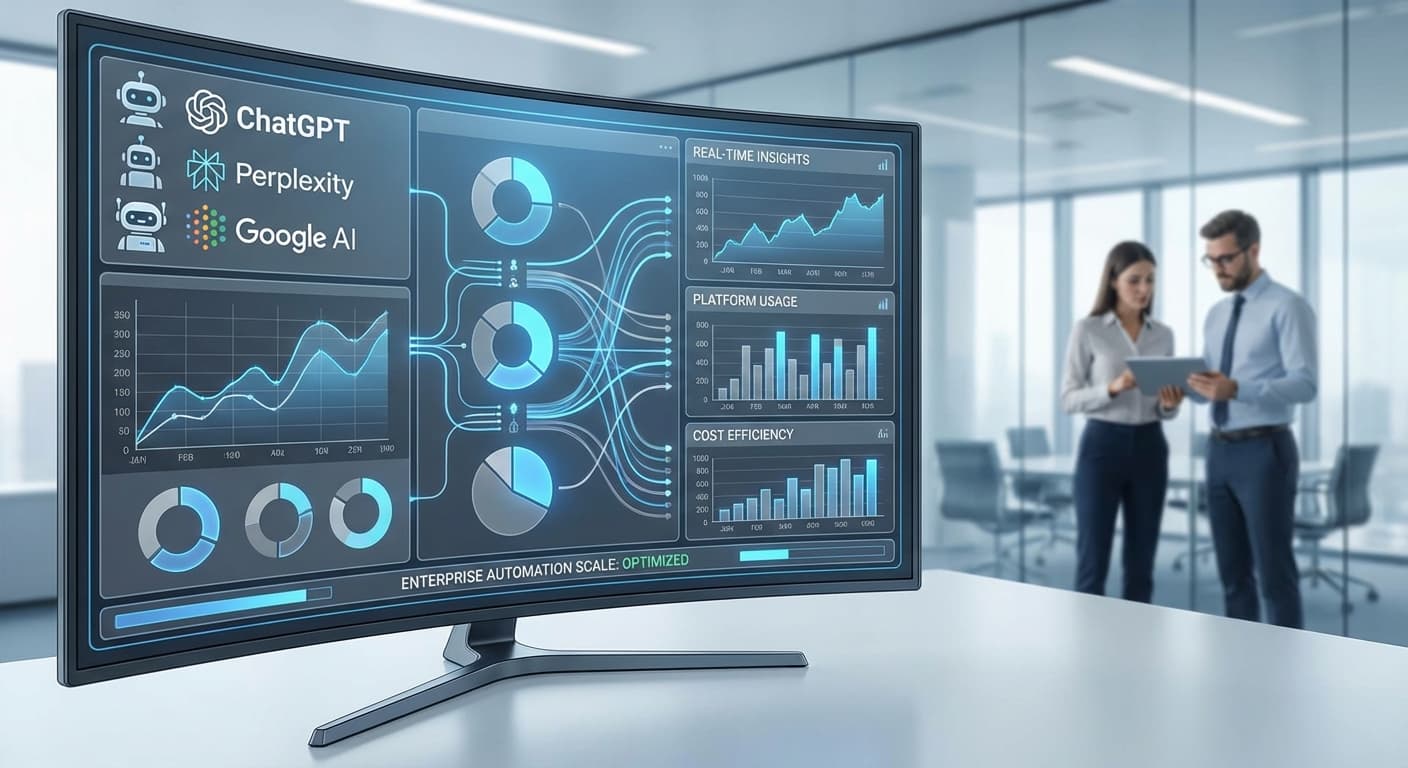
With over 500 million weekly ChatGPT users and AI search now accounting for 35% of all online queries in 2025, enterprise businesses are facing a critical challenge: how do you monitor your brand's visibility across dozens of AI platforms when you're publishing hundreds of pieces of content monthly?

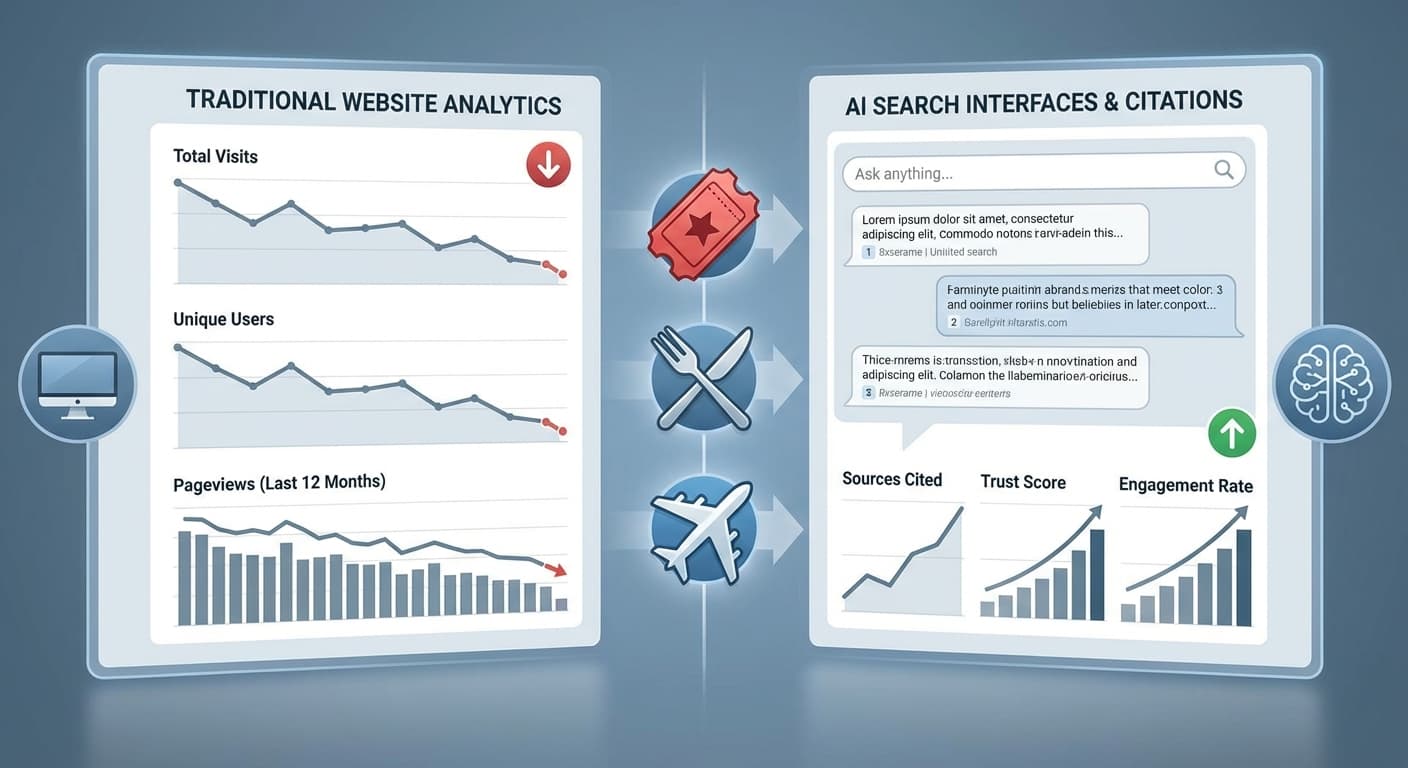
The days of manually checking whether your latest blog post got cited in a Perplexity response are long gone. When you're operating at enterprise scale—managing content for multiple brands, tracking competitor mentions, and optimizing across various AI search engines—manual monitoring becomes not just inefficient, but completely impossible.

The Enterprise AI Visibility Challenge

Enterprise content teams today are dealing with an unprecedented scale of content and platforms:

  • Content Volume: Large organizations publish 50-200+ pieces of content monthly

  • Platform Proliferation: ChatGPT, Perplexity, Claude, Gemini, Google AI Overviews, Bing Copilot, and dozens of specialized AI tools

  • Citation Complexity: Each AI platform has different citation behaviors and ranking factors

  • Multiple Stakeholders: Different teams need visibility data for SEO, PR, brand monitoring, and competitive intelligence
  • A recent survey of Fortune 500 marketing directors found that 78% struggle to track their AI visibility effectively, with most relying on sporadic manual checks that miss 85% of potential citations.

    Why Manual Monitoring Fails at Scale

    Time Investment Becomes Prohibitive

    To manually check just one piece of content across the five major AI platforms requires approximately 30 minutes. For an enterprise publishing 100 pieces monthly, that's 50 hours of manual work—before considering competitive monitoring or historical analysis.

    Inconsistent Coverage

    Manual monitoring typically focuses on:

  • Recent content only

  • High-priority pieces

  • Limited query variations

  • Mainstream AI platforms
  • This leaves massive blind spots in your visibility data.

    Human Error and Bias

    Manual checkers often:

  • Miss subtle mentions or paraphrased citations

  • Focus on obvious keywords while missing semantic variations

  • Inconsistently document findings

  • Struggle with technical or niche content validation
  • The Automated Solution: Key Components

    Effective enterprise AI visibility monitoring requires several automated components working together:

    1. Multi-Platform API Integration

    While not all AI platforms offer direct APIs for citation tracking, successful automation combines:

  • Direct API Access: Where available (Google AI Overviews, some Bing Copilot features)

  • Intelligent Scraping: For platforms without public APIs

  • Query Automation: Systematic testing of relevant search queries

  • Response Analysis: AI-powered parsing of responses for citations
  • 2. Semantic Content Matching

    Modern monitoring systems need to identify when your content is cited even when:

  • Your brand isn't explicitly mentioned

  • Content is paraphrased rather than directly quoted

  • Multiple sources are synthesized together

  • Technical concepts are simplified for general audiences
  • 3. Competitive Intelligence Integration

    Enterprise teams need to track:

  • When competitors are cited instead of your content

  • Topic areas where you're losing AI visibility

  • Emerging competitors gaining traction

  • Content gaps in your coverage
  • 4. Real-Time Alerting and Reporting

    Automated systems should provide:

  • Instant notifications for high-value citations

  • Weekly competitive visibility reports

  • Monthly trend analysis

  • Custom dashboards for different stakeholders
  • Implementation Strategy for Enterprises

    Phase 1: Audit and Baseline (Weeks 1-2)

  • Content Inventory: Catalog all published content across domains

  • Priority Mapping: Identify high-value content and key topics

  • Competitive Landscape: Define primary competitors and monitoring keywords

  • Platform Assessment: Determine which AI engines matter most for your audience
  • Phase 2: Tool Selection and Setup (Weeks 3-4)

    When evaluating monitoring solutions, consider:

  • Coverage: Does it monitor all relevant AI platforms?

  • Accuracy: How well does it identify semantic matches?

  • Scalability: Can it handle your content volume?

  • Integration: Does it connect with your existing marketing stack?

  • Reporting: Are the dashboards suitable for enterprise stakeholders?
  • Phase 3: Process Integration (Weeks 5-6)

  • Team Training: Ensure stakeholders understand new workflows

  • Alert Configuration: Set up notifications for different scenarios

  • Reporting Cadence: Establish regular review meetings

  • Success Metrics: Define KPIs for AI visibility performance
  • Advanced Monitoring Strategies

    Query Diversification

    Your monitoring should test multiple query types:

  • Direct Questions: "What is [your topic]?"

  • Comparison Queries: "Best [your category] tools"

  • Problem-Solution: "How to [solve problem your content addresses]"

  • Long-tail Variations: Industry-specific terminology
  • Geographic and Demographic Targeting

    AI responses can vary by:

  • User location

  • Language preferences

  • Professional context

  • Device type
  • Enterprise monitoring should account for these variations, especially for global brands.

    Historical Trend Analysis

    Automated systems can reveal:

  • Seasonal citation patterns

  • Content lifecycle in AI responses

  • Impact of content updates on visibility

  • Correlation between traditional SEO performance and AI citations
  • Common Implementation Challenges

    Data Volume Management

    Enterprise monitoring generates massive amounts of data. Successful implementations:

  • Use intelligent filtering to surface actionable insights

  • Implement data retention policies

  • Provide role-based access to different data levels

  • Integrate with existing analytics platforms
  • False Positive Management

    Automated systems can flag irrelevant mentions. Address this through:

  • Machine learning refinement over time

  • Human validation loops for high-priority alerts

  • Context-aware filtering

  • Regular system tuning
  • Cross-Team Coordination

    AI visibility data impacts multiple teams:

  • SEO Teams: Need citation data for strategy optimization

  • PR Teams: Want to track brand mentions and sentiment

  • Content Teams: Require performance feedback for future planning

  • Executive Teams: Need high-level visibility metrics
  • How Citescope Ai Helps

    Citescope Ai's Citation Tracker addresses enterprise-scale monitoring challenges by providing:

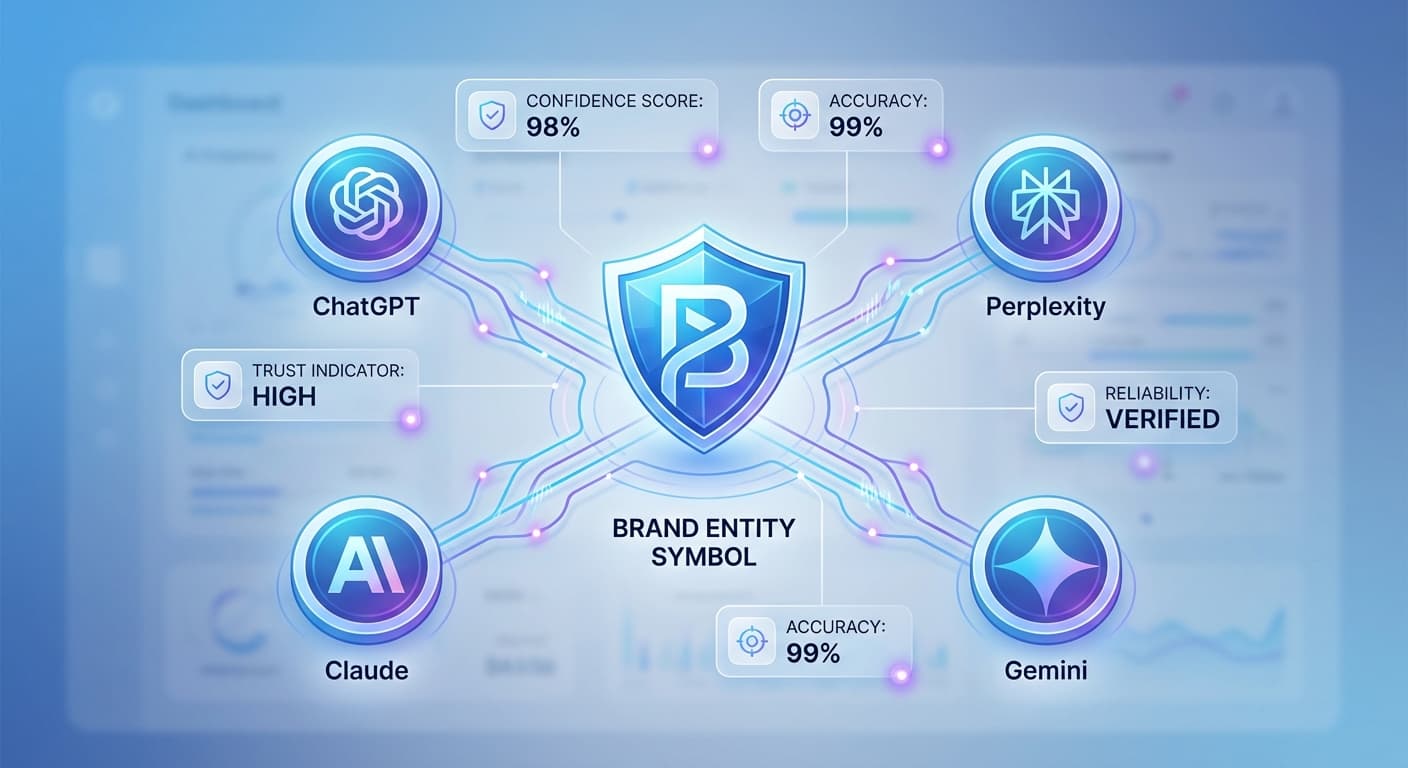
  • Comprehensive Coverage: Monitors ChatGPT, Perplexity, Claude, Gemini, and Google AI Overviews

  • Semantic Matching: Uses advanced AI to identify content citations even when paraphrased

  • Automated Reporting: Delivers regular insights without manual intervention

  • Team Collaboration: Supports multiple users with role-based access

  • Integration Ready: Exports data for analysis in your existing tools
  • The platform's GEO Score also helps optimize content for better AI visibility before publication, reducing the need for reactive monitoring.

    Measuring ROI on Automated Monitoring

    Successful enterprise implementations track:

    Efficiency Metrics


  • Time Savings: Hours recovered from manual monitoring

  • Coverage Improvement: Percentage increase in monitored content

  • Alert Accuracy: Reduction in false positives over time
  • Business Impact


  • Citation Growth: Month-over-month increase in AI mentions

  • Competitive Share: Your citations vs. competitor citations

  • Content Performance: ROI of optimized vs. non-optimized content

  • Brand Visibility: Overall presence in AI search results
  • Future-Proofing Your Monitoring Strategy

    As AI search evolves, successful monitoring systems must be:

  • Adaptable: Quick to integrate new AI platforms

  • Scalable: Handle growing content volumes

  • Intelligent: Improve accuracy through machine learning

  • Integrated: Connect with emerging marketing technologies
  • Ready to Optimize for AI Search?

    Manual AI visibility tracking simply doesn't scale for enterprise content operations. As AI search continues to grow—with projections showing it will account for 50% of all searches by 2027—automated monitoring becomes essential for competitive content strategy.

    Citescope Ai provides enterprise-grade AI visibility monitoring with comprehensive coverage across all major AI platforms. Start with our free tier to test the system with up to 3 content optimizations per month, or contact our team to discuss enterprise deployment for your organization. Don't let your competition dominate AI search while you're still checking citations manually.
    AI monitoringenterprise SEOautomationAI visibilitycitation tracking

    Track your AI visibility

    See how your content appears across ChatGPT, Perplexity, Claude, and more.

    Start for Free