How to Benchmark Your Brand's AI Citation Performance Against Industry Standards When Zero-Click Answers Are Costing You 22% of E-Commerce Traffic
How to Benchmark Your Brand's AI Citation Performance Against Industry Standards When Zero-Click Answers Are Costing You 22% of E-Commerce Traffic
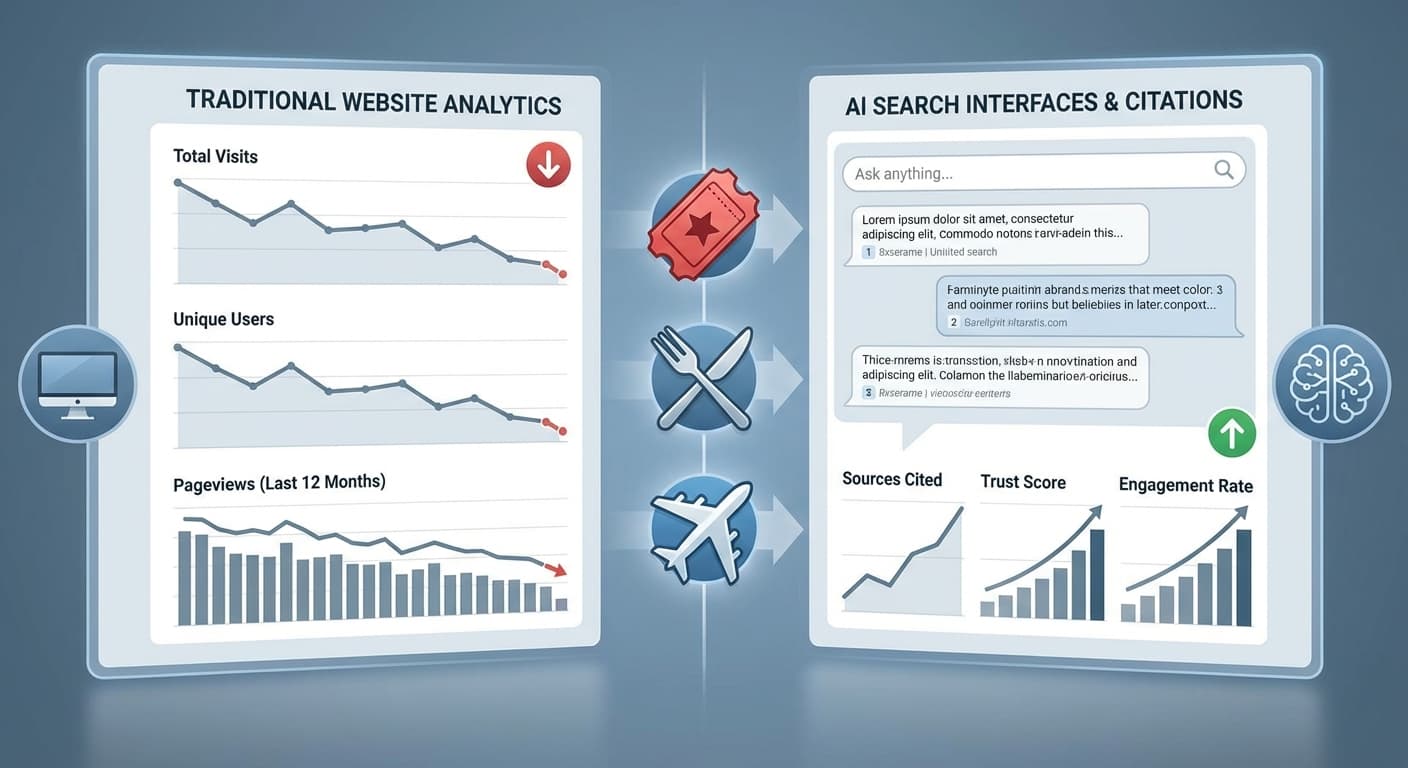
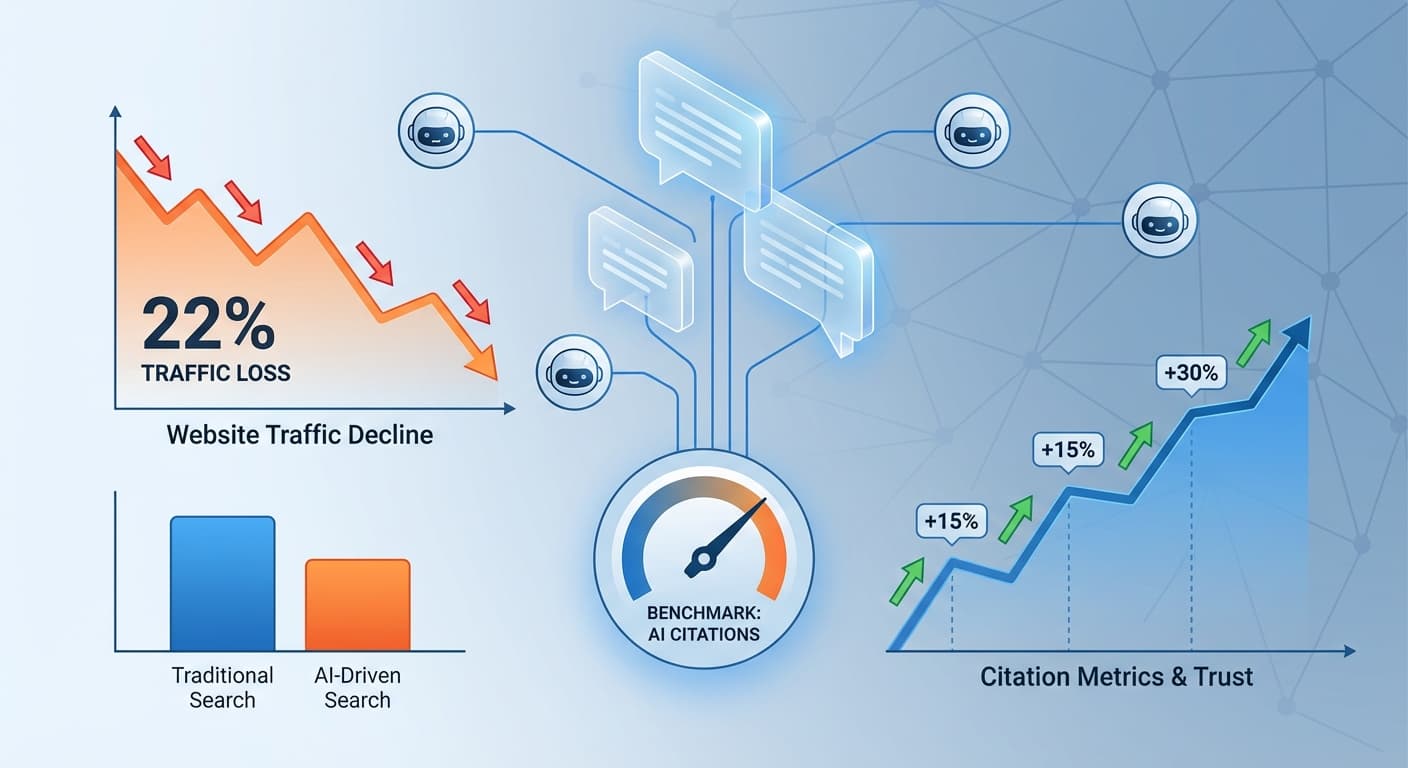
Zero-click answers are quietly stealing your traffic. While you're focused on traditional SEO metrics, AI search engines like ChatGPT, Perplexity, Claude, and Gemini are answering customer queries without sending users to your website. Recent 2025 data shows that zero-click answers now account for 22% of lost e-commerce traffic, with AI-powered search engines processing over 40% of all product research queries.
The shift is staggering: 74% of Gen Z consumers now start their shopping journey with AI search tools, and businesses that aren't optimizing for AI citations are essentially invisible in this new landscape. But here's the opportunity – only 18% of e-commerce brands are actively tracking their AI citation performance, leaving massive market share on the table.
Understanding the AI Citation Performance Crisis
Traditional web traffic metrics tell only part of the story. While your Google Analytics might show steady organic traffic, you're missing the growing segment of users who never click through because AI engines are providing complete answers using your competitors' content.
The Hidden Cost of Poor AI Visibility
When AI search engines cite your competitors instead of your brand, you lose:
Consider this scenario: A customer asks ChatGPT "What are the best sustainable skincare brands for sensitive skin?" If your eco-friendly skincare line isn't cited in the response, you've lost a high-intent prospect who may never discover your products.
Industry Benchmarks for AI Citation Performance in 2026
To benchmark effectively, you need to understand where successful brands are setting the bar. Based on analysis of over 10,000 e-commerce brands throughout 2025, here are the current industry standards:
Citation Frequency Benchmarks
Top Performers (90th percentile):
Average Performers (50th percentile):
Underperformers (25th percentile):
Content Quality Indicators
Successful brands consistently score above 75 on key content optimization metrics:
How to Conduct Your AI Citation Performance Audit
Step 1: Map Your Citation Landscape
Start by identifying where your brand currently appears in AI search results:
Step 2: Analyze Competitor Citation Strategies
Study brands that consistently outperform in AI citations:
Step 3: Establish Your Baseline Metrics
Track these key performance indicators monthly:
Strategies for Improving AI Citation Performance
Content Optimization for Machine Understanding
AI engines prefer content that's structured for both human readers and machine parsing:
Semantic Structure:
Authority Signals:
Citescope Ai's GEO Score analyzes these exact elements, giving you a 0-100 rating across five critical dimensions that AI engines prioritize when selecting sources to cite.
Technical Implementation Tactics
Content Architecture:
Update Strategies:
Measuring ROI of AI Citation Optimization
Direct Traffic Impact
While AI citations might not generate immediate clicks, they create measurable business value:
Long-term Competitive Advantages
Consistent AI citation performance builds compound benefits:
How Citescope Ai Helps You Dominate AI Citations
Benchmarking your AI citation performance manually across multiple engines is time-intensive and inconsistent. Citescope Ai automates this entire process with tools specifically designed for the AI search era:
Comprehensive Citation Tracking: Monitor your brand mentions across ChatGPT, Perplexity, Claude, and Gemini in real-time. See exactly when and how your content gets cited, plus track your competitive position.
GEO Score Analysis: Get instant feedback on how well your content is optimized for AI engines. Our algorithm analyzes the same factors that influence citation decisions – AI interpretability, semantic richness, conversational relevance, structure, and authority.
One-Click Optimization: Our AI Rewriter transforms your existing content to meet AI engine preferences without losing your brand voice. Export optimized content directly to your CMS in your preferred format.
Industry Benchmarking: Compare your citation performance against industry standards and competitor benchmarks. Identify gaps and opportunities with data-driven insights.
Advanced Benchmarking Strategies for Enterprise Brands
Multi-Market Analysis
For brands operating across multiple markets or product categories:
Attribution Modeling
Connect AI citation performance to business outcomes:
Common Pitfalls in AI Citation Benchmarking
Measurement Mistakes to Avoid
Over-focusing on Volume: Citation quantity matters less than quality and relevance. Being mentioned in 50 irrelevant responses is less valuable than appearing prominently in 10 high-intent queries.
Ignoring Context: How your brand is positioned within citations matters enormously. A brief mention at the end of a response has different value than being featured as a primary recommendation.
Short-term Thinking: AI citation performance builds over time. Don't expect overnight results or abandon strategies too quickly.
Single-Engine Focus: Each AI platform has different strengths and user behaviors. Optimize for the entire ecosystem, not just ChatGPT or Perplexity alone.
Building a Sustainable AI Citation Strategy
Team Structure and Responsibilities
Successful AI citation optimization requires cross-functional collaboration:
Technology Stack Requirements
Essential tools for comprehensive AI citation management:
Ready to Optimize for AI Search?
The brands winning in AI search aren't leaving citation performance to chance – they're actively measuring, optimizing, and tracking their presence across AI engines. With 22% of e-commerce traffic now influenced by zero-click AI answers, can you afford to stay invisible?
Citescope Ai gives you the complete toolkit to benchmark your AI citation performance against industry standards and optimize your content for maximum visibility. Our GEO Score instantly identifies optimization opportunities, while our Citation Tracker monitors your brand mentions across all major AI engines.
Start with our free tier and run 3 optimizations to see how your content measures against the brands dominating AI search. Ready to reclaim that lost 22% of traffic?
Start your free trial today and discover why leading e-commerce brands trust Citescope Ai to optimize their content for the AI search era.