GEO Strategy

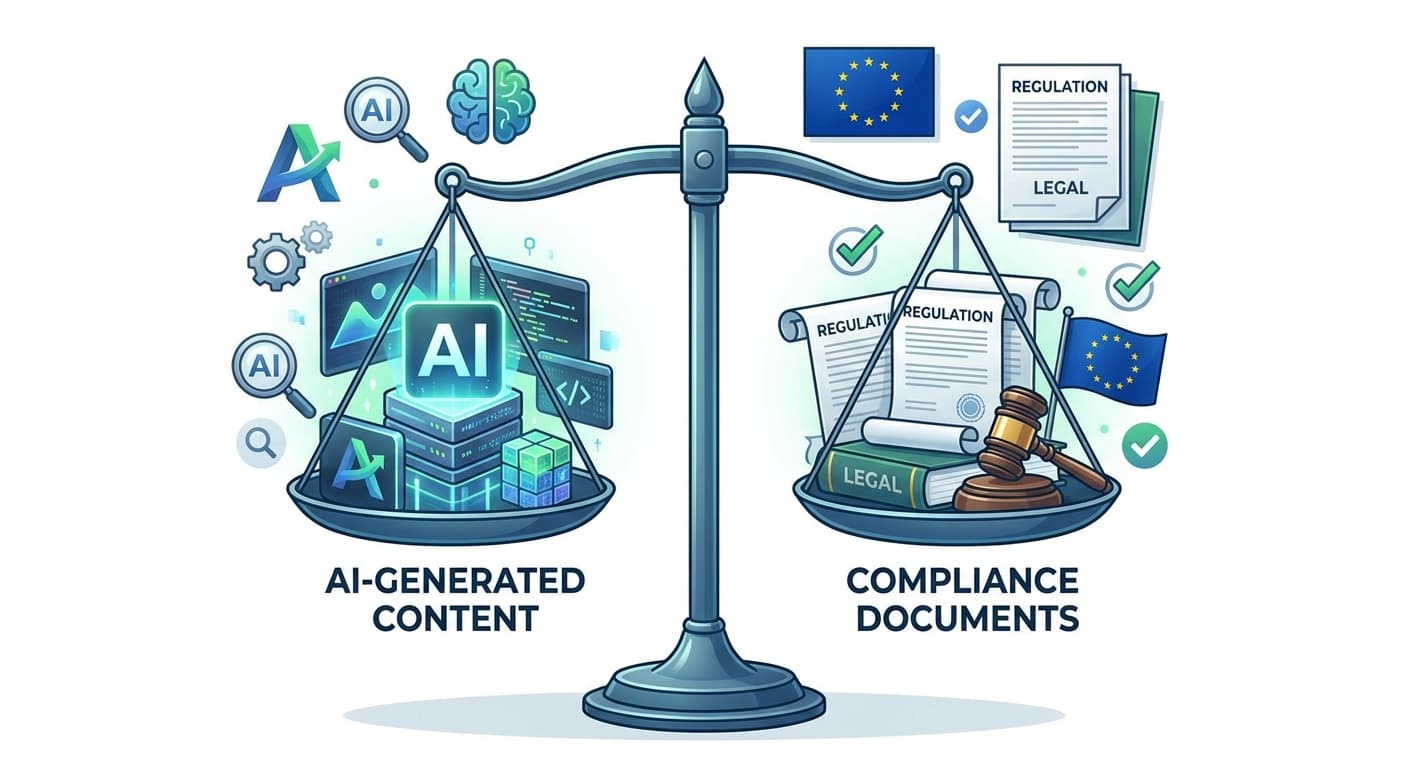
How to Build a Compliance-First AI Content Governance Strategy When 73% of Businesses Publish AI-Generated Content Without Disclosure Frameworks
May 23, 20267 min read
How to Build a Compliance-First AI Content Governance Strategy When 73% of Businesses Publish AI-Generated Content Without Disclosure Frameworks

How to Build a Compliance-First AI Content Governance Strategy When 73% of Businesses Publish AI-Generated Content Without Disclosure Frameworks

When the EU AI Act officially took effect in August 2024 and California's AI disclosure requirements began enforcement in January 2025, a shocking reality emerged: 73% of businesses were publishing AI-generated content without any formal disclosure frameworks or regulatory readiness protocols. As we navigate 2026, this compliance gap has created both a crisis and an opportunity for forward-thinking organizations.

With AI search engines now processing over 45 billion queries monthly and AI-generated content comprising nearly 60% of all published web content, the stakes for proper governance have never been higher. Organizations that establish robust AI content governance strategies today aren't just protecting themselves from regulatory penalties—they're positioning themselves as trustworthy sources in an increasingly AI-driven information ecosystem.

The Current Compliance Landscape: Why 2026 Is the Year of Reckoning

The regulatory environment around AI content has evolved dramatically since 2024. Here's what's driving the urgent need for compliance-first strategies:

New Regulatory Requirements

  • EU AI Act Implementation: Full enforcement across all member states, with fines up to 6% of annual global revenue

  • California SB-1001: Mandatory disclosure for AI-generated political content and consumer-facing materials

  • FTC AI Guidelines: Updated guidance requiring "clear and prominent" disclosure of AI involvement in content creation

  • Industry-Specific Rules: Financial services, healthcare, and education sectors face additional AI content regulations
  • The Business Impact of Non-Compliance

    Recent enforcement actions reveal the real cost of inadequate AI governance:

  • Average regulatory fine: $2.3 million for first-time violations

  • Brand trust decline: 67% drop in consumer confidence when undisclosed AI content is discovered

  • Search visibility impact: AI search engines increasingly favor transparently-sourced content

  • Legal exposure: Class-action lawsuits targeting misleading AI content practices
  • Building Your Compliance-First AI Content Governance Framework

    Step 1: Conduct a Comprehensive AI Content Audit

    Before implementing new governance measures, you need visibility into your current AI content landscape:

    Inventory Assessment:

  • Catalog all content creation tools and platforms using AI

  • Identify team members with access to AI writing tools

  • Review published content for potential AI-generated material

  • Document current disclosure practices (or lack thereof)
  • Risk Evaluation:

  • Assess regulatory exposure by jurisdiction and industry

  • Identify high-risk content categories (customer communications, financial disclosures, medical information)

  • Evaluate brand reputation vulnerabilities

  • Map potential liability scenarios
  • Step 2: Establish Clear AI Content Policies

    Your governance framework needs specific, actionable policies that address:

    Content Creation Guidelines:

  • When AI assistance is permitted vs. prohibited

  • Required human oversight and review processes

  • Quality standards for AI-generated content

  • Brand voice and authenticity requirements
  • Disclosure Requirements:

  • Mandatory disclosure triggers (percentage of AI involvement, content types, audience segments)

  • Standardized disclosure language and placement

  • Documentation requirements for compliance auditing

  • Exception processes for time-sensitive content
  • Quality Assurance Protocols:

  • Multi-stage review processes before publication

  • Fact-checking requirements for AI-generated claims

  • Source verification and citation standards

  • Regular content audits and compliance reviews
  • Step 3: Implement Technical Safeguards

    Technology plays a crucial role in scalable AI content governance:

    Content Tagging and Tracking:

  • Automated tagging systems for AI-assisted content

  • Metadata tracking for AI tool usage and contribution levels

  • Version control systems that preserve human vs. AI contributions

  • Integration with content management systems
  • Approval Workflows:

  • Automated routing for AI content review

  • Escalation protocols for high-risk content

  • Compliance checkpoints before publication

  • Audit trail maintenance for regulatory reporting
  • Step 4: Train Your Team on Compliance Requirements

    Human expertise remains essential for effective AI content governance:

    Training Components:

  • Current regulatory landscape and requirements

  • Company-specific policies and procedures

  • AI tool capabilities and limitations

  • Ethical considerations in AI content creation

  • Crisis management for compliance violations
  • Ongoing Education:

  • Quarterly updates on regulatory changes

  • Best practice sharing across teams

  • Regular compliance assessments and feedback

  • Industry benchmark comparisons
  • Best Practices for Sustainable AI Content Governance

    Transparency as a Competitive Advantage

    Rather than viewing disclosure requirements as burdens, leading organizations are turning transparency into a differentiator:

  • Proactive Disclosure: Going beyond minimum requirements to build trust

  • Educational Content: Explaining AI assistance in ways that add value for audiences

  • Quality Emphasis: Highlighting human expertise and oversight in AI-assisted content

  • Innovation Showcase: Demonstrating responsible AI adoption leadership
  • Balancing Efficiency and Compliance

    The goal isn't to eliminate AI from content creation—it's to use it responsibly:

    Smart Automation:

  • Use AI for initial research and ideation while maintaining human creativity

  • Implement AI-powered compliance checking tools

  • Automate routine disclosure and tagging processes

  • Leverage AI for quality assurance and fact-checking
  • Human-AI Collaboration Models:

  • AI assists, humans decide: Clear decision-making hierarchies

  • Expertise amplification: AI enhances subject matter expert capabilities

  • Creative partnerships: AI handles mechanics, humans focus on strategy and creativity

  • Continuous learning: Human feedback improves AI assistance over time
  • Measuring Success: KPIs for AI Content Governance

    Track these metrics to ensure your governance strategy delivers results:

    Compliance Metrics:

  • Disclosure compliance rate (target: 100%)

  • Time to compliance for new content types

  • Regulatory audit findings and remediation time

  • Legal risk exposure trends
  • Quality Indicators:

  • Content accuracy and fact-checking results

  • Brand consistency scores across AI-assisted content

  • Audience engagement with disclosed AI content

  • Source credibility and citation quality
  • Business Impact:

  • Content production efficiency gains

  • Brand trust and reputation metrics

  • Search visibility and AI citation rates

  • Cost savings from streamlined compliance processes
  • Tools like Citescope Ai can help monitor how well your compliant content performs in AI search engines, ensuring your governance efforts don't compromise discoverability. The platform's GEO Score analyzes content across authority and structure dimensions that are particularly important for establishing credibility with AI systems.

    Future-Proofing Your AI Content Strategy

    Anticipating Regulatory Evolution

    The AI governance landscape will continue evolving rapidly. Prepare by:

  • Monitoring regulatory proposals in key markets

  • Participating in industry standards development

  • Building flexible frameworks that can adapt to new requirements

  • Investing in compliance technology that scales with regulation
  • Emerging Best Practices

    Stay ahead of the curve by implementing:

  • AI Content Provenance: Blockchain-based verification of content origins

  • Dynamic Disclosure: Context-aware disclosure that adapts to audience and platform

  • Collaborative Governance: Cross-industry sharing of compliance innovations

  • Predictive Compliance: AI-powered systems that anticipate regulatory requirements
  • How Citescope Ai Helps Navigate AI Content Compliance

    As organizations build compliance-first AI content strategies, maintaining visibility and performance in AI search engines becomes critical. Citescope Ai's Citation Tracker helps you monitor how your transparently-disclosed content performs across ChatGPT, Perplexity, Claude, and Gemini—ensuring compliance efforts enhance rather than hinder discoverability.

    The platform's AI Rewriter can help optimize compliant content for better AI search visibility, while the GEO Score provides insights into how transparency and authority signals impact your content's performance in AI-driven search results. With features like multi-format export and comprehensive tracking, you can maintain both regulatory compliance and competitive advantage in the AI search landscape.

    Common Pitfalls to Avoid

    Over-Disclosure Fatigue:

  • Don't overwhelm audiences with unnecessary disclaimers

  • Focus on meaningful transparency that adds value

  • Use progressive disclosure for complex AI assistance scenarios
  • Compliance Theater:

  • Ensure policies have real impact beyond documentation

  • Implement measurable controls and regular auditing

  • Address root causes, not just symptoms of compliance gaps
  • Technology Dependencies:

  • Maintain human oversight even with automated systems

  • Plan for system failures and manual backup processes

  • Avoid vendor lock-in that limits future flexibility
  • Ready to Optimize for AI Search?

    Building a compliance-first AI content governance strategy isn't just about avoiding penalties—it's about establishing your organization as a trusted source in the age of AI search. With proper frameworks in place, you can leverage AI tools responsibly while maintaining the transparency and quality that both regulators and AI search engines value.

    Citescope Ai helps you track how your compliant content performs across major AI search platforms, ensuring your governance efforts translate into sustained visibility and credibility. Ready to build a compliance strategy that enhances rather than hinders your AI search performance? Start your free trial today and discover how transparency can become your competitive advantage in AI search.


    AI compliancecontent governanceAI regulationscontent strategyAI content disclosure

    Track your AI visibility

    See how your content appears across ChatGPT, Perplexity, Claude, and more.

    Start for Free