How to Build a Content Refresh Strategy When Google's April 2026 AI Overview Expansion Covers 58% of All Queries
How to Build a Content Refresh Strategy When Google's April 2026 AI Overview Expansion Covers 58% of All Queries
Google's April 2026 AI Overview expansion just changed everything. With 58% of all search queries now triggering AI-generated summaries and Google only indexing pages with freshness signals under 90 days for these overviews, content creators face an unprecedented challenge: keep refreshing or become invisible.
If you're still treating content as a "publish once and forget" asset, you're essentially handing over traffic to competitors who understand the new rules of AI-first search. The question isn't whether you need a content refresh strategy—it's how quickly you can implement one that actually works.
The New Reality of AI-Driven Search in 2026
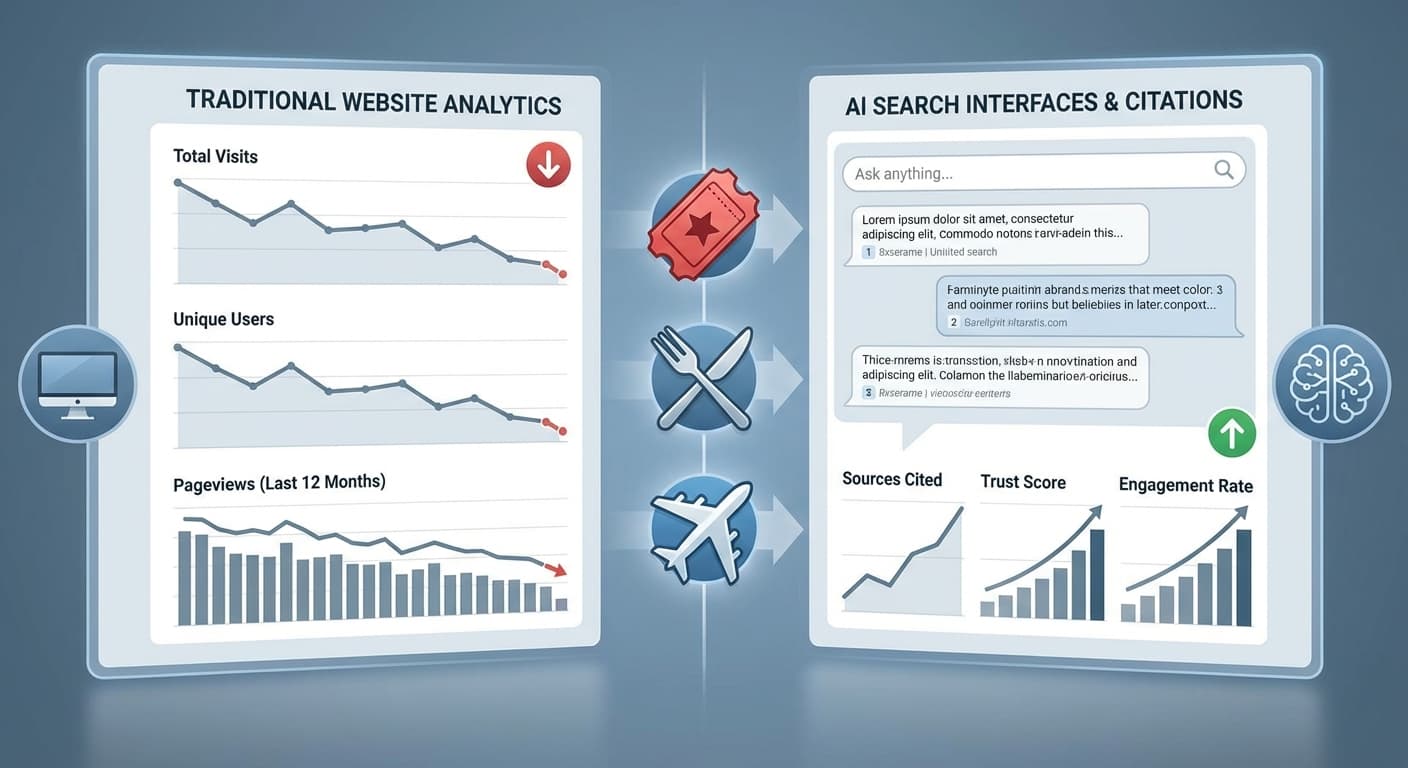
The numbers are staggering. According to recent industry data, AI search now accounts for 35% of all queries across platforms, with ChatGPT processing over 600 million weekly searches and Perplexity handling 150 million monthly queries. But Google's AI Overview expansion has fundamentally shifted how content discovery works.
Here's what's changed:
The message is clear: static content is dead content in the AI search era.
Understanding Google's 90-Day Freshness Window
What Counts as a "Freshness Signal"
Google's algorithm looks for several indicators when determining content freshness:
The 90-Day Rule Explained
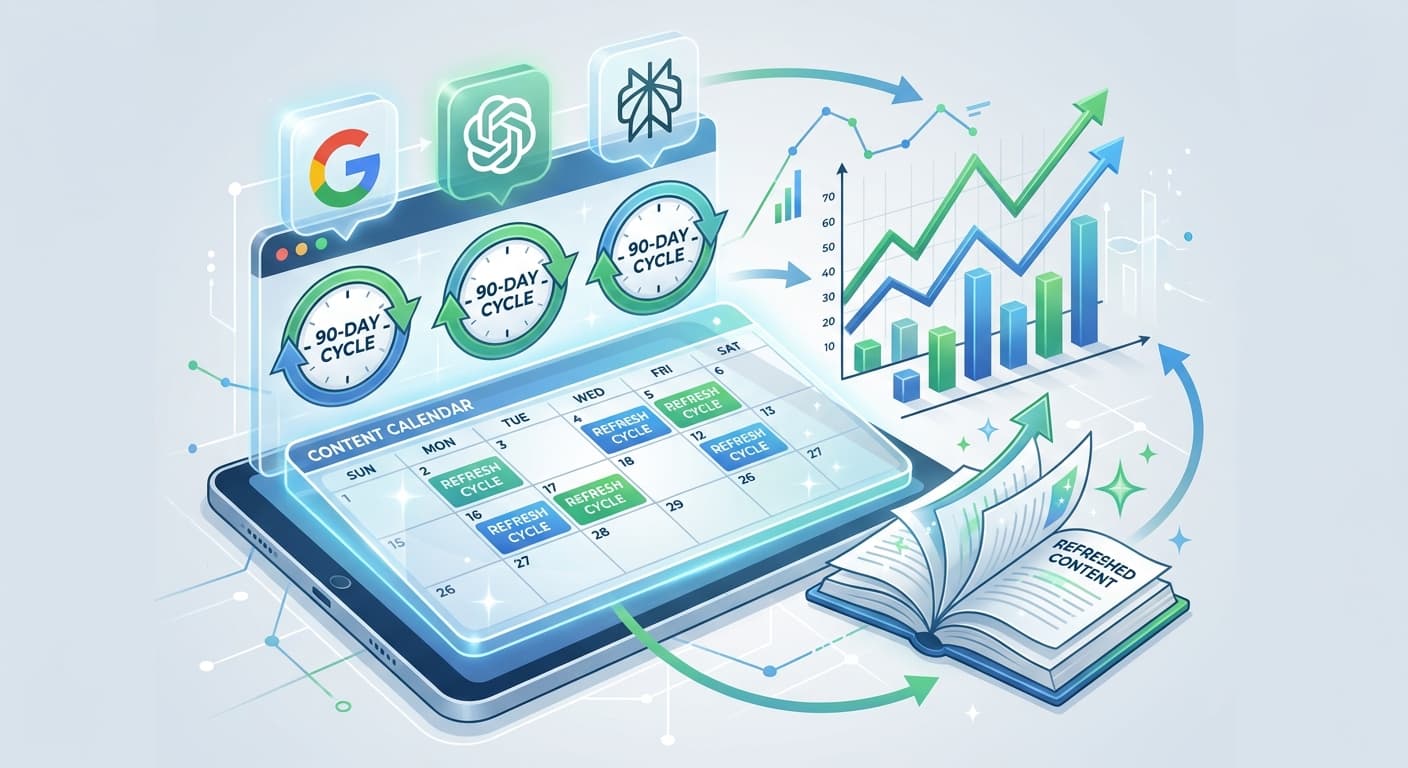
Content that hasn't shown freshness signals within 90 days faces significant penalties in AI Overview inclusion. This doesn't mean rewriting everything—strategic updates can maintain your freshness score without starting from scratch.
Building Your Content Refresh Strategy
Step 1: Audit Your Current Content Portfolio
Before diving into refresh mode, you need a clear picture of what you're working with:
High-Priority Content (Refresh First):
Medium-Priority Content:
Low-Priority Content:
Step 2: Create a Refresh Calendar
Successful content refresh requires systematic planning:
Weekly Refreshes:
Monthly Refreshes:
Quarterly Refreshes:
Step 3: Implement Strategic Refresh Techniques
The Quick Win Approach (15-30 minutes per page):
The Deep Refresh Approach (2-4 hours per page):
The Complete Overhaul (1-2 days per page):
Optimizing Content for AI Citation
Simply refreshing content isn't enough—you need to optimize for AI engines to actually find and cite your updates.
Structure for AI Consumption
Citation-Worthy Content Elements
While manually tracking and optimizing content refresh can be overwhelming, tools like Citescope Ai make this process manageable by analyzing your content's AI readiness through their GEO Score system and providing one-click optimization suggestions specifically designed for AI search engines.
Measuring Refresh Strategy Success
Key Performance Indicators
Track these metrics to gauge your refresh strategy effectiveness:
AI Visibility Metrics:
Traditional SEO Metrics:
Content Performance Metrics:
Tools and Technologies
Essential Refresh Tools:
Common Refresh Strategy Mistakes to Avoid
Advanced Refresh Tactics for 2026
AI-First Content Architecture
Structure your refresh strategy around how AI engines consume information:
Competitive Refresh Intelligence
Monitor competitor refresh patterns to identify opportunities:
How Citescope Ai Helps Streamline Your Content Refresh Strategy
Managing a comprehensive content refresh strategy across hundreds or thousands of pages can quickly become overwhelming. Citescope Ai addresses this challenge with several key features:
GEO Score Analysis: Get instant feedback on how AI-ready your content is across five critical dimensions, helping you prioritize which pieces need immediate refresh attention.
Citation Tracking: Monitor in real-time when your refreshed content gets cited by ChatGPT, Perplexity, Claude, and Gemini, so you can see the direct impact of your refresh efforts.
AI Rewriter Tool: Transform existing content with one-click optimization specifically designed for AI search engines, dramatically reducing the time needed for strategic refreshes.
Multi-Format Export: Download your optimized content in multiple formats (Markdown, HTML, WordPress blocks) to streamline your publishing workflow across different platforms.
With pricing starting at just $39/month for the Pro plan (or try the free tier with 3 optimizations monthly), Citescope Ai makes enterprise-level AI optimization accessible to content creators of all sizes.
Ready to Optimize for AI Search?
Google's AI Overview expansion isn't slowing down, and the 90-day freshness window is now a permanent fixture of search. Content creators who adapt their refresh strategies now will dominate AI search results, while those who delay risk becoming invisible.
Citescope Ai takes the guesswork out of content refresh by providing AI-specific optimization insights and citation tracking across all major AI search engines. Start with our free tier to test the platform with 3 content optimizations, then scale up as you see results.
Ready to future-proof your content strategy? Try Citescope Ai free today and watch your AI search visibility soar.