How to Build a Conversion Tracking System When AI Search Agents Complete Transactions Without Sending Users to Your Website
How to Build a Conversion Tracking System When AI Search Agents Complete Transactions Without Sending Users to Your Website
By 2026, over 40% of purchases are initiated through AI search interactions, and here's the shocking part: 65% of those transactions never result in a website visit. AI agents like ChatGPT's browsing mode, Perplexity's shopping features, and Claude's research capabilities are increasingly completing entire customer journeys—from discovery to purchase—without ever sending users to your site.
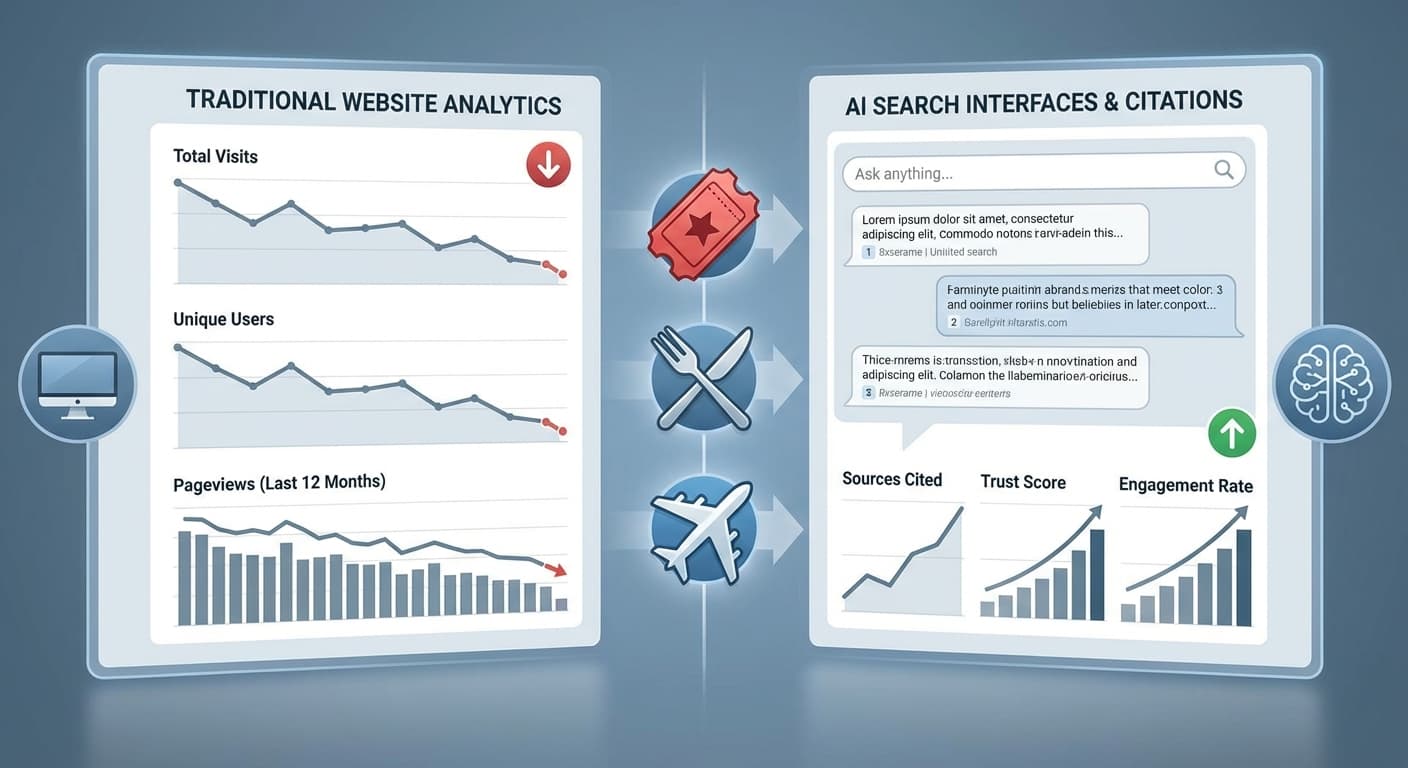
If your conversion tracking still relies on traditional website analytics, you're missing the majority of your AI-driven sales. The question isn't whether AI agents will disrupt your conversion funnel—it's whether you'll adapt your tracking systems in time to capture this invisible revenue stream.
The New Reality: AI Agents as Transaction Facilitators
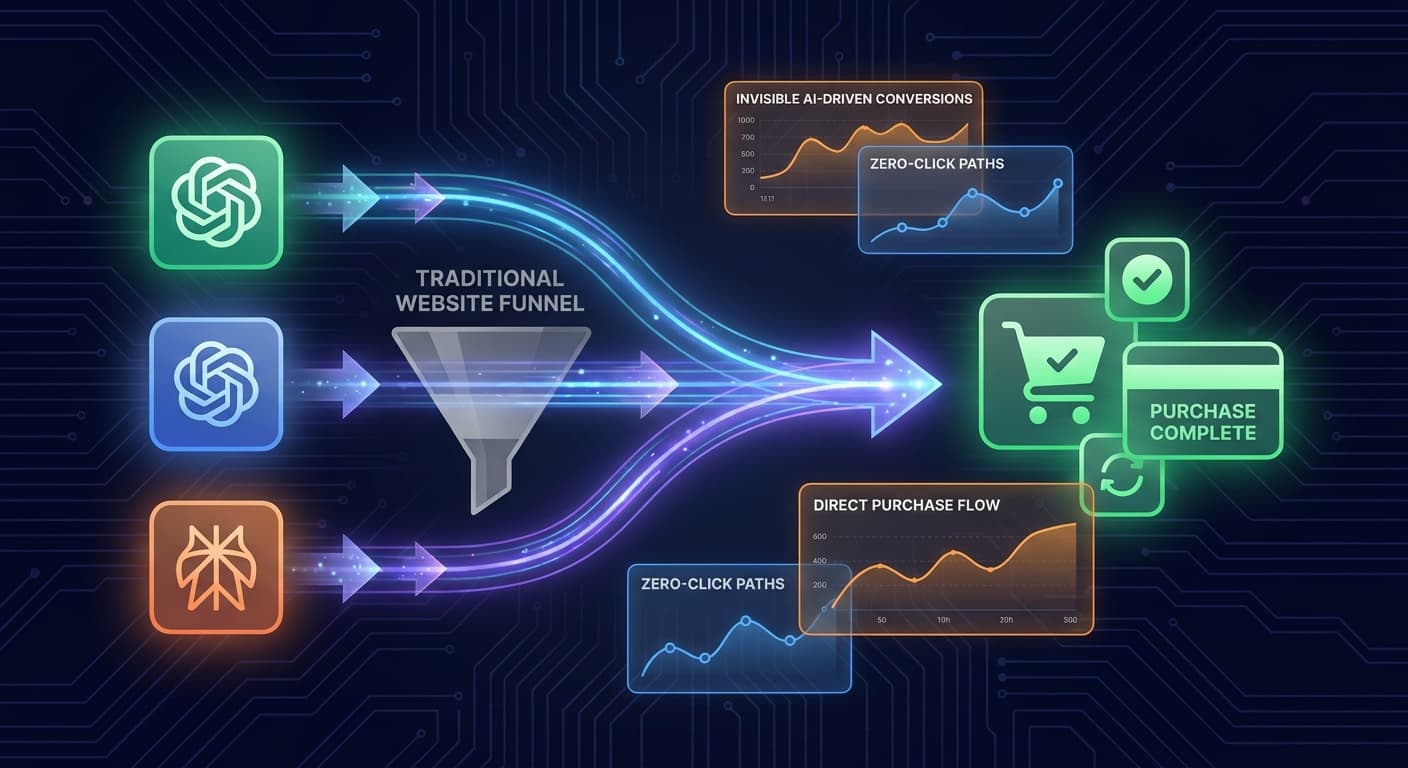
The traditional conversion path looked like this: Search → Click → Website → Purchase. Today's AI-powered journey often looks like this: AI Query → Agent Research → Direct Transaction Completion → No Website Visit.
Current statistics paint a clear picture:
This shift fundamentally breaks conventional attribution models. When a customer asks ChatGPT "Find me the best project management software for teams under 20 people" and the AI directly facilitates a Slack purchase without the user ever visiting Slack's website, how do you track that conversion?
Understanding the AI Attribution Gap
What Traditional Analytics Miss
Google Analytics, Adobe Analytics, and similar tools were built for a click-based web. They track:
What they don't capture:
The Invisible Conversion Problem
Consider these scenarios happening millions of times daily:
In each case, a conversion occurred, but traditional tracking systems show zero attribution.
Building Your AI-First Conversion Tracking System
1. Implement Multi-Touch Attribution Beyond Websites
Set Up API-Based Tracking
Create tracking endpoints that AI agents can ping when they facilitate transactions:
POST /api/ai-attribution
{
"agent": "chatgpt",
"query_context": "project management software comparison",
"recommendation_made": true,
"conversion_value": 49.99,
"attribution_id": "ai_conv_2026_001"
}
Leverage UTM Parameters for AI Referrals
When AI agents do send traffic, use specific UTM codes:
utm_source=ai_agentutm_medium=chatgpt|perplexity|claudeutm_campaign=ai_recommendationutm_content=query_context2. Deploy Citation-to-Conversion Mapping
Track Content Citations as Conversion Indicators
When AI agents cite your content during purchase recommendations, that's a leading conversion indicator. Monitor:
Tools like Citescope Ai can help you track when your content gets cited by AI agents, providing crucial data for attribution modeling.
Create Citation Scoring Systems
Assign conversion probability scores based on citation patterns:
3. Implement Conversational Attribution Tags
Brand Mention Tracking
Use social listening tools enhanced for AI conversations to track when your brand gets mentioned in AI-powered purchase discussions:
Query Pattern Analysis
Analyze the types of queries that lead to AI-facilitated purchases of your products:
4. Build Direct AI Agent Partnerships
API Integrations with AI Platforms
Where possible, establish direct integrations:
Revenue Sharing Arrangements
Negotiate transparent attribution through revenue-sharing models where AI platforms provide conversion data in exchange for commission percentages.
5. Create AI-Optimized Landing Pages for Attribution
AI-Specific Landing Pages
Create dedicated landing pages that AI agents can reference:
/ai-recommendations/project-management/chatgpt-users/crm-comparison/perplexity-shoppers/sustainable-productsThese pages serve dual purposes:
Schema Markup for AI Attribution
Implement structured data that AI agents can parse for attribution:
{
"@context": "https://schema.org",
"@type": "Product",
"aiRecommendationScore": 9.2,
"aiCompatible": true,
"conversionTrackingId": "ai_track_2026_product_001"
}
Advanced Attribution Techniques
Customer Journey Reconstruction
Post-Purchase Attribution Surveys
Add AI-specific questions to your post-purchase surveys:
Behavioral Pattern Matching
Analyze customer behavior patterns that suggest AI-driven discovery:
Cross-Platform Attribution Modeling
Unified Customer Identity
Implement customer data platforms (CDPs) that can connect:
Probabilistic Attribution
Use machine learning to assign conversion probability scores based on:
How Citescope Ai Helps Solve AI Attribution
Citescope Ai's Citation Tracker provides crucial data for building your AI attribution system. By monitoring when your content gets cited by ChatGPT, Perplexity, Claude, and Gemini, you can:
The platform's AI Rewriter also helps you create content that AI agents are more likely to cite during purchase recommendations, increasing your invisible conversion opportunities.
Implementation Roadmap
Phase 1: Foundation (Weeks 1-2)
Phase 2: Integration (Weeks 3-6)
Phase 3: Optimization (Weeks 7-12)
Phase 4: Scale (Months 4-6)
Measuring Success in the AI Attribution Era
Key Metrics to Track
Benchmarking Performance
Industry benchmarks for 2026:
The Future of AI-First Attribution
By 2027, analysts predict that 60% of all B2B software purchases will be initiated through AI agents. Companies that build robust AI attribution systems now will have a significant competitive advantage in understanding and optimizing their true conversion performance.
The businesses thriving in this new landscape won't be those with the best websites—they'll be the ones with the best AI visibility and the most sophisticated attribution systems to track their invisible conversions.
Ready to Optimize for AI Search?
Don't let AI-driven conversions remain invisible in your analytics. Citescope Ai helps you track citations, optimize content for AI agents, and build the attribution data you need to understand your true conversion performance. Start with our free tier and get 3 content optimizations to see how AI visibility can transform your conversion tracking. Try Citescope Ai free today and turn your invisible AI conversions into visible business growth.