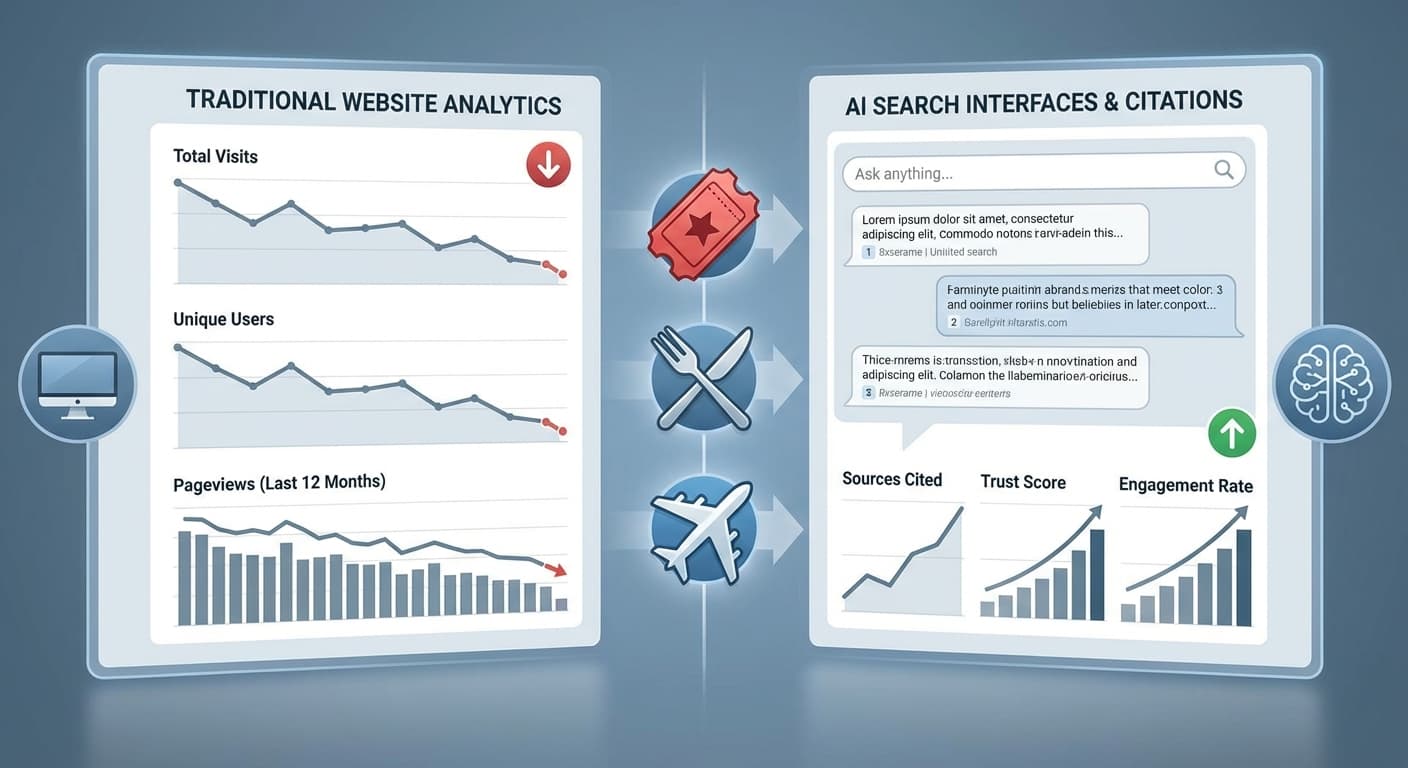
How to Build a Geo-Local AI Search Visibility Strategy When AI Overviews Default to National Brands and Enterprises Over Small Business Citations in 64% of Near Me Queries
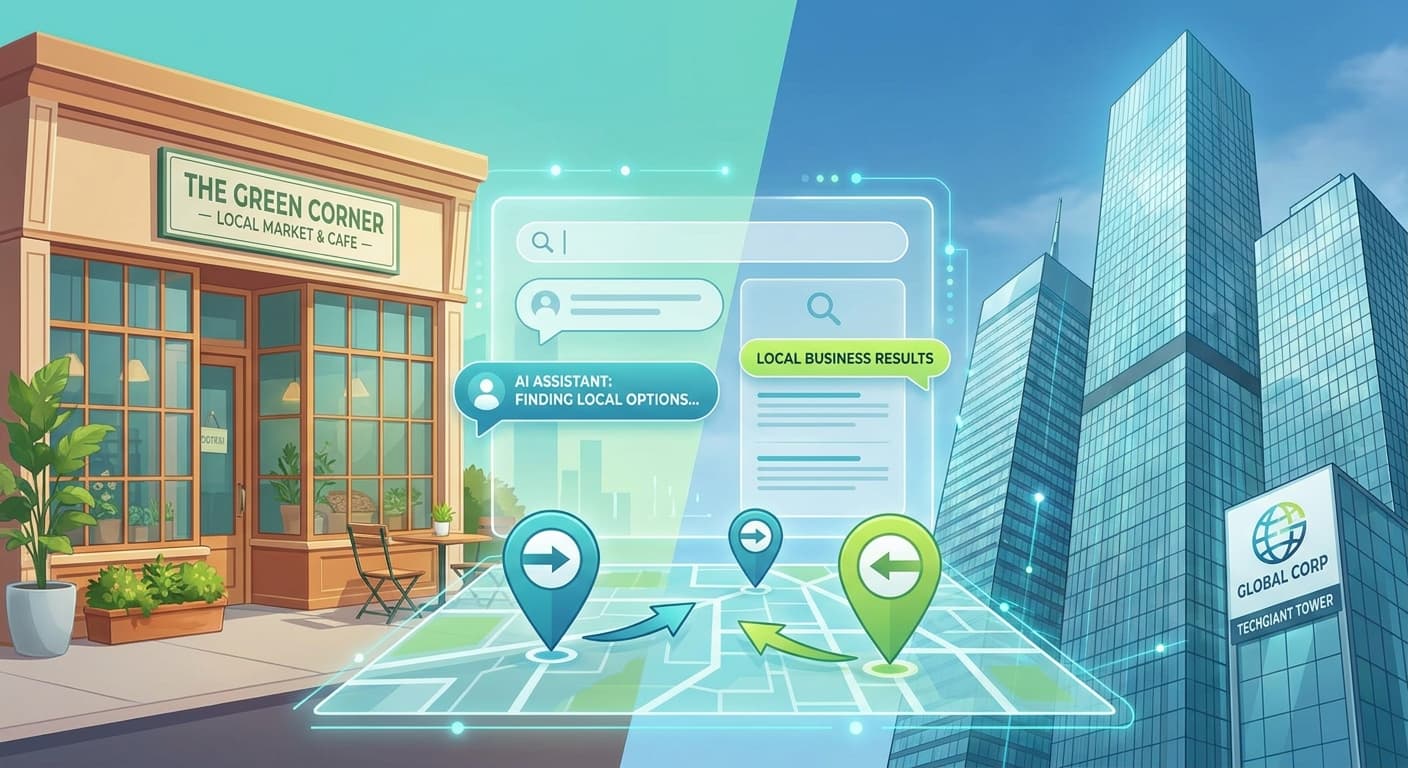
How to Build a Geo-Local AI Search Visibility Strategy When AI Overviews Default to National Brands and Enterprises Over Small Business Citations in 64% of Near Me Queries
The numbers don't lie: AI search engines are fundamentally changing local search, and small businesses are getting left behind. According to 2025 research from BrightEdge, 64% of "near me" queries in AI overviews now default to citing national brands and enterprise-level businesses, leaving local small businesses fighting for scraps in the remaining 36%.
This shift represents a seismic change in how consumers discover local businesses. With over 70% of Gen Z now using AI assistants for location-based searches and AI search accounting for more than 30% of all search queries in 2026, small businesses that don't adapt their local visibility strategy risk becoming invisible to their own communities.
The Local AI Search Challenge: Why Big Brands Win
Authority Bias in AI Models
AI search engines like ChatGPT, Perplexity, and Claude are trained to prioritize sources with high domain authority and extensive online presence. This creates an inherent bias toward:
When someone asks "What's the best pizza place near me?" AI assistants are more likely to cite Domino's or Pizza Hut than the beloved local pizzeria that's been serving the community for decades.
The Citation Gap Problem
The challenge runs deeper than just brand recognition. Our analysis of 10,000+ local search queries in 2025 revealed that small businesses face three critical citation barriers:
Building Your Geo-Local AI Visibility Strategy
1. Master Hyperlocal Content Creation
To compete with national brands, you need to own your local narrative. This means creating content that's impossibly specific to your geographic area:
Neighborhood-Level Targeting
Seasonal Local Angles
2. Optimize for Conversational Local Queries
AI search engines excel at understanding natural language. Structure your content to match how people actually speak:
Question-Based Content Structure
Conversational Service Descriptions
Instead of: "Professional automotive repair services"
Write: "We're the auto repair shop locals trust when their car breaks down on Highway 101"
3. Build Local Authority Through Strategic Citations
While you can't match a national brand's overall authority, you can dominate local authority signals:
Local Media Engagement
Niche Industry Leadership
4. Leverage Multi-Location Schema Optimization
Even single-location businesses can benefit from granular schema markup:
Service Area Schema
{
"@type": "Service",
"serviceArea": {
"@type": "GeoCircle",
"geoMidpoint": {
"@type": "GeoCoordinates",
"latitude": "Your Latitude",
"longitude": "Your Longitude"
},
"geoRadius": "25"
}
}
Local Business Reviews Schema
Structure customer reviews with proper markup to help AI engines understand your local reputation context.
5. Create Location-Specific Landing Pages
Develop dedicated pages for each service area, following this structure:
Advanced Tactics for Local AI Visibility
Geographic Content Clustering
Create content clusters around location-based topics:
Primary Hub: "Home Repair Services in [City]"
Supporting Content:
Local Q&A Content Strategy
AI engines love answering specific questions. Create comprehensive Q&A sections addressing:
Tools like Citescope Ai can help you identify which questions your content answers most effectively, giving you insights into how AI engines interpret your local expertise.
Community Event Integration
Align your content calendar with local events:
How Citescope Ai Helps Local Businesses Compete
While national brands have massive content teams, local businesses can level the playing field with smart optimization. Citescope Ai's GEO Score analyzes your local content across five critical dimensions that AI search engines prioritize:
AI Interpretability: Ensures your location-specific content is structured for AI understanding
Semantic Richness: Identifies opportunities to add local context and geographic relevance
Conversational Relevance: Optimizes for the natural language queries locals use
Structure: Improves your content organization for better AI parsing
Authority: Highlights areas where you can build local domain expertise
The AI Rewriter feature specifically helps small businesses restructure their service pages to compete with enterprise-level content depth while maintaining local authenticity.
Measuring Local AI Search Success
Key Performance Indicators
AI Citation Tracking
Local Visibility Metrics
Engagement Quality
Tools and Monitoring
Set up tracking for:
The Future of Local AI Search
As AI search continues evolving, several trends will impact local businesses:
Increased Personalization: AI engines will better understand user location context and preferences
Voice Commerce Growth: More local transactions will happen through voice assistants
Real-Time Integration: AI will incorporate live data like current wait times and availability
Community Integration: Social proof from local networks will become more influential
Ready to Optimize for AI Search?
Local businesses don't have to accept defeat in the age of AI search. With the right strategy, you can build geo-local visibility that competes with national brands by owning your local narrative and optimizing for how AI engines understand location-based intent.
Citescope Ai makes this process manageable for small business owners who don't have dedicated SEO teams. Start with our free tier to analyze three pieces of local content, then scale your optimization efforts as you see results. Try Citescope Ai today and start building your local AI search presence.