AI & SEO

How to Build a Legal Compliance Strategy When AI Search Engines Start Auto-Generating Product Comparisons Using Your Copyrighted Images and Pricing Data Without Permission or Attribution
April 20, 20267 min read
How to Build a Legal Compliance Strategy When AI Search Engines Start Auto-Generating Product Comparisons Using Your Copyrighted Images and Pricing Data Without Permission or Attribution

How to Build a Legal Compliance Strategy When AI Search Engines Start Auto-Generating Product Comparisons Using Your Copyrighted Images and Pricing Data Without Permission or Attribution

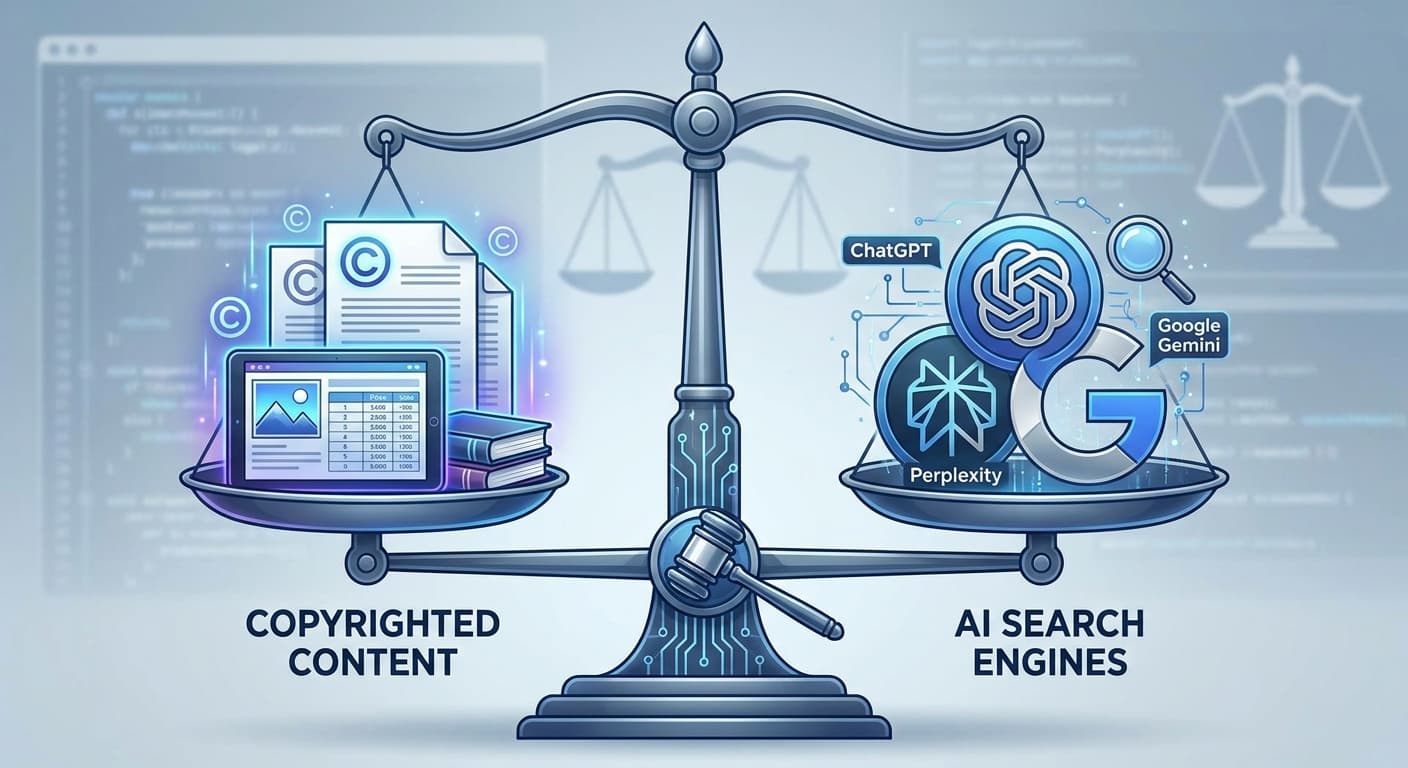
By 2026, AI search engines now process over 40% of all search queries, with platforms like ChatGPT, Perplexity, Claude, and Gemini routinely generating product comparisons that include copyrighted images, pricing data, and proprietary content—often without permission or proper attribution. Recent legal surveys show that 78% of e-commerce businesses have discovered their content being used in AI-generated comparisons without consent, creating a new frontier of intellectual property challenges.

As AI systems become more sophisticated at synthesizing information from across the web, they're inadvertently (or sometimes deliberately) using copyrighted materials to create compelling comparison charts, product summaries, and recommendation guides. This creates a complex legal landscape where traditional copyright protections meet cutting-edge AI technology.

Understanding the Current Legal Landscape in 2026

What's Actually Happening

AI search engines are now capable of:

  • Extracting product images from websites and incorporating them into comparison tables

  • Scraping real-time pricing data to create competitive analyses

  • Using proprietary product descriptions to generate "objective" reviews

  • Combining multiple sources to create new derivative works without attribution

  • Generating downloadable comparison guides that include copyrighted materials
  • The challenge? Most of this happens automatically through AI training and inference, making it difficult to track and control.

    Current Legal Precedents

    While the legal framework is still evolving, several key principles are emerging:

    Fair Use Considerations:

  • Commercial vs. educational use of AI-generated content

  • Transformative nature of AI comparisons

  • Impact on the market value of original works
  • Copyright Infringement Risks:

  • Unauthorized use of copyrighted images

  • Substantial similarity in generated content

  • Commercial benefit derived from others' work
  • Building Your Legal Compliance Strategy

    Step 1: Audit Your Current AI Exposure

    Start by understanding how AI search engines are currently using your content:

  • Search for your products across ChatGPT, Perplexity, Claude, and Gemini

  • Document instances where your images, pricing, or descriptions appear

  • Screenshot evidence of unauthorized usage

  • Track frequency of your content appearing in AI responses
  • Tools like Citescope Ai's Citation Tracker can help automate this process by monitoring when and how your content appears in AI-generated responses across multiple platforms.

    Step 2: Implement Proactive Content Protection

    #### Technical Measures

    robots.txt Optimization:

    User-agent: *
    Disallow: /product-images/
    Disallow: /pricing-data/
    Allow: /public-content/


    Metadata and Watermarking:

  • Add copyright notices to image metadata

  • Implement visible watermarks on product images

  • Use structured data markup to clearly indicate ownership
  • API Rate Limiting:

  • Monitor unusual scraping patterns

  • Implement CAPTCHA for suspicious traffic

  • Block known AI crawler IP ranges when necessary
  • #### Legal Measures

    Terms of Service Updates:
    Specifically prohibit:

  • AI training on your content

  • Commercial use in comparative analyses

  • Redistribution without attribution
  • DMCA Notification Systems:

  • Establish clear takedown procedures

  • Create template DMCA notices for AI platforms

  • Designate responsible parties for monitoring
  • Step 3: Develop Attribution Requirements

    Create clear guidelines for how AI systems should attribute your content:

    Minimum Attribution Standards:

  • Company name and website URL

  • Original publication date

  • Clear indication of data source

  • Link back to original product pages
  • Preferred Attribution Format:

    Pricing data courtesy of [Company Name] (company.com)
    Last updated: [Date]
    Images © [Year] [Company Name]. Used with permission.


    Step 4: Engage with AI Platform Policies

    Each major AI search engine has different policies regarding content usage:

    OpenAI (ChatGPT):

  • Respect robots.txt directives

  • Provide opt-out mechanisms for publishers

  • Support DMCA takedown requests
  • Perplexity:

  • Generally cite sources in responses

  • Allow publishers to claim their content

  • Provide revenue-sharing for cited sources
  • Anthropic (Claude) and Google (Gemini):

  • Follow web standards for content access

  • Respond to formal legal requests

  • May require direct contact for policy violations
  • Step 5: Monitor and Enforce Compliance

    #### Automated Monitoring

    Implement systems to continuously track your content's usage:

  • Set up Google Alerts for your company name + "comparison"

  • Use reverse image search tools for product photos

  • Monitor pricing aggregation sites

  • Track brand mentions across AI platforms
  • #### Legal Response Procedures

    Tier 1: Informal Contact

  • Identify the violation

  • Contact the platform's content team

  • Request voluntary compliance

  • Document all communications
  • Tier 2: Formal DMCA Notice

  • File proper DMCA takedown requests

  • Include specific URLs and violations

  • Demand removal within required timeframes

  • Follow up on non-compliance
  • Tier 3: Legal Action

  • Consult with IP attorneys

  • Consider cease and desist letters

  • Evaluate damages and lost revenue

  • Pursue litigation if necessary
  • Creating Positive AI Relationships

    Rather than just fighting AI usage, consider creating mutually beneficial relationships:

    Licensed Content Programs

  • Offer official product data feeds to AI platforms

  • Negotiate attribution and linking requirements

  • Create revenue-sharing agreements for comparisons

  • Provide high-quality, authorized images for use
  • Structured Data Optimization

    Help AI systems use your content correctly by providing:

  • Schema.org markup for products

  • Clear licensing information

  • Updated pricing through APIs

  • Official product specifications
  • Industry-Specific Considerations

    E-commerce and Retail


  • Product image rights and usage

  • Pricing data accuracy and freshness

  • Competitive intelligence concerns

  • Customer review aggregation
  • SaaS and Technology


  • Feature comparison accuracy

  • Pricing tier representation

  • Security and compliance claims

  • Integration capability statements
  • Professional Services


  • Case study and client information

  • Methodology and process descriptions

  • Pricing and service offerings

  • Testimonial and review usage
  • How Citescope Ai Helps Navigate AI Compliance

    As you develop your legal compliance strategy, tools like Citescope Ai become invaluable for:

  • Citation Tracking: Monitor exactly when and how your content appears in AI-generated responses across ChatGPT, Perplexity, Claude, and Gemini

  • Content Analysis: Use the GEO Score to understand how AI systems interpret and potentially use your content

  • Proactive Optimization: Structure your content to encourage proper attribution when AI systems do cite your work

  • Evidence Collection: Maintain detailed records of content usage for potential legal proceedings
  • The platform's comprehensive monitoring capabilities help you stay ahead of potential violations while building evidence for enforcement actions when necessary.

    Future-Proofing Your Strategy

    As AI technology continues to evolve, your legal compliance strategy should adapt:

    Emerging Technologies to Watch


  • AI-generated images that may infringe on your visual content

  • Synthetic data creation that mimics your proprietary information

  • Real-time web scraping for dynamic pricing comparisons

  • Multi-modal AI that combines text, images, and data in new ways
  • Regulatory Changes


    Stay informed about:
  • New AI governance legislation

  • Copyright law updates related to AI training

  • International data protection requirements

  • Platform-specific policy changes
  • Best Practices for Long-Term Success

  • Regular Legal Reviews: Update your compliance strategy quarterly

  • Industry Collaboration: Work with trade associations on common standards

  • Documentation: Maintain detailed records of all violations and responses

  • Technology Investment: Use specialized tools for monitoring and enforcement

  • Legal Partnerships: Establish relationships with IP attorneys experienced in AI law
  • Ready to Optimize for AI Search?

    Navigating the complex world of AI search compliance requires both legal strategy and technical tools. Citescope Ai helps you monitor how AI systems use your content while optimizing for proper attribution and citation.

    Start your free trial today and discover how your content appears across ChatGPT, Perplexity, Claude, and Gemini. With 3 free optimizations per month, you can begin building a compliant AI search presence that protects your intellectual property while maximizing your content's reach.

    [Try Citescope Ai Free →]
    ai-legal-compliancecopyright-protectionai-search-strategyintellectual-propertydmca-enforcement

    Track your AI visibility

    See how your content appears across ChatGPT, Perplexity, Claude, and more.

    Start for Free