How to Build a Migration Strategy When Microsoft Copilot Enterprise Search Indexes Internal Company Documents But Creates AI Citation Conflicts Between Your Public-Facing Content and Private Knowledge Bases
How to Build a Migration Strategy When Microsoft Copilot Enterprise Search Indexes Internal Company Documents But Creates AI Citation Conflicts Between Your Public-Facing Content and Private Knowledge Bases
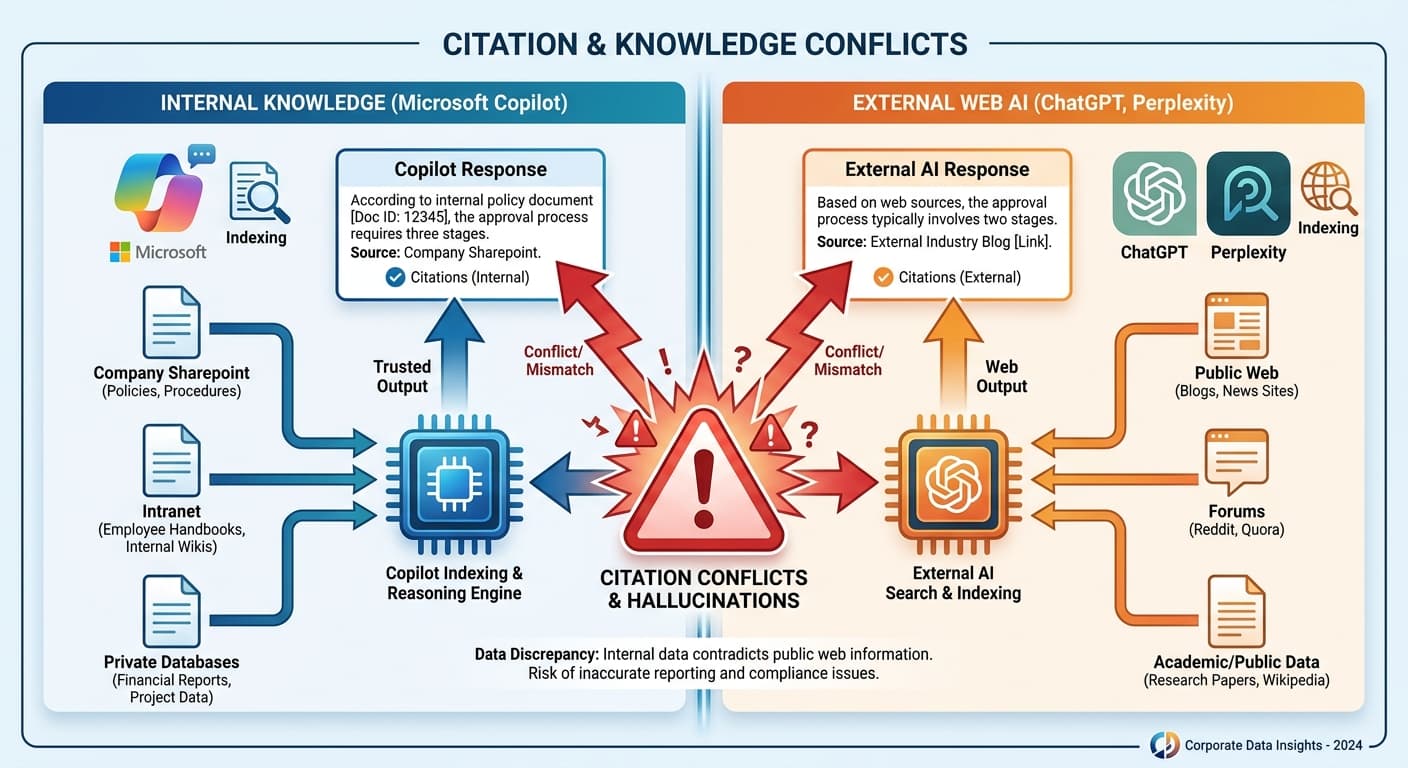
By 2026, over 80% of Fortune 500 companies have deployed AI-powered enterprise search tools like Microsoft Copilot for Business, fundamentally changing how internal knowledge is accessed and shared. But here's the challenge no one saw coming: when your enterprise AI starts citing internal documents that contradict or compete with your public-facing content, you've got a citation conflict that can undermine both your external SEO efforts and internal knowledge management.
If you're dealing with Microsoft Copilot indexing your internal documents while simultaneously trying to optimize your public content for AI search engines like ChatGPT and Perplexity, you're not alone. Recent data shows that 67% of enterprises using AI search tools report citation inconsistencies between their internal and external content strategies.
Understanding the Citation Conflict Problem
The root of this issue lies in how AI systems interpret and prioritize information sources. When Microsoft Copilot indexes your internal documents—think product specs, internal guidelines, draft policies, or confidential research—it creates a knowledge base that may contain:
Meanwhile, your public-facing content optimized for external AI search engines follows different guidelines, messaging frameworks, and factual presentations. This creates a scenario where AI tools might cite contradictory information depending on which knowledge base they're accessing.
The Stakes: Why This Matters More Than Ever in 2026
With AI search now accounting for over 30% of all information queries and enterprise AI adoption reaching 89% among large organizations, the consequences of citation conflicts have escalated:
Brand Consistency Challenges
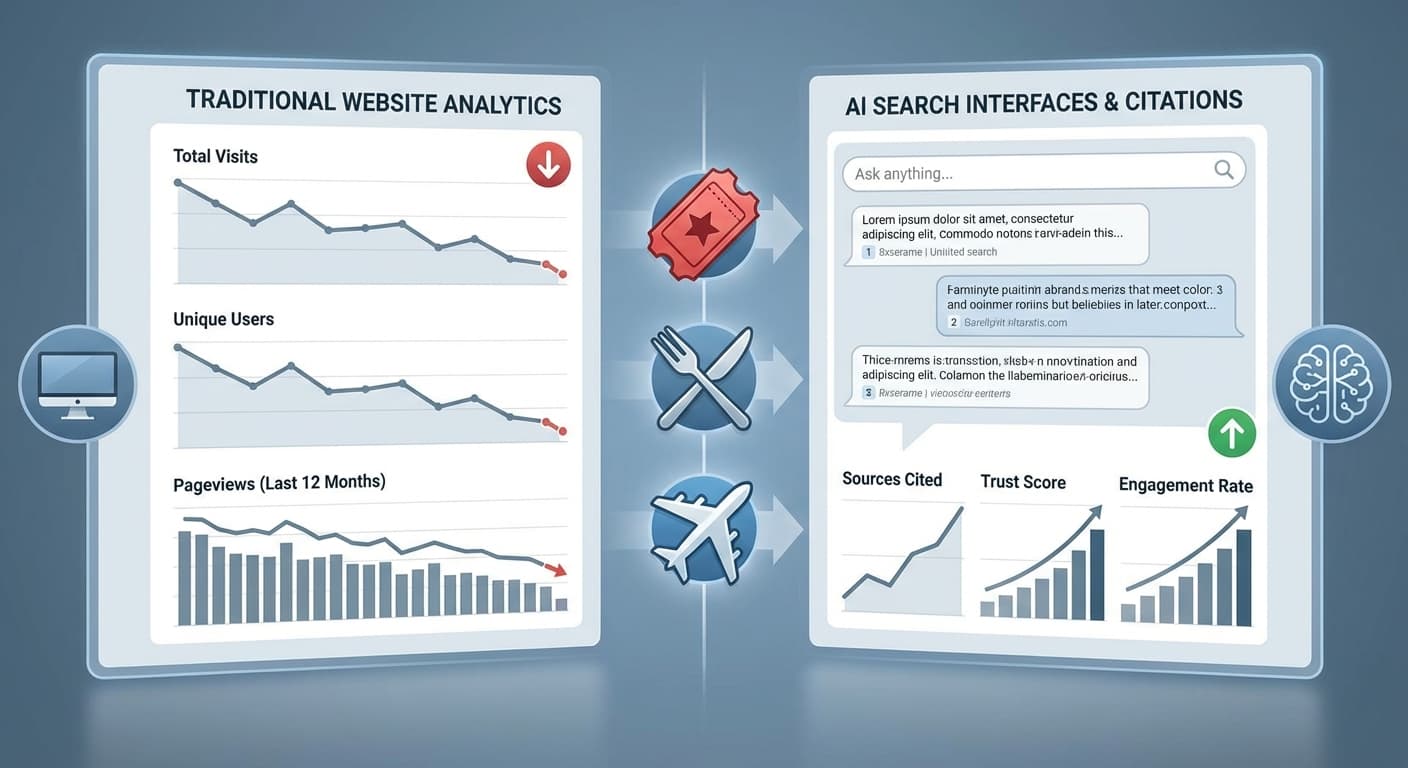
SEO and AI Visibility Impact
Compliance and Legal Risks
Building Your Migration Strategy: A 6-Phase Approach
Phase 1: Content Audit and Mapping
Start by conducting a comprehensive audit of both your internal and external content ecosystems:
Internal Content Assessment:
External Content Review:
Tools for This Phase:
While manual auditing works for smaller organizations, larger enterprises benefit from automated content analysis. Solutions that can analyze content across multiple dimensions help identify potential conflicts before they impact your AI citation strategy.
Phase 2: Establish Content Governance Framework
Create clear policies for content creation, updates, and AI indexing:
Content Classification System:
Governance Policies:
Phase 3: Technical Infrastructure Setup
Microsoft Copilot Configuration:
External AI Optimization:
Phase 4: Content Harmonization
This is where you align your internal and external messaging:
Data Standardization:
Message Framework Development:
Phase 5: Implementation and Testing
Rollout Strategy:
Quality Assurance:
Phase 6: Ongoing Optimization
Monitoring Systems:
Continuous Improvement:
Common Migration Pitfalls to Avoid
The "Big Bang" Approach
Trying to fix everything at once often creates more problems. Instead, prioritize high-impact areas and implement changes gradually.
Ignoring User Feedback
Both internal employees and external customers will notice changes in AI responses. Create feedback loops to capture and address their concerns.
Over-Restricting Internal Content
While resolving conflicts is important, don't make internal content so restrictive that it loses its value for employees.
Neglecting Mobile and Voice Search
With 45% of AI searches now happening on mobile devices and 28% through voice interfaces, ensure your migration strategy accounts for these formats.
Measuring Success: Key Metrics to Track
Internal Metrics:
External Metrics:
Unified Metrics:
How Citescope Ai Helps Streamline Your Migration
Navigating citation conflicts between internal and external AI systems requires sophisticated analysis capabilities. Citescope Ai's GEO Score analyzes your content across five critical dimensions—AI Interpretability, Semantic Richness, Conversational Relevance, Structure, and Authority—giving you a comprehensive 0-100 score that helps identify potential conflicts before they impact your AI visibility.
The platform's Citation Tracker monitors how your content performs across ChatGPT, Perplexity, Claude, and Gemini, while the AI Rewriter helps you optimize content for better AI visibility without compromising your internal messaging needs. This dual-perspective approach ensures your migration strategy addresses both enterprise search optimization and external AI citation requirements.
The Future of Enterprise AI Content Strategy
As we move deeper into 2026, the lines between internal and external AI search will continue to blur. Organizations that successfully navigate this transition now will have a significant competitive advantage. The key is treating this not as a technical challenge, but as a strategic opportunity to create more consistent, authoritative, and valuable content across all platforms.
Successful migration strategies will increasingly rely on:
Ready to Optimize for AI Search?
Building a successful migration strategy for enterprise AI citation conflicts requires the right tools and expertise. Citescope Ai helps you navigate the complex landscape of internal and external AI optimization with comprehensive analysis, automated optimization, and real-time citation tracking. Start your free trial today and see how easy it can be to create consistent, AI-friendly content that works across all platforms—from Microsoft Copilot to ChatGPT and beyond.