How to Build a Multi-Model AI Search Preference Strategy When Enterprise Buyers Use Different AI Assistants
How to Build a Multi-Model AI Search Preference Strategy When Enterprise Buyers Use Different AI Assistants
Picture this: Your enterprise client just closed a deal with a competitor because while your brand appeared prominently in Claude during their research phase, you completely vanished from Gemini results when they reached final purchase evaluation. Sound familiar? You're not alone.
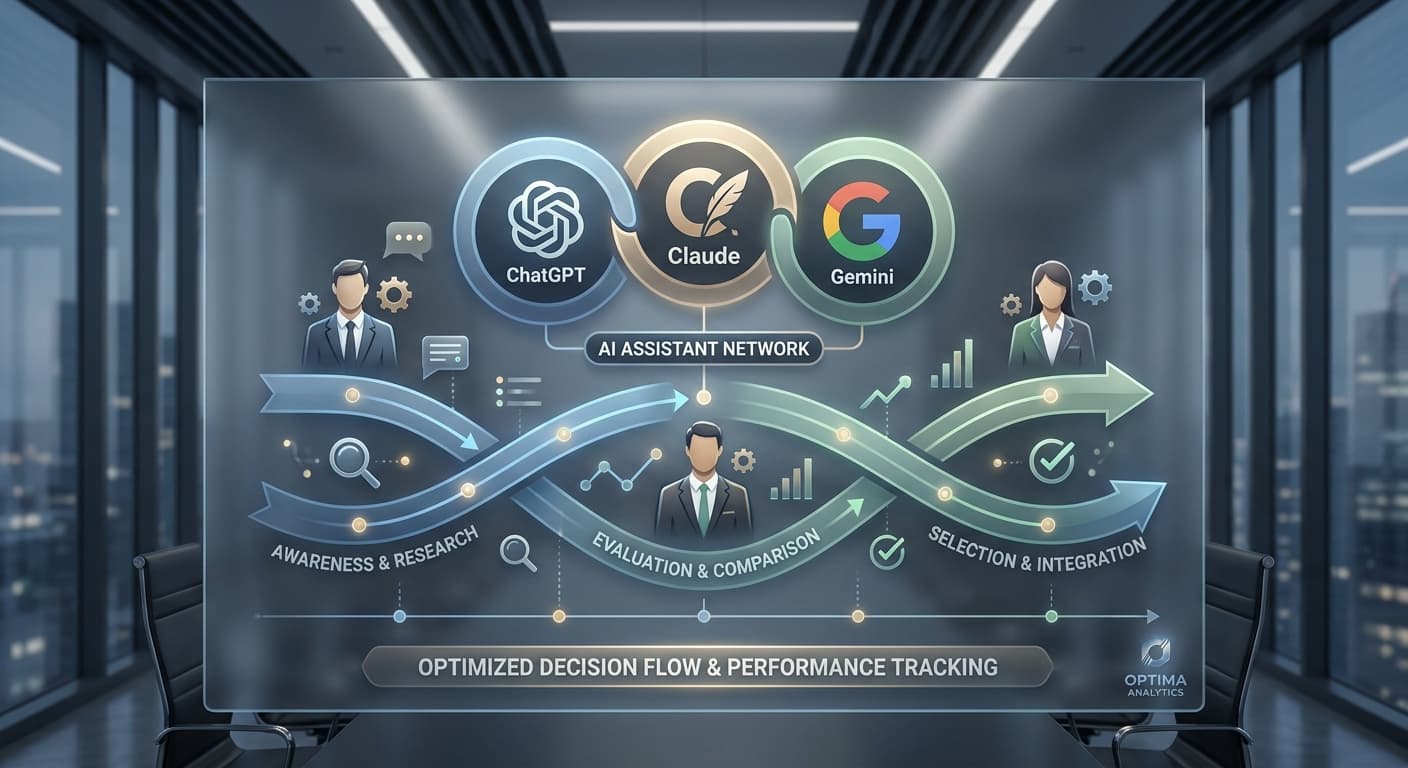
By 2026, 73% of B2B buyers use multiple AI assistants throughout their purchasing journey, with different models dominating different decision stages. Research shows that while ChatGPT leads initial discovery (41% market share), Claude dominates technical evaluation (38%), and Gemini increasingly influences final purchase decisions (34%). This fragmented landscape creates a critical challenge: how do you maintain consistent brand visibility across all AI models when each interprets and prioritizes content differently?
The Multi-Model Reality of Enterprise Buying
Why Enterprise Buyers Switch Between AI Models
Enterprise buyers don't stick to one AI assistant—they strategically switch based on decision stage and information needs:
Discovery Phase (Weeks 1-2)
Evaluation Phase (Weeks 3-6)
Final Decision Phase (Weeks 7-8)
The Citation Gap Problem
Here's where most brands fail: they optimize for one AI model and assume universal visibility. Recent data from enterprise software purchases shows:
This inconsistency costs enterprises an estimated $2.3M annually in lost qualified opportunities.
Understanding Each AI Model's Content Preferences
ChatGPT: The Discovery Specialist
ChatGPT excels at surfacing broad, authoritative content during initial research phases. Its citation algorithm prioritizes:
Optimization Strategy:
Claude: The Technical Evaluator
Claude's strength lies in processing complex, technical content with nuanced analysis. It favors:
Optimization Strategy:
Gemini: The Decision Validator
Google's Gemini focuses on real-world validation and risk mitigation, prioritizing:
Optimization Strategy:
Building Your Multi-Model Strategy Framework
Phase 1: Content Audit Across Models
Before optimizing, understand your current visibility across all three platforms:
Phase 2: Content Architecture Design
Create a content framework that serves all three models effectively:
Universal Elements (include in all content):
Model-Specific Optimizations:
Phase 3: Production and Distribution
Develop a content creation process that ensures multi-model optimization:
Measuring Multi-Model Performance
Key Metrics to Track
Citation Consistency Score:
Decision Stage Coverage:
Competitive Citation Share:
A content optimization platform like Citescope Ai can automate much of this tracking, providing real-time visibility into your citation performance across all major AI models and alerting you when optimization opportunities arise.
Advanced Tracking Strategies
Query Simulation Testing:
Attribution Analysis:
Common Multi-Model Optimization Mistakes
Mistake #1: Single-Model Optimization
Many brands optimize exclusively for ChatGPT due to its market share, ignoring Claude and Gemini entirely. This creates massive blind spots during critical evaluation and decision phases.
Mistake #2: Generic Content Approaches
Treating all AI models the same leads to mediocre performance across all platforms. Each model has distinct preferences that require tailored optimization.
Mistake #3: Inconsistent Brand Messaging
Creating model-specific content without maintaining consistent brand voice and key messaging can confuse buyers and weaken brand authority.
Mistake #4: Neglecting Technical Infrastructure
Failing to implement proper structured data, site architecture, and performance optimization that supports all AI models' crawling and interpretation capabilities.
Implementation Roadmap: Your 90-Day Plan
Days 1-30: Assessment and Planning
Days 31-60: Content Creation and Optimization
Days 61-90: Scale and Measure
How Citescope Ai Helps Manage Multi-Model Complexity
Managing citation performance across multiple AI models manually is nearly impossible at scale. Citescope Ai's platform addresses this challenge through:
Unified Citation Tracking: Monitor your content performance across ChatGPT, Perplexity, Claude, and Gemini from a single dashboard, identifying exactly where you're losing visibility in the buyer journey.
GEO Score Analysis: Get detailed insights into how each piece of content performs across different AI models, with specific recommendations for improving visibility in underperforming platforms.
AI-Powered Optimization: The AI Rewriter analyzes your content and automatically creates variants optimized for each model's preferences while maintaining consistent brand messaging.
Multi-Format Export: Easily deploy optimized content across different platforms and CMSs with support for Markdown, HTML, and WordPress blocks.
Performance Alerting: Receive notifications when your citation performance drops in any model, allowing for rapid response and optimization.
The platform's Enterprise tier includes advanced features like competitive citation tracking, buyer journey mapping, and ROI attribution specifically designed for B2B marketing teams managing complex, multi-touch sales cycles.
The Future of Multi-Model Optimization
As AI search continues evolving, expect even greater model specialization and fragmentation. Early adopters of multi-model strategies are already seeing:
The brands that master multi-model AI search optimization now will have significant competitive advantages as AI adoption accelerates throughout 2026 and beyond.
Ready to Optimize for AI Search?
Don't let citation gaps cost you qualified opportunities. Citescope Ai helps B2B brands maintain consistent visibility across all major AI models, ensuring your content reaches buyers at every decision stage. Start with our free tier to audit your current multi-model performance, then upgrade to Pro or Enterprise for comprehensive optimization and tracking capabilities. Transform your AI search strategy today and never lose another deal to citation dropoff.