How to Build a Multi-Touch AI Attribution Model When Users Research in ChatGPT, Compare in Perplexity, and Convert Through Google Without Ever Clicking Your Website
How to Build a Multi-Touch AI Attribution Model When Users Research in ChatGPT, Compare in Perplexity, and Convert Through Google Without Ever Clicking Your Website
The modern customer journey has been completely transformed. In 2026, over 73% of consumers now use AI-powered search engines like ChatGPT, Perplexity, and Claude as their primary research tools, yet most businesses are still measuring success with outdated attribution models designed for the click-through web.
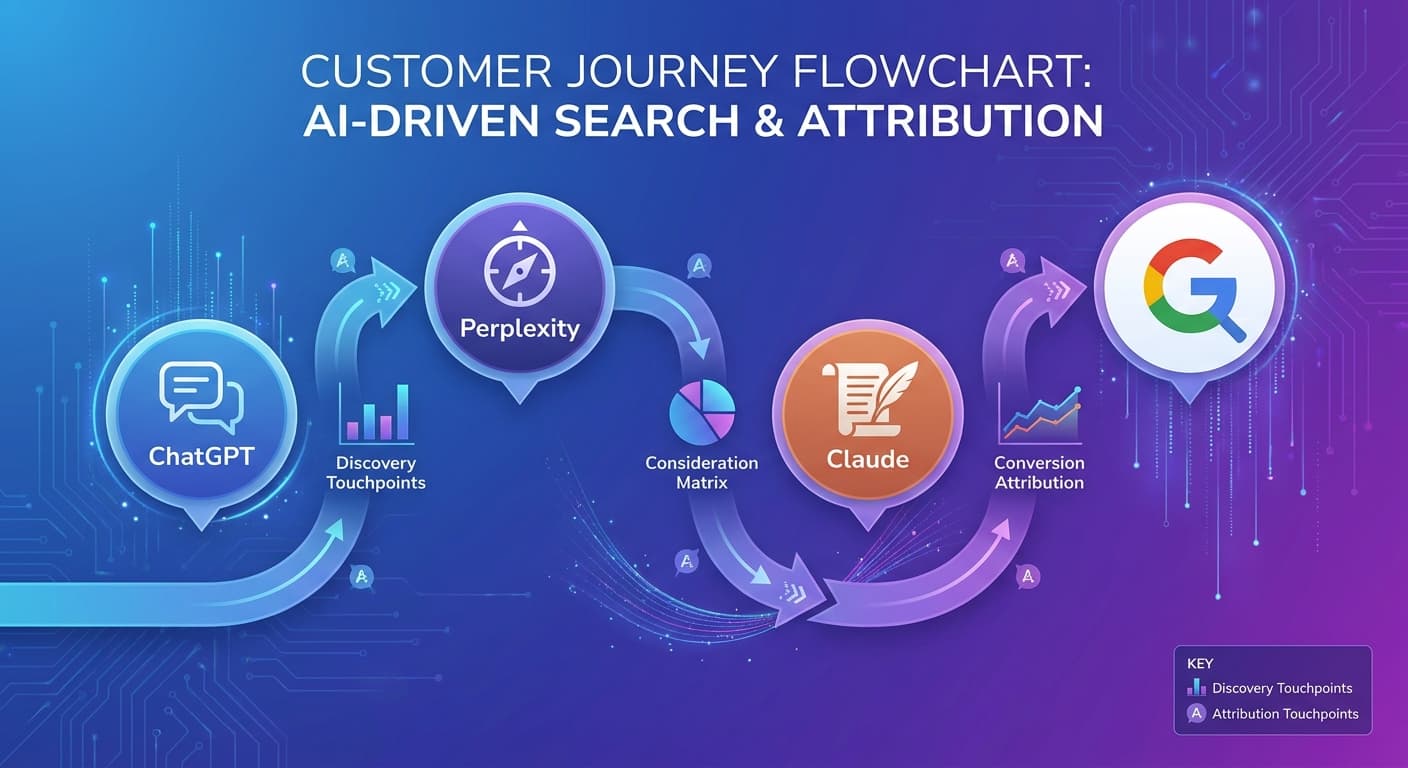
Here's the reality: Your potential customers might discover your brand through a ChatGPT conversation, validate their decision on Perplexity, check reviews on Claude, and then make their final purchase through a direct Google search—all without ever visiting your website during their research phase. Traditional analytics tools can't track this journey, leaving marketers blind to their true impact across AI channels.
The Problem with Traditional Attribution Models in the AI Era
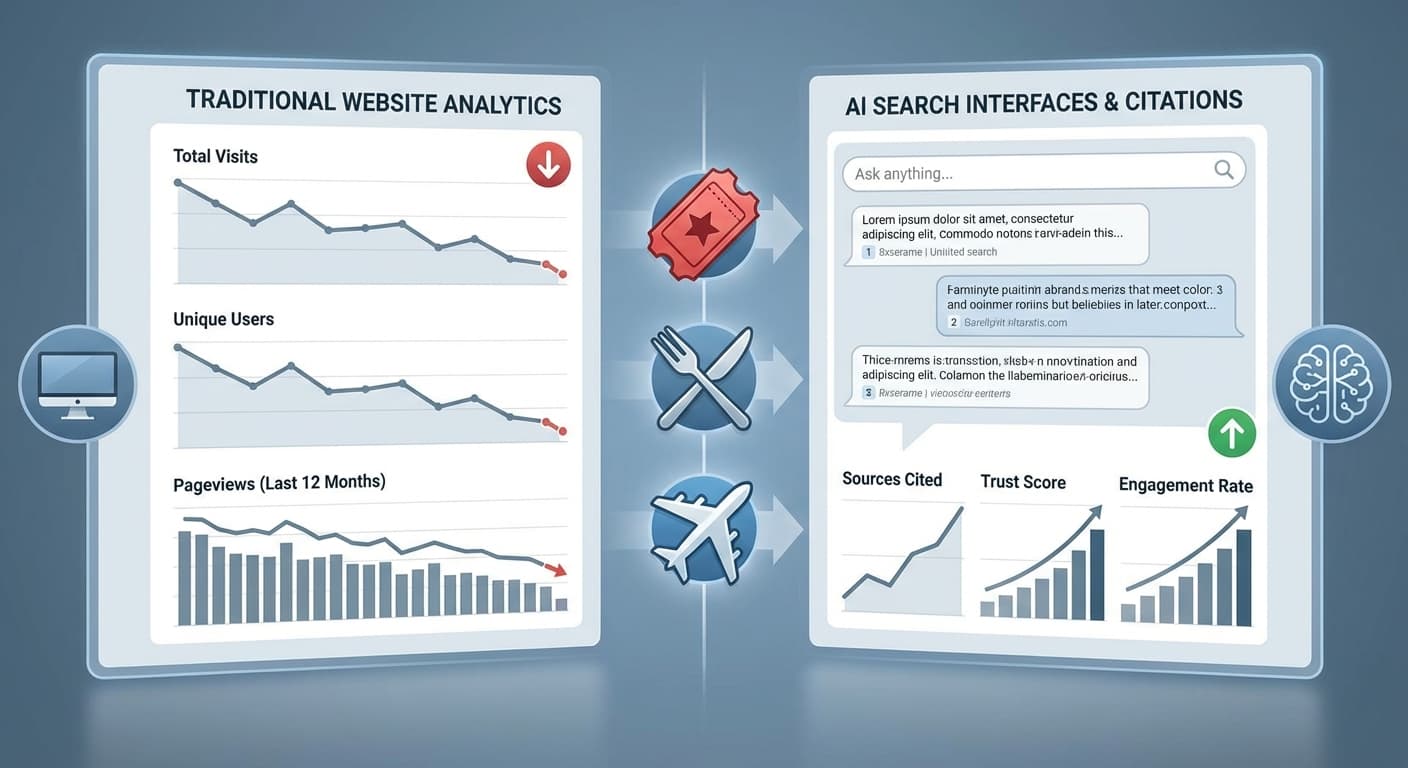
Traditional marketing attribution relies on trackable touchpoints: clicks, page views, form submissions, and cookie-based tracking. But AI search engines operate differently:
According to recent studies, B2B buyers now consume an average of 13 pieces of content before making a purchase decision, with 45% of that consumption happening through AI search engines that don't generate traditional traffic.
Understanding the Multi-Touch AI Customer Journey
The modern AI-influenced customer journey typically follows this pattern:
Stage 1: AI Discovery
Stage 2: AI Comparison
Stage 3: Validation
Stage 4: Conversion
Building Your Multi-Touch AI Attribution Framework
1. Implement AI Citation Tracking
The foundation of AI attribution is knowing when and where your content gets cited. This requires:
Citescope Ai's Citation Tracker monitors these mentions automatically, alerting you whenever your content gets referenced by major AI engines and providing detailed analytics on citation frequency and context.
2. Create AI-Optimized Content Funnels
Develop content specifically designed for AI consumption at each funnel stage:
Top of Funnel (Discovery)
Middle of Funnel (Comparison)
Bottom of Funnel (Decision)
3. Use UTM Parameters for AI-Influenced Traffic
While AI engines don't generate direct clicks, you can still track their influence:
4. Implement Cross-Platform Brand Monitoring
Set up comprehensive monitoring across:
5. Create AI Attribution Scoring Models
Develop a weighted scoring system that assigns value to different AI touchpoints:
High Value (75-100 points)
Medium Value (40-75 points)
Low Value (10-40 points)
Measuring Success: Key AI Attribution Metrics
Primary Metrics
Secondary Metrics
Advanced Attribution Techniques
1. Behavioral Cohort Analysis
Group users based on their AI interaction patterns:
2. Time-Decay Attribution
Assign decreasing value to older AI touchpoints:
3. Intent-Based Scoring
Weight citations based on user intent signals:
How Citescope Ai Helps Build Your Attribution Model
Building a comprehensive AI attribution model requires specialized tools that can track citations across multiple AI platforms and analyze their impact on your business goals.
Citescope Ai provides the infrastructure for effective AI attribution through:
The platform's dashboard provides attribution-focused analytics that help you understand which content drives the most valuable AI citations and how those citations correlate with downstream conversions.
Implementation Roadmap
Week 1-2: Foundation Setup
Week 3-4: Content Audit
Week 5-8: Attribution Model Testing
Week 9-12: Scale and Optimize
The Future of AI Attribution
As AI search engines continue to evolve, attribution models will need to become even more sophisticated. Expect to see:
Ready to Optimize for AI Search?
The shift to AI-powered search isn't coming—it's already here. Businesses that build robust AI attribution models now will have a significant competitive advantage as more consumers adopt AI-first research behaviors.
Citescope Ai makes it easy to start tracking your AI citations and building attribution models that reflect the modern customer journey. With our Citation Tracker, GEO Score analytics, and content optimization tools, you can finally measure and improve your impact across all AI search engines.
Start your free trial today and discover how your content is already performing in AI search engines. Get 3 free optimizations to test how our tools can improve your AI visibility and attribution tracking.