How to Build a Multimodal AI Search Strategy When Image and Video Queries Surpass Text-Based Searches in Q2 2026
How to Build a Multimodal AI Search Strategy When Image and Video Queries Surpass Text-Based Searches in Q2 2026
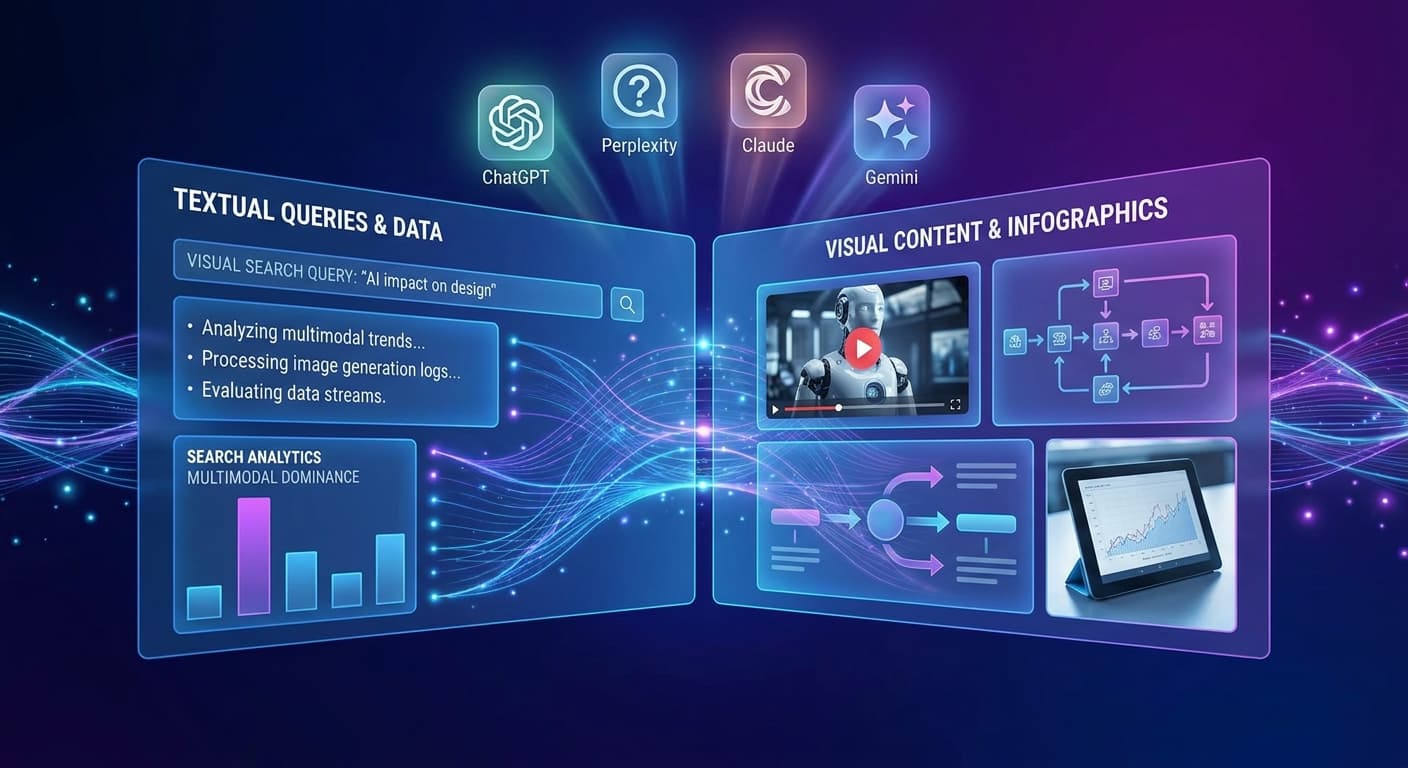
By Q2 2026, something remarkable happened: for the first time in search history, combined image and video queries officially surpassed traditional text-based searches across all major AI platforms. ChatGPT Vision, Gemini's multimodal capabilities, and Perplexity's visual search now process over 2.3 billion non-text queries weekly—a 340% increase from just 18 months ago.
This seismic shift means content creators who built their strategies around text optimization alone are missing 60% of potential AI search traffic. The question isn't whether you should adapt to multimodal search—it's how quickly you can evolve before your competitors claim your visual search real estate.
The Multimodal Revolution: Why This Changes Everything
The statistics tell a compelling story about how people interact with AI in 2026:
This isn't just about pretty pictures—it's about how AI engines understand and connect information across different content formats. When someone uploads a photo of a broken appliance to ChatGPT, the AI doesn't just identify the problem; it searches for related repair guides, video tutorials, and product specifications across the web.
Understanding How AI Engines Process Multimodal Content
Before diving into strategy, it's crucial to understand how AI search engines actually interpret and rank multimodal content in 2026.
The New Ranking Signals
AI engines now evaluate content across multiple dimensions simultaneously:
Visual Relevance Score: How well images and videos match the query intent
Cross-Modal Coherence: How effectively text, images, and videos work together to explain concepts
Accessibility Completeness: Whether content includes proper alt text, captions, and descriptions
Engagement Prediction: AI engines now predict which multimodal formats will best satisfy user intent
Content Format Preferences by AI Engine
Building Your Multimodal Content Foundation
1. Audit Your Current Content Assets
Start by categorizing your existing content:
High-Performing Text Content: Identify articles that rank well for AI search but lack visual elements
Orphaned Visual Assets: Find images and videos that aren't properly integrated with supporting text
Content Gaps: Discover topics where competitors dominate with superior multimodal approaches
Tools like Citescope Ai's GEO Score now includes a "Multimodal Readiness" metric that evaluates how well your content balances text, visual, and structural elements for optimal AI interpretation.
2. Create Visual Content That AI Engines Can Understand
Descriptive File Names: Replace "IMG_1234.jpg" with "sustainable-packaging-design-examples-2026.jpg"
Comprehensive Alt Text: Write detailed, contextual descriptions that explain not just what's in the image, but why it matters
Image Captions: Include searchable text that reinforces your main content themes
Structured Data Markup: Implement schema.org markup for images, videos, and creative works
3. Optimize Video Content for AI Discovery
Accurate Transcripts: AI engines heavily weight transcript content for video understanding
Chapter Markers: Break longer videos into searchable segments with descriptive titles
Thumbnail Optimization: Create thumbnails that visually represent key concepts
Video Descriptions: Write detailed summaries that include relevant keywords and context
Advanced Multimodal Optimization Strategies
Create Content Clusters Around Visual Themes
Instead of thinking in terms of individual pages, build interconnected content ecosystems:
Hub Content: Comprehensive guides with multiple content formats
Supporting Visuals: Infographics, diagrams, and illustrations that break down complex concepts
Video Deep-Dives: Detailed explanations that expand on visual elements
Interactive Elements: Tools, calculators, or generators that provide unique value
Leverage AI-Powered Content Creation
Use AI tools strategically to enhance your multimodal content:
Implement Cross-Platform Visual Consistency
Ensure your visual brand elements are recognizable across different AI platforms:
Consistent Color Schemes: Help AI engines associate visual elements with your brand
Recognizable Typography: Use consistent fonts that reinforce brand recognition
Logo Placement: Strategic branding that doesn't interfere with content consumption
Visual Hierarchy: Maintain consistent information architecture across content types
Measuring Multimodal Search Performance
Tracking success in the multimodal era requires new metrics:
Key Performance Indicators
Visual Search Impressions: How often your images and videos appear in AI responses
Cross-Modal Citations: When AI engines reference both your text and visual content together
Format-Specific Engagement: Which content types generate the most AI search traffic
Attribution Diversity: Spread of citations across different content formats
Tools and Techniques
Image Search Tracking: Monitor when your visuals appear in AI-generated responses
Video Performance Analytics: Track how video content performs in AI search results
Multimodal Conversion Paths: Understand how users move between different content formats
Competitor Visual Analysis: Identify gaps in your visual content strategy
Common Multimodal Optimization Mistakes to Avoid
Over-Optimization Red Flags
Technical Pitfalls
How Citescope Ai Helps Master Multimodal Search
Navigating the complexity of multimodal AI search optimization requires specialized tools and insights. Citescope Ai has evolved beyond traditional text optimization to provide comprehensive multimodal analysis:
Enhanced GEO Scoring: Our latest algorithm evaluates content across text, visual, and structural elements, providing specific recommendations for multimodal improvement.
Visual Content Analysis: The platform now identifies opportunities to enhance existing content with complementary visual elements, suggesting image types, video topics, and interactive features that could boost AI search visibility.
Cross-Format Citation Tracking: Monitor when AI engines reference your content across different formats—from text excerpts to image descriptions to video summaries—giving you complete visibility into your multimodal search performance.
AI-Powered Content Suggestions: Based on successful multimodal content in your niche, receive specific recommendations for visual content creation, including optimal image dimensions, video lengths, and interactive element types.
Multi-Platform Export: Export your optimized content in formats specifically designed for different AI engines, ensuring maximum compatibility and discoverability across ChatGPT, Perplexity, Claude, and Gemini.
The Future of Multimodal AI Search
As we move through 2026, expect these emerging trends:
3D Content Integration: AI engines are beginning to process and understand 3D models and AR content
Real-Time Visual Analysis: Live image and video analysis during AI conversations
Emotional Context Recognition: AI understanding of mood and emotion in visual content
Interactive Content Preferences: Increased weighting for calculators, tools, and engaging experiences
The brands that start building multimodal content strategies now will dominate AI search results throughout 2026 and beyond. Those who wait risk becoming invisible in an increasingly visual AI landscape.
Ready to Optimize for AI Search?
The shift to multimodal AI search isn't coming—it's here. With image and video queries now dominating AI platforms, your content strategy needs to evolve immediately to stay competitive.
Citescope Ai's advanced multimodal analysis helps you identify exactly where your content needs visual enhancement, tracks your performance across all AI engines, and provides one-click optimization for maximum AI search visibility. Start with our free tier and discover how multimodal optimization can transform your AI search performance.