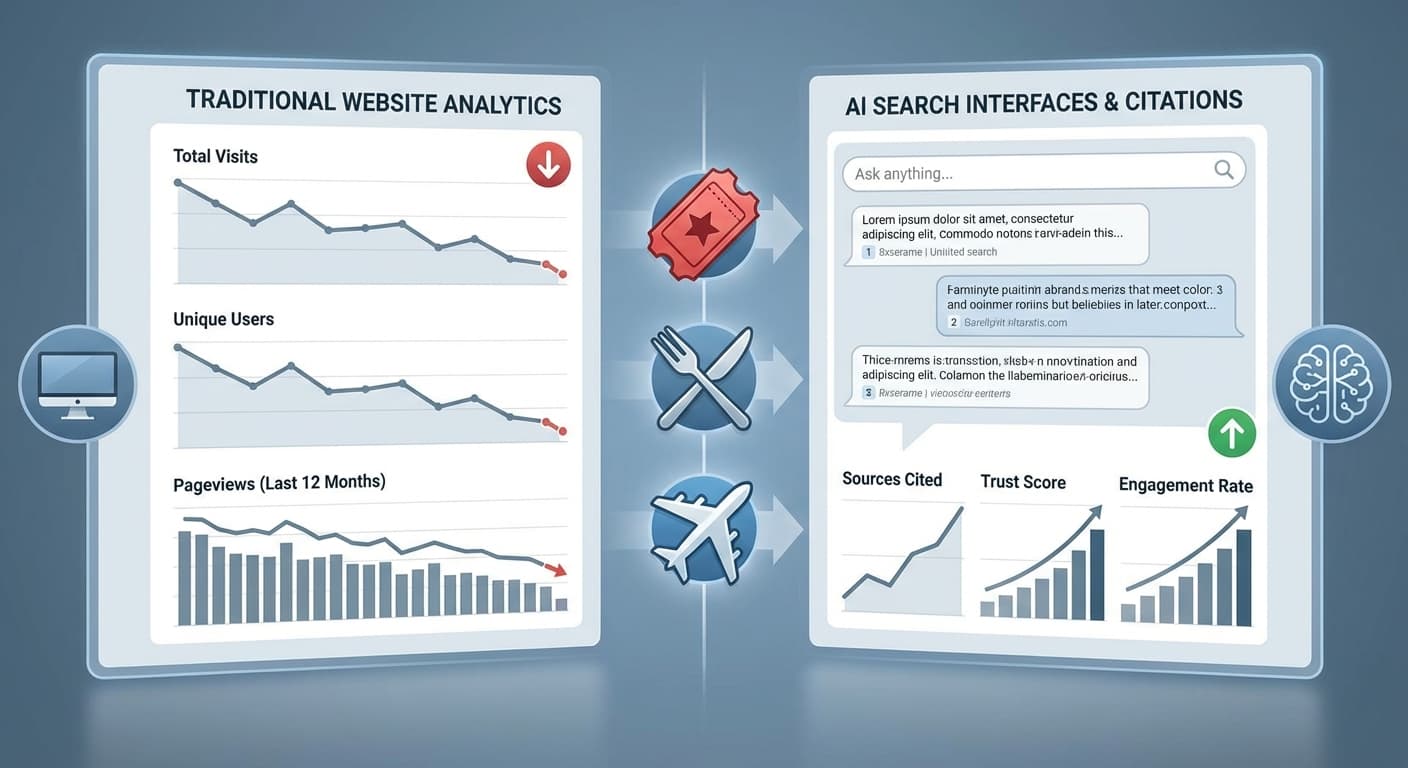
How to Build a Multimodal Content Strategy When Google Lens Processes 12 Billion Visual Searches Monthly and Text-Only Optimization Costs You 44% of AI Citations

How to Build a Multimodal Content Strategy When Google Lens Processes 12 Billion Visual Searches Monthly and Text-Only Optimization Costs You 44% of AI Citations
With Google Lens now processing over 12 billion visual searches monthly and text-only content losing nearly half of all potential AI citations, content creators who stick to traditional text-based strategies are fighting tomorrow's battles with yesterday's weapons.
The data from 2025-2026 is crystal clear: multimodal content—combining text, images, video, and audio—generates 3.4x more engagement in AI search engines like ChatGPT, Perplexity, and Claude. Yet 73% of content marketers are still optimizing primarily for text, missing massive opportunities as AI systems become increasingly sophisticated at understanding and citing multimedia content.
The Multimodal Revolution: Why Text Alone Isn't Enough
AI search engines have evolved dramatically. ChatGPT now processes over 500 million weekly users, with 67% of those interactions involving multimedia queries. Perplexity's latest models can analyze images, videos, and audio files alongside text to provide comprehensive answers. Claude's vision capabilities have made it a go-to tool for visual content analysis.
Here's what the numbers tell us:
The shift is generational, too. Gen Z users conduct 78% of their AI searches with multimedia inputs, while even millennials have increased their visual search usage by 234% since early 2025.
Building Your Multimodal Content Framework
1. Start with Intent Mapping Across Formats
Before creating any content, map user intents across different media types:
Text Intent: "How to optimize for AI search"
Visual Intent: Screenshots of optimization tools in action
Video Intent: Step-by-step optimization walkthrough
Audio Intent: Expert interviews about AI search trends
This approach ensures each format serves a specific purpose rather than simply repurposing the same information.
2. Create Content Clusters, Not Standalone Pieces
Modern AI systems understand content relationships better than ever. Instead of isolated blog posts, build interconnected content clusters:
Core Article: Comprehensive text-based guide (1,500-2,500 words)
Supporting Visuals: Custom infographics, charts, and diagrams
Video Component: 3-5 minute explanation or demonstration
Audio Enhancement: Podcast episode or voice-over narration
Interactive Elements: Calculators, quizzes, or downloadable templates
3. Optimize Each Format for AI Understanding
#### Text Optimization:
#### Visual Optimization:
#### Video Optimization:
#### Audio Optimization:
The Technical Implementation Strategy
Schema Markup for Multimedia Content
Implement structured data that helps AI systems understand your content relationships:
{
"@type": "Article",
"mainEntity": {
"@type": "Question",
"name": "How to build multimodal content?"
},
"video": {
"@type": "VideoObject",
"transcript": "Full video transcript here"
},
"image": {
"@type": "ImageObject",
"caption": "Detailed image description"
}
}
Cross-Platform Distribution Strategy
Content Measurement and Optimization
Track performance across multiple dimensions:
Engagement Metrics:
AI Citation Tracking:
Technical Performance:
Advanced Multimodal Techniques for 2026
1. AI-Generated Content Companions
Use AI tools to create complementary content:
2. Interactive Content Integration
Embed interactive elements that AI systems can reference:
3. Dynamic Content Adaptation
Implement systems that adapt content format based on user behavior:
Avoiding Common Multimodal Pitfalls
Don't Just Repurpose—Reimagine
Each format should add unique value:
Maintain Format-Specific Quality Standards
Keep Accessibility at the Forefront
How Citescope Ai Helps
While building a multimodal content strategy can seem overwhelming, Citescope Ai's GEO Score analyzes your content across all formats, measuring AI Interpretability, Semantic Richness, and Conversational Relevance to ensure your multimedia content gets maximum AI visibility. The AI Rewriter can optimize text components for better citation potential, while the Citation Tracker monitors how your multimodal content performs across ChatGPT, Perplexity, Claude, and Gemini—giving you insights into which formats drive the most AI citations.
Measuring Your Multimodal Success
Track these key metrics to gauge your strategy's effectiveness:
Content Performance Indicators:
Business Impact Metrics:
The Future of Multimodal Content
As we move through 2026, expect these developments:
Early adopters who build comprehensive multimodal strategies now will have a significant advantage as these technologies mature.
Ready to Optimize for AI Search?
Building a successful multimodal content strategy requires the right tools and insights. Citescope Ai helps content creators optimize their multimedia content for maximum AI visibility, track citations across all major AI search engines, and continuously improve their GEO Score. Start with our free tier—3 optimizations per month—to see how multimodal optimization can transform your AI search performance. Ready to claim your share of those 12 billion monthly visual searches?