How to Build a Niche AI Platform Distribution Strategy When Domain-Specific Search Engines Are Fragmenting Your Audience
How to Build a Niche AI Platform Distribution Strategy When Domain-Specific Search Engines Are Fragmenting Your Audience
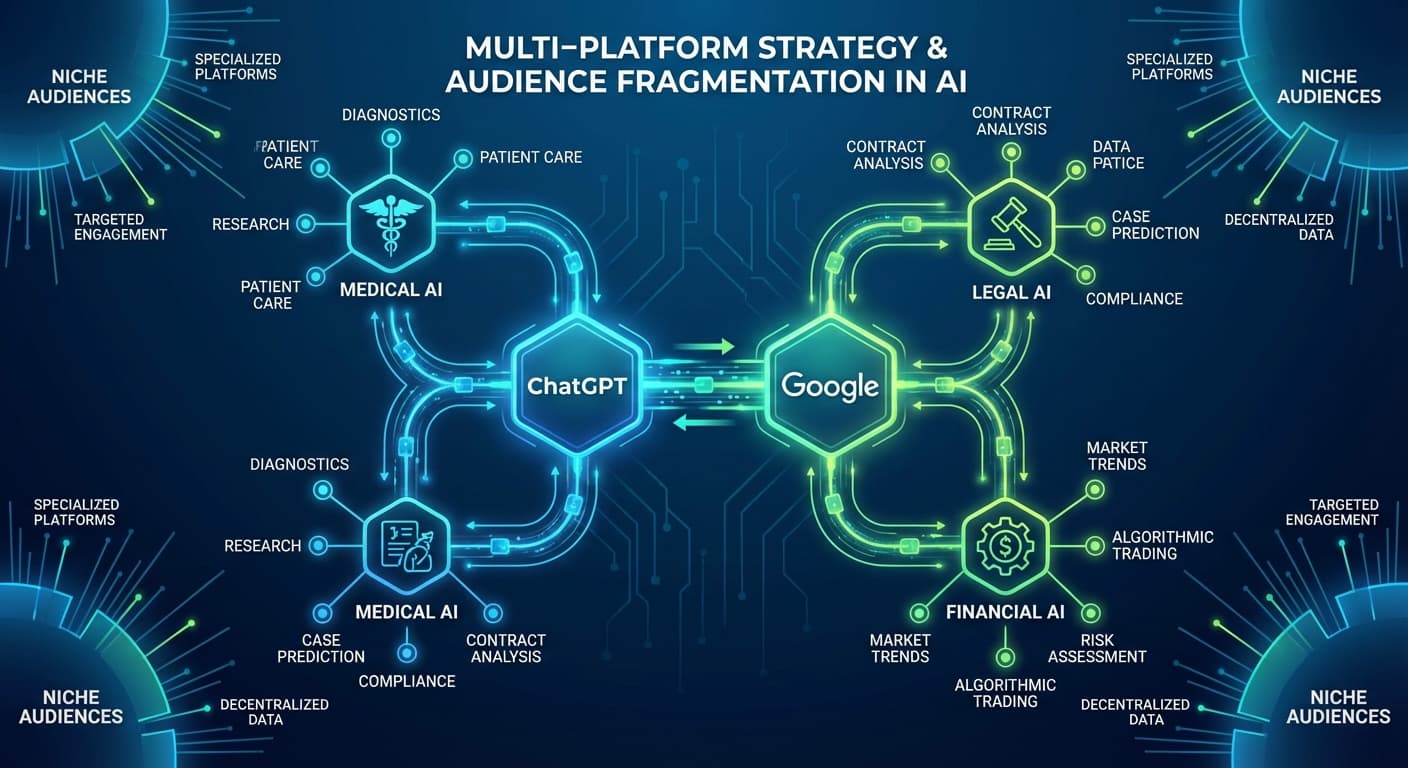
By 2026, your audience isn't just searching on ChatGPT and Google anymore. They're using Harvey AI for legal research, Glass Health for medical queries, and dozens of other domain-specific AI platforms that didn't exist two years ago. This fragmentation represents both a massive opportunity and a strategic nightmare for content creators.
Recent data shows that specialized AI search engines now capture over 40% of professional queries in their respective domains, with platforms like Consensus for academic research and AlphaSense for financial analysis seeing 300%+ growth in 2025 alone. The question isn't whether your audience is fragmenting—it's how quickly you can adapt your distribution strategy to meet them where they are.
The Rise of Vertical AI Search Platforms
The AI search landscape has evolved dramatically since ChatGPT's initial dominance. Today's users are increasingly turning to specialized platforms that understand their specific context and terminology:
This specialization means your content needs to be discoverable across multiple platforms, each with unique algorithms, citation preferences, and user behaviors.
Understanding Platform-Specific Citation Patterns
Each AI platform has developed distinct preferences for how it discovers, evaluates, and cites content. Understanding these patterns is crucial for effective distribution:
Medical AI Platforms
Medical AI engines prioritize:
Legal AI Platforms
Legal AI systems favor:
Financial AI Platforms
Financial AI engines emphasize:
Building Your Multi-Platform Strategy
1. Audit Your Current AI Visibility
Before expanding to niche platforms, assess your current performance:
Tools like Citescope Ai's Citation Tracker can help you monitor mentions across multiple AI platforms simultaneously, giving you a comprehensive view of your current reach.
2. Develop Platform-Specific Content Variants
Rather than creating entirely new content for each platform, develop strategic variants of your core pieces:
Core Article: "The Future of Remote Work Technology"
Legal AI Variant: Focus on employment law implications, regulatory compliance, and workplace safety requirements
Medical AI Variant: Emphasize ergonomic health considerations, mental health impacts, and occupational medicine aspects
Financial AI Variant: Highlight cost savings, productivity metrics, and ROI calculations for remote work investments
3. Optimize for Domain-Specific Keywords and Terminology
Each vertical has its own language. Medical content should include:
Legal content benefits from:
4. Structure Content for AI Interpretation
Different AI platforms prefer different content structures:
For Medical AI:
For Legal AI:
For Financial AI:
Advanced Distribution Tactics
Cross-Platform Content Syndication
Develop a systematic approach to content distribution:
Building Domain Authority Across Verticals
Establish credibility in each niche by:
Measuring Success Across Platforms
Track different metrics for different platforms:
Universal Metrics:
Platform-Specific Metrics:
How Citescope Ai Helps Navigate Multi-Platform Distribution
Managing content optimization across multiple AI platforms can be overwhelming. Citescope Ai streamlines this process through:
GEO Score Analysis: Our comprehensive scoring system evaluates your content across the five dimensions that matter most to AI engines—AI Interpretability, Semantic Richness, Conversational Relevance, Structure, and Authority. This helps you understand how well your content will perform across different platform types.
AI Rewriter Tool: Instead of manually creating variants for each platform, our one-click optimization restructures your content to match the citation patterns and preferences of specific AI engine categories. Whether you're targeting medical AI or legal AI, the tool adapts your content's structure and terminology accordingly.
Multi-Platform Citation Tracking: Monitor your content's performance across ChatGPT, Perplexity, Claude, Gemini, and emerging domain-specific platforms from a single dashboard. This visibility helps you identify which variants are working and where to focus your optimization efforts.
Export Flexibility: Download your optimized content in multiple formats (Markdown, HTML, WordPress blocks) to streamline publication across different platforms and content management systems.
Future-Proofing Your Strategy
The AI search landscape will continue evolving rapidly. Prepare for:
Stay adaptable by:
Building Long-Term Success
Successful niche AI platform distribution requires:
The fragmentation of AI search presents both challenges and unprecedented opportunities. Content creators who master multi-platform distribution now will dominate their niches as these specialized engines mature and gain mainstream adoption.
Ready to Optimize for AI Search?
Navigating the complex landscape of domain-specific AI platforms doesn't have to slow down your content strategy. Citescope Ai provides the tools you need to optimize, track, and succeed across multiple AI search engines simultaneously. Start with our free tier to optimize 3 pieces of content per month, or upgrade to Pro for unlimited optimizations and advanced citation tracking. Transform your content for the age of AI search—try Citescope Ai today.