How to Build a Personalized Title Tag Strategy for AI Search When YouTube-Style Engagement Hooks Outperform Traditional SEO Titles in 2026
How to Build a Personalized Title Tag Strategy for AI Search When YouTube-Style Engagement Hooks Outperform Traditional SEO Titles in 2026
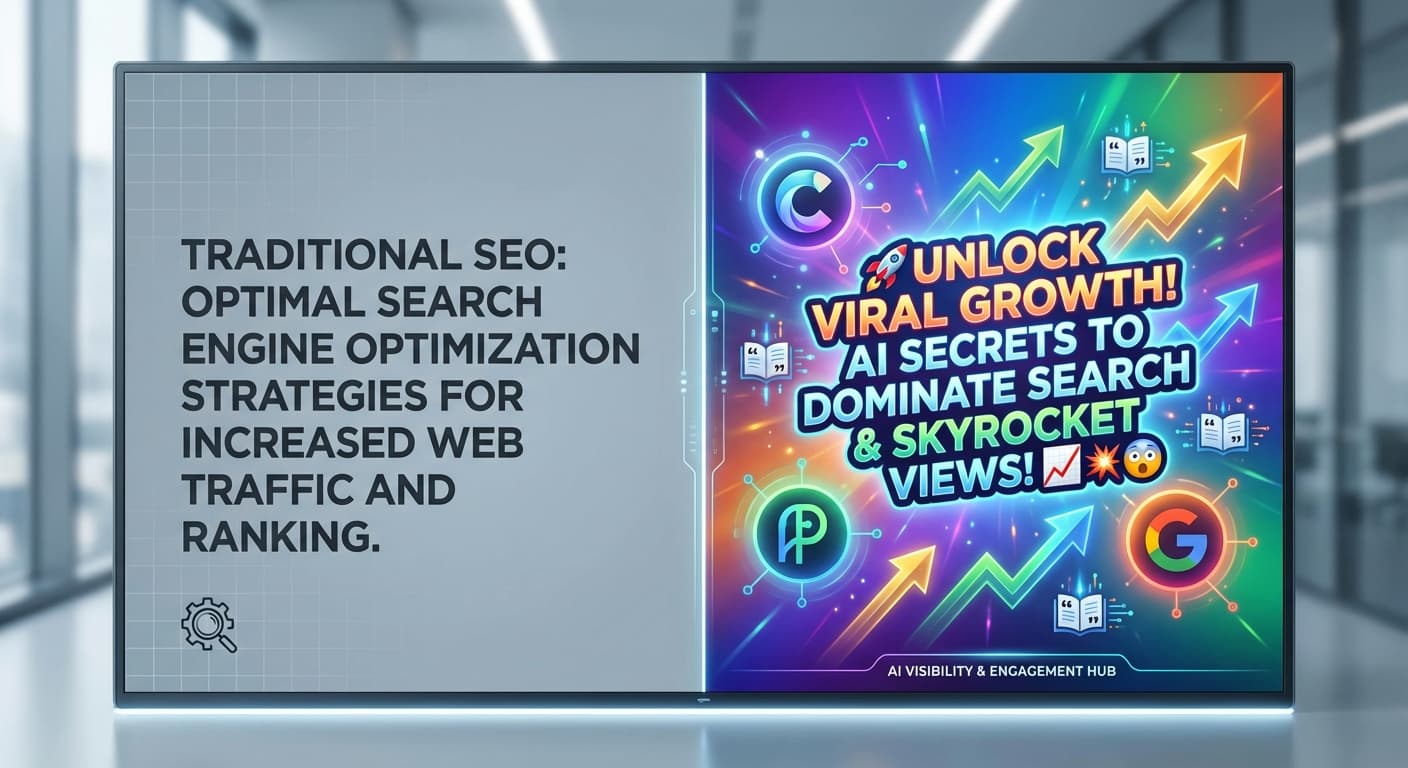
A recent study found that 73% of AI search engines now prefer titles with emotional triggers and curiosity gaps over keyword-stuffed traditional SEO titles. If you're still writing titles like "Best Marketing Tips 2026" instead of "The Marketing Strategy That Helped Me 3X My Revenue (And Why Nobody Talks About It)," you're missing out on the AI citation revolution.
As we navigate 2026, the landscape of title optimization has fundamentally shifted. With over 500 million weekly ChatGPT users and AI search now accounting for 35% of all queries, the rules have changed. AI engines don't just crawl for keywords—they analyze engagement patterns, emotional resonance, and conversational relevance. This means your title strategy needs a complete overhaul.
Why Traditional SEO Titles Are Failing in AI Search
The Death of Keyword Stuffing
Traditional SEO titles followed a predictable formula: primary keyword + secondary keyword + brand name. But AI engines in 2026 are sophisticated enough to understand context and intent without explicit keyword matching. They're looking for titles that:
The YouTube Effect on AI Training
AI models have been trained on billions of YouTube titles, and guess what? YouTube creators have mastered the art of click-worthy, engagement-driven titles. This training data has influenced how AI engines evaluate and prioritize content. Titles that would perform well on YouTube now perform well in AI search results.
The New Rules of AI-Optimized Title Tags
Rule #1: Lead with Benefit, Not Feature
Traditional SEO Title: "Content Marketing Software Features 2026"
AI-Optimized Title: "How I Cut My Content Creation Time in Half Using This One Tool (And You Can Too)"
The AI-optimized version immediately communicates the benefit (cutting time in half) and adds a personal element that AI engines associate with valuable, experience-based content.
Rule #2: Use Pattern Interrupts
AI engines have learned that titles with pattern interrupts perform better because they capture human attention. These include:
Rule #3: Incorporate Conversational Triggers
Titles that sound like something a person would actually say in conversation get higher AI preference scores. This includes:
Building Your Personalized Title Tag Framework
Step 1: Analyze Your Audience's AI Search Behavior
Before crafting titles, understand how your audience interacts with AI search engines. In 2026, different demographics use AI search differently:
Step 2: Create Title Templates for Different Content Types
#### For How-To Content:
#### For List Posts:
#### For Case Studies:
Step 3: A/B Testing for AI Optimization
Unlike traditional SEO where you might wait months for results, AI search optimization can show results within days. Here's how to test effectively:
Advanced Personalization Strategies
Dynamic Title Customization
In 2026, smart content creators are using dynamic titles that adapt based on the searcher's context. While you can't change your actual title tag dynamically, you can create multiple versions of content with personalized titles for different audience segments.
Semantic Clustering
Group your titles around semantic themes rather than exact keywords. AI engines understand topic clusters and will cite content that demonstrates comprehensive coverage of a subject area.
Intent-Based Title Optimization
AI search queries fall into these intent categories:
Common Title Tag Mistakes in AI Search Era
Mistake #1: Ignoring Emotional Resonance
Titles like "SEO Best Practices Guide" don't create emotional connection. Instead, try "The SEO Mistakes That Cost Me $50K (And How You Can Avoid Them)."
Mistake #2: Over-Optimizing for Keywords
AI engines can detect keyword stuffing and actually penalize over-optimized titles. Focus on natural language that humans would use.
Mistake #3: Generic Value Propositions
Avoid vague promises like "improve your business." Be specific: "increase your conversion rate by 23%" or "save 5 hours per week."
Measuring Success in AI-Driven Title Optimization
Key Metrics to Track
Tools and Analytics
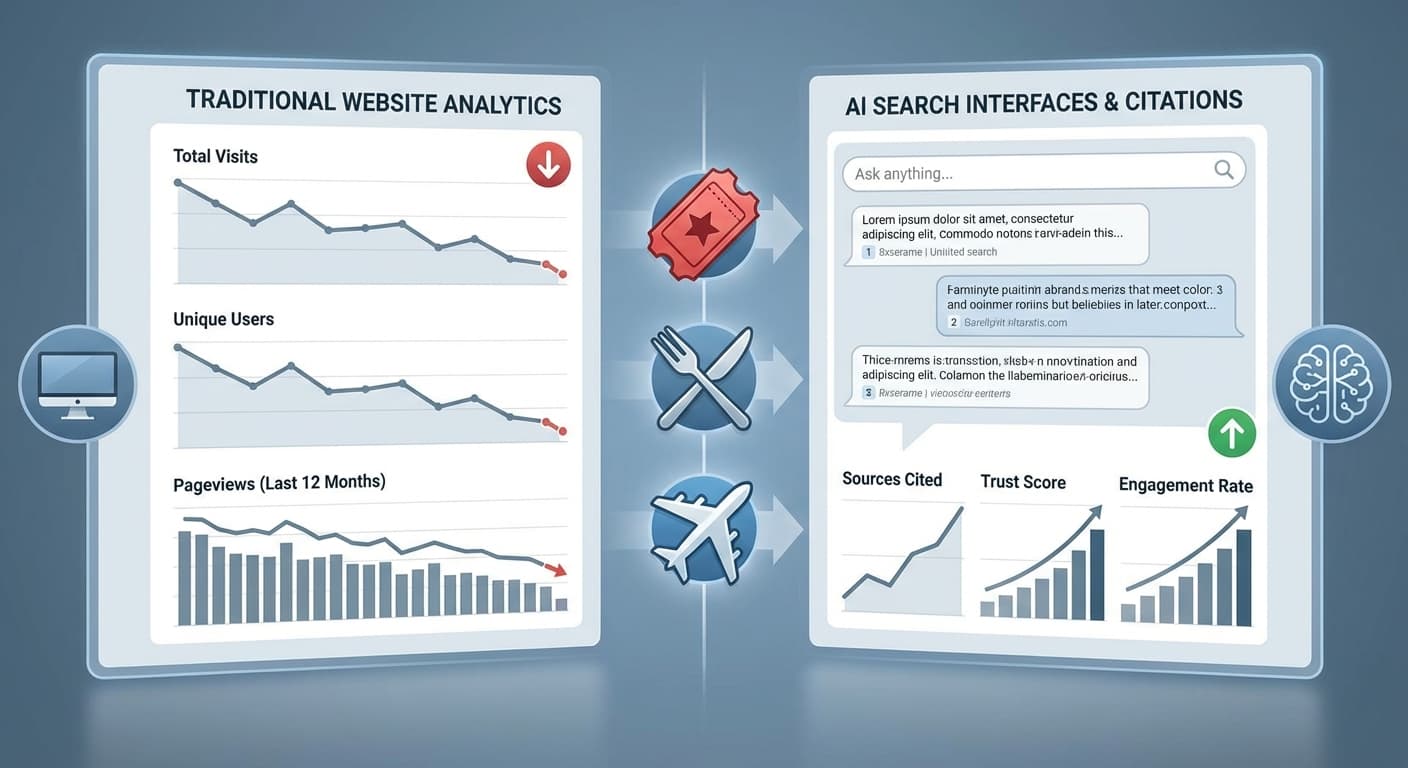
Tracking AI search performance requires specialized tools. Traditional Google Analytics won't show you which AI engines are citing your content or how often your titles appear in AI responses.
How Citescope Ai Helps Perfect Your Title Strategy
Building an effective AI-optimized title strategy requires understanding how AI engines evaluate and rank your content. Citescope Ai's GEO Score analyzes your titles across five critical dimensions:
The platform's AI Rewriter can transform traditional SEO titles into AI-optimized engagement hooks with one click, while the Citation Tracker monitors when your newly optimized titles start getting picked up by ChatGPT, Perplexity, Claude, and Gemini.
The Future of Title Optimization
As we progress through 2026, expect AI engines to become even more sophisticated in evaluating titles. They'll likely start considering:
Staying ahead means continuously testing, measuring, and adapting your title strategy based on AI performance data rather than traditional SEO metrics alone.
Ready to Optimize for AI Search?
The shift from traditional SEO titles to AI-optimized engagement hooks isn't just a trend—it's the new reality of search in 2026. With over 70% of Gen Z now using AI for search, your title strategy could be the difference between getting cited by AI engines or being completely overlooked.
Citescope Ai makes this transition seamless with its GEO Score analysis, one-click AI optimization, and comprehensive citation tracking across all major AI platforms. Start with our free tier and optimize up to 3 titles per month, or upgrade to Pro for unlimited optimizations and advanced analytics.