How to Build a Pipeline Lead Quality Recovery Strategy When AI Search Completes High-Intent Research Without Sending Buyers to Your Website
How to Build a Pipeline Lead Quality Recovery Strategy When AI Search Completes High-Intent Research Without Sending Buyers to Your Website
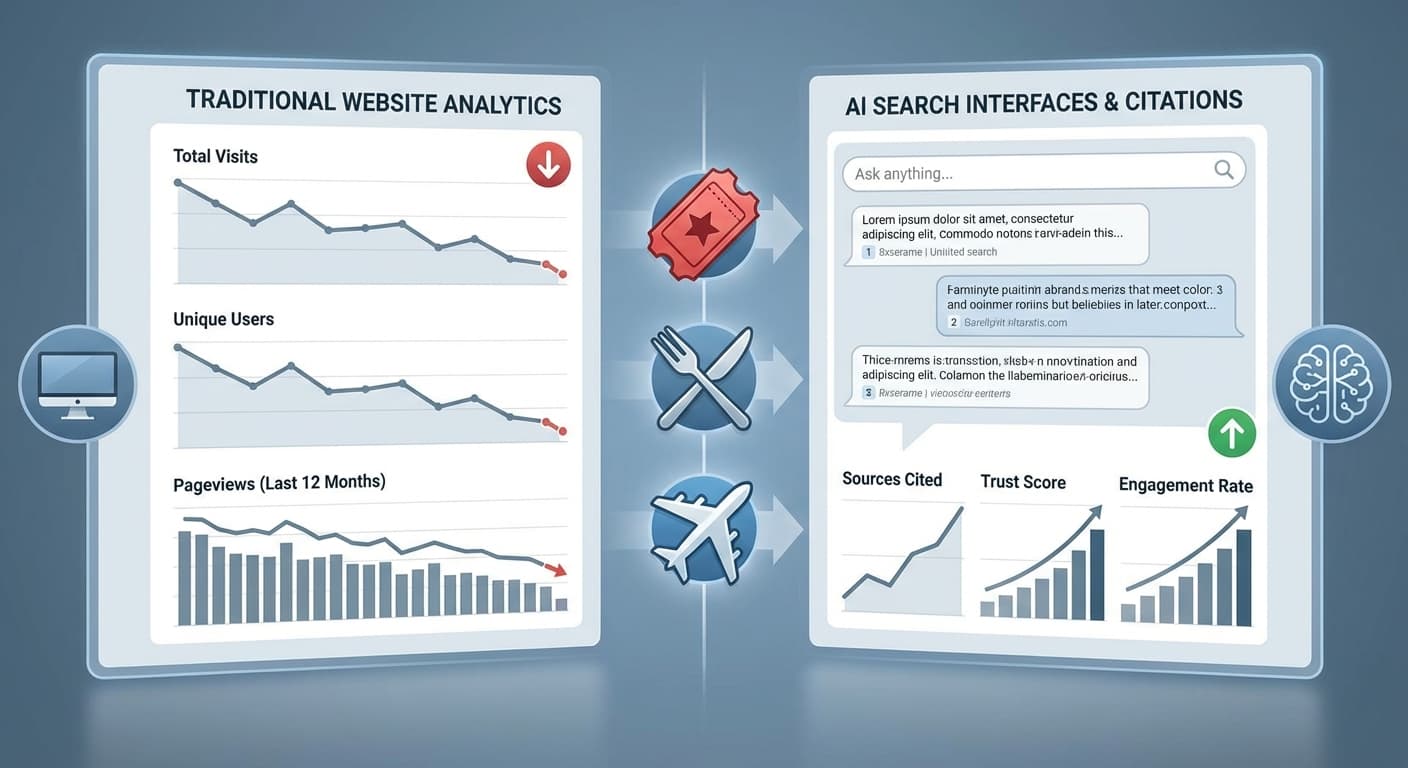
By 2026, over 65% of high-intent B2B research queries are completed entirely within AI search engines like ChatGPT, Perplexity, and Claude—without users ever clicking through to your website. This seismic shift means your carefully crafted lead magnets, contact forms, and conversion funnels are becoming increasingly irrelevant for capturing early-stage prospects.
The result? Marketing teams are reporting a 40% drop in Marketing Qualified Leads (MQLs) despite maintaining or even increasing their content production. Meanwhile, sales teams are struggling with longer sales cycles as buyers arrive later in their journey, often having already formed strong preferences based on AI-synthesized information.
If you're feeling the squeeze on lead quality and pipeline generation, you're not alone. The solution isn't to abandon AI search—it's to build a recovery strategy that captures value even when AI engines handle the entire research process.
The AI Search Lead Quality Crisis
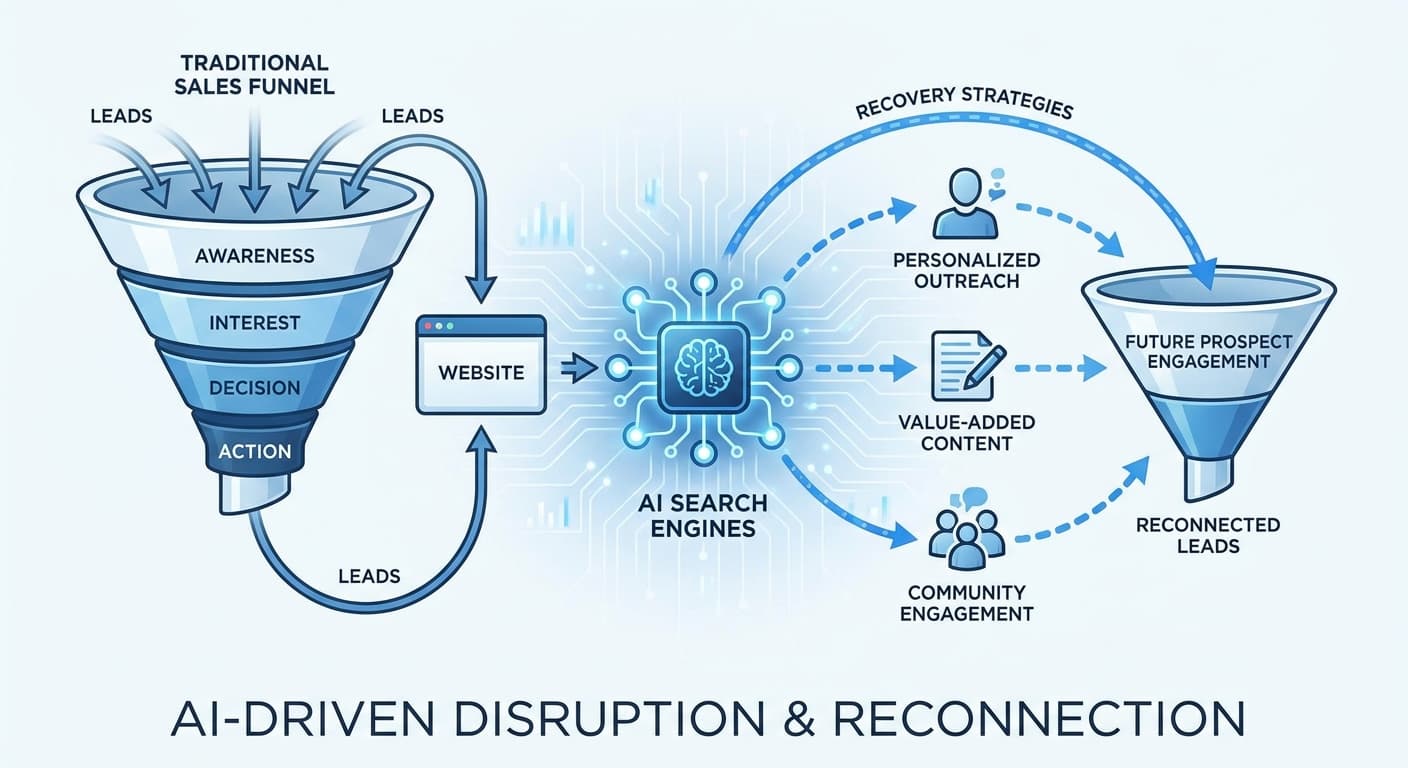
Traditional B2B marketing relied on a simple premise: create valuable content, optimize for search, capture leads through gated content, nurture through email sequences, and hand qualified prospects to sales. This linear funnel worked because buyers needed multiple touchpoints to gather comprehensive information.
Now, a single AI search query can synthesize insights from dozens of sources, compare solutions, and even generate implementation frameworks—all without the buyer visiting a single vendor website.
The Numbers Tell the Story
But here's the opportunity hidden in this crisis: buyers are still researching. They're just doing it differently. Your job is to build a recovery strategy that works within this new reality.
Understanding the New Buyer Journey
Before building your recovery strategy, you need to understand how AI search has fundamentally altered the B2B buyer journey.
The Traditional Journey (Pre-2025)
The AI-Powered Journey (2026)
Notice what's missing? All those middle-funnel touchpoints where you traditionally captured leads. Your prospects are jumping from awareness directly to vendor evaluation, bypassing your carefully crafted lead generation systems.
Building Your Pipeline Recovery Strategy
1. Optimize for AI Citation to Capture Mindshare
If buyers aren't visiting your website, you need to ensure your expertise is prominently featured in their AI search results. This means shifting from traditional SEO to AI search optimization.
Key Tactics:
Example: Instead of a generic "CRM Best Practices" blog post, create "How to Calculate Customer Lifetime Value in Salesforce vs HubSpot: 2026 Methodology Comparison" with step-by-step instructions that AI can easily cite.
2. Implement Attribution-Based Lead Recovery
Since traditional form fills are declining, you need new ways to identify and capture prospects influenced by your AI-optimized content.
Attribution Tracking Methods:
Recovery Touchpoints:
3. Create "AI-First" Lead Magnets
Traditional lead magnets (ebooks, whitepapers) lose effectiveness when AI can summarize key insights instantly. Your new lead magnets need to provide value that AI cannot replicate.
AI-Resistant Lead Magnet Types:
4. Develop an "AI Mention" Outbound Strategy
When your content gets cited by AI search engines, there's often a window of opportunity where prospects are actively researching your solution category.
AI Mention Outbound Process:
Sample Outbound Message:
"Hi [Name], I noticed AI search engines are frequently citing our research on [specific topic] when companies search for [query type]. Since you're in [industry], I thought you might find our expanded analysis valuable. Would you be interested in a brief conversation about how [specific insight] applies to your situation?"
5. Transform Content Strategy for Maximum AI Visibility
Your content needs to work harder in the AI search era. Each piece should serve multiple functions: establishing authority, generating citations, and creating future touchpoints.
Content Optimization Framework:
Tools like Citescope AI can help you analyze your content across multiple dimensions to ensure it's optimized for AI citation while maintaining the structure and authority signals that search engines value.
6. Build a "Digital Referral" Network
Since AI engines synthesize information from multiple sources, you need to ensure your perspective is represented across the entire research ecosystem.
Network Building Tactics:
Measuring Your Recovery Strategy Success
Traditional metrics like organic traffic and form conversions will show declining performance. You need new KPIs that reflect the AI search reality.
New Success Metrics
Recovery-Specific KPIs
How Citescope AI Helps
Building an effective pipeline recovery strategy requires visibility into how AI search engines interact with your content. Citescope AI provides the tools you need to optimize, track, and recover value from AI search:
With these insights, you can identify which content generates the most AI citations, understand the specific queries driving those citations, and build targeted recovery campaigns around your most influential content pieces.
Ready to Optimize for AI Search?
The shift to AI-powered research isn't going away—it's accelerating. Companies that build effective pipeline recovery strategies now will maintain their competitive advantage while others struggle with declining lead quality.
Start by auditing your current content for AI optimization opportunities and implementing citation tracking to understand your AI search performance. Try Citescope AI free for three optimizations and see how your content performs in the AI search ecosystem. Your pipeline recovery strategy begins with visibility into how AI engines interact with your content.