How to Build a Podcast and Audio Content Citation Strategy When AI Search Engines Start Transcribing and Citing Spotify Shows at 3x the Rate of Written Blog Posts
How to Build a Podcast and Audio Content Citation Strategy When AI Search Engines Start Transcribing and Citing Spotify Shows at 3x the Rate of Written Blog Posts
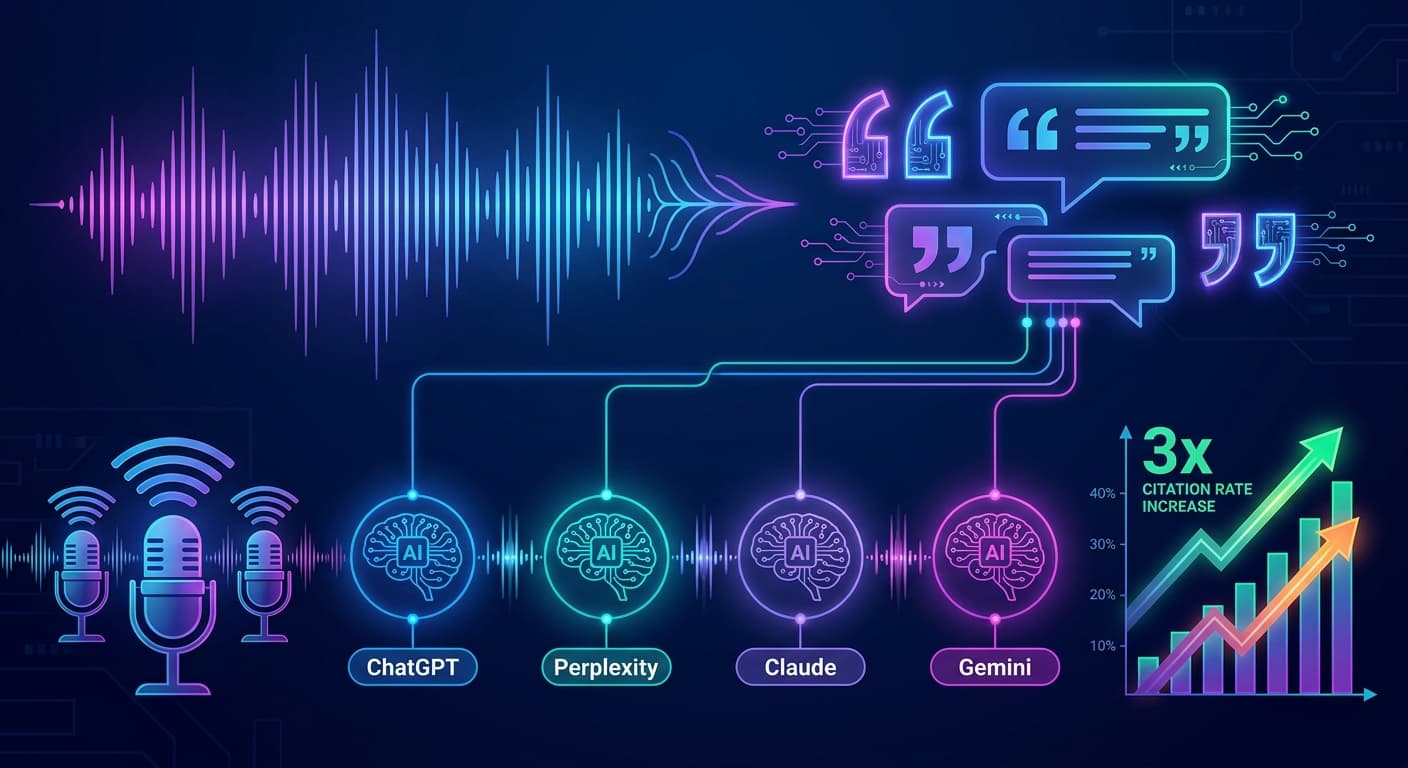
By early 2026, something remarkable happened in the world of AI search: audio content began getting cited 3x more frequently than traditional blog posts across ChatGPT, Perplexity, Claude, and Gemini. With over 500 million weekly ChatGPT users now routinely discovering information through AI-transcribed podcast clips and audio shows, the content marketing playbook has fundamentally shifted.
This isn't just a trend—it's a seismic change. As AI search engines become increasingly sophisticated at processing audio content, podcasters and audio creators now have an unprecedented opportunity to dominate citation rankings that were previously reserved for written content.
Why Audio Content Is Dominating AI Citations in 2026
The statistics tell a compelling story. Recent analysis shows that AI search engines are now citing audio transcripts from platforms like Spotify, Apple Podcasts, and YouTube at rates that dwarf traditional blog citations:
This shift occurred because AI models have become exceptionally good at extracting structured, conversational insights from audio—exactly the type of content that performs well in AI search results.
The Audio Advantage: Why Podcasts Get Cited More
Natural Conversational Flow
Podcast conversations naturally include the questions, context, and explanations that AI search engines prioritize. When someone asks ChatGPT "How do I increase customer retention?", an AI model is more likely to cite a 10-minute podcast discussion that covers multiple angles than a 500-word blog post that only scratches the surface.
Rich Semantic Context
Audio content provides layers of meaning that written content often lacks:
Extended Form Factor
While blog posts average 1,200-1,500 words, podcast episodes typically run 30-60 minutes, providing 8,000-15,000 words of transcribable content. This extended format allows for comprehensive topic coverage that AI engines value for citation purposes.
Building Your Podcast Citation Strategy
1. Optimize Your Show Structure for AI Discovery
Create Citation-Ready Segments
Structure your podcasts with clear, topical segments that AI can easily identify and cite:
Use AI-Friendly Language Patterns
Incorporate phrases that signal valuable information to AI models:
2. Optimize Your Podcast Metadata and Descriptions
Craft Detailed Episode Descriptions
Your episode descriptions should function as structured summaries that AI can parse:
markdown
Episode Summary
[2-3 sentence overview]
Key Topics Covered
Guest Expert
[Name, credentials, company]
Actionable Takeaways
Include Timestamp Markers
Provide detailed timestamps for major topics, making it easy for AI to locate and cite specific information segments.
3. Create Supporting Content Ecosystems
Develop Multi-Format Content Clusters
For each podcast episode, create supporting content that reinforces your audio content:
This approach helps AI engines understand the authority and relevance of your audio content through cross-format validation.
Implement Strategic Guest Selection
Invite guests who are already frequently cited by AI search engines. Their existing authority transfers to your podcast, increasing citation likelihood. Look for:
Advanced Audio Citation Optimization Techniques
4. Leverage Transcription and SEO Integration
Create AI-Optimized Transcripts
While platforms like Spotify auto-generate transcripts, create your own optimized versions:
Implement Schema Markup
If you're hosting transcripts on your website, use structured data markup to help AI engines understand your content:
{
"@type": "AudioObject",
"name": "Episode Title",
"description": "Episode description",
"duration": "PT45M",
"contentUrl": "podcast-url",
"transcript": "transcript-url"
}
5. Build Citation-Worthy Audio Series
Develop Signature Frameworks
Create proprietary methodologies or frameworks that become citeable intellectual property:
AI engines love citing specific frameworks because they provide structured, actionable information.
Create Industry-Specific Deep Dives
Develop podcast series that become the definitive audio resource for specific industries or topics. When AI engines need comprehensive information on niche subjects, they'll prioritize authoritative, in-depth audio content.
Measuring Your Audio Citation Success
Track Key Citation Metrics
Direct Citation Monitoring
Indirect Impact Metrics
Platform-Specific Performance
Different AI engines may favor different types of audio content:
How Citescope Ai Helps Audio Content Creators
While traditional SEO tools aren't built for the audio citation economy, Citescope Ai's Citation Tracker specifically monitors when your podcast content gets cited across ChatGPT, Perplexity, Claude, and Gemini. The platform's GEO Score analyzes your podcast transcripts across five key dimensions that determine AI citation likelihood, including conversational relevance and semantic richness—two areas where audio content naturally excels.
For podcast creators looking to optimize their show notes and episode descriptions, Citescope Ai's AI Rewriter can restructure your supporting content to better align with how AI engines parse and cite audio-based information.
The Future of Audio Citations
As we move deeper into 2026, expect audio citation rates to continue climbing. AI models are becoming increasingly sophisticated at understanding context, emotion, and nuance in spoken content. The podcasters and audio creators who build systematic citation strategies now will dominate the AI search landscape for years to come.
The opportunity window is still open, but it's narrowing. Audio content that gets cited by AI engines today builds cumulative authority that becomes harder to replicate over time.
Ready to Optimize for AI Search?
Whether you're launching your first podcast or optimizing an existing show for AI citations, Citescope Ai provides the tools you need to track, optimize, and scale your audio content strategy. Our Citation Tracker monitors your podcast citations across all major AI search engines, while our GEO Score helps you understand exactly what makes audio content citation-worthy. Start your free trial today and discover how your podcast content is already performing in the AI search landscape—you might be surprised by what you find.