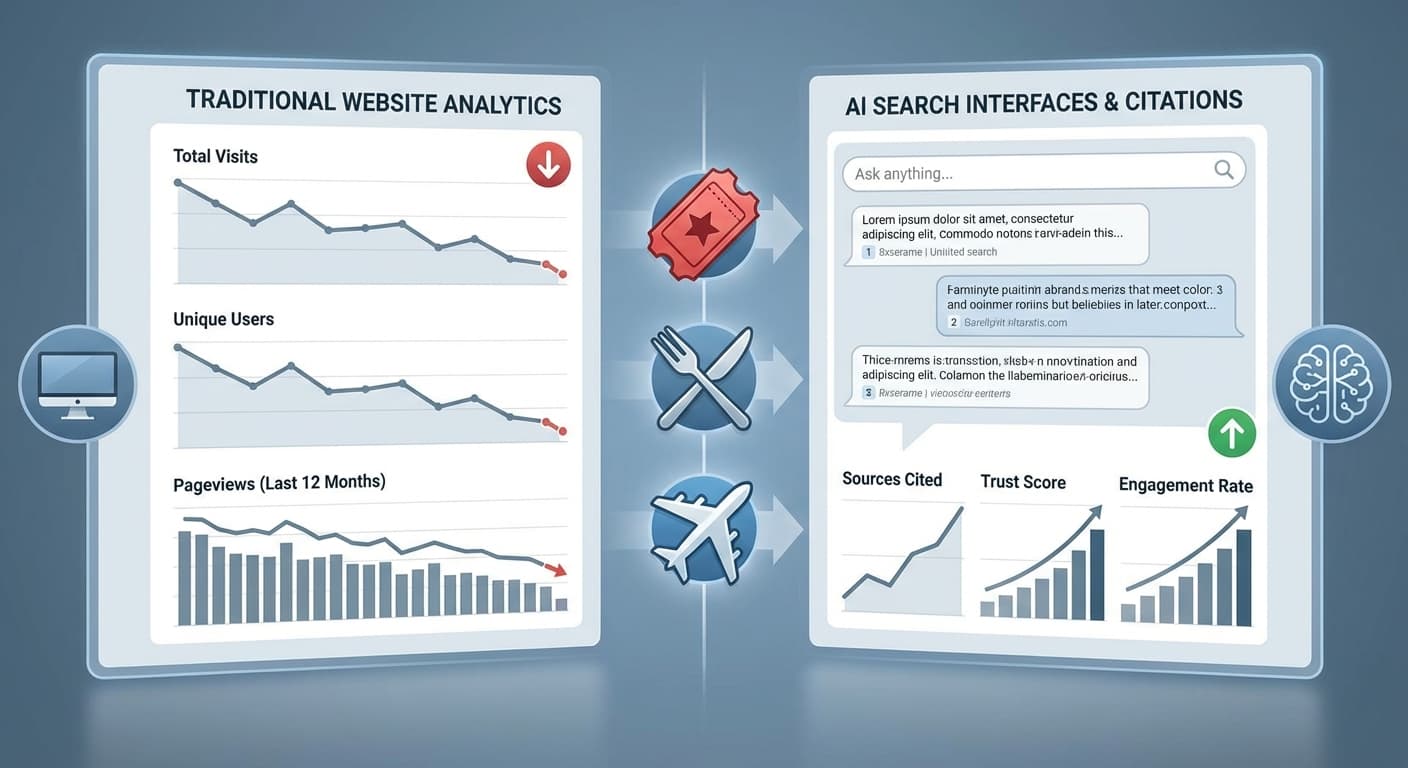
How to Build a Predictive Content Gap Analysis System When AI Search Engines Answer Questions Your Website Doesn't Address Yet Your Competitors Rank For
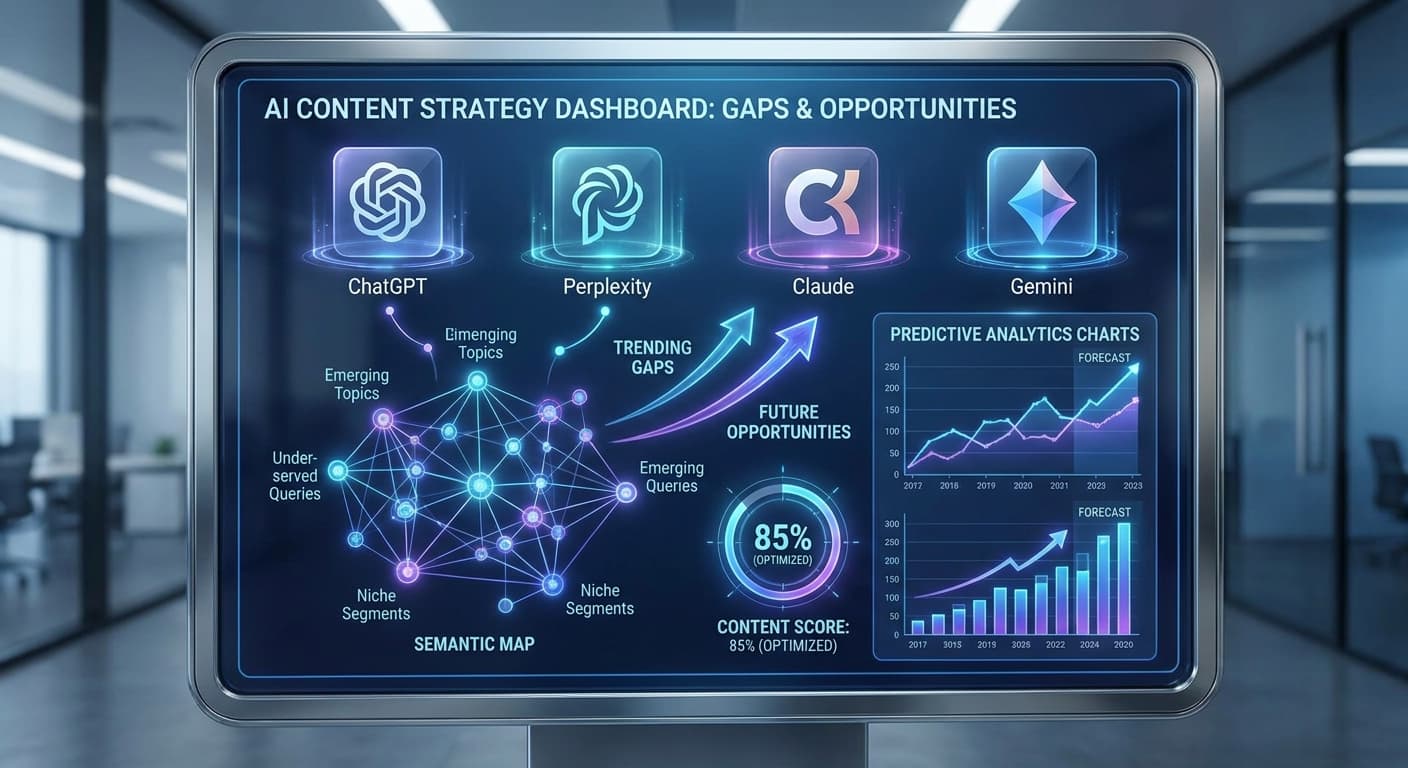
How to Build a Predictive Content Gap Analysis System When AI Search Engines Answer Questions Your Website Doesn't Address Yet Your Competitors Rank For
What if you could predict which questions AI search engines will prioritize next month—before your competitors even know those gaps exist? In 2025, over 400 million people now rely on AI-powered search daily, and these systems are surfacing content gaps that traditional SEO tools completely miss.
While your competitors scramble to reverse-engineer why ChatGPT cited them last week, smart content strategists are building predictive systems that identify tomorrow's content opportunities today. The result? They're capturing AI citations for questions that don't even trend on Google yet.
The Hidden Content Gap Crisis in AI Search
Traditional content gap analysis tells you what keywords you're missing compared to competitors. But AI search engines operate differently—they synthesize answers from multiple sources and often surface questions that haven't been explicitly searched for yet.
Consider this scenario: Your competitor gets cited by Perplexity for "sustainable packaging alternatives for small e-commerce businesses" even though:
This is the new reality of content gaps in 2026. AI engines are creating demand for answers to questions users didn't know they had.
Understanding AI-Native Content Gaps
AI search engines analyze content through five key lenses that traditional SEO misses:
Semantic Connection Mapping
AI engines identify topics that are conceptually related but not obviously connected. If you write about "remote team productivity" but miss "asynchronous decision-making frameworks," AI might surface that gap when users ask nuanced follow-up questions.
Conversational Context Bridging
Users ask AI engines questions in natural language, often combining multiple concepts. "How do I maintain company culture while scaling internationally during economic uncertainty?" requires content that bridges culture, scaling, globalization, and economic strategy.
Knowledge Synthesis Opportunities
AI engines excel at combining information from multiple sources. If competitors cover pieces of a complex topic but no one addresses the full picture, that's a massive opportunity.
Future-State Problem Solving
AI engines are increasingly answering "what if" and "how to prepare for" questions. Users ask about scenarios that haven't happened yet but might.
Cross-Industry Pattern Recognition
AI engines spot patterns across industries and suggest solutions from one sector to another. Your fintech content might get cited for healthcare questions if you cover relevant frameworks.
Building Your Predictive Content Gap Analysis System
Step 1: Create Your Competitive Intelligence Network
Set up monitoring for:
Pro tip: Use tools like Citescope Ai's Citation Tracker to monitor when and why competitors get cited across ChatGPT, Perplexity, Claude, and Gemini. This reveals patterns traditional SEO tools miss.
Step 2: Map Semantic Territories
Create a semantic map of your content universe:
Step 3: Analyze AI Engine Query Patterns
AI engines surface different types of questions:
Audit your content against these question types. Where are the gaps?
Step 4: Build Your Content Opportunity Scoring Matrix
Score potential content opportunities across:
AI Visibility Factors (40% weight):
Competitive Advantage (35% weight):
Market Timing (25% weight):
Step 5: Implement Predictive Monitoring
Set up systems to catch emerging opportunities:
Advanced Techniques for Content Gap Prediction
The Convergence Mapping Method
Identify where multiple trends intersect:
These intersections often generate high-value AI search queries before they hit mainstream awareness.
The Question Ladder Strategy
Map out how questions evolve:
Most content covers levels 1-3. AI engines increasingly cite content that addresses levels 4-5.
The Authority Gap Analysis
Identify topics where:
These represent opportunities to become the definitive source.
Implementing Your Predictive System
Month 1: Foundation Building
Month 2: Pattern Recognition
Month 3: Predictive Content Creation
Ongoing: System Optimization
How Citescope Ai Helps
Building a predictive content gap analysis system requires sophisticated monitoring and optimization tools. Citescope Ai provides the infrastructure you need:
Citation Intelligence: Track exactly when and why your content (and competitors') gets cited across all major AI engines. This data reveals patterns that traditional analytics miss.
GEO Score Analysis: Evaluate your content across the five dimensions AI engines prioritize—AI Interpretability, Semantic Richness, Conversational Relevance, Structure, and Authority. Identify gaps before creating content.
AI-Optimized Content Creation: Use the AI Rewriter to transform existing content into formats that AI engines prefer to cite, testing different approaches to see what works.
Competitive Monitoring: Set up alerts when competitors get cited for topics in your territory, allowing you to respond with better, more comprehensive content.
Measuring Success
Leading Indicators
Lagging Indicators
Common Pitfalls to Avoid
Over-Optimizing for Current AI Behavior: AI engines evolve rapidly. Build flexibility into your system rather than gaming current algorithms.
Ignoring Content Quality for Coverage: Better to deeply cover fewer topics than superficially address everything.
Missing Cross-Industry Opportunities: Some of your best content gaps might come from adjacent industries facing similar challenges.
Focusing Only on Questions You Can Answer: Sometimes the biggest opportunity is admitting knowledge limits while providing the best available guidance.
The Future of Predictive Content Strategy
As AI search continues growing—with Gemini processing over 200 million queries weekly and Claude gaining enterprise adoption—the advantage goes to content creators who can predict and prepare rather than react.
The companies winning AI citations in 2026 aren't just creating good content; they're creating the right content at the right time, often before users know they need it.
Ready to Optimize for AI Search?
Building a predictive content gap analysis system transforms your content strategy from reactive to proactive. Instead of chasing yesterday's trends, you're capturing tomorrow's opportunities.
Citescope Ai gives you the tools to identify, create, and optimize content that AI engines want to cite. Our Citation Tracker, GEO Score analysis, and AI Rewriter work together to help you build the predictive system that keeps you ahead of the competition.
Start building your competitive advantage today—try Citescope Ai free and see which content gaps you're missing in the AI search revolution.