How to Build a Predictive Search Intent Tracking Strategy in the Era of AI Personalization

How to Build a Predictive Search Intent Tracking Strategy in the Era of AI Personalization
In 2026, we're witnessing a seismic shift that's caught most marketing teams off guard: AI search engines now personalize results so heavily that two users asking the identical question can receive completely different answers—and cite entirely different sources. With ChatGPT processing over 600 million weekly queries and Perplexity handling 150+ million searches monthly, the days of universal SERP benchmarking are officially over.
This presents a fascinating paradox: just as AI search becomes more influential (now representing 35% of all search queries), it becomes exponentially harder to predict and track. Marketing teams that built their strategies around consistent, rankable results are scrambling to adapt to a world where search intent tracking requires an entirely new playbook.
The Death of Universal Search Results
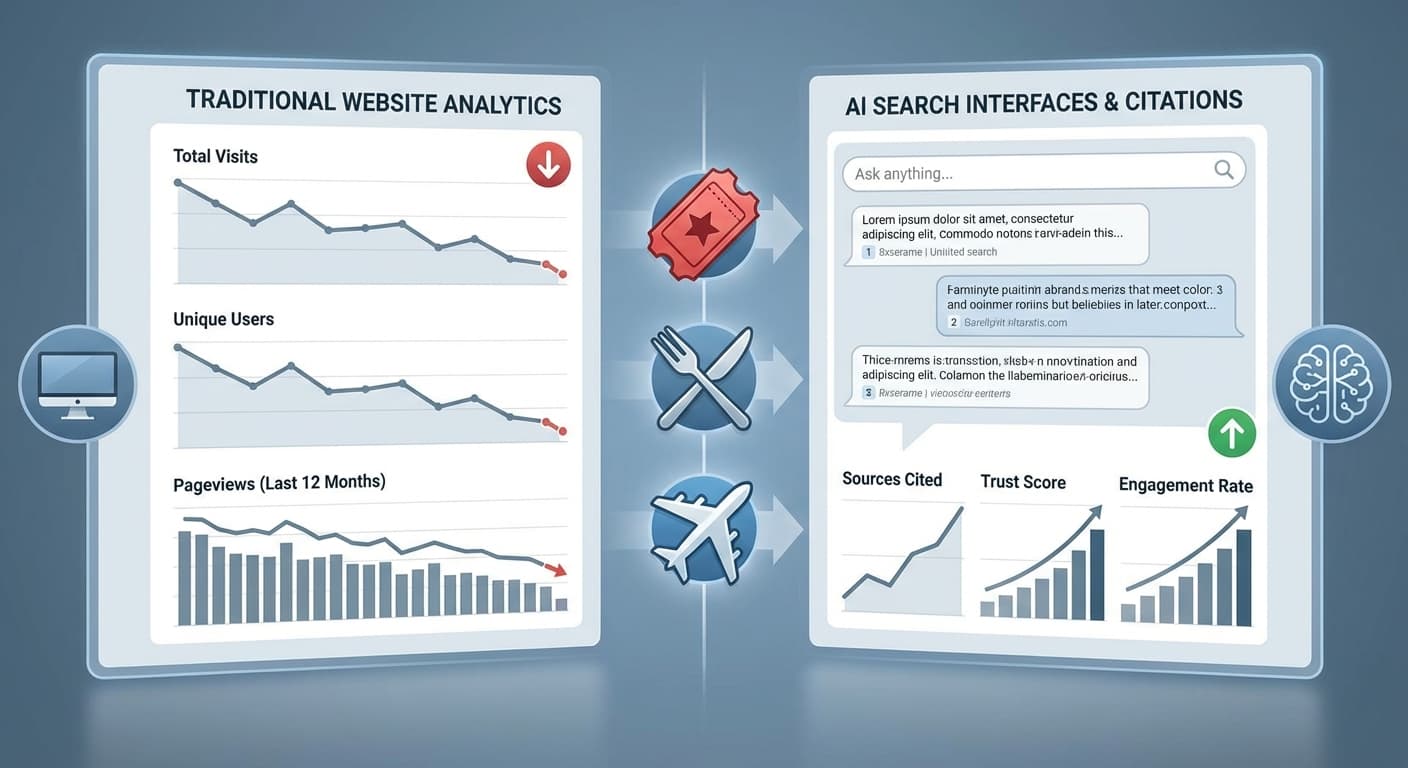
Traditional SEO operated on a simple premise: optimize for specific keywords, track your rankings, and measure success through consistent SERP positions. AI search engines have shattered this model entirely.
Why AI Personalization Changes Everything
Modern AI search engines consider hundreds of personalization factors:
A software developer asking "How to implement OAuth" might receive highly technical documentation, while a small business owner gets beginner-friendly tutorials. Same query, completely different intent interpretation, entirely different citations.
Building Intent Tracking for the AI Era
The solution isn't to abandon search intent tracking—it's to evolve beyond traditional metrics and embrace predictive modeling.
1. Map Intent Clusters, Not Individual Keywords
Instead of tracking specific keyword rankings, focus on intent cluster performance:
Traditional Approach:
AI-Era Approach:
Each cluster requires different content strategies and success metrics.
2. Implement Multi-Persona Testing
Create systematic testing protocols that account for personalization variables:
Persona Development:
Testing Protocol:
3. Track Citation Patterns, Not Rankings
Shift from position tracking to citation pattern analysis:
Key Metrics to Monitor:
This approach reveals which content truly answers user intent, regardless of personalization variables.
Advanced Strategies for Intent Prediction
Semantic Signal Mapping
Develop content that captures multiple semantic signals within single pieces:
For instance, tools like Citescope Ai analyze content across five key dimensions—AI Interpretability, Semantic Richness, Conversational Relevance, Structure, and Authority—providing a comprehensive GEO Score that predicts AI citation likelihood regardless of personalization variables.
Conversation Flow Optimization
AI engines increasingly consider conversational context. Structure content to perform well in multi-turn conversations:
Layer 1: Direct Answer
Layer 2: Context and Nuance
Layer 3: Advanced Applications
This layered approach ensures your content serves multiple personas within the same piece.
Real-Time Adaptation Systems
Build feedback loops that adapt to changing AI behavior:
Measuring Success in a Personalized World
New KPIs for AI Search Success
Citation Reach Metrics:
Intent Coverage Analysis:
Conversational Performance:
Building Predictive Models
Use historical citation data to predict future performance:
How Citescope Ai Helps Navigate AI Personalization
While building a predictive search intent strategy requires sophisticated analysis, modern tools can significantly streamline the process. Citescope Ai's Citation Tracker monitors your content across ChatGPT, Perplexity, Claude, and Gemini, providing visibility into how different AI engines cite your content across various user contexts.
The platform's AI Rewriter uses citation data to optimize content structure and semantic richness, improving performance across multiple persona types. Rather than guessing which content elements drive citations, you can see exactly which sections get referenced and optimize accordingly.
The GEO Score provides a predictive measure of citation likelihood that accounts for AI personalization factors, helping you prioritize optimization efforts on content most likely to succeed in the personalized AI search landscape.
Practical Implementation Steps
Week 1-2: Foundation Building
Week 3-4: Testing and Analysis
Month 2: Optimization and Refinement
Ongoing: Continuous Improvement
The Future of Intent Tracking
As AI personalization becomes even more sophisticated, successful content strategies will increasingly rely on predictive modeling and real-time adaptation. The organizations that master intent cluster thinking and citation pattern analysis will maintain competitive advantages in an increasingly fragmented search landscape.
The key is shifting from reactive optimization to proactive prediction—building content systems that anticipate user intent across multiple personalization scenarios rather than responding to historical performance data that may no longer be relevant.
Ready to Optimize for AI Search?
Building a predictive search intent tracking strategy doesn't have to be overwhelming. Citescope Ai provides the tools and insights you need to navigate AI personalization successfully. From citation tracking across major AI platforms to predictive GEO scoring that accounts for personalization factors, we help you build content that performs regardless of how AI engines personalize results.
Start with our free tier today and see how your content performs across different AI search contexts. Get 3 free optimizations to test our approach, then upgrade to Pro ($39/month) for unlimited optimizations and comprehensive citation tracking. Ready to master AI search intent tracking? Try Citescope Ai free today.