How to Build a Real-Time Intent Pillar Strategy When Traditional Keyword Research Tools Can't Predict What AI Agents Will Search for in Agentic Commerce Workflows

How to Build a Real-Time Intent Pillar Strategy When Traditional Keyword Research Tools Can't Predict What AI Agents Will Search for in Agentic Commerce Workflows
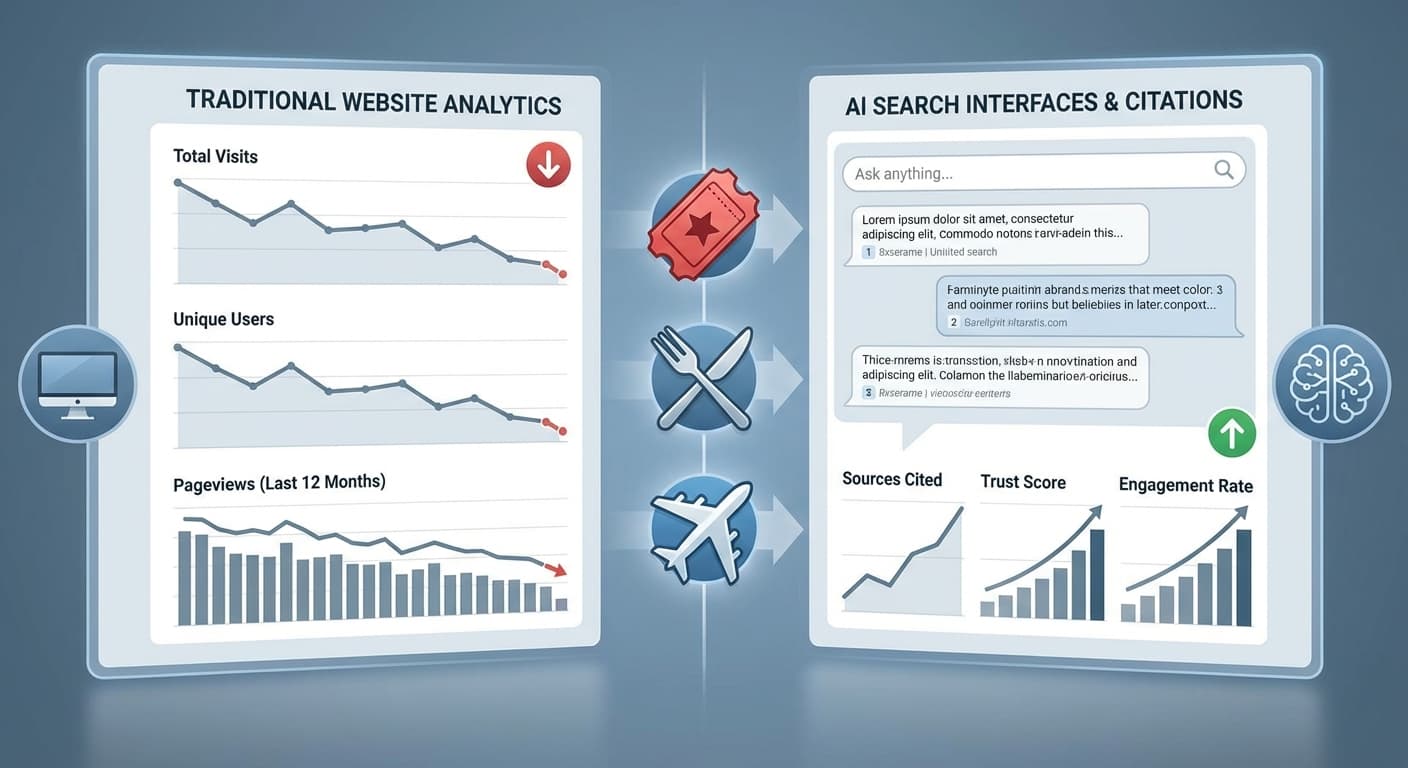
By 2026, AI agents are handling over 40% of commerce-related searches, from product discovery to price comparisons and purchase decisions. Yet here's the challenge: traditional keyword research tools like SEMrush and Ahrefs are built for human search patterns, not the complex, contextual queries that AI agents generate when helping users navigate agentic commerce workflows.
While you're optimizing for "best running shoes" and "affordable laptops," AI agents are asking questions like "recommend ergonomic office chairs for remote workers with lower back pain under $500 that ship within 2 days" or "compare sustainable skincare brands with clinical testing data for sensitive skin types."
This shift demands a completely new approach to content strategy—one that moves beyond static keyword lists to dynamic, intent-driven pillar content that can adapt to the unpredictable nature of AI-powered commerce.
The Breakdown of Traditional Keyword Research in AI Commerce
Why Keyword Tools Miss the Mark
Traditional keyword research tools analyze historical search data to predict future queries. But AI agents don't search the way humans do:
A recent study by Commerce Intelligence found that 67% of AI agent queries in 2025 contained parameters that never appeared in traditional keyword research tools.
The Rise of Intent Fluidity
In agentic commerce, intent isn't static—it's fluid. An AI agent helping a user might start with "budget-friendly smartphones" but quickly pivot to "smartphones with best camera quality under $800 with trade-in options" as it learns more about the user's preferences and constraints.
This fluidity means that the old model of creating content around fixed keyword clusters is increasingly ineffective.
Building Your Real-Time Intent Pillar Strategy
1. Map Commerce Journey Micro-Moments
Instead of starting with keywords, begin by mapping the micro-moments in modern commerce journeys:
Discovery Phase:
Evaluation Phase:
Decision Phase:
For each micro-moment, create flexible content pillars that can address multiple variations of intent rather than specific keywords.
2. Develop Semantic Intent Clusters
Move beyond keyword groups to semantic intent clusters that capture the "why" behind searches:
Example for E-commerce Electronics:
Each cluster should have pillar content that can dynamically address various combinations of these intents.
3. Create Modular Content Architecture
Structure your content as modular components that can be recombined based on real-time intent signals:
Core Components:
Dynamic Combinations:
This modular approach allows AI agents to find exactly the information combination they need for any specific query.
4. Implement Real-Time Intent Monitoring
Set up systems to capture and analyze actual AI agent queries:
Direct Monitoring:
Behavioral Analytics:
Market Intelligence:
5. Build Dynamic Content Templates
Develop content templates that can adapt to various intent combinations:
Adaptive Product Guides:
[Product Category] for [User Type] - [Primary Intent]
Quick Decision Framework
[Dynamic criteria based on detected intent]
Top Recommendations
[Filtered by real-time inventory, pricing, reviews]
Detailed Comparison
[Modular feature tables that expand based on query complexity]
Next Steps
[Personalized actions based on user journey stage]
Flexible FAQ Structures:
Optimizing for AI Agent Discovery
Once you've built your intent pillar strategy, optimization becomes crucial. AI agents evaluate content differently than traditional search engines, focusing on:
Tools like Citescope Ai can help optimize your content for these AI-specific ranking factors through their GEO Score analysis, which evaluates content across dimensions like AI Interpretability and Conversational Relevance.
Content Refresh Triggers
Set up automated triggers to refresh your content when:
Advanced Tactics for Intent Prediction
Leverage AI Agent Conversation Logs
If you have access to customer service AI logs or chatbot conversations, mine them for:
Create Intent Simulation Scenarios
Regularly run "what if" scenarios:
Build Community Intelligence Networks
Engage with communities where your target users discuss problems and solutions:
These conversations often reveal the exact language and concerns that later show up in AI agent queries.
Measuring Success in Real-Time Intent Strategy
Key Performance Indicators
AI Visibility Metrics:
Commerce Impact Metrics:
Content Performance Metrics:
Continuous Optimization Loop
How Citescope Ai Helps Build Better Intent Strategies
Building and maintaining a real-time intent pillar strategy requires constant monitoring and optimization. Citescope Ai's Citation Tracker shows you exactly which of your content pieces are being cited by ChatGPT, Perplexity, Claude, and Gemini—giving you direct insight into what content resonates with AI agents.
The platform's GEO Score analyzes your content across five key dimensions that matter for AI visibility, while the AI Rewriter can help you restructure existing content to better address dynamic intent clusters. This combination of monitoring and optimization tools makes it possible to maintain an adaptive content strategy that stays ahead of unpredictable AI agent queries.
Ready to Optimize for AI Search?
Traditional keyword research is becoming obsolete as AI agents reshape how people discover and purchase products. Building a real-time intent pillar strategy isn't just about staying competitive—it's about positioning your brand as the go-to source for AI-powered commerce decisions. Try Citescope Ai free and start tracking which of your content pieces are already winning citations from AI agents, then optimize the rest of your content library to capture more of this rapidly growing traffic source.