How to Build a Return on AI Investment Tracking System When 64% of Marketing Budgets Now Include AI Search Optimization But CMOs Can't Prove ROI to the Board
How to Build a Return on AI Investment Tracking System When 64% of Marketing Budgets Now Include AI Search Optimization But CMOs Can't Prove ROI to the Board
CMOs are facing a critical challenge in 2026: while 64% of marketing budgets now allocate resources to AI search optimization, most can't demonstrate concrete ROI to their boards. With AI-powered search engines like ChatGPT (reaching 600M+ weekly users), Perplexity, Claude, and Gemini fundamentally changing how consumers discover information, the pressure to prove AI investment returns has never been higher.
The problem isn't just about spending money on AI tools—it's about creating a systematic approach to measure, track, and optimize the return on those investments. This comprehensive guide will show you how to build a robust ROI tracking system that satisfies both your board's demands for accountability and your team's need for actionable insights.
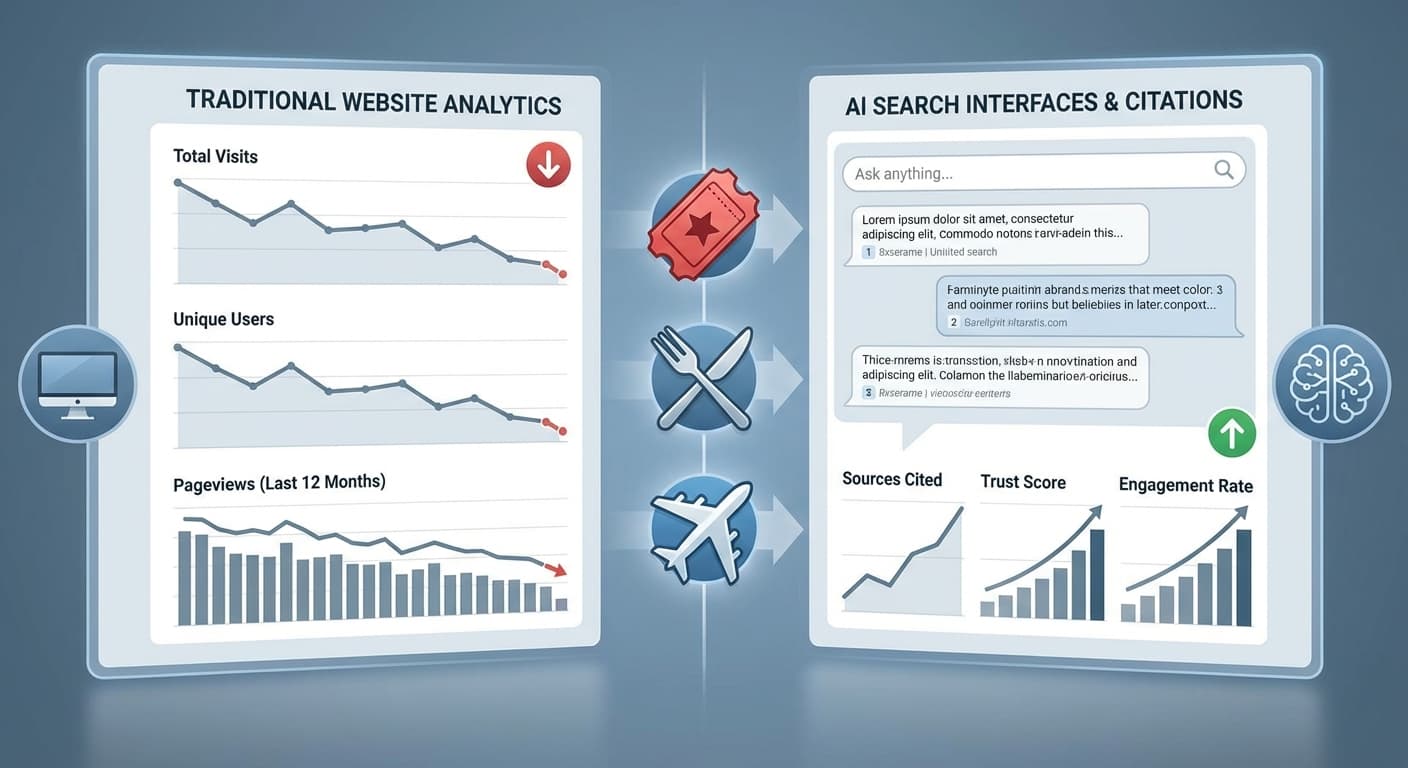
Why Traditional Marketing ROI Metrics Fail in AI Search
Traditional marketing ROI calculations don't capture the unique value proposition of AI search optimization. Here's why:
The Attribution Problem
The Measurement Gap
The 5-Layer ROI Tracking Framework
To build an effective AI investment tracking system, implement these five interconnected measurement layers:
Layer 1: Input Investment Tracking
Capture every dollar spent on AI search optimization:
Direct Costs:
Indirect Costs:
Layer 2: Citation and Visibility Metrics
Primary KPIs:
Measurement Tools:
Layer 3: Traffic and Engagement Attribution
Advanced Attribution Modeling:
Technical Implementation:
Layer 4: Business Impact Measurement
Revenue Attribution:
Brand Equity Metrics:
Layer 5: Efficiency and Optimization Metrics
Operational Excellence:
Building Your AI ROI Dashboard
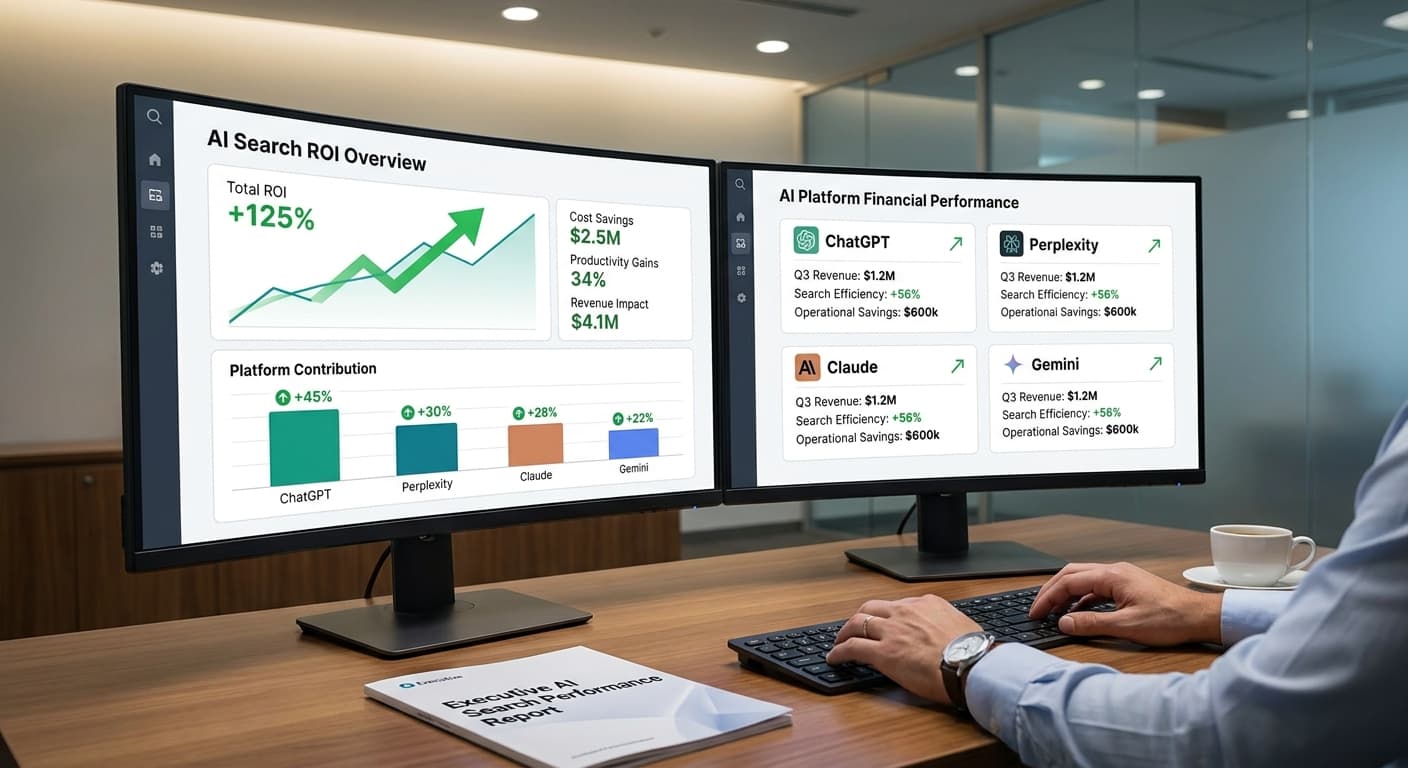
Essential Metrics for Board Reporting
Create executive-friendly dashboards with these key metrics:
Financial Performance:
Growth Indicators:
Technical Implementation
Data Integration Strategy:
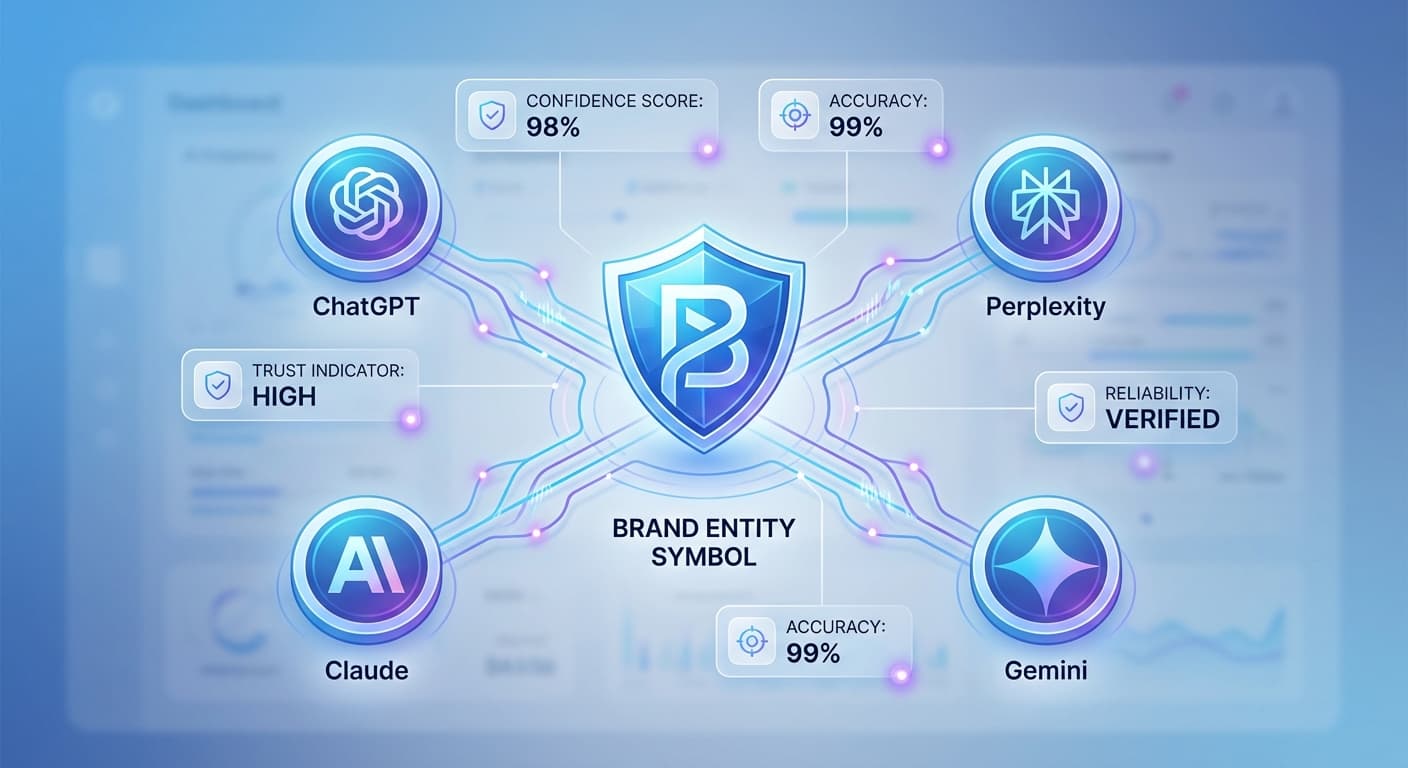
Tools like Citescope Ai's Citation Tracker can automate much of this data collection, providing real-time monitoring of when your content gets cited across ChatGPT, Perplexity, Claude, and Gemini, making it easier to build comprehensive ROI reports.
Overcoming Common ROI Tracking Challenges
Challenge 1: Long Attribution Windows
Solution: Implement multi-touch attribution models with extended lookback windows (90-180 days) to capture AI search's influence on longer buying cycles.
Challenge 2: Cross-Platform Complexity
Solution: Develop unified tracking codes and consistent UTM strategies across all AI platforms to maintain attribution integrity.
Challenge 3: Proving Incremental Value
Solution: Use controlled testing with content optimized for AI search versus standard content to demonstrate lift.
Advanced ROI Optimization Strategies
Predictive ROI Modeling
Develop predictive models that forecast:
Competitive Intelligence Integration
Track competitors' AI search visibility to:
Content Portfolio Optimization
Analyze ROI by:
How Citescope Ai Simplifies ROI Tracking
Building a comprehensive ROI tracking system requires sophisticated tools and analytics capabilities. Citescope Ai streamlines this process with:
Automated Citation Monitoring: Real-time tracking across all major AI search engines eliminates manual monitoring and ensures complete visibility into your content's performance.
GEO Score Analytics: The platform's 5-dimensional analysis provides predictive insights into content performance, helping you allocate resources to the highest-ROI content optimization opportunities.
Multi-Platform Reporting: Consolidated dashboards show citation performance across ChatGPT, Perplexity, Claude, and Gemini, making it easy to calculate platform-specific ROI and optimize budget allocation.
Export Integration: Download optimized content and performance data in multiple formats for seamless integration with your existing analytics and reporting systems.
Building Board-Ready ROI Reports
Executive Summary Template
Investment Overview:
Performance Highlights:
Strategic Insights:
Quarterly Business Review Framework
Ready to Optimize for AI Search?
Building a comprehensive AI investment tracking system is essential for justifying marketing spend and optimizing performance in 2026's AI-driven search landscape. While the framework outlined above provides the strategic foundation, implementing it effectively requires sophisticated tools and analytics capabilities.
Citescope Ai makes AI search ROI tracking simple and actionable. Our platform automatically monitors citations across all major AI engines, provides predictive performance insights through GEO Scoring, and delivers the data you need to build compelling ROI reports for your board.
Start tracking your AI search ROI today with a free Citescope Ai account—get 3 content optimizations per month to test the platform and begin building your measurement system. Ready to scale? Our Pro plan ($39/month) provides unlimited optimizations and advanced analytics to power your complete ROI tracking framework.