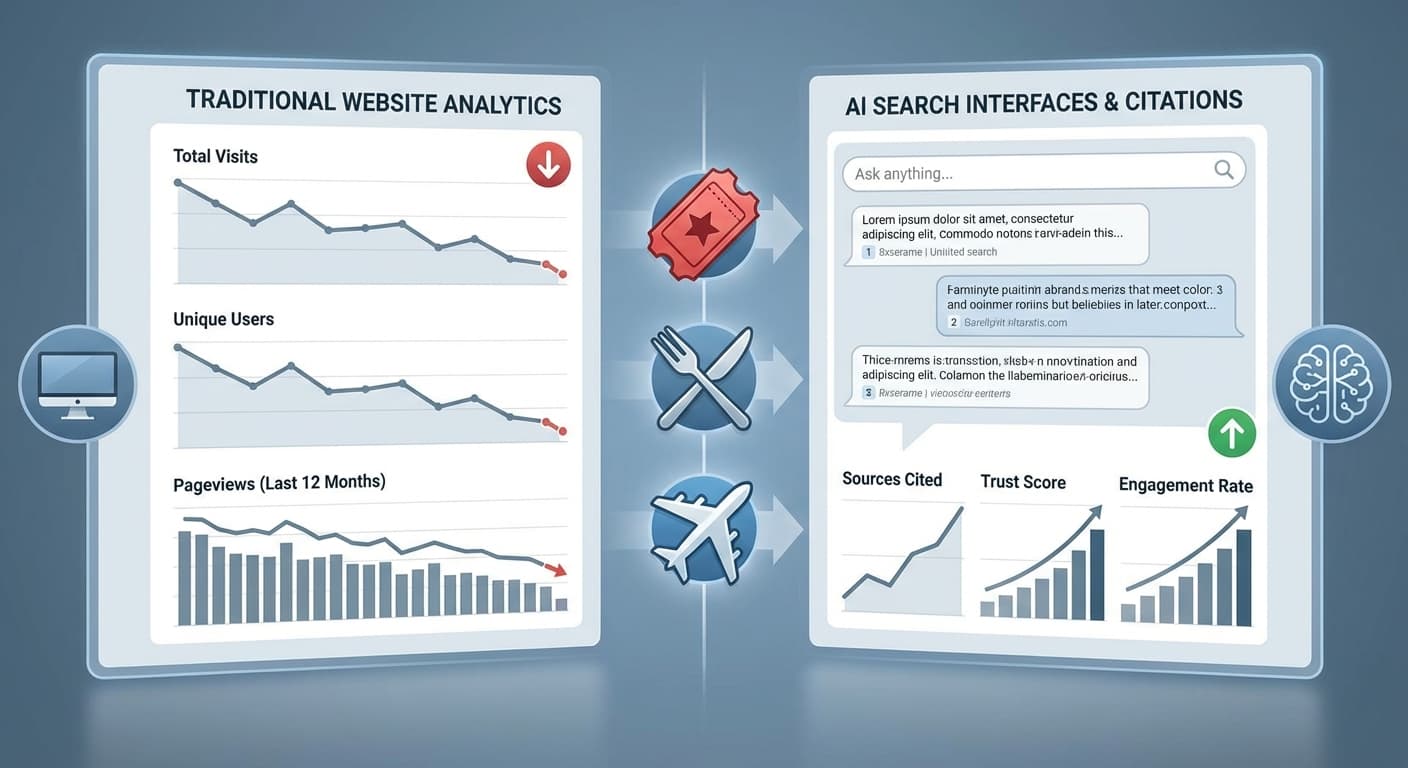
How to Build a Search Everywhere Optimization Framework: Beyond Traditional Google Rankings
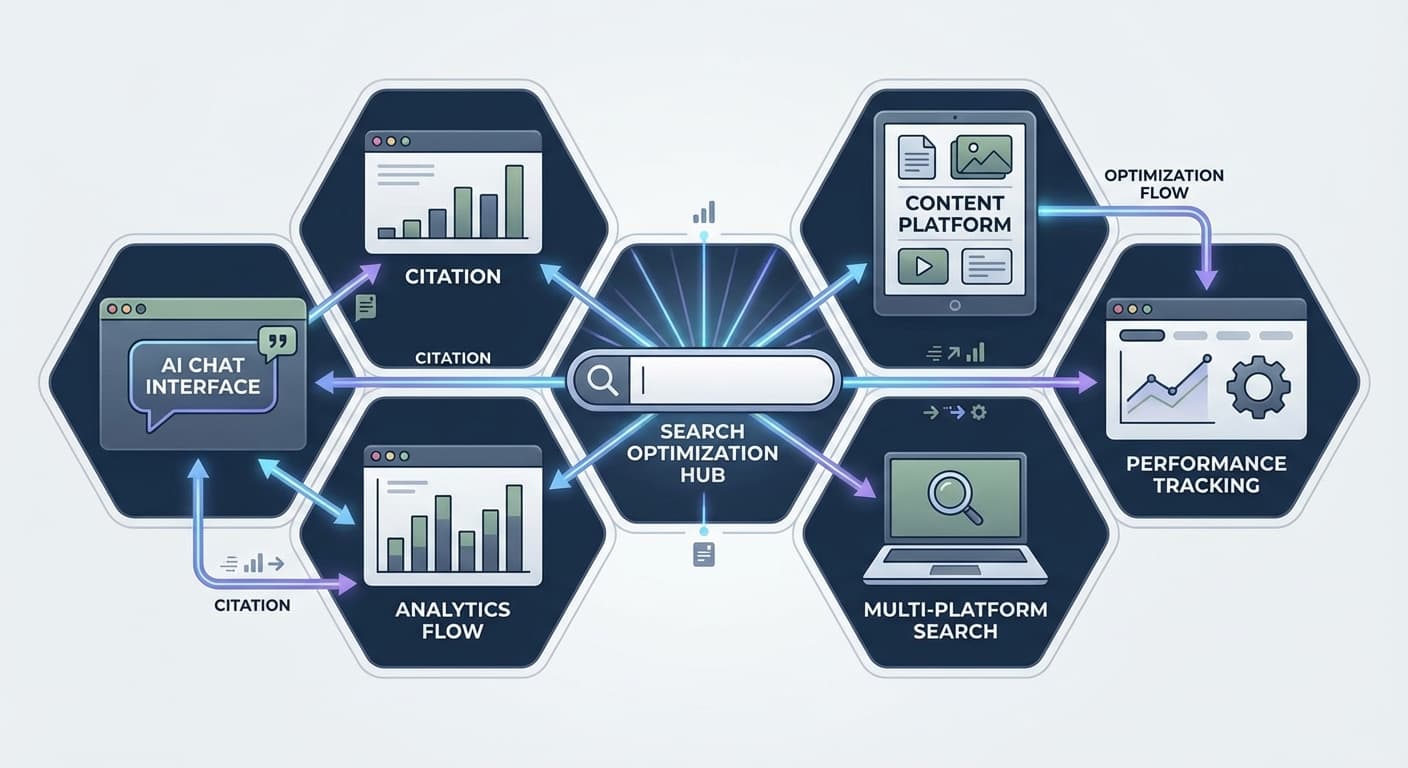
How to Build a Search Everywhere Optimization Framework: Beyond Traditional Google Rankings
With over 75% of consumers now using AI-powered search tools for product research and information gathering in 2026, your brand's visibility strategy can't afford to focus solely on traditional Google rankings. Yet most marketing teams are still trapped in the old playbook—tracking keyword positions while missing citations in ChatGPT, Perplexity, Claude, and Google's AI Overviews entirely.
If your brand needs comprehensive visibility across all search platforms but your team is still only monitoring traditional SERPs, you're flying blind in the new search landscape. Here's how to build a "Search Everywhere" optimization framework that actually works in 2026.
The Reality of Multi-Platform Search in 2026
The search landscape has fundamentally shifted. Recent data shows:
Yet most brands are still optimizing for a single search engine using metrics that don't capture the full picture. Your content might rank #1 on Google but be completely invisible when someone asks ChatGPT the same question.
Why Traditional SEO Metrics Fall Short
Traditional SEO tracking focuses on:
But these metrics don't tell you:
Building Your Search Everywhere Framework
Phase 1: Audit Your Current AI Visibility
Before building your optimization framework, you need to understand where you currently stand across all search platforms.
Step 1: Conduct Cross-Platform Brand Queries
Test variations of queries related to your industry across:
Document when your brand, content, or expertise is mentioned and in what context.
Step 2: Analyze Citation Patterns
Look for patterns in how AI engines cite sources:
Step 3: Map Content Gaps
Identify topics where competitors are getting cited but you're not. These represent immediate optimization opportunities.
Phase 2: Create Content Optimized for AI Interpretation
AI search engines evaluate content differently than traditional search algorithms. They prioritize:
Content Optimization Strategies:
- Focus on answering specific questions your audience asks
- Use natural language that mirrors how people actually speak
- Include variations of questions within your content
- Use clear headings and subheadings
- Include bullet points and numbered lists
- Add definition boxes for key terms
- Create scannable content sections
- Cover topics comprehensively, not superficially
- Include related concepts and terminology
- Connect ideas logically throughout your content
- Provide context and background information
Phase 3: Implement Cross-Platform Tracking
Traditional rank tracking tools won't capture your AI search visibility. You need a comprehensive monitoring approach.
Key Metrics to Track:
Tools like Citescope Ai can automate much of this tracking, monitoring citations across ChatGPT, Perplexity, Claude, and other AI platforms while providing actionable insights for optimization.
Phase 4: Optimize Content Performance
Once you're tracking AI citations, you can begin optimizing for better performance.
Content Optimization Techniques:
- Include author credentials and expertise markers
- Add publication dates and update timestamps
- Link to authoritative sources and research
- Include case studies and data points
- Answer questions directly and concisely
- Use natural language patterns
- Include follow-up questions and related topics
- Provide actionable advice and next steps
- Use consistent heading hierarchies
- Include summary sections
- Add key takeaways and conclusions
- Create logical content flow
Phase 5: Scale and Systematize
Create Content Templates
Develop standardized templates that incorporate AI optimization best practices:
Establish Review Processes
Regularly audit your content performance:
Train Your Team
Ensure your content creators understand:
Common Implementation Challenges
Challenge 1: Resource Allocation
Many teams struggle with dedicating resources to AI optimization while maintaining traditional SEO efforts.
Solution: Start with high-impact content pieces and gradually expand your optimization efforts.
Challenge 2: Measurement Complexity
Tracking performance across multiple AI platforms can be overwhelming.
Solution: Focus on the platforms most relevant to your audience first, then expand monitoring gradually.
Challenge 3: Content Scalability
Optimizing individual pieces of content for AI can be time-intensive.
Solution: Develop templates and systems that build optimization into your content creation process from the start.
How Citescope Ai Helps
Building and maintaining a Search Everywhere optimization framework requires sophisticated tracking and optimization capabilities. Citescope Ai provides:
The platform eliminates the guesswork from AI optimization, providing clear metrics and actionable recommendations for improving your content's visibility across all search platforms.
Measuring Success in the New Search Landscape
Your Search Everywhere framework should track:
Primary Metrics:
Secondary Metrics:
Ready to Optimize for AI Search?
The search landscape has evolved beyond traditional keyword rankings, but most brands are still using outdated optimization strategies. A comprehensive Search Everywhere framework ensures your content gets discovered and cited across all the platforms your audience actually uses.
Citescope Ai makes it easy to build, implement, and scale your AI search optimization efforts. Start with our free tier to optimize up to 3 pieces of content per month and see how your visibility improves across ChatGPT, Perplexity, Claude, and other AI platforms. Ready to get started? Try Citescope Ai free today and transform your search strategy for 2026.