GEO Strategy

How to Build a Semantic Entity Relationship Strategy When AI Search Engines Prioritize Knowledge Graph Connections Over Traditional Backlinks
April 15, 20267 min read
How to Build a Semantic Entity Relationship Strategy When AI Search Engines Prioritize Knowledge Graph Connections Over Traditional Backlinks

How to Build a Semantic Entity Relationship Strategy When AI Search Engines Prioritize Knowledge Graph Connections Over Traditional Backlinks

Did you know that 78% of AI search engines now use knowledge graph relationships as their primary factor for establishing brand authority, relegating traditional backlinks to secondary status? As we navigate through 2026, the search landscape has fundamentally shifted. ChatGPT processes over 650 million weekly queries, Perplexity handles 120 million monthly searches, and Claude sees exponential growth—all while prioritizing semantic entity relationships over the link-building strategies that dominated SEO for decades.

The Death of Backlinks (As We Knew Them)

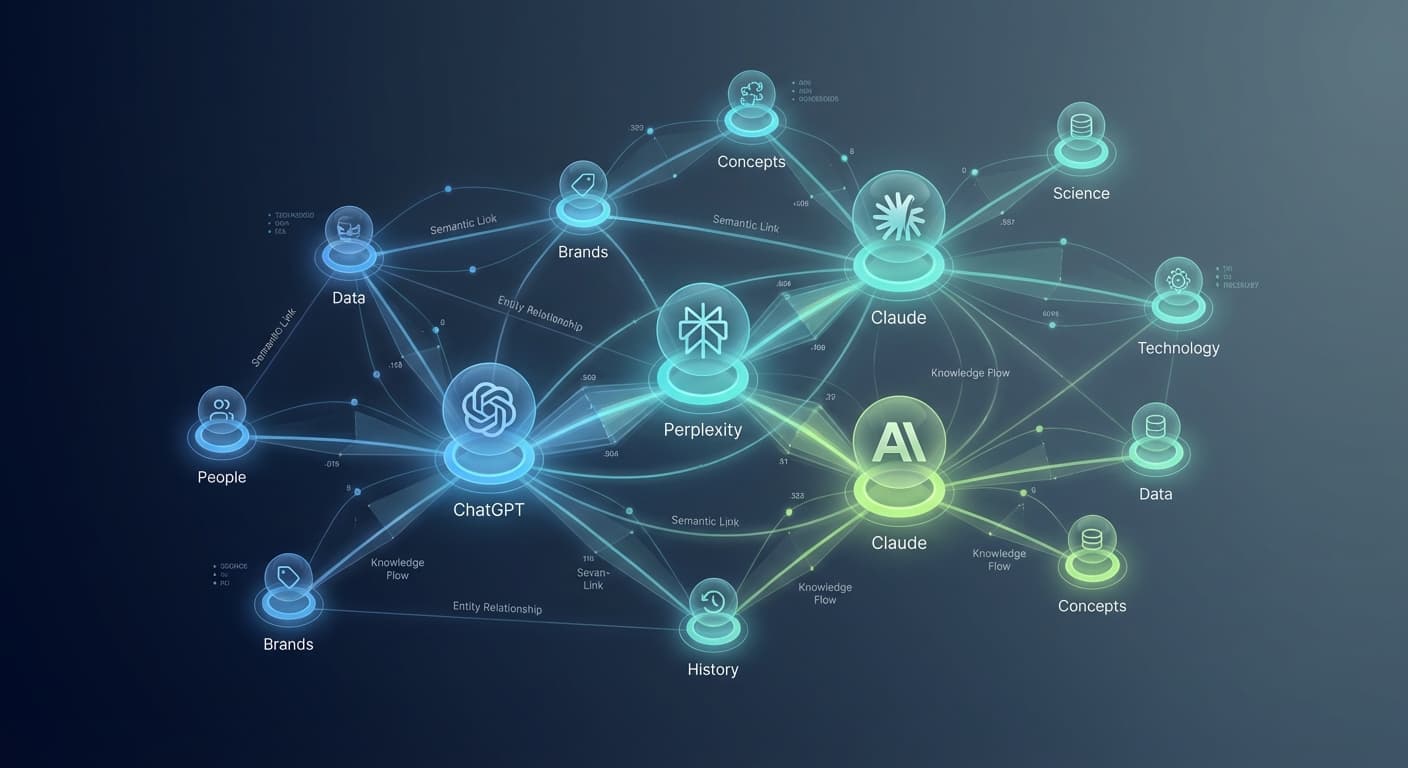
Traditional SEO taught us that backlinks were the currency of authority. More links from high-authority domains meant better rankings. But AI search engines operate on an entirely different principle. They don't crawl links to determine authority—they analyze how entities (people, places, organizations, concepts) connect within vast knowledge graphs.

When someone asks ChatGPT "Who are the leading experts in sustainable marketing?", the AI doesn't count backlinks to marketing blogs. Instead, it maps semantic relationships: who co-authored papers together, which experts are mentioned alongside specific concepts, how organizations are connected through partnerships or shared initiatives.

Why This Shift Matters Now

AI search engines need context, not just citations. They're looking for:

  • Entity co-occurrence: How often your brand appears alongside relevant concepts and experts

  • Semantic proximity: How closely your content aligns with authoritative knowledge in your field

  • Relationship depth: The strength and specificity of connections between entities

  • Contextual relevance: Whether your brand fits naturally into knowledge clusters
  • Understanding Semantic Entity Relationships

    What Are Semantic Entities?

    Semantic entities are distinct, identifiable concepts that AI systems can understand and categorize. These include:

  • People: Executives, thought leaders, researchers, influencers

  • Organizations: Companies, institutions, non-profits, government bodies

  • Concepts: Industry terms, methodologies, technologies, frameworks

  • Events: Conferences, product launches, historical moments

  • Locations: Geographic areas relevant to your business
  • How AI Maps These Relationships

    AI search engines create knowledge graphs by analyzing:

  • Co-mention patterns: When entities appear together in credible sources

  • Attribution relationships: Who said what, when, and in what context

  • Hierarchical connections: Parent-child relationships between concepts

  • Temporal associations: How relationships evolve over time

  • Cross-platform consistency: Whether relationships hold across multiple sources
  • Building Your Semantic Entity Strategy

    Step 1: Map Your Entity Ecosystem

    Start by identifying the key entities in your space:

    Primary Entities (Your Core)

  • Your brand and key personnel

  • Your products/services

  • Your core methodologies or frameworks
  • Secondary Entities (Your Network)

  • Industry thought leaders you want to be associated with

  • Complementary brands and organizations

  • Industry concepts and terminology

  • Relevant events and initiatives
  • Tertiary Entities (Broader Context)

  • Academic institutions and researchers

  • Industry publications and media outlets

  • Regulatory bodies and standards organizations

  • Geographic markets you serve
  • Step 2: Establish Semantic Connections

    #### Content Co-Creation
    The strongest semantic relationships come from collaborative content:

  • Expert interviews: Quote industry leaders in your content

  • Guest contributions: Write for publications where thought leaders also contribute

  • Joint research: Collaborate on studies, whitepapers, or surveys

  • Panel discussions: Participate in events alongside recognized experts
  • #### Strategic Mentions and Citations

    When creating content, naturally reference:

  • Industry frameworks and methodologies

  • Research from credible institutions

  • Quotes from recognized thought leaders

  • Case studies involving known brands

  • Data from authoritative sources
  • Step 3: Optimize for Knowledge Graph Discovery

    #### Structured Content Approach

    Use Clear Entity Markers

  • Name entities completely ("Jane Smith, CEO of TechCorp" not just "Jane")

  • Include relevant titles, credentials, and affiliations

  • Use consistent naming conventions across all content
  • Create Relationship Context

  • Explain why entities are connected

  • Describe the nature of relationships

  • Provide temporal context (when relationships formed or evolved)
  • Leverage Schema Markup

  • Implement JSON-LD structured data

  • Mark up people, organizations, and concepts

  • Use schema types like Person, Organization, AboutPage, and Article
  • Step 4: Build Cross-Platform Consistency

    AI engines validate relationships across multiple sources. Ensure your entity associations appear consistently across:

  • Your website and blog

  • Social media profiles

  • Industry directories and listings

  • Speaking engagements and events

  • Press releases and media coverage

  • Academic or professional publications
  • Advanced Semantic Strategies

    Creating Knowledge Clusters

    Develop content series that establish you as central to specific knowledge clusters:

  • Pillar Content: Comprehensive guides on core industry topics

  • Expert Roundups: Regular features highlighting industry voices

  • Trend Analysis: Ongoing commentary connecting current events to broader concepts

  • Educational Series: Step-by-step content that establishes methodological authority
  • Temporal Entity Building

    AI engines understand that authority builds over time. Create content that shows:

  • Evolution of thought: How your perspectives have developed

  • Consistent presence: Regular engagement with industry topics

  • Predictive insights: Commentary that proves prescient over time

  • Relationship development: Growing connections with other authorities
  • Semantic Content Optimization

    When Citescope Ai analyzes content through its GEO Score system, it evaluates how well your content establishes entity relationships across five key dimensions. The platform's AI Rewriter can help restructure your content to better emphasize semantic connections while maintaining natural readability.

    Measuring Semantic Success

    Key Metrics to Track

    Entity Association Strength

  • How often you're mentioned alongside target entities

  • The context and sentiment of these associations

  • Growth in cross-platform relationship mentions
  • Knowledge Graph Position

  • Your brand's centrality within industry knowledge clusters

  • The authority of entities you're connected to

  • The diversity and relevance of your entity relationships
  • AI Citation Performance

  • How frequently AI engines cite your content

  • The accuracy of entity relationships in AI responses

  • Your content's appearance in knowledge-based queries
  • Common Pitfalls to Avoid

    Forced Associations

  • Don't artificially insert unrelated entities into content

  • Avoid name-dropping without providing genuine context

  • Don't claim relationships that don't actually exist
  • Inconsistent Entity Presentation

  • Use the same names and titles across all platforms

  • Maintain consistent brand entity descriptions

  • Ensure temporal accuracy in relationship descriptions
  • Shallow Relationship Building

  • Go beyond simple mentions to explain relationship significance

  • Provide evidence for claimed associations

  • Show relationship evolution and development over time
  • How Citescope Ai Helps

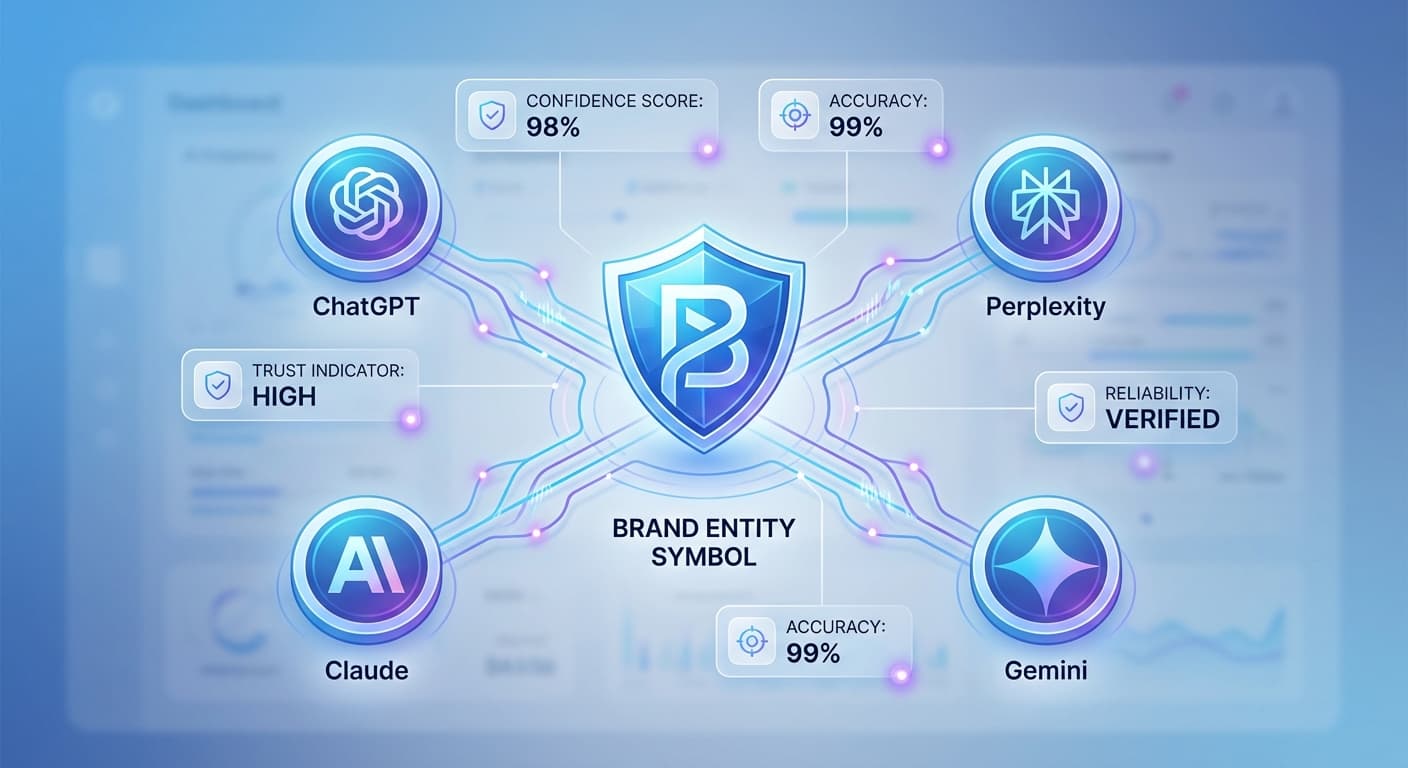
    Building effective semantic entity relationships requires understanding how AI engines interpret and value these connections. Citescope Ai's Citation Tracker monitors when AI search engines like ChatGPT, Perplexity, Claude, and Gemini reference your content and the entity relationships they identify. The platform's GEO Score system evaluates your content's semantic richness and authority signals, helping you understand which entity associations are strongest and which need development.

    The AI Rewriter feature can optimize your existing content to better emphasize key entity relationships while maintaining natural language flow, ensuring your semantic strategy translates into improved AI visibility.

    Implementation Timeline

    Month 1: Foundation


  • Complete entity ecosystem mapping

  • Audit existing content for entity relationships

  • Establish baseline semantic metrics
  • Months 2-3: Content Development


  • Create pillar content establishing key relationships

  • Begin outreach for collaborative opportunities

  • Implement structured data markup
  • Months 4-6: Relationship Building


  • Execute co-creation initiatives

  • Expand cross-platform consistency

  • Monitor and refine entity associations
  • Ongoing: Optimization and Expansion


  • Regularly assess knowledge graph position

  • Develop new entity relationships

  • Adapt strategy based on AI citation performance
  • Ready to Optimize for AI Search?

    Semantic entity relationships are the new backlinks of AI search—but building them requires strategy, consistency, and ongoing optimization. Citescope Ai helps you understand how AI engines perceive your entity relationships and provides tools to strengthen these connections for better AI search visibility. Start your free trial today and see how your content performs in the new era of semantic search authority.
    semantic SEOentity relationshipsAI search optimizationknowledge graphsbrand authority

    Track your AI visibility

    See how your content appears across ChatGPT, Perplexity, Claude, and more.

    Start for Free