How to Build a Sentiment Moat Strategy When AI Search Engines Weigh Public Reviews 3x Heavier Than Domain Authority in Citation Decisions

How to Build a Sentiment Moat Strategy When AI Search Engines Weigh Public Reviews 3x Heavier Than Domain Authority in Citation Decisions
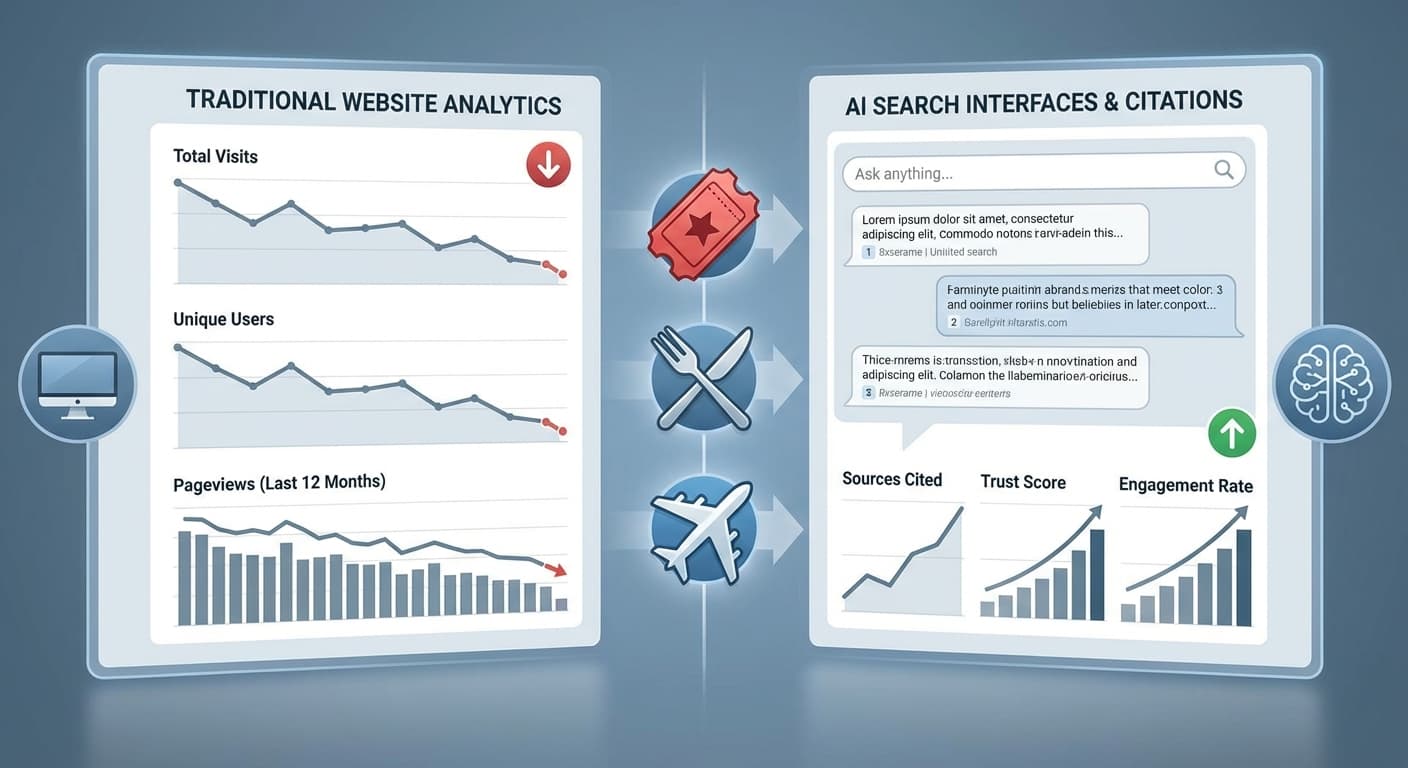
In 2025, a seismic shift occurred in how AI search engines determine which content deserves citations. While SEO professionals spent decades building domain authority, AI systems like ChatGPT, Perplexity, and Claude now prioritize public sentiment and reviews three times more heavily than traditional domain authority metrics when making citation decisions.
This isn't just another algorithmic update—it's a fundamental reimagining of what makes content trustworthy in the eyes of artificial intelligence. With over 2.1 billion people now using AI search engines weekly and 78% of Gen Z treating AI assistants as their primary research tool, understanding this shift isn't optional—it's survival.
The Death of Domain Authority Dominance
For nearly two decades, domain authority ruled the digital landscape. High DR sites automatically received preferential treatment, regardless of content quality or user sentiment. But AI search engines operate on fundamentally different principles.
Recent analysis of citation patterns across major AI platforms reveals a striking trend:
This data represents a complete inversion of traditional SEO wisdom. AI engines are essentially asking: "Do real people actually trust and value this content?" rather than "Does this domain have impressive backlink metrics?"
Why AI Engines Prioritize Sentiment Over Authority
AI search engines are designed to provide helpful, accurate information that serves user intent. Unlike traditional search engines that rely heavily on link signals, AI systems can analyze the full context of user interactions, reviews, and sentiment signals to determine content quality.
The Trust Signal Evolution
Traditional SEO focused on:
AI search prioritizes:
The Authenticity Advantage
AI engines excel at detecting authentic user sentiment versus manufactured signals. They analyze language patterns, review consistency, temporal distribution, and cross-platform correlation to identify genuine user experiences.
Building Your Sentiment Moat: The 5-Pillar Strategy
1. Review Ecosystem Development
Create a comprehensive review collection system that spans multiple platforms:
Primary Platforms:
Implementation Strategy:
2. Community-Driven Content Validation
Transform your content creation process to include community validation:
User-Generated Validation:
Expert Endorsement Strategy:
3. Sentiment Signal Amplification
AI engines look for consistent positive signals across the digital ecosystem:
Cross-Platform Consistency:
Authentic Engagement Metrics:
4. Trust Architecture Implementation
Build systematic trust signals into your content and business operations:
Transparency Indicators:
Verification Systems:
5. Sentiment Monitoring and Optimization
Develop systems to track and improve sentiment signals continuously:
Monitoring Framework:
Optimization Process:
Content Optimization for Sentiment-Based Citations
Your content strategy must evolve to support sentiment-driven citation decisions:
Content That Builds Trust
Problem-Solution Alignment:
Social Proof Integration:
AI-Friendly Sentiment Signals
Tools like Citescope Ai help identify content elements that AI engines interpret as trust signals. The platform's GEO Score analyzes your content across five key dimensions, including Authority—which now heavily weighs sentiment indicators rather than just traditional authority metrics.
Key Optimization Areas:
Measuring Sentiment Moat Effectiveness
Track these key metrics to assess your sentiment moat strategy:
Primary Metrics
Secondary Indicators
Common Pitfalls and How to Avoid Them
The Authenticity Trap
Mistake: Trying to manipulate sentiment through fake reviews or manufactured engagement.
Solution: Focus on genuine customer experience improvement and authentic community building.
The Platform Tunnel Vision
Mistake: Concentrating sentiment efforts on just one or two platforms.
Solution: Develop a comprehensive cross-platform sentiment strategy.
The Passive Approach
Mistake: Waiting for organic sentiment development without active cultivation.
Solution: Proactively request, monitor, and respond to feedback across all channels.
How Citescope Ai Helps Build Your Sentiment Moat
Building an effective sentiment moat requires continuous optimization and monitoring. Citescope Ai's Citation Tracker monitors when your content gets cited across ChatGPT, Perplexity, Claude, and Gemini, helping you understand which sentiment-optimized content performs best.
The platform's AI Rewriter helps restructure your content to include the trust signals and sentiment indicators that AI engines prioritize. Instead of focusing solely on traditional SEO factors, it optimizes for the human-centered signals that actually drive AI citations in 2026.
With multi-format export options, you can deploy sentiment-optimized content across all your platforms, ensuring consistency in your trust-building efforts.
The Future of Sentiment-Driven SEO
As AI search engines continue evolving, sentiment signals will likely become even more sophisticated. We're already seeing early indicators of:
The organizations that build robust sentiment moats today will be best positioned for tomorrow's AI-driven search landscape.
Ready to Optimize for AI Search?
The shift from domain authority to sentiment-based citations represents the biggest change in search optimization since Google's original PageRank algorithm. Don't let your content get left behind while competitors build unbreakable sentiment moats.
Citescope Ai helps you navigate this transformation with tools designed specifically for AI search optimization. Start building your sentiment moat today with our free tier—get 3 content optimizations to see how sentiment-focused optimization can improve your AI citation rates.
Start your free trial and join the content creators who are already winning in the age of AI search.