How to Build a Server Log Analysis System for AI Search Traffic When 78% of Businesses Can't Measure AI-Driven Sessions

How to Build a Server Log Analysis System for AI Search Traffic When 78% of Businesses Can't Measure AI-Driven Sessions
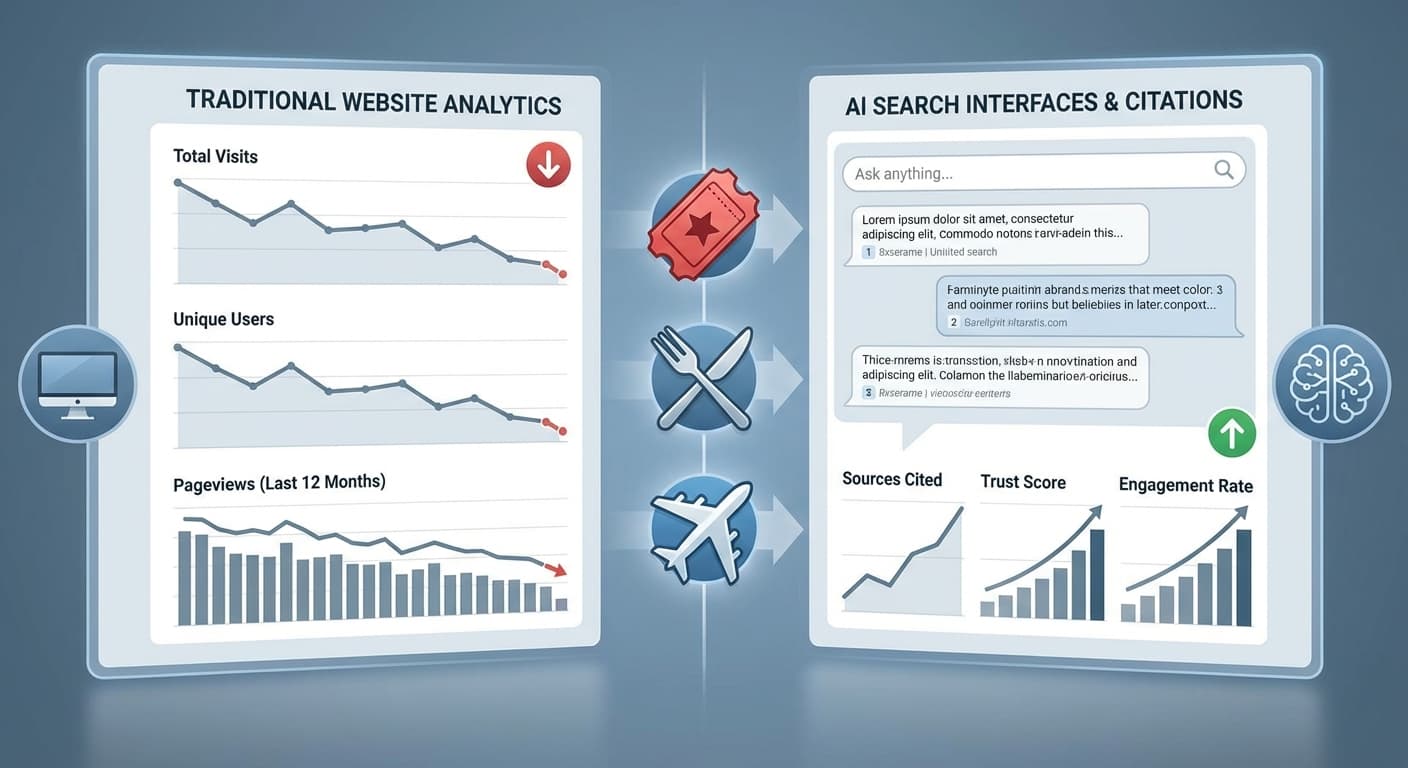
Here's a staggering reality: While AI search queries now account for over 35% of all online searches in 2026, 78% of businesses have no visibility into how AI systems like ChatGPT, Perplexity, Claude, and Gemini interact with their content. Traditional analytics tools like Google Analytics completely miss the crawling patterns of Large Language Models (LLMs), leaving content creators flying blind in the age of AI-driven search.
If you're relying solely on conventional web analytics, you're missing critical insights about how AI systems discover, evaluate, and potentially cite your content. This gap isn't just a minor oversight—it's a competitive disadvantage that could cost you valuable AI search visibility.
The Hidden World of AI Search Traffic
Unlike human visitors who browse pages linearly, AI systems exhibit unique crawling behaviors that traditional analytics can't capture:
These patterns are invisible to Google Analytics because they don't trigger typical user session events. Instead, they appear as server requests that most businesses ignore or filter out as "bot traffic."
Why Traditional Analytics Fall Short for AI Search
Conventional web analytics were designed for human behavior, not AI consumption. Here's what they miss:
Crawler Attribution Problems
Session Tracking Limitations
Content Interaction Blind Spots
Building Your AI Traffic Analysis System
Creating an effective server log analysis system for AI search traffic requires a systematic approach. Here's how to build one that actually works:
Step 1: Configure Enhanced Server Logging
First, ensure your web server captures detailed request information:
Apache Configuration Example
LogFormat "%h %l %u %t \"%r\" %>s %b \"%{Referer}i\" \"%{User-agent}i\" %D %{X-Forwarded-For}i" ai_analysis
Key data points to capture:
Step 2: Identify AI Crawler Patterns
Develop a comprehensive database of AI system identifiers:
Known AI User Agents (2026 patterns):
Behavioral Signatures:
Step 3: Create AI-Specific Metrics
Develop metrics that matter for AI search optimization:
#### Content Depth Analysis
#### Authority Signal Tracking
Step 4: Implement Real-Time Monitoring
Set up automated alerts for significant AI traffic changes:
Advanced Analysis Techniques
Once your basic system is operational, implement these advanced analysis methods:
Content Performance Correlation
Analyze the relationship between AI crawler behavior and actual citations:
Competitive AI Visibility Analysis
Monitor how AI systems interact with competitor content:
Predictive Citation Modeling
Use historical crawler data to predict future AI citations:
Essential Tools and Technologies
Building an effective system requires the right technology stack:
Log Processing Tools
Visualization Platforms
Database Solutions
How Citescope Ai Helps
While building a comprehensive server log analysis system provides valuable insights, Citescope Ai offers a complementary approach that focuses on the outcome rather than just the process. Our Citation Tracker monitors when your content actually gets cited by ChatGPT, Perplexity, Claude, and Gemini—giving you the ultimate measure of AI search success.
Combine server log insights about AI crawler behavior with Citescope Ai's citation tracking to create a complete picture of your AI search performance. Our GEO Score also analyzes your content across the five dimensions that matter most to AI systems, helping you optimize based on what the data reveals about AI preferences.
Common Implementation Challenges and Solutions
Data Volume Management
Challenge: AI crawlers can generate massive log volumes
Solution: Implement intelligent filtering and sampling strategies
False Positive Identification
Challenge: Distinguishing legitimate AI crawlers from scrapers
Solution: Develop behavioral verification algorithms
Real-Time Processing
Challenge: Processing logs fast enough for actionable insights
Solution: Use stream processing frameworks like Apache Kafka
Data Privacy Compliance
Challenge: Balancing analysis depth with privacy regulations
Solution: Implement data anonymization and retention policies
Measuring Success: Key Performance Indicators
Track these KPIs to measure your AI traffic analysis system's effectiveness:
Future-Proofing Your System
The AI search landscape evolves rapidly. Ensure your system stays relevant:
Adaptive Pattern Recognition
Integration Readiness
Ready to Optimize for AI Search?
Building a server log analysis system for AI search traffic is just one piece of the optimization puzzle. While understanding how AI systems interact with your content is valuable, the ultimate goal is getting cited in AI search results.
Citescope Ai simplifies this process by combining content optimization with citation tracking in one platform. Our AI Rewriter optimizes your content structure for better AI visibility, while our Citation Tracker shows you exactly when and where your content gets referenced by major AI search engines.
Start with our free tier and get 3 content optimizations to see how AI-focused optimization can improve your search visibility. Ready to stop guessing and start measuring your AI search success? Try Citescope Ai free today and discover what you've been missing in the age of AI search.