How to Build a Server Log Intelligence Strategy When AI Crawlers Reveal Which Queries Competitors Are Winning But Your Analytics Dashboard Completely Misses
How to Build a Server Log Intelligence Strategy When AI Crawlers Reveal Which Queries Competitors Are Winning But Your Analytics Dashboard Completely Misses
Your Google Analytics shows healthy traffic growth, but here's the uncomfortable truth: you're missing 40-60% of the actual search intelligence that matters in 2026. While traditional analytics track human visitors, AI crawlers from ChatGPT, Perplexity, Claude, and Gemini are quietly analyzing your content—and your competitors'—to determine who gets cited in the 2.1 billion monthly AI search queries happening right now.
The most successful content marketers have discovered that server logs contain a goldmine of competitive intelligence that standard analytics completely overlook. They're not just tracking what queries bring traffic; they're uncovering which specific topics and content angles AI systems find most valuable—intelligence that's reshaping entire content strategies.
The Hidden Intelligence Gap in Your Analytics
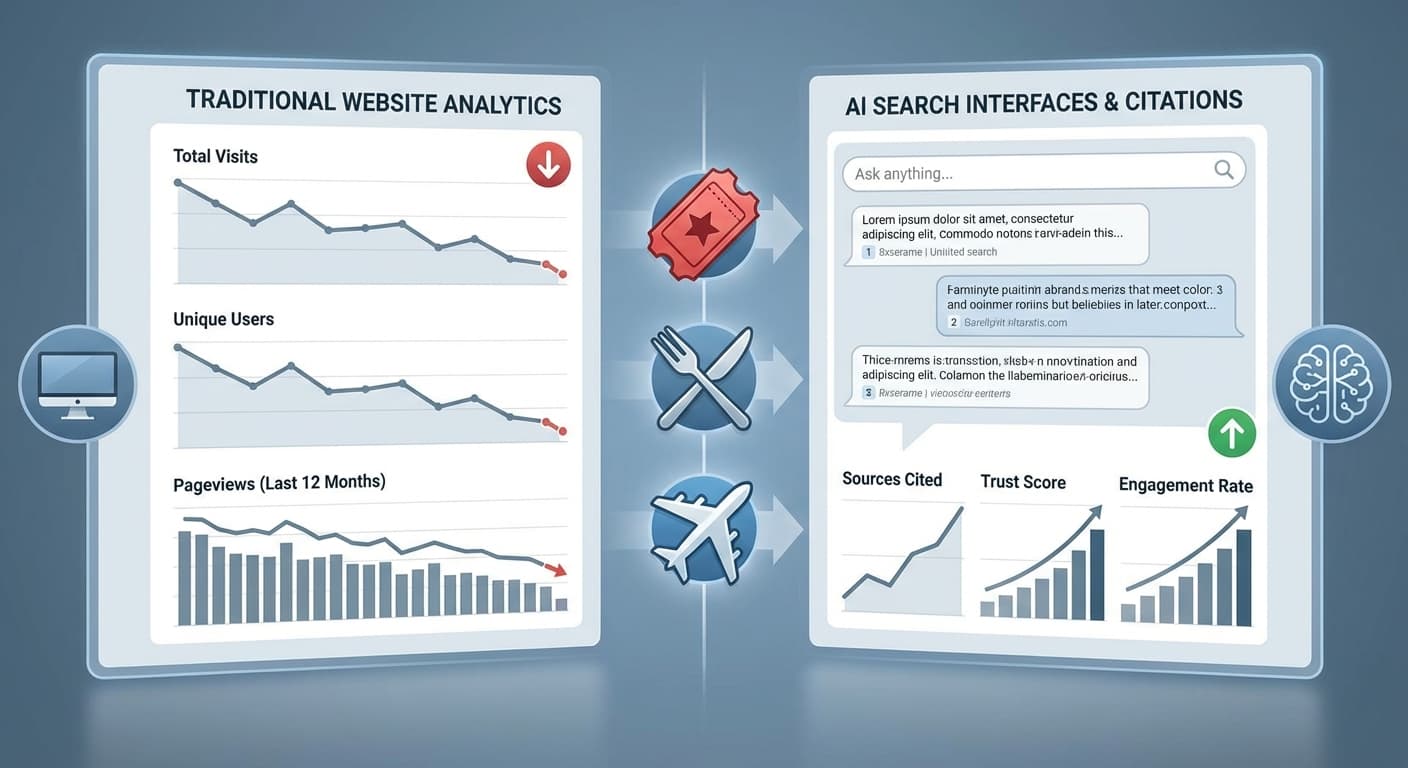
Traditional web analytics were designed for a world where humans clicked links. But AI search engines work differently. When someone asks ChatGPT "What's the best project management software for remote teams?", the AI doesn't visit your website—its crawlers have already analyzed your content weeks or months earlier.
This creates a massive blind spot:
What Your Current Dashboard Misses
Why Server Log Intelligence Matters More in 2026
AI search now represents over 35% of all search queries, with Gen Z users conducting 70% of their searches through conversational AI interfaces. This shift means:
The New Competitive Landscape
When AI systems decide which content to cite, they're not just looking at traditional SEO signals. They're analyzing:
Companies using server log intelligence are discovering that competitors ranking lower in traditional search are actually winning more AI citations—because their content better matches what AI systems value.
Building Your Server Log Intelligence Framework
Here's how to extract competitive intelligence from your server logs that your analytics dashboard misses:
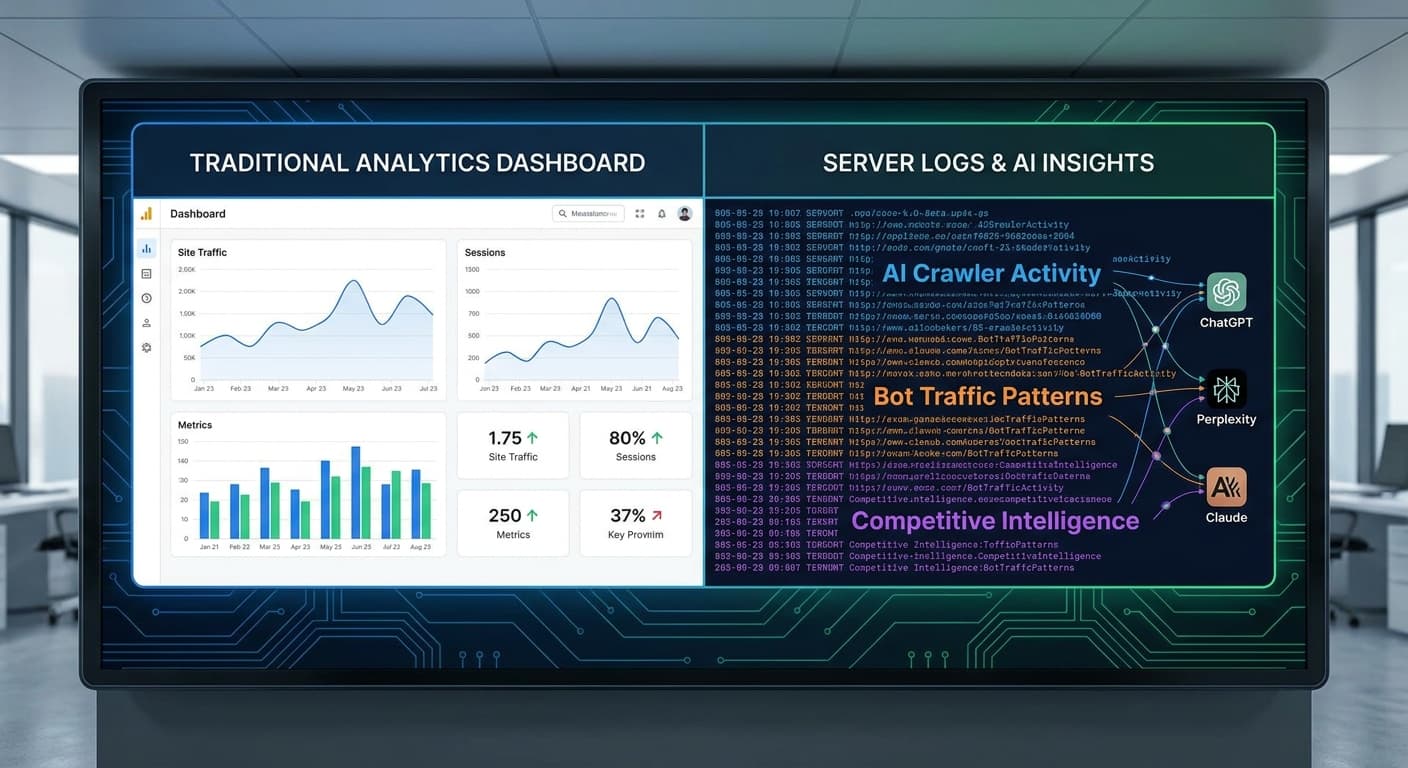
Step 1: Identify and Segment AI Crawler Traffic
Start by isolating AI crawler activity in your server logs. Look for these user agents:
Step 2: Analyze Crawl Patterns vs. Competitor Intelligence
Compare your AI crawler activity against what you can observe about competitors:
Your Server Logs Should Track:
Competitive Research Should Include:
Step 3: Map Content Performance to AI Crawler Behavior
Create a correlation analysis between:
This reveals which content elements AI systems value most and where you have competitive gaps.
Advanced Server Log Intelligence Strategies
Query Intent Mapping Through Crawler Patterns
AI crawlers often visit related pages in specific sequences, revealing how they understand topic relationships. Track:
This intelligence shows you which content clusters AI systems find most comprehensive and authoritative.
Competitive Content Gap Analysis
Combine your server log data with competitive AI search analysis:
Identify Gaps Where Competitors Win:
Discover Opportunity Areas:
Seasonal Intelligence Patterns
AI crawlers often increase activity before certain types of queries surge. Track:
Technical Implementation Best Practices
Server Log Configuration
Ensure your server logs capture:
Data Processing Pipeline
Privacy and Compliance Considerations
Server log analysis for AI crawler intelligence is generally permissible since:
However, ensure your data retention policies align with relevant privacy regulations.
How Citescope AI Helps Bridge the Intelligence Gap
While server log analysis reveals what AI crawlers are doing, Citescope AI helps you understand why certain content performs better and how to optimize accordingly. The platform's GEO Score analyzes your content across five dimensions that directly correlate with AI citation success:
By combining server log intelligence with GEO optimization, you can move from reactive analysis to proactive content strategy—understanding not just what competitors are doing, but how to consistently outperform them in AI search results.
Measuring Success and ROI
Key Metrics to Track
Expected Timelines
Ready to Optimize for AI Search?
Server log intelligence reveals the competitive landscape that traditional analytics miss, but optimization requires understanding what AI systems actually value in content. Citescope AI bridges this gap with tools that analyze, optimize, and track your content's performance across all major AI search engines.
Start building your AI search advantage today with a free Citescope AI account—get 3 content optimizations to see how your content performs on our GEO Score and begin tracking citations across ChatGPT, Perplexity, Claude, and Gemini. Your competitors are already optimizing for AI search; make sure you're not falling behind.