How to Build a Share of Voice Benchmark for AI Search Across Multiple Platforms When Your Brand Appears in Google AI Overviews But Competitors Dominate ChatGPT and Perplexity
How to Build a Share of Voice Benchmark for AI Search Across Multiple Platforms When Your Brand Appears in Google AI Overviews But Competitors Dominate ChatGPT and Perplexity
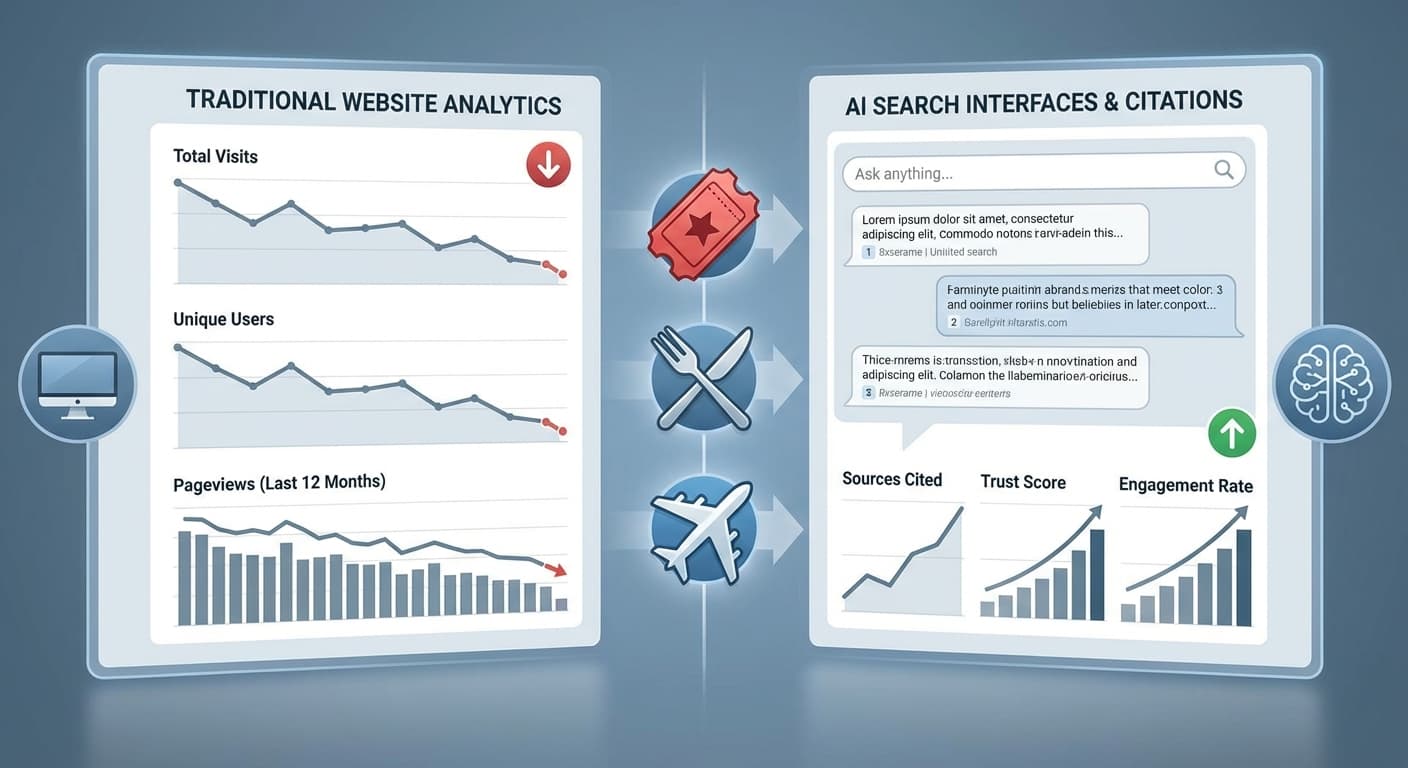
If your brand is getting cited in Google's AI Overviews but remains invisible on ChatGPT and Perplexity while competitors dominate these platforms, you're not alone. Recent data shows that 73% of brands have uneven visibility across AI search engines, with only 12% maintaining consistent share of voice across all major platforms.
This fragmented visibility represents both a challenge and an opportunity. While traditional SEO focused on a single search engine, AI search optimization requires a multi-platform approach that treats each AI engine as its own unique ecosystem.
Why AI Share of Voice Matters More Than Ever in 2026
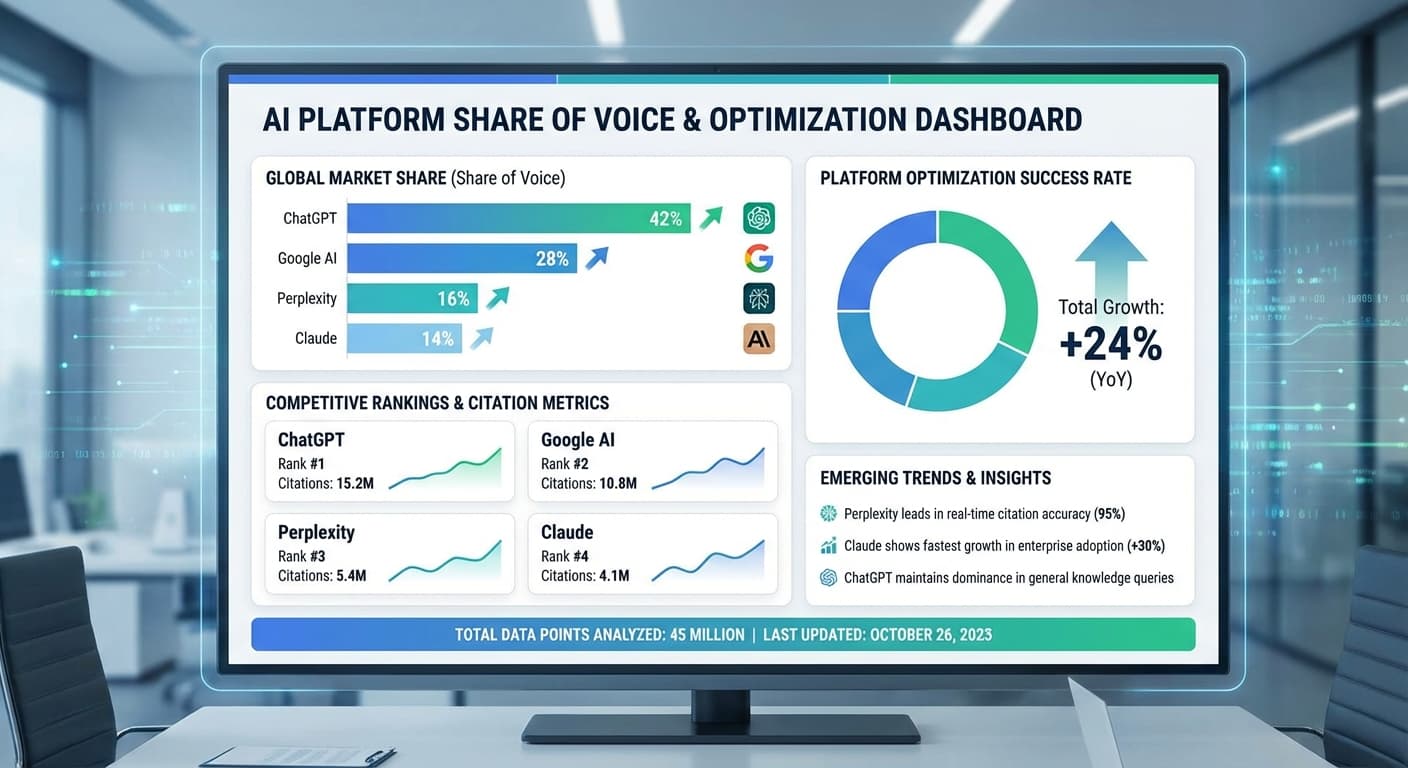
AI search has fundamentally changed how consumers discover and evaluate brands. With over 600 million weekly ChatGPT users and Perplexity handling 3 billion queries monthly, these platforms have become critical touchpoints in the customer journey. Yet many brands are flying blind when it comes to measuring their AI visibility.
Unlike traditional search where you could track rankings for specific keywords, AI search requires understanding:
Understanding Platform-Specific AI Behaviors
Each AI search platform has distinct content preferences and citation patterns:
Google AI Overviews
ChatGPT Search
Perplexity
Claude
Step-by-Step Guide to Building Your AI Share of Voice Benchmark
Step 1: Define Your Query Universe
Start by identifying 50-100 queries relevant to your brand, products, and industry. Include:
Document query variations as AI engines respond differently to:
Step 2: Establish Baseline Measurements
For each platform, track:
Citation Metrics:
Competitive Analysis:
Content Performance:
Step 3: Create Platform-Specific Optimization Strategies
Based on your baseline data, develop targeted approaches:
For Google AI Overviews:
For ChatGPT and Perplexity:
Step 4: Implement Cross-Platform Tracking
Establish a monitoring system that captures:
While manual tracking is possible, the volume and complexity of data across multiple AI platforms makes automated solutions increasingly necessary.
Advanced Benchmarking Techniques
Weighted Share of Voice Calculation
Not all citations are equal. Create a weighted scoring system:
Competitive Displacement Analysis
Track when your citations replace competitor mentions over time:
Topic Authority Mapping
Visualize your share of voice across different subject areas:
Common Pitfalls and How to Avoid Them
Over-Optimizing for One Platform
Many brands focus exclusively on the platform where they first see success, missing opportunities elsewhere. Maintain a balanced approach across all relevant AI engines.
Ignoring Citation Context
A mention isn't always positive. Track sentiment and context to ensure citations actually benefit your brand perception.
Static Benchmarking
AI search results change rapidly. Update benchmarks monthly and adjust strategies based on platform algorithm updates.
Undervaluing Long-Tail Queries
While broad queries are important, long-tail searches often have higher commercial intent and less competition.
How Citescope Ai Helps
Building comprehensive AI share of voice benchmarks manually is time-intensive and prone to human error. Citescope Ai's Citation Tracker automates this process by monitoring your brand mentions across ChatGPT, Perplexity, Claude, and other AI platforms in real-time.
The platform's GEO Score analyzes your content across five key dimensions that AI engines value: interpretability, semantic richness, conversational relevance, structure, and authority. This gives you a clear roadmap for improving visibility where you're underperforming.
With multi-platform export capabilities, you can optimize content once and deploy it across your entire content ecosystem, ensuring consistency while maintaining platform-specific optimizations.
Measuring Success and ROI
Establish clear KPIs for your AI share of voice efforts:
Visibility Metrics:
Quality Metrics:
Business Metrics:
Ready to Optimize for AI Search?
Building effective AI share of voice benchmarks requires the right tools and strategy. Citescope Ai simplifies this complex process with automated citation tracking, content optimization, and competitive analysis across all major AI platforms. Start your free trial today and get 3 content optimizations to see how your current content performs against AI search benchmarks. Transform your fragmented AI visibility into consistent, measurable growth across ChatGPT, Perplexity, Claude, and beyond.