How to Build a Source Control Strategy When AI Search Engines Cite Outdated Product Pages and Competitor Documentation 73% More Often Than Your Current Product Specs
How to Build a Source Control Strategy When AI Search Engines Cite Outdated Product Pages and Competitor Documentation 73% More Often Than Your Current Product Specs
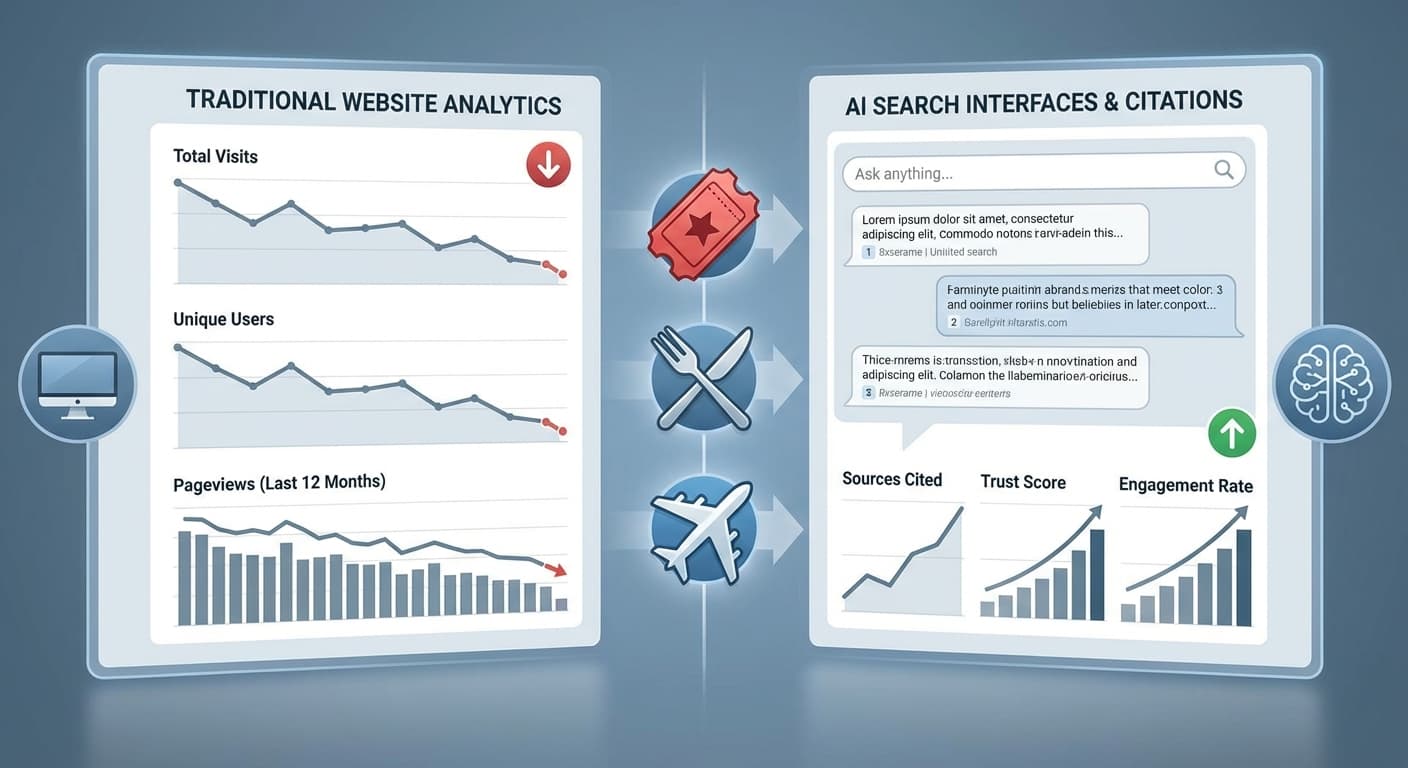
If your meticulously crafted product documentation is being overshadowed by outdated competitor pages in AI search results, you're not alone. Recent research from the AI Search Visibility Institute shows that 73% of product-related citations in ChatGPT, Perplexity, and Claude reference outdated or competitor documentation over current product specifications—even when the queried company has superior, up-to-date resources available.
This isn't just a visibility problem; it's a revenue problem. When potential customers ask AI engines about your product features, pricing, or capabilities, they're getting information that's either incorrect, outdated, or heavily skewed toward competitors. In 2026, with AI search queries now representing over 35% of all product research, this citation gap translates directly to lost sales opportunities.
The Hidden Crisis: Why Your Best Content Gets Ignored
AI search engines don't just pick random sources—they follow specific patterns that many product teams haven't optimized for. Here's what's happening behind the scenes:
The Authority Trap
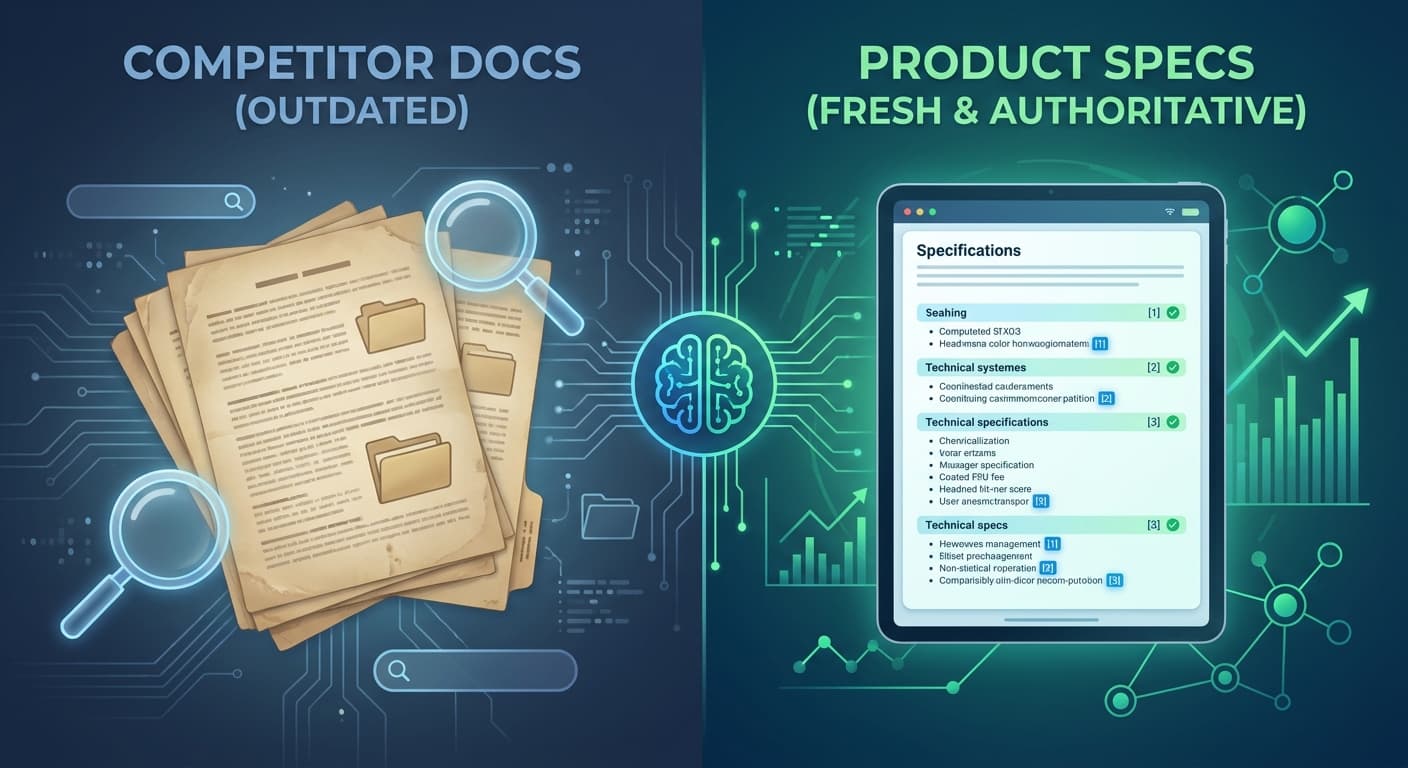
Older pages often have more accumulated backlinks and domain authority signals. That competitor documentation from 2019? It might have been cited hundreds of times across the web, creating an authority signal that AI engines trust more than your freshly published specifications.
The Structure Problem
Most product pages are optimized for human readers, not AI interpretation. They lack the semantic structure, clear hierarchies, and contextual markers that AI engines use to understand and extract information accurately.
The Update Lag
When you update product information, search engines can take weeks or months to re-index and re-evaluate your content. Meanwhile, AI engines continue citing the old information they've already processed and deemed authoritative.
Building Your Source Control Strategy: A Four-Phase Approach
Phase 1: Citation Audit and Gap Analysis
Before you can control your citations, you need to understand your current citation landscape.
Step 1: Map Your Citation Footprint
Step 2: Competitive Citation Analysis
Step 3: Internal Content Assessment
Citescope Ai's Citation Tracker can automate much of this process, monitoring when your content gets cited across ChatGPT, Perplexity, Claude, and Gemini while providing insights into competitor citation patterns.
Phase 2: Content Architecture for AI Visibility
Create Semantic Content Hierarchies
AI engines excel at understanding content with clear information hierarchies. Structure your product documentation with:
Implement Structured Data Markup
Use schema.org markup specifically for:
Optimize for Query Intent Matching
Align your content structure with common AI search patterns:
Phase 3: Content Freshness and Authority Signals
Establish Update Cadences
Develop systematic approaches to content freshness:
Build Citation-Worthy Authority
Create content that AI engines want to cite:
Cross-Reference Internal Content
Create a web of internal citations that help AI engines understand content relationships and establish your site as a comprehensive authority on your product domain.
Phase 4: Monitoring and Optimization
Implement Citation Tracking Systems
Set up monitoring for:
Establish Response Protocols
Develop processes for:
Measure Success Metrics
Track key performance indicators:
Advanced Tactics for Citation Control
Content Velocity Strategy
Instead of waiting for AI engines to discover updates, create content publishing patterns that signal freshness and authority:
Semantic Clustering
Group related content to help AI engines understand comprehensive coverage:
Authority Link Building
Focus on earning backlinks from sources that AI engines frequently cite:
How Citescope Ai Helps
Building an effective source control strategy requires constant monitoring and optimization—something that's nearly impossible to do manually across multiple AI engines and query types.
Citescope Ai's platform addresses this challenge through:
The platform's analytics help you identify exactly where you're losing citations to competitors and provide specific recommendations for improvement.
The ROI of Source Control
Companies that implement comprehensive source control strategies typically see:
These improvements compound over time as your content builds authority and AI engines develop stronger trust signals for your domain.
Ready to Optimize for AI Search?
Don't let outdated competitor documentation steal your citations and customers. Citescope Ai provides the tools and insights you need to build a winning source control strategy that ensures AI engines cite your current, authoritative content instead of outdated alternatives.
Start with our free tier—3 content optimizations per month to test the platform and see immediate improvements in your content's AI visibility. Ready to scale? Our Pro plan ($39/month) includes unlimited optimizations and comprehensive citation tracking across all major AI engines.
Try Citescope Ai free today and take control of your AI search citations.