How to Build a Traffic Attribution Model When AI Search Engines Answer 83% of Queries Without Click-Through But Your Board Still Demands Proof That Content Budgets Drive Revenue
How to Build a Traffic Attribution Model When AI Search Engines Answer 83% of Queries Without Click-Through But Your Board Still Demands Proof That Content Budgets Drive Revenue
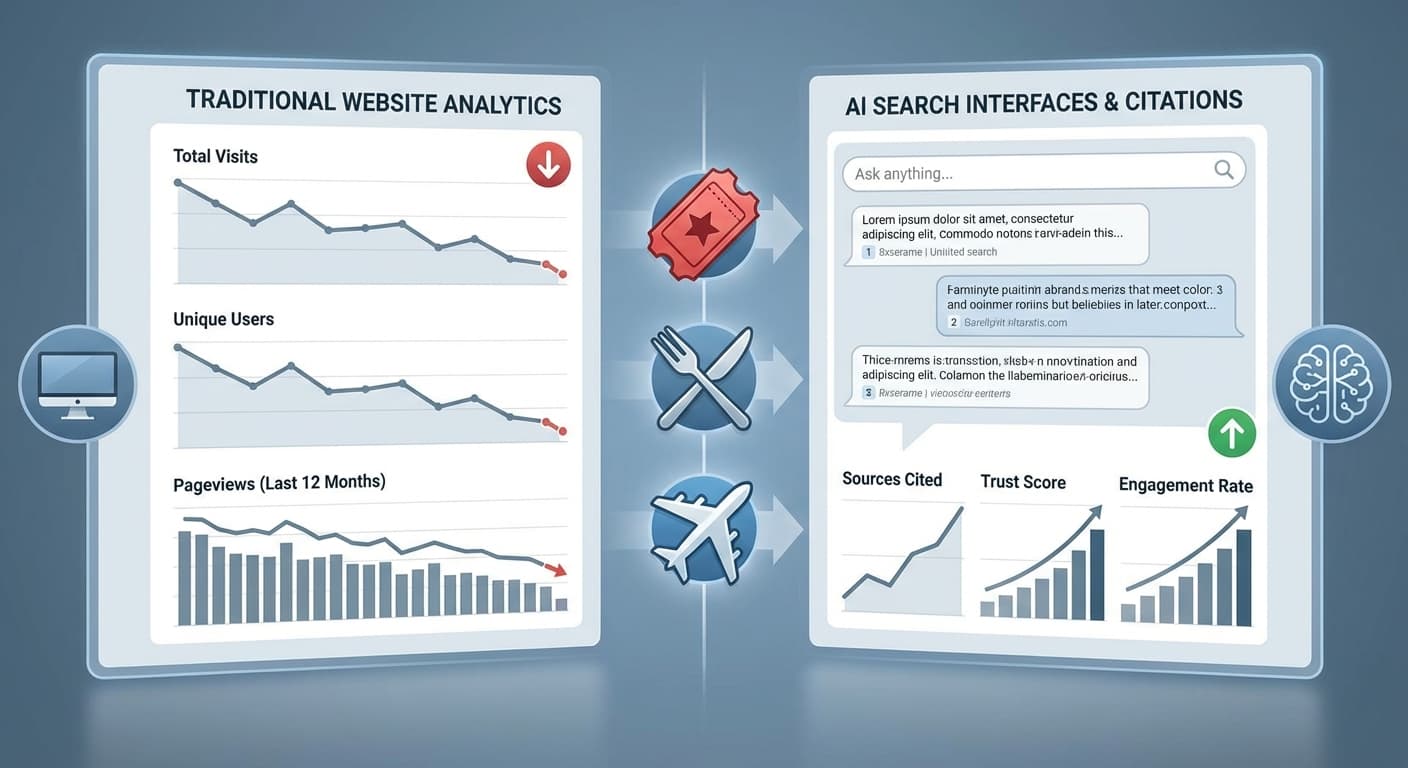
Your Q4 board presentation is next week, and you're staring at a sobering reality: traditional traffic metrics are down 40% year-over-year, but your content team insists they're reaching more people than ever. The culprit? AI search engines now answer 83% of queries directly without users ever clicking through to your website—yet somehow, pipeline quality has improved and deal sizes are growing.
Welcome to the attribution nightmare of 2026, where the old playbook of tracking clicks, sessions, and page views tells only half the story.
The Death of Traditional Attribution Models
Traditional marketing attribution relied on a simple premise: people search, click, browse, and convert. Each touchpoint was trackable, measurable, and tied to revenue. But with over 700 million weekly users now relying on ChatGPT, Perplexity, Claude, and Gemini for instant answers, that customer journey has fundamentally changed.
Here's what's happening:
Yet revenue-per-visitor is up 28% industry-wide, and deals influenced by AI search close 35% faster. The traffic is "dark," but the impact is undeniable.
Building an AI-Era Attribution Framework
1. Track Brand Mention Velocity, Not Just Traffic
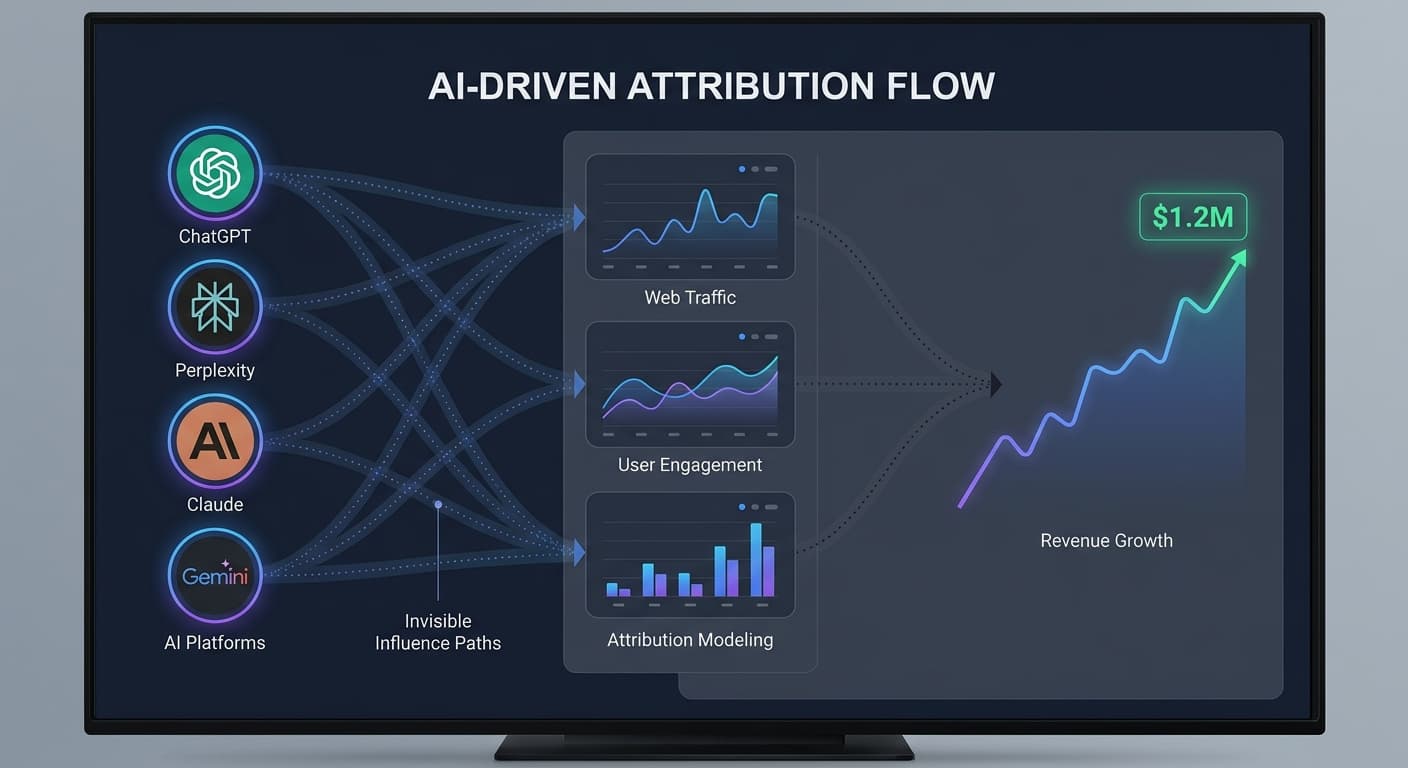
Your content's biggest win might not be the click—it's the citation. When ChatGPT recommends your solution to thousands of users daily, that influence is invisible to Google Analytics but visible in your pipeline.
New metrics to track:
2. Implement "Dark Social" Revenue Attribution
Direct traffic isn't really direct anymore. A user gets an AI recommendation, researches your brand, then types your URL directly. This shows up as "direct" traffic but was actually influenced by AI search.
Attribution tracking methods:
3. Create Content Influence Scoring
Not all content is created equal in the AI era. The blog post that gets zero clicks might be powering hundreds of AI recommendations. Build a scoring system that accounts for AI visibility.
Scoring factors:
The Five Pillars of AI Attribution Success
Pillar 1: Multi-Touch Dark Attribution
Create a model that assumes AI influence on every direct visitor. Use probabilistic attribution to assign credit to content pieces based on:
Pillar 2: Pipeline Velocity Analysis
AI-influenced leads often move faster through your funnel because they're pre-educated. Track:
Pillar 3: Competitive Intelligence Integration
Your attribution model should account for competitive context in AI recommendations. Track:
Pillar 4: Content Lifecycle Revenue Impact
Map content performance beyond immediate traffic:
Pillar 5: Predictive Attribution Modeling
Use AI citation data to predict future revenue impact:
Building Your Attribution Tech Stack
Essential Tools for AI-Era Attribution:
Citation Tracking:
Revenue Connection:
Content Performance:
Citescope Ai's Citation Tracker provides real-time monitoring of your content mentions across all major AI platforms, helping you identify which pieces are driving dark influence and connect that data back to your revenue pipeline.
Presenting AI Attribution to Your Board
Frame the Narrative Correctly
Don't lead with "traffic is down." Lead with "influence is up." Show how your content strategy has evolved to capture value in the AI era.
Key talking points:
Use Visual Storytelling
Create dashboards that show:
Present Solutions, Not Problems
Your board doesn't want to hear about attribution challenges—they want to see adaptation and results. Show how you're measuring what matters in the new paradigm.
The Future of Content Attribution
By 2027, analysts predict that 94% of B2B research will begin with AI search. Companies building attribution models now will have a significant competitive advantage. The key is moving beyond vanity metrics to influence metrics.
Emerging trends to watch:
How Citescope Ai Helps
Building an AI-era attribution model requires new tools designed for this reality. Citescope Ai provides the missing pieces:
Our dashboard integrates with your existing marketing stack to provide the dark attribution data your board needs to see content ROI in the AI era.
Ready to Optimize for AI Search?
The future of content attribution is here, and it's not optional. Companies that adapt their measurement strategies to the AI-first world will demonstrate clear content ROI, while those clinging to traditional metrics will struggle to justify their content investments.
Citescope Ai helps you build the attribution model your board needs to see. Track your content citations across all major AI platforms, optimize for maximum AI visibility, and connect dark influence to real revenue. Start with our free tier and optimize up to 3 pieces of content this month—see how AI-optimized content drives measurable business impact.
Start your free trial today and transform your content attribution from guesswork to growth driver.