How to Build a Unified Paid-Organic AI Search Budget When Finance Teams Still Separate SEO and PPC Spending Despite Platform Convergence in 2026
How to Build a Unified Paid-Organic AI Search Budget When Finance Teams Still Separate SEO and PPC Spending Despite Platform Convergence in 2026
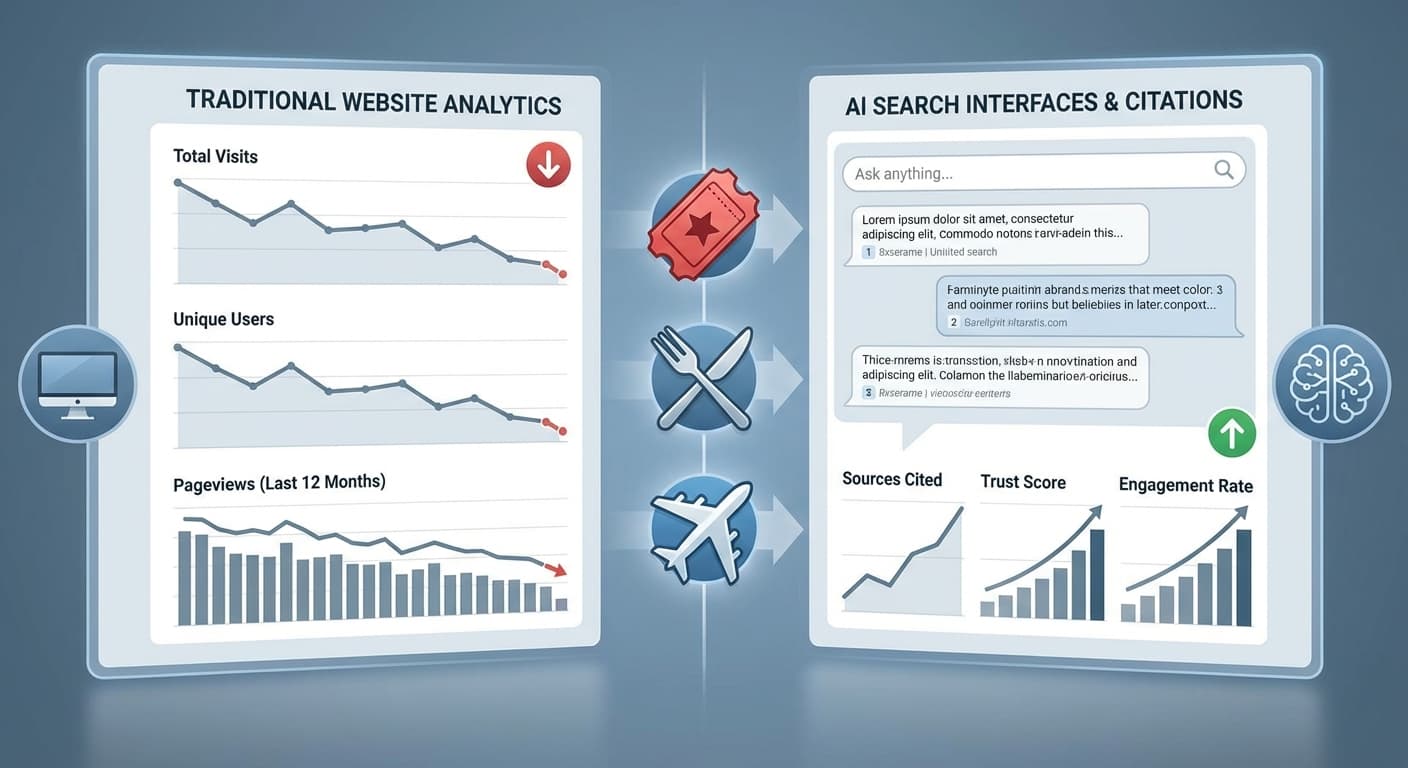
By 2026, AI search engines like ChatGPT, Perplexity, and Claude now handle over 35% of all search queries, yet 78% of marketing teams still operate with completely separate budgets for SEO and paid search. This outdated approach is costing businesses millions in missed opportunities as AI platforms increasingly blend organic citations with sponsored content in their responses.
The problem? While marketing technology has evolved toward unified AI search optimization, finance departments are still stuck in the pre-AI era of channel silos. It's time to bridge this gap and build budgets that reflect how search actually works in 2026.
The New Reality of AI Search Economics
Traditional search operated on clear boundaries: organic results on one side, paid ads on the other. AI search engines have demolished these walls. When ChatGPT answers a query about "best project management software," it might cite your organic content while simultaneously featuring sponsored recommendations. Perplexity's answer engine can reference your blog post, your paid content, and your competitor's sponsored response all within the same output.
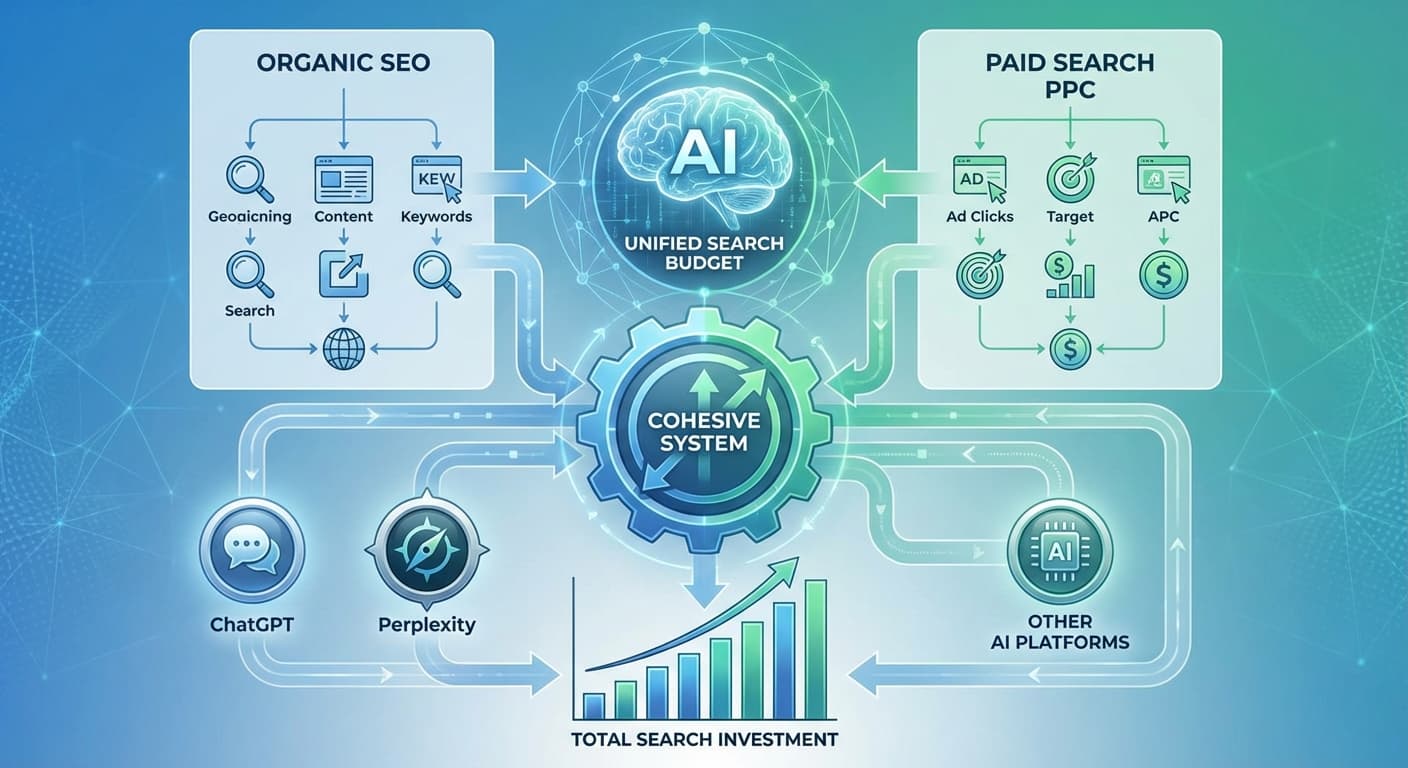
This convergence creates a fundamental challenge: how do you allocate budget when the same piece of content can generate both organic citations and support paid campaigns? The answer lies in moving beyond channel-based thinking toward outcome-based budgeting.
Why Finance Teams Resist AI Search Budget Integration
Before building a unified approach, it's crucial to understand the barriers. Finance teams resist integrated AI search budgets for several legitimate reasons:
Attribution Complexity
Risk Management Concerns
Organizational Inertia
The Framework for Unified AI Search Budgeting
Step 1: Establish Shared AI Search Metrics
Create metrics that transcend traditional channel boundaries:
These metrics help finance teams understand that success in AI search requires coordinated investment, not competing budgets.
Step 2: Map Content Journey Across Channels
Document how content flows between organic and paid channels in AI search:
This mapping demonstrates to finance teams why separating budgets artificially constrains performance at each stage.
Step 3: Create Hybrid Budget Categories
Replace "SEO Budget" and "PPC Budget" with outcome-focused categories:
Step 4: Implement Graduated Budget Release
Address finance concerns about risk management through staged budget allocation:
Quarter 1: Start with 70% traditional split, 30% unified pool
Quarter 2: Move to 50% traditional split, 50% unified pool
Quarter 3: Implement 30% traditional split, 70% unified pool
Quarter 4: Full unified budget with performance-based reallocation
This gradual approach lets finance teams see results while maintaining familiar control mechanisms.
Overcoming Common Finance Objections
"How Do We Track ROI Without Channel-Specific Spending?"
Solution: Implement contribution-based attribution models that track how different touchpoints contribute to final conversions, rather than assigning credit to single channels.
Example: If a user discovers your brand through an AI citation, engages with paid content, and converts after reading organic content, each touchpoint gets proportional credit based on its influence.
"What If the Unified Budget Gets Wasted on Low-Performing Activities?"
Solution: Create performance gates that automatically reallocate spending based on results.
Framework:
"How Do We Compare Performance to Previous Years?"
Solution: Develop bridging metrics that connect traditional KPIs to AI search outcomes.
Approach:
Building the Business Case for Unified AI Search Budgets
Present Data-Driven Arguments
Propose Pilot Programs
Start with low-risk pilot programs that demonstrate unified budget effectiveness:
How Citescope Ai Helps Bridge Budget Planning
When building your case for unified AI search budgets, tools like Citescope Ai can provide the data and optimization capabilities that make integrated approaches successful. Its GEO Score helps identify which content investments will perform best across both organic citations and paid promotion, while the Citation Tracker provides the cross-platform metrics finance teams need to evaluate ROI.
The AI Rewriter ensures that content optimized for organic visibility also performs well in paid campaigns, maximizing the efficiency of unified budget allocation.
Implementation Timeline and Milestones
Months 1-2: Foundation Building
Months 3-4: Pilot Launch
Months 5-6: Scale and Optimize
Months 7-12: Full Implementation
Measuring Success in Unified AI Search Budgets
Track these key indicators to demonstrate the value of integrated budgeting:
Efficiency Metrics
Performance Metrics
Business Impact Metrics
How Citescope Ai Helps
Navigating the transition to unified AI search budgets requires tools that can optimize content across channels and provide the metrics finance teams need. Citescope Ai's comprehensive platform helps by:
With features like the GEO Score and Citation Tracker, you can provide finance teams with the data they need to confidently approve unified AI search budgets.
Ready to Optimize for AI Search?
Building unified AI search budgets isn't just about organizational efficiency—it's about positioning your business to succeed as AI engines continue to reshape how people find and evaluate information. The companies that adapt their budget structures to match the reality of AI search will have a significant competitive advantage in 2026 and beyond.
Ready to make the case for unified AI search budgets with data your finance team will trust? Try Citescope Ai free and discover how integrated optimization and tracking can transform your approach to AI search investment. Start your free trial today and get the metrics you need to build winning budget proposals.