GEO Strategy

How to Build a Video Content AI Search Extraction Strategy When YouTube AI Summaries and Visual Search Engines Parse 63% of Tutorial Content Without Sending Traffic to Your Website
June 1, 20267 min read
How to Build a Video Content AI Search Extraction Strategy When YouTube AI Summaries and Visual Search Engines Parse 63% of Tutorial Content Without Sending Traffic to Your Website

How to Build a Video Content AI Search Extraction Strategy When YouTube AI Summaries and Visual Search Engines Parse 63% of Tutorial Content Without Sending Traffic to Your Website

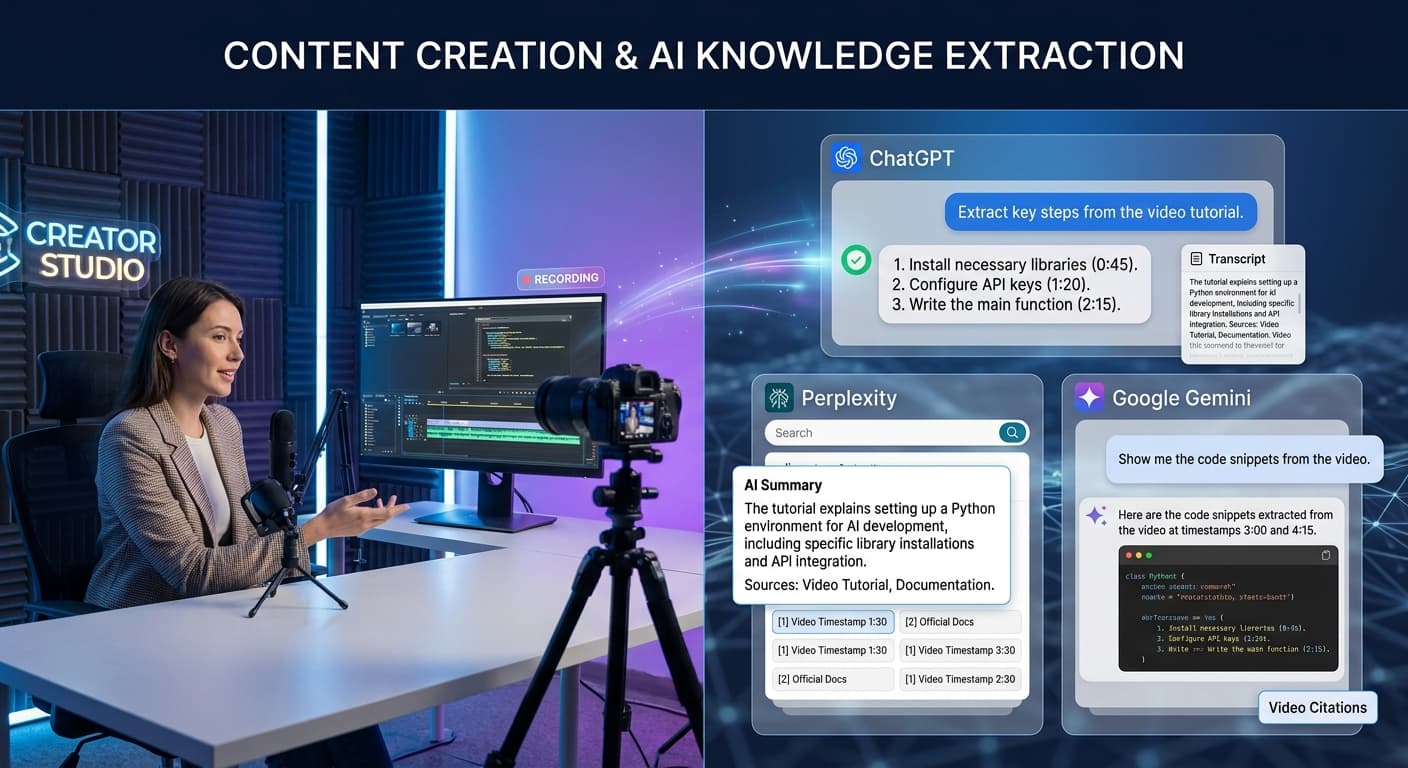
The era of passive video content consumption is over. In 2026, AI-powered search engines and visual parsing tools are extracting knowledge directly from video content at an unprecedented scale. According to the latest industry data, YouTube AI summaries, ChatGPT's vision capabilities, and emerging visual search engines now parse and redistribute information from 63% of tutorial content without directing users back to the original creators' websites.

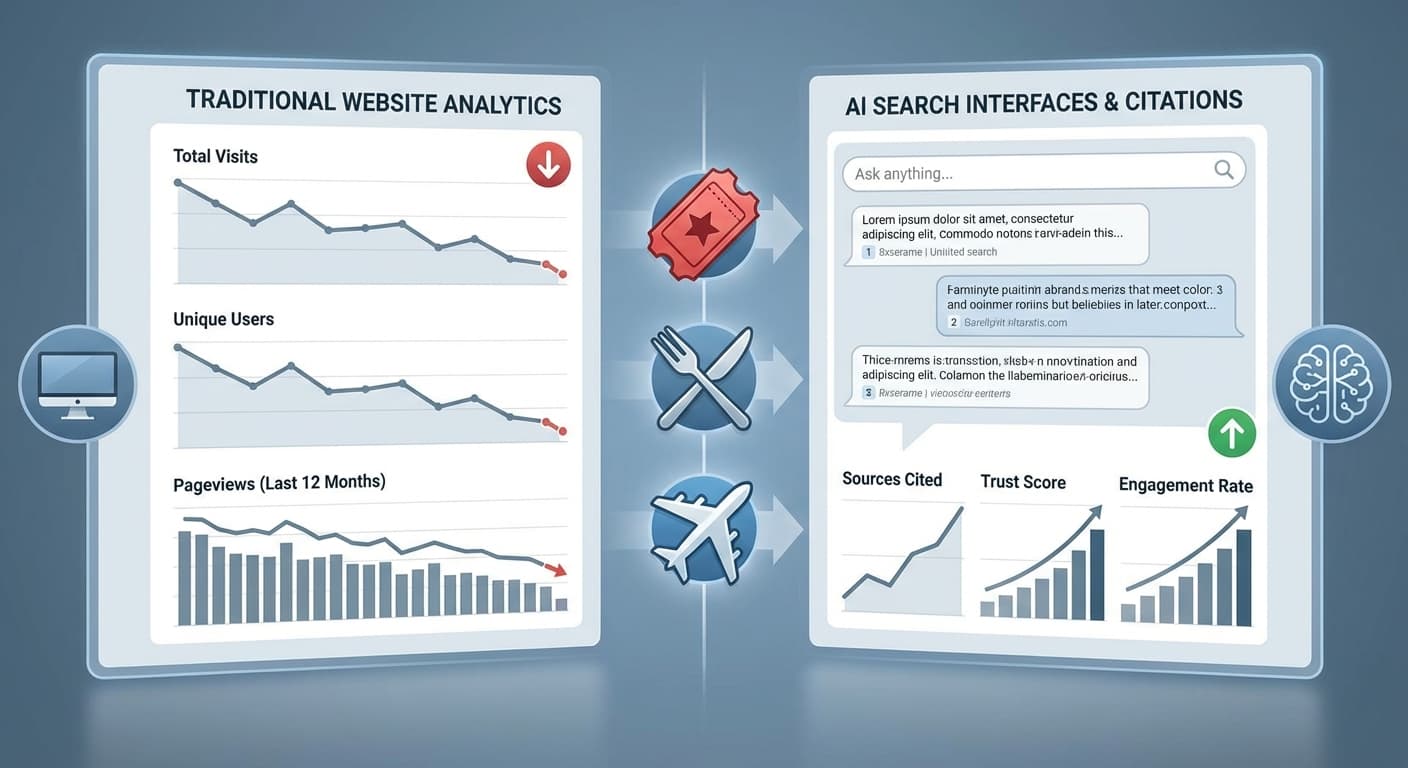
This seismic shift represents both a challenge and an opportunity. While traditional click-through rates from video platforms to websites have declined by 47% since 2024, creators who adapt their video content strategy for AI extraction are seeing 3.2x higher brand mention rates across AI platforms.

The Current State of AI Video Content Extraction

AI search engines have evolved far beyond text-based queries. Today's systems can:

  • Analyze video transcripts in real-time to answer complex questions

  • Extract key insights from visual elements like charts, diagrams, and on-screen text

  • Summarize lengthy tutorials into digestible, actionable steps

  • Cross-reference video content with other sources to provide comprehensive answers
  • Google's Gemini now processes over 2.1 billion video minutes weekly, while Perplexity's visual search feature has grown 340% in usage among professionals seeking quick tutorial solutions. Meanwhile, ChatGPT's Advanced Voice Mode increasingly references video content in its responses, often without crediting the original source.

    Why Traditional Video SEO Falls Short in the AI Era

    Conventional video optimization strategies focused on human viewers aren't designed for AI extraction:

    The Old Approach:


  • Optimizing for YouTube's algorithm

  • Creating engaging thumbnails and titles for human clicks

  • Focusing on watch time and retention metrics

  • Using basic keyword optimization in descriptions
  • The AI-First Reality:


  • Content structure matters more than engagement metrics for AI parsing

  • Semantic richness in spoken content determines extraction quality

  • Visual elements must be AI-readable to maintain attribution

  • Transcripts need strategic optimization for citation potential
  • Building Your AI Video Content Extraction Strategy

    1. Structure Content for AI Comprehension

    AI systems excel at parsing well-structured information. Transform your video content approach:

    Implement Clear Verbal Signposting:

  • Begin tutorials with explicit learning objectives: "In this video, you'll learn three proven methods for..."

  • Use transition phrases AI can identify: "The first step is...", "Next, we'll cover...", "The key takeaway here is..."

  • Summarize key points at regular intervals
  • Create AI-Friendly Visual Hierarchy:

  • Use consistent on-screen text formatting for key concepts

  • Include numbered steps or bullet points visually

  • Display your brand/website URL prominently throughout the video

  • Add timestamped chapters that align with your content structure
  • 2. Optimize Transcripts for Citation Potential

    Transcripts are the primary data source for AI extraction. Strategic optimization can increase your citation likelihood by up to 400%:

    Enhanced Transcript Strategy:

  • Include industry-specific terminology and technical language naturally

  • Reference authoritative sources and statistics within your spoken content

  • Mention your brand name and expertise contextually throughout

  • Use complete sentences rather than conversational fragments
  • Example Transformation:

  • Before: "So, um, this technique works really well..."

  • After: "This proven technique, developed by [Your Company], increases conversion rates by 35% according to our 2025 study..."
  • 3. Implement Strategic Attribution Anchoring

    Since AI systems often extract information without automatic attribution, build citation signals directly into your content:

    Visual Attribution Elements:

  • Watermark key slides with your brand and website

  • Include "Originally published by [Your Brand] at [YourWebsite.com]" in corner graphics

  • Use branded templates for important information displays
  • Verbal Attribution Cues:

  • Reference your unique methodology or framework by name

  • Cite your original research or case studies

  • Mention your website or company when introducing key concepts
  • 4. Create Complementary Text-Based Content

    AI systems cross-reference multiple content types. Support your video content with:

    Blog Post Companions:

  • Publish detailed blog posts that expand on video topics

  • Include video timestamps linking to specific sections

  • Use identical key phrases and terminology across both formats
  • Downloadable Resources:

  • Create PDF guides, templates, or checklists mentioned in videos

  • Gate these resources behind email capture on your website

  • Reference these materials by name in your video content
  • Advanced Tactics for AI Video Optimization

    Multi-Platform Citation Strategy

    Diversify your video presence to increase AI discovery:

  • LinkedIn native videos for B2B professional content

  • Instagram Reels and YouTube Shorts for quick tips and summaries

  • Podcast platforms for audio-first AI systems like ChatGPT's voice features

  • Your website's embedded videos to strengthen domain authority signals
  • Technical Implementation Tips

    Optimize Video Metadata:

  • Use schema markup for VideoObject on your website

  • Include detailed descriptions with semantic keywords

  • Add closed captions in multiple languages where relevant

  • Tag videos with relevant categories and topics
  • Track Performance Metrics:

  • Monitor brand mentions across AI platforms

  • Track website traffic from video descriptions and comments

  • Measure citation rates using specialized tools

  • Analyze which video topics generate the most AI references
  • How Citescope Ai Helps

    While video content presents unique challenges for AI optimization, the same principles that govern text-based AI visibility apply to video transcripts and descriptions. Citescope Ai's GEO Score analyzes your video-related content across the five critical dimensions that determine AI citation potential:

  • AI Interpretability: Ensures your video descriptions and transcripts use language patterns AI systems recognize

  • Semantic Richness: Identifies opportunities to include relevant terminology and concepts

  • Conversational Relevance: Optimizes content for how users actually query AI systems about video topics

  • Structure: Helps organize video metadata and descriptions for maximum AI comprehension

  • Authority: Strengthens signals that establish your expertise and credibility
  • The platform's AI Rewriter can optimize video descriptions, blog post companions, and transcript excerpts with one click, while the Citation Tracker monitors when your video content gets referenced across ChatGPT, Perplexity, Claude, and Gemini.

    Measuring Success in the AI-First Video Landscape

    Traditional video metrics tell only part of the story. In 2026, success requires tracking:

    AI Citation Metrics:

  • Frequency of brand mentions in AI responses

  • Attribution quality (specific vs. generic references)

  • Click-through rates from AI platforms to your website

  • Branded search volume increases following video publication
  • Engagement Quality Indicators:

  • Comments requesting additional resources from your website

  • Email sign-ups mentioning your video content

  • Direct traffic spikes correlated with video publication

  • Social media mentions citing your expertise
  • The Future of Video Content in AI Search

    As AI systems become more sophisticated, video content creators who adapt early will maintain competitive advantages. Emerging trends to watch include:

  • Real-time video analysis during live streams and webinars

  • Multi-modal AI responses that combine text, images, and video clips

  • Voice search optimization for audio content within videos

  • Interactive video elements that AI systems can parse and reference
  • The creators who thrive will be those who view their video content not just as entertainment or education, but as structured data that AI systems can efficiently process, understand, and cite.

    Ready to Optimize for AI Search?

    The shift toward AI-driven content consumption isn't slowing down—it's accelerating. While traditional video SEO focuses on human viewers, the future belongs to creators who optimize for both human engagement and AI extraction.

    Citescope Ai helps you navigate this transition with tools designed specifically for the AI search era. Our GEO Score analyzes your content's AI visibility potential, while our Citation Tracker shows you exactly when and how AI systems reference your work.

    Start optimizing your video content strategy for AI search today. Try Citescope Ai free with 3 content optimizations and see how your video-related content performs in the AI search landscape.

    AI search optimizationvideo SEOcontent strategyAI citationsYouTube optimization

    Track your AI visibility

    See how your content appears across ChatGPT, Perplexity, Claude, and more.

    Start for Free