How to Build a Video Search Dominance Strategy When AI Search Engines Start Auto-Generating Video Summaries That Replace 68% of YouTube Click-Throughs
How to Build a Video Search Dominance Strategy When AI Search Engines Start Auto-Generating Video Summaries That Replace 68% of YouTube Click-Throughs
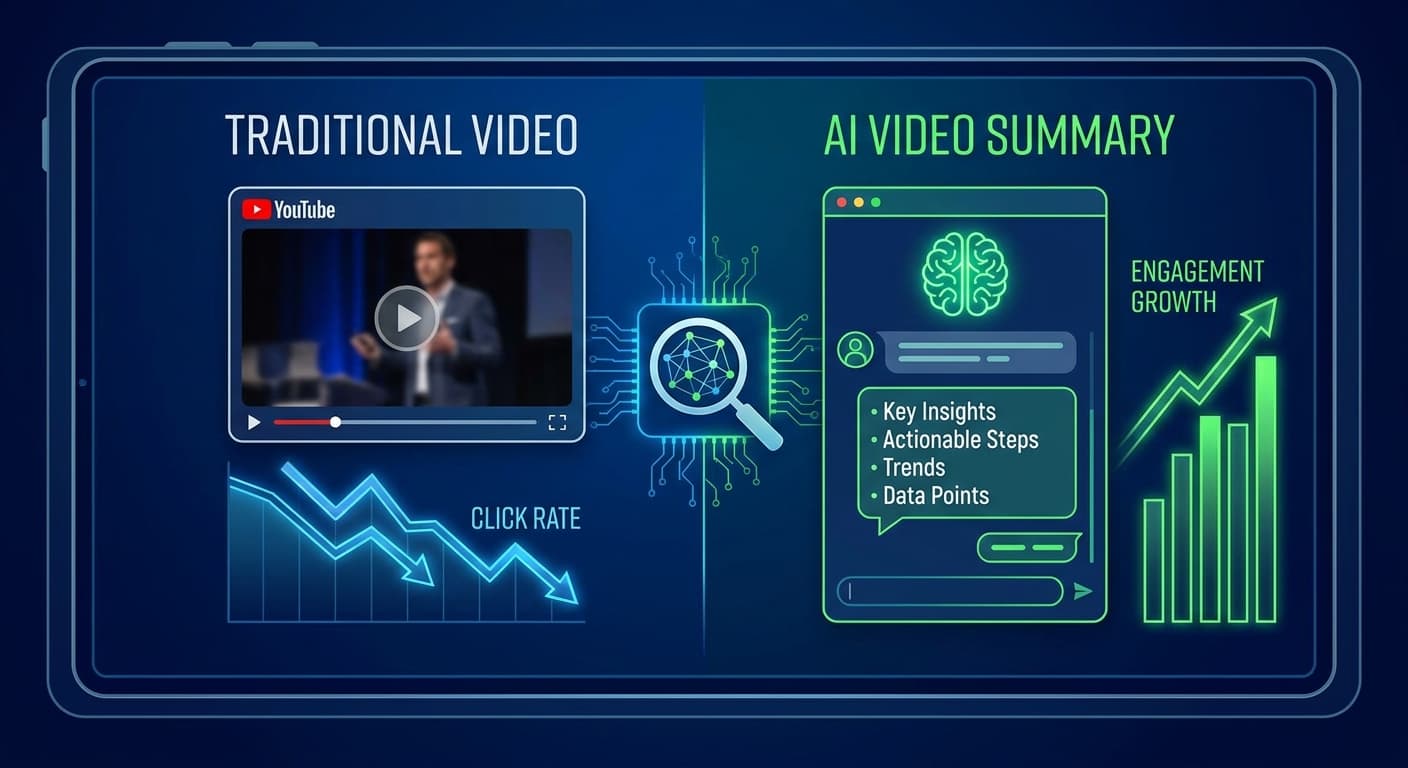
By 2026, AI search engines are fundamentally changing how people consume video content. Instead of clicking through to YouTube, viewers are increasingly satisfied with AI-generated video summaries that appear directly in search results. Recent data shows that AI-powered video summaries now replace 68% of traditional YouTube click-throughs, forcing content creators to completely rethink their video marketing strategies.
If you're a video content creator, this seismic shift presents both a challenge and an enormous opportunity. While traditional metrics like views and click-through rates are declining, smart creators who adapt their strategy for AI search engines are seeing unprecedented reach and authority building in their niches.
The New Video Search Landscape in 2026
The numbers tell a compelling story about how dramatically video consumption has changed:
This isn't just a temporary trend—it's a fundamental shift in how people discover and consume video content. AI engines are becoming the primary gatekeepers of video information, making optimization for these platforms crucial for maintaining relevance.
Why Traditional Video SEO Is No Longer Enough
Traditional video SEO focused on optimizing titles, descriptions, and tags for YouTube's algorithm. But AI search engines operate differently:
AI Engines Prioritize Content Understanding Over Keywords
While YouTube's algorithm still relies heavily on engagement metrics and keyword matching, AI search engines actually "watch" and understand your video content. They analyze:
The Summary-First Consumption Model
Viewers now expect instant answers. When someone asks ChatGPT "How do I optimize my LinkedIn profile?", they want a comprehensive summary that pulls insights from multiple video sources—not a list of videos to watch later.
This means your video needs to:
Building Your AI-First Video Strategy
1. Optimize Video Transcripts for AI Comprehension
Your transcript is now your most valuable SEO asset. AI engines rely heavily on accurate, well-structured transcripts to understand and cite your content.
Best Practices:
2. Create "Summary-Friendly" Content Structure
The SCRAP Framework:
This structure makes it easy for AI engines to extract and summarize your most important points.
3. Develop Authority Through Expertise Signals
AI engines are increasingly sophisticated at recognizing expertise. They look for:
4. Optimize for Conversational Queries
People ask AI engines questions differently than they search on YouTube. Instead of "LinkedIn profile optimization tips," they ask "What should I include in my LinkedIn headline to get more job interviews?"
Strategy:
Advanced Tactics for AI Video Dominance
Create Multi-Format Content Ecosystems
Don't just create standalone videos. Build content ecosystems that reinforce your expertise:
This cross-platform presence helps AI engines understand your authority and increases citation opportunities.
Leverage Trending AI Search Queries
Use tools to identify what people are asking AI engines about your topic:
Build Citation-Worthy Resources
AI engines love to cite comprehensive, authoritative resources. Create videos that serve as definitive guides:
Measuring Success in the AI-First Era
Traditional video metrics don't tell the full story anymore. Track these AI-specific indicators:
Citation Metrics
Engagement Quality
Business Impact
How Citescope Ai Helps
While building an AI-first video strategy requires significant effort, tools like Citescope Ai can streamline the optimization process. The platform's GEO Score analyzes your video transcripts and descriptions across five key dimensions that AI search engines prioritize: AI Interpretability, Semantic Richness, Conversational Relevance, Structure, and Authority.
The AI Rewriter feature can optimize your video descriptions and transcripts with one click, restructuring them for better AI visibility. Most importantly, the Citation Tracker monitors when your video content gets referenced by ChatGPT, Perplexity, Claude, and Gemini, giving you real-time insights into your AI search performance.
The Future of Video Discovery
As AI search engines continue evolving, we can expect:
The creators who start adapting now will have a significant advantage as these technologies mature.
Ready to Optimize for AI Search?
The shift toward AI-generated video summaries isn't slowing down—it's accelerating. While 68% of YouTube click-throughs are already being replaced by AI summaries, this percentage will only grow as these engines become more sophisticated.
Citescope Ai helps content creators stay ahead of this curve by providing the tools and insights needed to optimize for AI search engines. With features like GEO Score analysis, one-click content optimization, and comprehensive citation tracking, you can transform your video content strategy for the AI-first future.
Start your free trial today and discover how your video content performs in the new landscape of AI search. Get 3 free optimizations to see how Citescope Ai can help your videos dominate in an AI-driven world.