How to Build an AI Answer Competitive Intelligence Strategy When You Can't Identify Which Competitor Sources Are Influencing LLM Recommendations in 67% of Commercial Queries

How to Build an AI Answer Competitive Intelligence Strategy When You Can't Identify Which Competitor Sources Are Influencing LLM Recommendations in 67% of Commercial Queries
A recent study by Stanford's AI Research Lab reveals a startling reality: in 67% of commercial queries, businesses cannot identify which competitor sources are influencing AI-generated recommendations. This "black box" problem has become the biggest challenge facing competitive intelligence teams in 2026, as AI search engines like ChatGPT, Perplexity, Claude, and Gemini now handle over 40% of all commercial research queries.
With AI search becoming the primary discovery channel for B2B buyers—especially among the 78% of Gen Z professionals who now use AI tools for purchase research—understanding your competitive landscape in AI answers isn't just important, it's survival.
The AI Attribution Crisis: Why Traditional Competitive Intelligence Falls Short
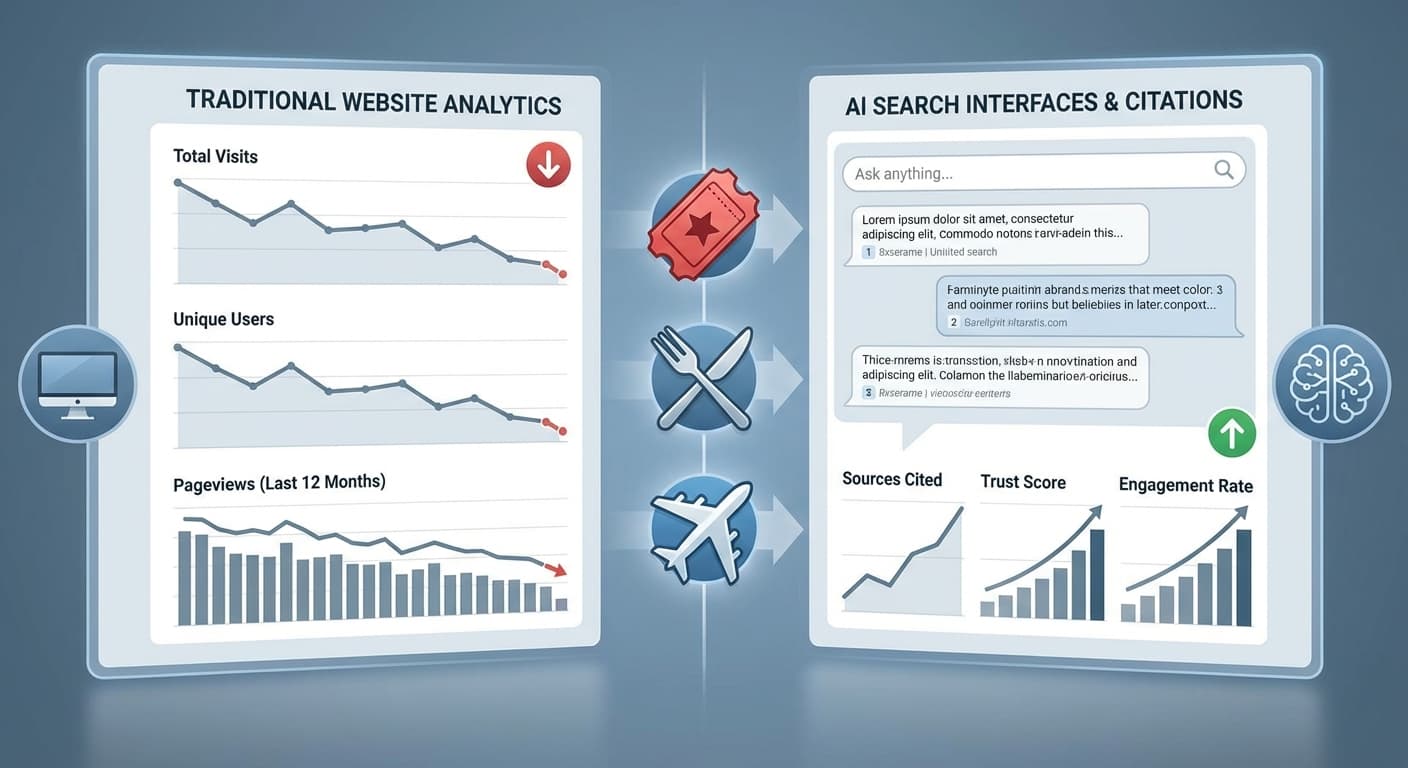
Traditional competitive analysis relies on visible rankings, backlink profiles, and keyword tracking. But AI search engines operate fundamentally differently. When ChatGPT recommends three project management tools or Perplexity suggests the "best CRM for small businesses," the underlying sources often remain hidden or aggregated beyond recognition.
This opacity creates several critical blind spots:
Building Your AI Competitive Intelligence Framework
Despite these challenges, savvy businesses are developing sophisticated strategies to map the AI competitive landscape. Here's how to build your own framework:
1. Query Mapping and Pattern Recognition
Start by identifying the high-value commercial queries in your space. Focus on:
Document how different AI engines respond to these queries across multiple sessions. Look for patterns in:
2. Reverse Engineering AI Recommendations
While you can't always see direct citations, you can analyze AI responses for clues about source influence:
Content fingerprinting: Look for unique phrases, statistics, or positioning statements that appear in AI responses and trace them back to likely sources.
Feature emphasis patterns: If AI consistently highlights specific product features when discussing competitors, investigate which sources emphasize those same features.
Pricing and specification accuracy: Cross-reference pricing, features, and specifications mentioned in AI responses with competitor websites and marketing materials.
3. Multi-Platform Intelligence Gathering
Different AI engines have varying source preferences and algorithms. Build intelligence across:
Tools like Citescope Ai's Citation Tracker can help monitor when your content gets cited across these platforms, giving you insights into platform-specific preferences.
4. Content Gap Analysis Through AI Lens
Traditional content gap analysis focuses on what competitors rank for. AI-focused gap analysis asks different questions:
Advanced Tactics for AI Competitive Intelligence
Prompt Engineering for Competitive Research
Develop specific prompts designed to surface competitive information:
Vary your prompts and track how responses change, as this can reveal which competitors have strongest influence in different contexts.
Semantic Clustering Analysis
AI engines group related concepts semantically. Map how your competitors cluster around key topics:
Third-Party Intelligence Integration
Combine AI insights with traditional competitive intelligence:
Overcoming the 67% Attribution Gap
While you can't identify sources in 67% of cases, you can still build effective competitive intelligence:
Focus on Outcome Patterns
Instead of tracking specific citations, monitor:
Develop Response Quality Metrics
Measure competitive strength through:
Create Influence Proxy Indicators
Develop indirect measures of competitive AI influence:
How Citescope Ai Helps
While the AI attribution challenge is complex, tools like Citescope Ai provide crucial visibility into the AI competitive landscape. The Citation Tracker monitors when your content gets cited by major AI engines, helping you understand your own AI visibility while providing benchmarks for competitive analysis. The GEO Score analyzes content across five dimensions that influence AI citations, giving you insights into why certain content performs better in AI recommendations.
By tracking your own citations and optimizing your content using the AI Rewriter, you can better understand the factors that drive AI influence—knowledge you can apply to competitive analysis.
Building Your Action Plan
Here's your 30-day competitive intelligence roadmap:
Week 1: Query mapping and initial AI response documentation
Week 2: Pattern recognition and source fingerprinting analysis
Week 3: Multi-platform intelligence gathering and comparison
Week 4: Framework refinement and regular monitoring setup
Essential Tools and Resources
Looking Ahead: The Future of AI Competitive Intelligence
As AI search continues to evolve, expect:
The businesses that invest in AI competitive intelligence now—even with current limitations—will have significant advantages as the ecosystem matures.
Ready to Optimize for AI Search?
While competitive intelligence in AI search presents unique challenges, having visibility into your own AI performance is crucial for benchmarking and strategy development. Citescope Ai helps you track citations across ChatGPT, Perplexity, Claude, and Gemini while optimizing your content for better AI visibility. Start with our free tier to analyze your content's AI readiness and begin building your competitive intelligence framework. Try Citescope Ai today and take the first step toward mastering AI search competition.