AI & SEO

How to Build an AI Referral Attribution System When ChatGPT and Perplexity Traffic Appears as Direct or Organic in Your Analytics

March 23, 20267 min read
How to Build an AI Referral Attribution System When ChatGPT and Perplexity Traffic Appears as Direct or Organic in Your Analytics

How to Build an AI Referral Attribution System When ChatGPT and Perplexity Traffic Appears as Direct or Organic in Your Analytics

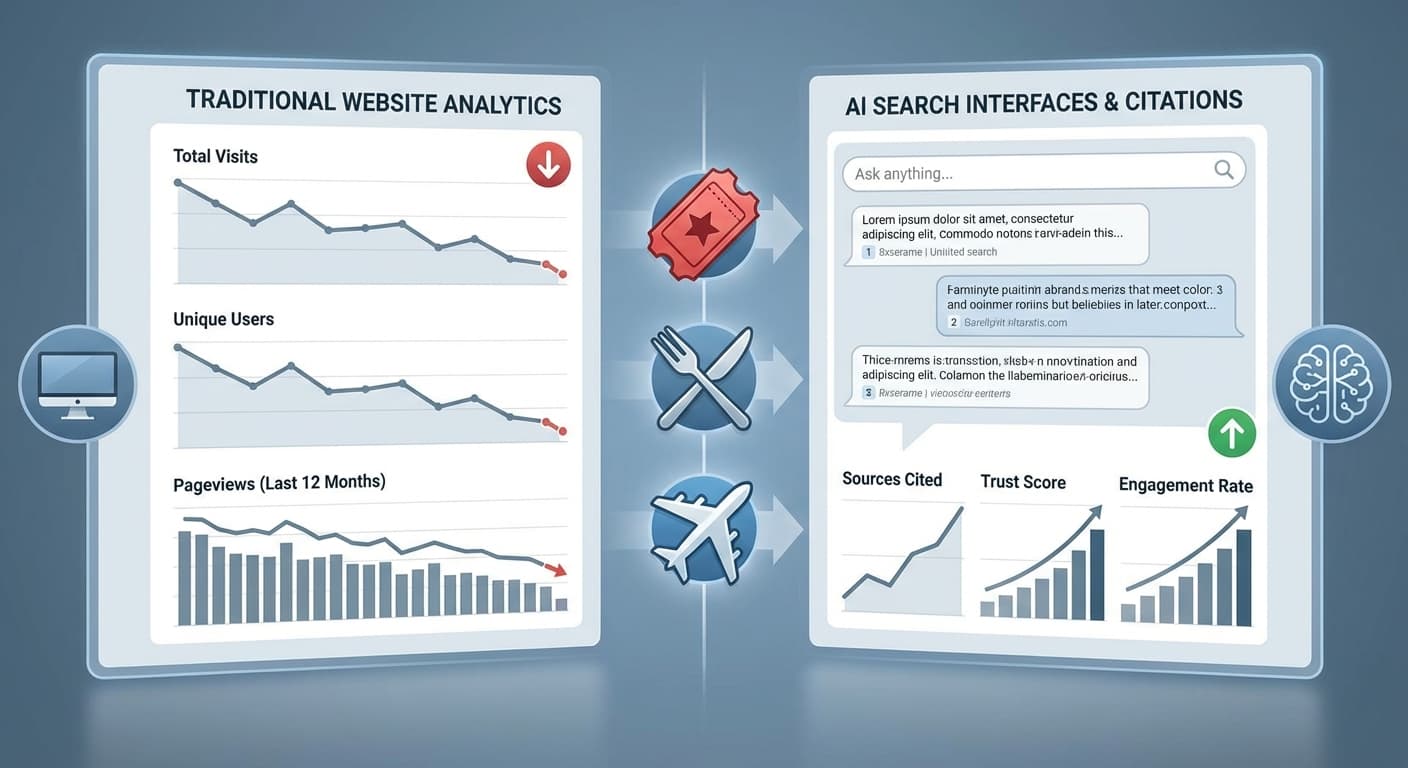
Imagine discovering that 40% of your website traffic is actually coming from AI search engines like ChatGPT and Perplexity, but your analytics shows it as "direct" or "organic search." This isn't a hypothetical scenario—it's the reality facing content creators and marketers in 2026.

With over 500 million weekly ChatGPT users and Perplexity handling 15 billion searches monthly, AI-driven traffic has become a significant source of website visits. Yet traditional analytics tools are blind to this new referral channel, leaving marketers in the dark about one of their fastest-growing traffic sources.

The AI Attribution Problem

When users click links from ChatGPT, Claude, Perplexity, or Gemini responses, the traffic often appears misclassified in Google Analytics. Here's why:

  • No Referrer Headers: Many AI platforms strip referrer information for privacy

  • App-Based Traffic: Mobile AI apps don't pass referrer data like traditional browsers

  • Session Timing: Users often research with AI, then visit sites later, appearing as direct traffic

  • Link Formatting: Some AI platforms use redirect URLs that mask the original source
  • This misattribution means you're potentially undervaluing AI optimization efforts while over-crediting other channels.

    Building Your AI Referral Attribution System

    Step 1: Implement UTM Parameter Strategy for AI Platforms

    The most reliable way to track AI referrals is through strategic UTM parameter usage:

    For Content You Control:

  • Add UTM parameters to all external links in your content

  • Use consistent naming: utm_source=ai-search&utm_medium=referral&utm_campaign=content-optimization

  • Create AI-specific landing pages with embedded tracking
  • For Citations You Can't Control:

  • Monitor brand mentions and create redirect URLs

  • Use branded short links in your content that AI engines are likely to cite

  • Implement dynamic UTM generation for high-value pages
  • Step 2: Set Up Enhanced Google Analytics 4 Configuration

    GA4 offers better attribution modeling than Universal Analytics, but needs proper configuration:

    Custom Channel Groupings:

  • Create an "AI Search" channel group

  • Define rules for AI-related traffic patterns

  • Include UTM parameters and referrer patterns specific to AI platforms
  • Enhanced Measurement Settings:

  • Enable all enhanced measurement features

  • Set up custom events for AI-driven behaviors

  • Configure conversion attribution windows to capture longer research cycles
  • Data-Driven Attribution:

  • Switch from last-click to data-driven attribution

  • This better accounts for the multi-touch nature of AI-assisted research
  • Step 3: Deploy Advanced Tracking Mechanisms

    JavaScript-Based Detection:
    javascript
    // Detect AI-specific user agents and behaviors
    function detectAIReferral() {
    const userAgent = navigator.userAgent;
    const aiIndicators = ['ChatGPT', 'Claude', 'Perplexity', 'Gemini'];

    // Check for AI app indicators
    if (aiIndicators.some(ai => userAgent.includes(ai))) {
    gtag('event', 'ai_referral_detected', {
    'ai_platform': 'detected_via_useragent'
    });
    }
    }


    URL Parameter Analysis:

  • Monitor for unusual parameter patterns

  • Track sessions that arrive with no referrer but show AI-like behavior

  • Implement probabilistic matching based on user behavior patterns
  • Step 4: Create AI-Specific Landing Experiences

    Design landing pages that cater to AI-referred traffic:

  • Contextual Content: Anticipate the questions AI users are asking

  • Clear Navigation: AI users often have specific intent

  • Embedded Tracking: Use multiple tracking methods on these pages

  • Conversion Optimization: AI-referred users often have higher intent
  • Advanced Attribution Techniques

    Cross-Device Tracking

    AI search often involves cross-device behavior—researching on mobile, converting on desktop:

  • User ID Implementation: Link authenticated users across devices

  • Google Signals: Enable for cross-device reporting

  • Enhanced Conversions: Use hashed customer data for better attribution
  • Behavioral Pattern Analysis

    Develop heuristics to identify AI-originated traffic:

    High-Intent Indicators:

  • Direct navigation to specific, deep pages

  • Low bounce rates with high engagement

  • Searches for very specific, long-tail terms

  • Time on site patterns consistent with research behavior
  • Session Characteristics:

  • Multiple page views in single sessions

  • Downloads of resources mentioned in AI responses

  • Engagement with specific content sections cited by AI
  • Server-Side Tracking Implementation

    Log Analysis:

  • Parse server logs for AI-specific patterns

  • Identify requests without referrer headers but with AI-like characteristics

  • Track API calls from known AI platforms
  • Database Integration:

  • Store AI attribution data separately from standard analytics

  • Create custom dashboards combining multiple data sources

  • Implement real-time AI traffic monitoring
  • Tools and Technologies for AI Attribution

    Analytics Platforms

    Specialized Tools:

  • Mixpanel: Better event tracking for AI behaviors

  • Amplitude: Advanced cohort analysis for AI-referred users

  • Adobe Analytics: Custom variables for AI attribution
  • Integration Requirements:

  • Customer Data Platforms (CDPs) for unified tracking

  • Tag management systems for dynamic UTM generation

  • API connections between analytics and CRM systems
  • Tracking Infrastructure

    Server-Side GTM:

  • Better data accuracy for AI-originated requests

  • First-party data collection

  • Reduced impact of ad blockers
  • Custom Attribution Models:

  • Build probabilistic models based on user behavior

  • Use machine learning to identify AI patterns

  • Implement multi-touch attribution for AI journeys
  • Measuring AI Attribution Success

    Key Metrics to Track

    Volume Metrics:

  • Percentage of traffic attributed to AI sources

  • Growth in AI-referred sessions over time

  • AI traffic by content type and topic
  • Quality Metrics:

  • Conversion rates from AI traffic

  • Average session duration for AI-referred users

  • Pages per session for AI traffic
  • Business Impact:

  • Revenue attributed to AI referrals

  • Lead quality from AI sources

  • Customer lifetime value of AI-acquired users
  • Reporting and Visualization

    Create dedicated dashboards showing:

  • AI traffic trends and patterns

  • Content performance in AI search results

  • Attribution comparison (before vs. after implementation)

  • ROI of AI optimization efforts
  • How Citescope Ai Helps

    While building attribution systems is crucial for measuring AI traffic, Citescope Ai helps you optimize the source of that traffic. Our Citation Tracker monitors when your content gets cited by ChatGPT, Perplexity, Claude, and Gemini—giving you the data you need to correlate citations with traffic spikes. The GEO Score helps you understand which content performs best in AI search, while the AI Rewriter optimizes your content structure to increase citation likelihood. This creates a complete picture: Citescope Ai helps you earn more AI citations, and your attribution system helps you measure the traffic impact.

    Implementation Roadmap

    Week 1-2: Foundation Setup


  • Configure GA4 for AI attribution

  • Implement basic UTM strategy

  • Set up custom channel groupings
  • Week 3-4: Advanced Tracking


  • Deploy JavaScript detection scripts

  • Configure server-side tracking

  • Create AI-specific landing pages
  • Week 5-6: Analysis and Optimization


  • Develop behavioral analysis models

  • Build custom dashboards

  • Implement automated reporting
  • Ongoing: Refinement


  • Monitor attribution accuracy

  • Adjust models based on new AI platform behaviors

  • Scale successful attribution methods
  • Common Pitfalls to Avoid

    Over-Attribution:

  • Don't assume all unattributed traffic is from AI

  • Validate attribution models with known data

  • Use conservative estimates for uncertain traffic
  • Under-Investment in Infrastructure:

  • Proper attribution requires technical resources

  • Don't rely solely on free analytics tools

  • Invest in server-side tracking capabilities
  • Ignoring Privacy Compliance:

  • Ensure GDPR/CCPA compliance in tracking

  • Respect user privacy preferences

  • Use first-party data when possible
  • Ready to Optimize for AI Search?

    Building an AI attribution system reveals the true impact of AI search on your traffic—but first, you need that AI traffic to attribute. Citescope Ai helps you create content that AI engines love to cite, with our GEO Score analyzing your content's AI-readiness and our Citation Tracker monitoring real citations across ChatGPT, Perplexity, Claude, and Gemini. Start with our free plan and get 3 content optimizations to see how AI-optimized content performs in your new attribution system. Try Citescope Ai free today and start measuring what matters in the AI search era.

    AI AttributionGoogle AnalyticsAI SEOTraffic AnalysisReferral Tracking

    Track your AI visibility

    See how your content appears across ChatGPT, Perplexity, Claude, and more.

    Start for Free