How to Build an AI Search Attribution Tracking Strategy When 64% of Customer Journeys Start in ChatGPT
How to Build an AI Search Attribution Tracking Strategy When 64% of Customer Journeys Start in ChatGPT
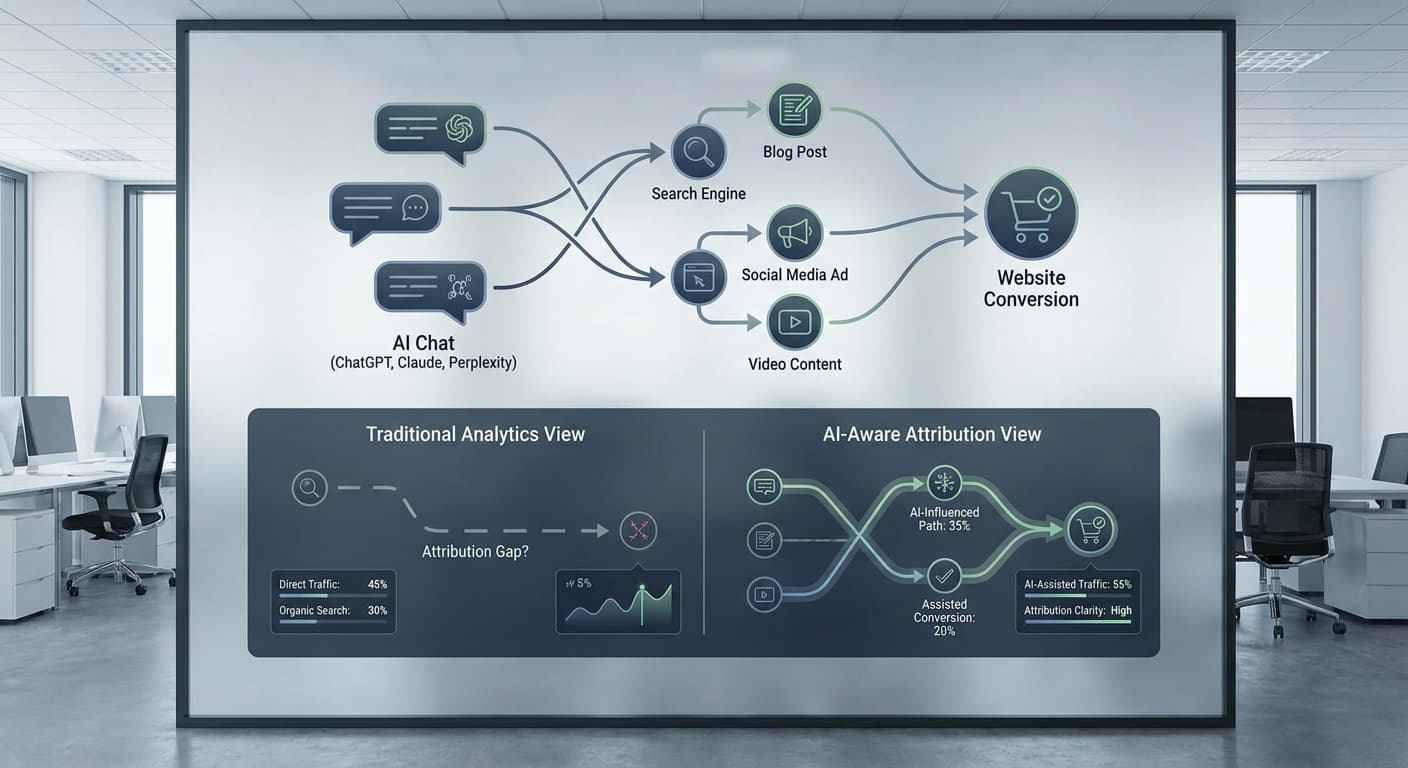
Here's a sobering reality check: If a potential customer discovers your business through ChatGPT, gets curious about your services through Claude, compares options via Perplexity, and then visits your website directly by typing your URL—your analytics will show this as "direct traffic." You'll have zero visibility into the AI-powered journey that led to their conversion.
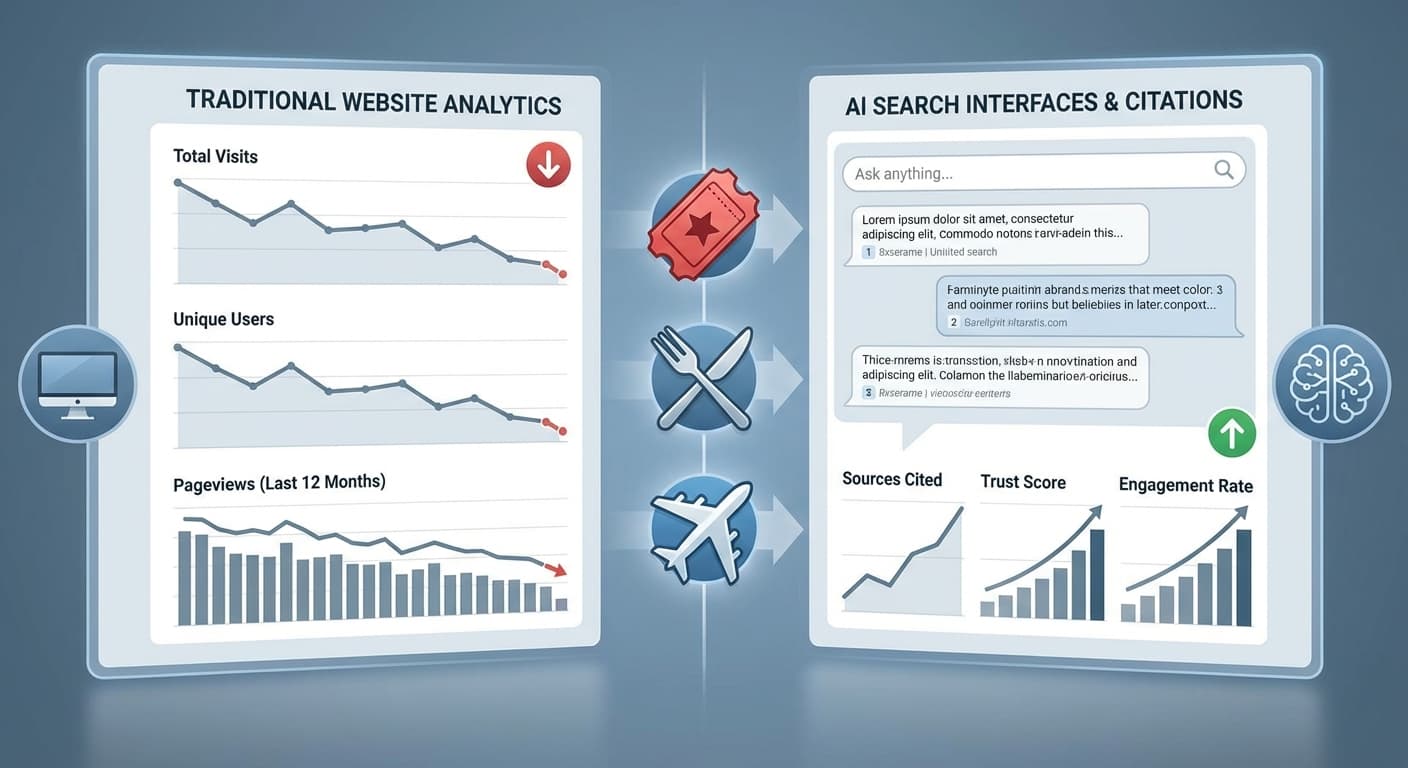
With AI search engines now handling over 30% of all queries and 64% of Gen Z's customer journeys beginning in conversational AI platforms, traditional attribution models are creating massive blind spots in your marketing analytics. The result? You're optimizing for the wrong channels while missing the AI touchpoints that actually drive your best customers.
The Attribution Black Hole: Why Traditional Analytics Miss AI-Driven Conversions
Traditional web analytics were built for a simpler world where customers clicked links from Google, social media, or email campaigns. But AI search engines operate fundamentally differently:
The AI Search Journey Problem
Traditional Search Journey:
Google Search → Click Result → Website → Conversion
AI Search Journey:
ChatGPT Question → AI Response (mentions your brand) → Mental note → Later direct website visit → Conversion
In the AI journey, there's no clickable link, no referral data, and no tracking pixel. Your analytics see this as a mysterious "direct" visit, leaving you blind to what actually drove the conversion.
The Scale of the Problem
Recent studies show that:
Understanding AI Attribution: The New Customer Journey Map
To build an effective attribution strategy, you first need to understand how customers actually move through AI-powered touchpoints:
Phase 1: AI Discovery
Phase 2: AI Research
Phase 3: Direct Engagement
Building Your AI Attribution Tracking Framework
1. Implement Conversational UTM Tracking
Create unique UTM parameters specifically for AI-generated traffic:
?utm_source=ai_search&utm_medium=citation&utm_campaign=q1_2026
While users won't click these links directly, promote these tagged URLs in:
2. Set Up Brand Mention Monitoring
Track when AI engines cite your content:
Key Platforms to Monitor:
What to Track:
3. Create AI-Specific Landing Pages
Design landing pages optimized for AI-influenced traffic:
4. Deploy Behavioral Attribution Models
Move beyond last-click attribution to behavioral pattern recognition:
Key Indicators of AI-Influenced Traffic:
5. Implement Survey-Based Attribution
Add post-conversion surveys asking:
Advanced AI Attribution Techniques
Cross-Platform Journey Mapping
Create cohort analyses that identify AI-influenced behavior:
AI Citation Tracking Integration
Specialized tools now track AI citations across platforms. When integrated with your analytics, these provide:
Predictive Attribution Modeling
Use machine learning to predict AI-influenced conversions:
Data Inputs:
Predictive Outputs:
Measuring Success: Key Metrics for AI Attribution
Primary Metrics
Secondary Metrics
How Citescope Ai Helps
While building attribution frameworks manually is complex, Citescope Ai's Citation Tracker automates much of this process. The platform monitors citations across ChatGPT, Perplexity, Claude, and Gemini, providing real-time alerts when your content gets mentioned. You can correlate these citations with your website traffic patterns to build accurate attribution models.
The GEO Score feature also helps predict which content is most likely to earn AI citations, allowing you to proactively optimize for maximum attribution visibility.
Common Implementation Challenges and Solutions
Challenge 1: Data Privacy and Tracking Limitations
Solution: Focus on first-party data collection through surveys, enhanced analytics setup, and behavioral pattern recognition rather than invasive tracking.
Challenge 2: Cross-Platform Citation Monitoring
Solution: Use specialized AI citation tracking tools combined with social listening platforms to capture mentions across all major AI engines.
Challenge 3: Proving ROI to Leadership
Solution: Start with correlation analysis and gradually build causation evidence through controlled testing and survey validation.
Challenge 4: Resource Allocation
Solution: Begin with high-impact, low-effort tactics like UTM tracking and post-conversion surveys before investing in advanced attribution modeling.
Ready to Optimize for AI Search?
The shift to AI-powered customer journeys isn't coming—it's already here. While your competitors struggle with attribution blind spots, you can gain a competitive advantage by building comprehensive AI attribution tracking.
Citescope Ai helps you monitor AI citations, optimize content for maximum visibility, and track your performance across all major AI search engines. Start with our free tier to analyze your first three pieces of content, then upgrade to Pro for comprehensive attribution tracking and optimization tools.
Start your free trial today and stop losing attribution data in the AI search revolution.