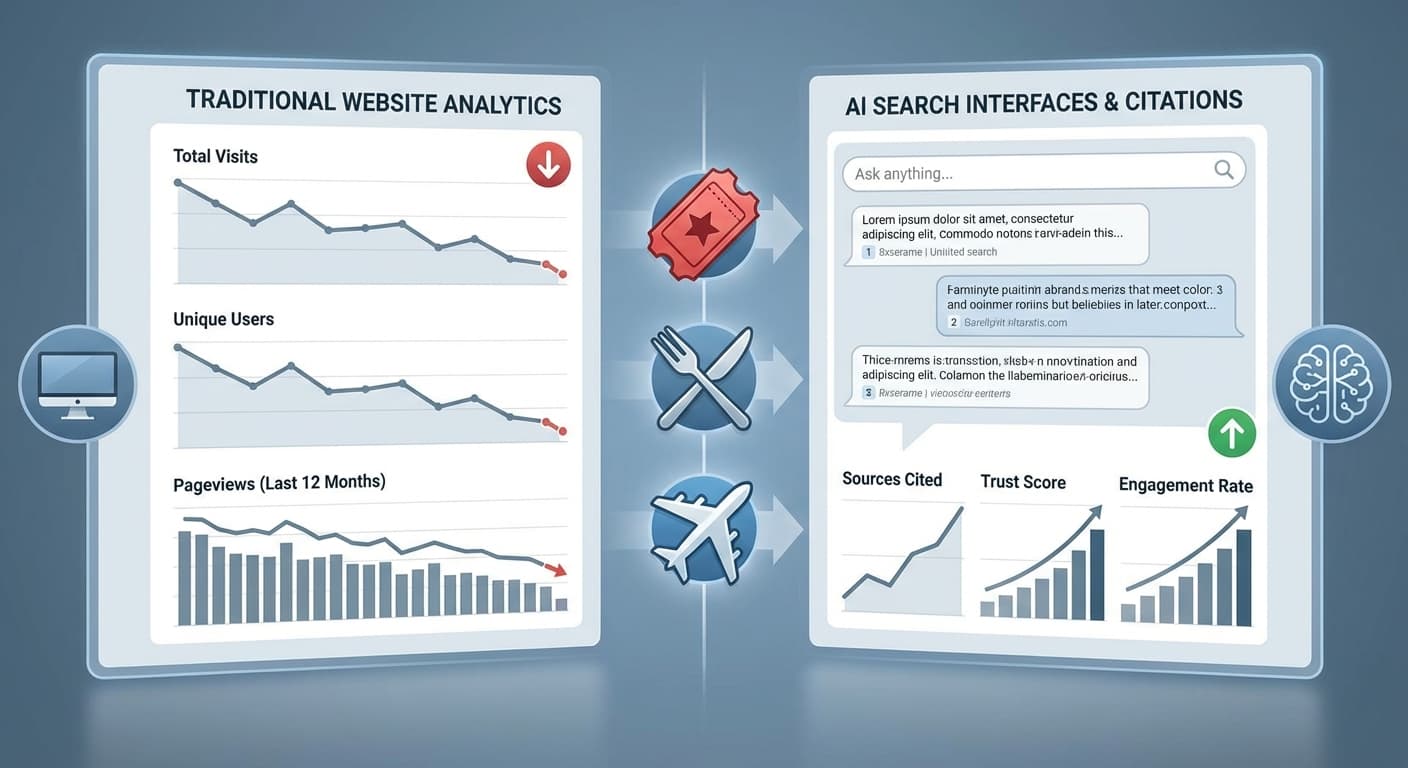
How to Build an AI Search Budget Allocation Strategy When CFOs Demand ROI Proof
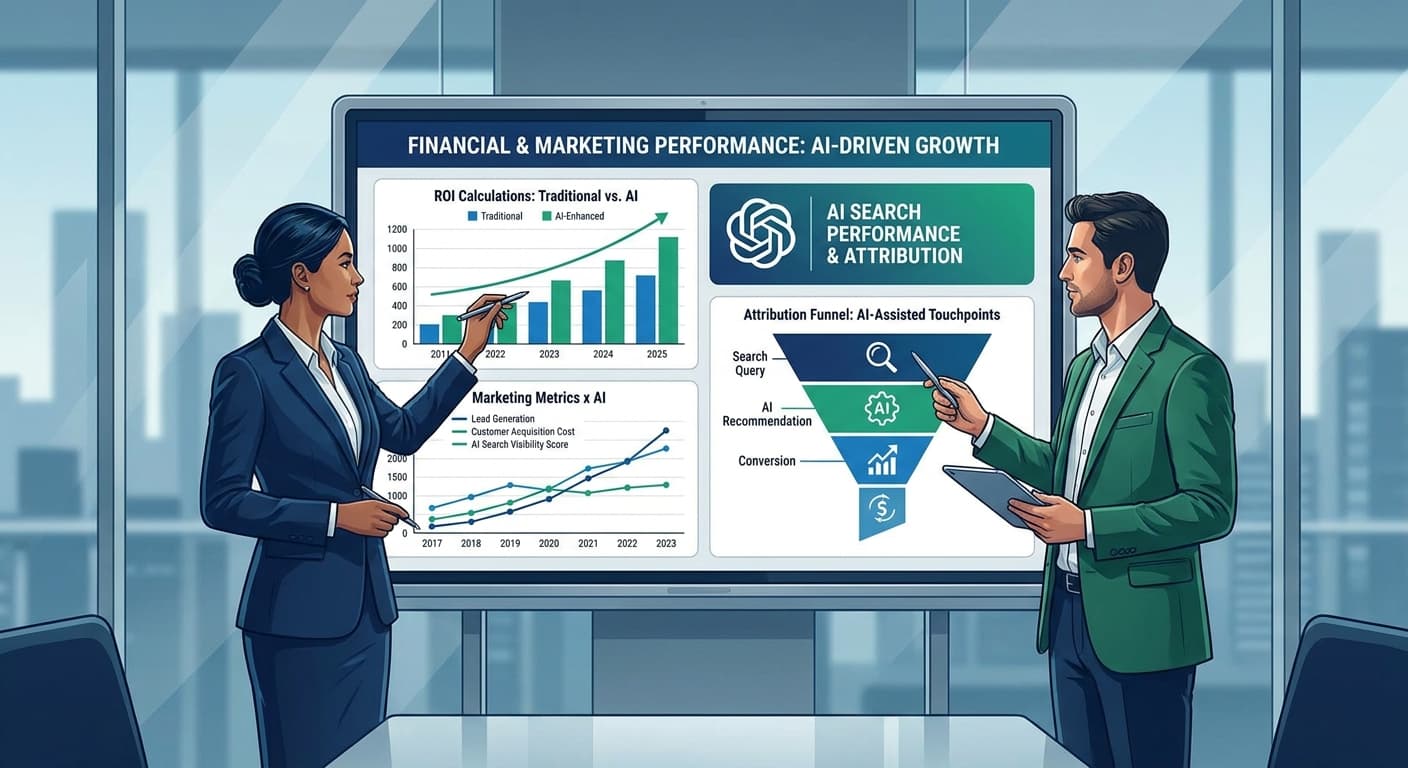
How to Build an AI Search Budget Allocation Strategy When CFOs Demand ROI Proof
CFOs are asking the tough questions: "We're spending $50K annually on AI search optimization, but where's the revenue impact?" It's a fair question, especially when 82% of AI-generated brand mentions can't be tracked to revenue in traditional analytics platforms like Google Analytics or HubSpot. Yet with AI search now driving 35% of all queries and ChatGPT alone serving 600 million weekly users, ignoring this channel isn't an option.
The challenge isn't whether to invest in AI search optimization—it's how to build a budget allocation strategy that satisfies both growth objectives and CFO scrutiny. Here's how forward-thinking marketing teams are cracking this code in 2026.
The Hidden ROI Problem in AI Search Attribution
Traditional marketing attribution falls apart with AI search engines. When someone asks ChatGPT "What's the best project management software for remote teams?" and your brand gets mentioned, that interaction doesn't show up in your Google Analytics. The user might not even visit your website immediately—they might research further, discuss with colleagues, or bookmark the AI conversation for later.
This creates what researchers call "dark attribution"—valuable brand exposure and consideration that influences purchase decisions weeks or months later, but can't be traced through conventional tracking pixels.
The Scale of the Attribution Gap
Recent studies show:
This means your traditional funnel metrics are missing a massive piece of the customer journey.
Framework: The AI Search ROI Pyramid
To build a defensible budget allocation strategy, think of AI search ROI in three measurable tiers:
Tier 1: Direct Attribution (20% of total impact)
These are the conversions you can track:
Tier 2: Influence Attribution (50% of total impact)
Metrics that indicate AI search influence:
Tier 3: Brand Authority Attribution (30% of total impact)
Longer-term brand building effects:
Budget Allocation Strategy by Business Stage
Early Stage Companies ($10K-25K annual AI search budget)
Focus: Foundation Building (70% Tier 1, 30% Tier 2)
Start with high-intent, bottom-funnel content that drives immediate traffic and conversions. Build your measurement foundation before scaling spend.
Growth Stage Companies ($25K-100K annual budget)
Focus: Scale and Influence (40% Tier 1, 45% Tier 2, 15% Tier 3)
Expand to mid-funnel content and begin building brand authority in AI search results.
Enterprise Companies ($100K+ annual budget)
Focus: Market Dominance (25% Tier 1, 45% Tier 2, 30% Tier 3)
Dominate AI search results across all relevant queries while building long-term brand authority.
Measuring What Matters: KPIs for CFO Reporting
Monthly Dashboards Should Include:
Direct Revenue Metrics:
Leading Indicators:
Business Impact Metrics:
Quarterly Business Reviews Should Include:
Correlation Analysis: Show relationships between AI search investments and business outcomes, even if direct attribution isn't possible.
Competitive Benchmarking: Demonstrate how AI search presence affects market position relative to competitors.
Customer Journey Analysis: Map how AI search interactions influence the broader customer journey, using surveys and sales feedback.
Advanced Attribution Techniques
1. Customer Survey Integration
Add AI search questions to your customer onboarding surveys:
2. Sales Team Intelligence
Train sales teams to ask about research methods during discovery calls. Track patterns in deals that mention AI-assisted research.
3. Brand Lift Studies
Run quarterly studies comparing brand awareness and consideration in markets with high AI search optimization versus control markets.
4. Incrementality Testing
Temporarily reduce AI search optimization in test markets to measure the impact on overall marketing performance.
How Citescope Ai Helps Bridge the Attribution Gap
While building comprehensive attribution takes time, tools like Citescope Ai provide immediate visibility into your AI search performance. The platform's Citation Tracker monitors when your content gets mentioned across ChatGPT, Perplexity, Claude, and Gemini, giving you real-time data on your share of AI-generated responses.
The GEO Score feature helps justify budget allocation by showing exactly how well your content performs against AI search optimization criteria. Instead of guessing which content investments will drive AI visibility, you get concrete scores across five key dimensions that correlate with citation frequency.
Building Internal Buy-In: The CFO Conversation Framework
When presenting your AI search budget to financial leadership:
Frame the Opportunity Cost
"Our competitors are capturing 40% of AI search mentions in our category. Each month we delay optimization is market share we're ceding to them."
Present Blended Attribution
"While we can directly attribute $50K in revenue to AI search, our correlation analysis shows it influenced an additional $200K in pipeline."
Show Efficiency Gains
"AI search optimization is improving our overall content ROI by 23%, reducing our cost per acquisition across all channels."
Demonstrate Competitive Advantage
"Early investment in AI search gives us a 12-18 month head start before this becomes table stakes for our industry."
Implementation Timeline: 90-Day Quick Start
Days 1-30: Foundation
Days 31-60: Optimization
Days 61-90: Scale
Ready to Optimize for AI Search?
Building an AI search budget strategy that satisfies both growth goals and financial scrutiny requires the right measurement foundation. Citescope Ai helps marketing teams prove ROI by tracking citations across all major AI platforms and optimizing content for maximum visibility. Start with our free tier to test 3 optimizations per month, or upgrade to Pro ($39/mo) for comprehensive AI search optimization. Try Citescope Ai free today and build the attribution framework your CFO demands.