GEO Strategy

How to Build an AI Search Competitive Intelligence System When You Can't Track How Your Competitors Are Winning Citations in ChatGPT and Perplexity Responses
February 16, 20267 min read
How to Build an AI Search Competitive Intelligence System When You Can't Track How Your Competitors Are Winning Citations in ChatGPT and Perplexity Responses

How to Build an AI Search Competitive Intelligence System When You Can't Track How Your Competitors Are Winning Citations in ChatGPT and Perplexity Responses

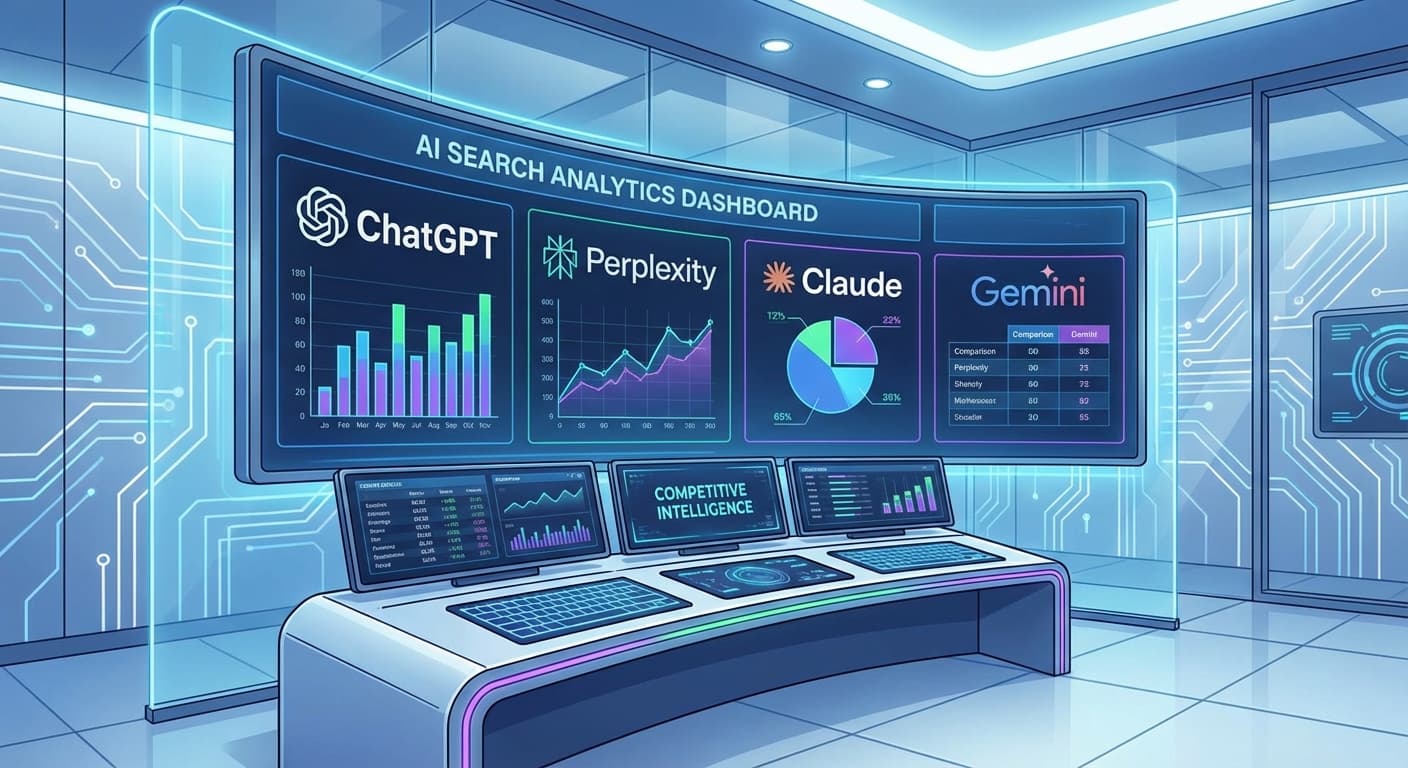
With AI search engines processing over 50 billion queries monthly in 2025 and capturing 35% of all search traffic, a troubling reality has emerged for content marketers: your competitors are winning citations in ChatGPT, Perplexity, Claude, and Gemini responses—but you have no visibility into why or how.

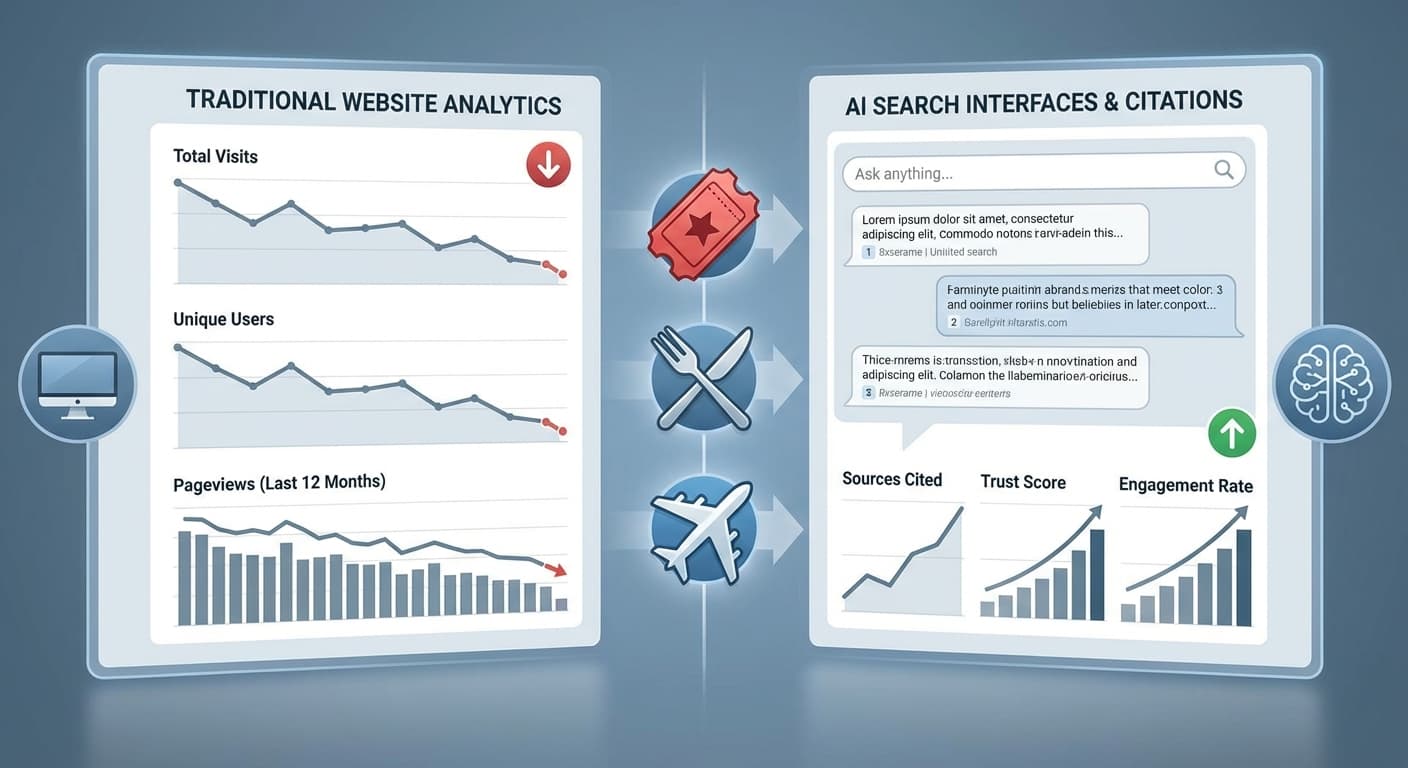
Unlike traditional search where you can track keyword rankings and backlinks, AI search engines operate as black boxes. When a potential customer asks ChatGPT about your industry, which brands get cited? Which content pieces earn those coveted source links? Without this intelligence, you're essentially flying blind in the most important search battleground of 2025.

The Hidden AI Search War Your Competitors Are Already Fighting

The shift to AI search has created an entirely new competitive landscape. While 72% of Gen Z now uses AI engines as their primary search method, most businesses still focus exclusively on traditional SEO metrics. This disconnect means:

  • Your competitors could be dominating AI citations while ranking poorly on Google

  • High-authority content that works for traditional SEO might fail completely in AI responses

  • New players with AI-optimized content are potentially outperforming established brands

  • Customer research journeys now happen almost entirely within AI chat interfaces
  • The challenge? Unlike Google Search Console or SEMrush for traditional search, there's no built-in analytics dashboard showing which competitors earn the most AI citations in your space.

    Building Your AI Search Competitive Intelligence Framework

    Step 1: Map Your Competitive AI Citation Landscape

    Start by identifying your true AI search competitors—which may differ significantly from your traditional SEO competitors. Create a systematic approach:

    Primary Research Method:

  • Develop 50-100 industry-specific queries your target audience would ask AI engines

  • Query each across ChatGPT, Perplexity, Claude, and Gemini weekly

  • Document which brands, websites, and content pieces get cited

  • Track citation frequency, placement, and context
  • Query Categories to Test:

  • Product comparison questions ("What are the best [your product category] for [use case]?")

  • How-to queries in your niche

  • Industry trend and news questions

  • Problem-solution scenarios your customers face

  • Technical questions requiring expert sources
  • Step 2: Analyze Citation-Winning Content Patterns

    Once you've identified which competitors consistently win citations, reverse-engineer their success:

    Content Structure Analysis:

  • Format preferences: Do cited articles use specific heading structures?

  • Content depth: What's the typical word count of cited pieces?

  • Authority signals: How do they establish expertise and credibility?

  • Source diversity: Do they cite other authoritative sources?

  • Conversational alignment: How closely does the content match natural language queries?
  • Authority and Trust Signals:

  • Industry certifications and credentials mentioned

  • Author bio strength and expertise indicators

  • Publication on high-authority domains

  • Social proof elements (testimonials, case studies, user counts)

  • Recency and update frequency
  • Step 3: Build Content Intelligence Systems

    Automated Monitoring Setup:
    While you can't directly track competitors' AI citations at scale, you can create systems to monitor the content that consistently wins:

  • Use RSS feeds to track when top-cited competitors publish new content

  • Set up Google Alerts for your industry keywords to catch trending topics early

  • Monitor competitor social media for content promotion patterns

  • Track when competitors update their most-cited pages
  • Content Gap Analysis:

  • Identify topics where competitors consistently get cited but you don't have content

  • Find question types where no competitor dominates (opportunity gaps)

  • Analyze seasonal patterns in citation-winning topics

  • Map content themes that emerge across multiple AI engines
  • Step 4: Develop Your Citation Optimization Strategy

    Content Creation Framework:
    Based on your competitive intelligence, develop content that's optimized for AI citation:

  • Lead with clear, definitive answers - AI engines prefer content that directly answers queries

  • Use structured data and clear headings - Help AI engines parse and understand your content

  • Include relevant statistics and data - Numbers make content more citation-worthy

  • Write in conversational, natural language - Match how people actually ask questions

  • Establish topical authority - Cover subjects comprehensively rather than superficially
  • Content Optimization Priorities:

  • Update existing high-performing content with AI-friendly structures

  • Create comprehensive guides on topics where competitors dominate citations

  • Develop FAQ-style content that directly addresses common queries

  • Build topic clusters that establish your domain expertise
  • Advanced Competitive Intelligence Techniques

    Reverse Engineering Citation Success

    Content Performance Indicators:
    Look for these signals that suggest content performs well in AI search:

  • High engagement metrics despite lower traditional SEO rankings

  • Unusual traffic spikes that don't correlate with Google algorithm updates

  • Social sharing patterns that suggest discovery through AI recommendations

  • Direct traffic increases following AI engine feature launches
  • Competitor Content Strategy Patterns:

  • Publishing frequency and timing

  • Content update cycles for evergreen pieces

  • Topic expansion strategies (how they build authority clusters)

  • Cross-platform content distribution approaches
  • Building Your Own Citation Network

    Strategic Content Partnerships:

  • Identify websites that frequently get cited alongside your competitors

  • Develop guest posting and collaboration strategies with these authoritative sources

  • Create link-worthy resources that other cited sources would reference

  • Build relationships with industry experts whose quotes appear in AI responses
  • How Citescope Ai Helps Solve the AI Citation Intelligence Problem

    While building competitive intelligence manually is time-intensive, Citescope Ai provides the systematic approach needed to compete effectively in AI search. The platform's Citation Tracker monitors when your content gets cited by ChatGPT, Perplexity, Claude, and Gemini—giving you the visibility that's been missing.

    More importantly, the GEO Score analyzes your content across the five dimensions that matter most for AI citations: AI Interpretability, Semantic Richness, Conversational Relevance, Structure, and Authority. This means you can optimize strategically rather than guessing what works.

    Measuring Your AI Search Competitive Position

    Key Metrics to Track

    Citation Share Metrics:

  • Percentage of industry queries where you earn citations vs. competitors

  • Citation placement (first source, supporting source, etc.)

  • Query topic categories where you consistently win

  • Brand mention frequency in AI responses
  • Content Performance Indicators:

  • Time from publication to first AI citation

  • Citation longevity (how long content continues earning citations)

  • Cross-platform citation consistency

  • Seasonal citation performance patterns
  • Competitive Gap Analysis:

  • Topics where competitors dominate but you have no presence

  • Content formats that consistently outperform your current approach

  • Authority signals your content lacks compared to cited competitors

  • Geographic or demographic query variations where competitors excel
  • Future-Proofing Your AI Search Strategy

    As AI search continues evolving, your competitive intelligence system must adapt:

    Emerging Trends to Monitor:

  • New AI search engines entering the market

  • Changes in citation behavior across existing platforms

  • Integration of real-time information into AI responses

  • Increased emphasis on local and personalized AI search results
  • Strategic Recommendations:

  • Build content systems that can scale across multiple AI platforms

  • Develop expertise-based content that's difficult for competitors to replicate quickly

  • Create comprehensive resource libraries that establish category authority

  • Invest in content formats that AI engines increasingly prefer
  • Ready to Optimize for AI Search?

    Building competitive intelligence for AI search doesn't have to be a manual, time-intensive process. Citescope Ai provides the systematic citation tracking and content optimization tools you need to compete effectively in ChatGPT, Perplexity, Claude, and Gemini.

    With features like automated citation monitoring, GEO Score analysis, and one-click AI optimization, you can finally see which content strategies actually drive AI search visibility. Start with our free tier (3 optimizations per month) and discover what your competitors are doing right—and how you can do it better.

    Start your free Citescope Ai trial today and gain the AI search competitive intelligence that's been missing from your content strategy.
    AI searchcompetitive intelligencecontent optimizationcitation trackingAI SEO

    Track your AI visibility

    See how your content appears across ChatGPT, Perplexity, Claude, and more.

    Start for Free