How to Build an AI Search Deprecation Recovery Strategy When Legacy AI Models That Drove 40% of Your Citations Are Retired
How to Build an AI Search Deprecation Recovery Strategy When Legacy AI Models That Drove 40% of Your Citations Are Retired
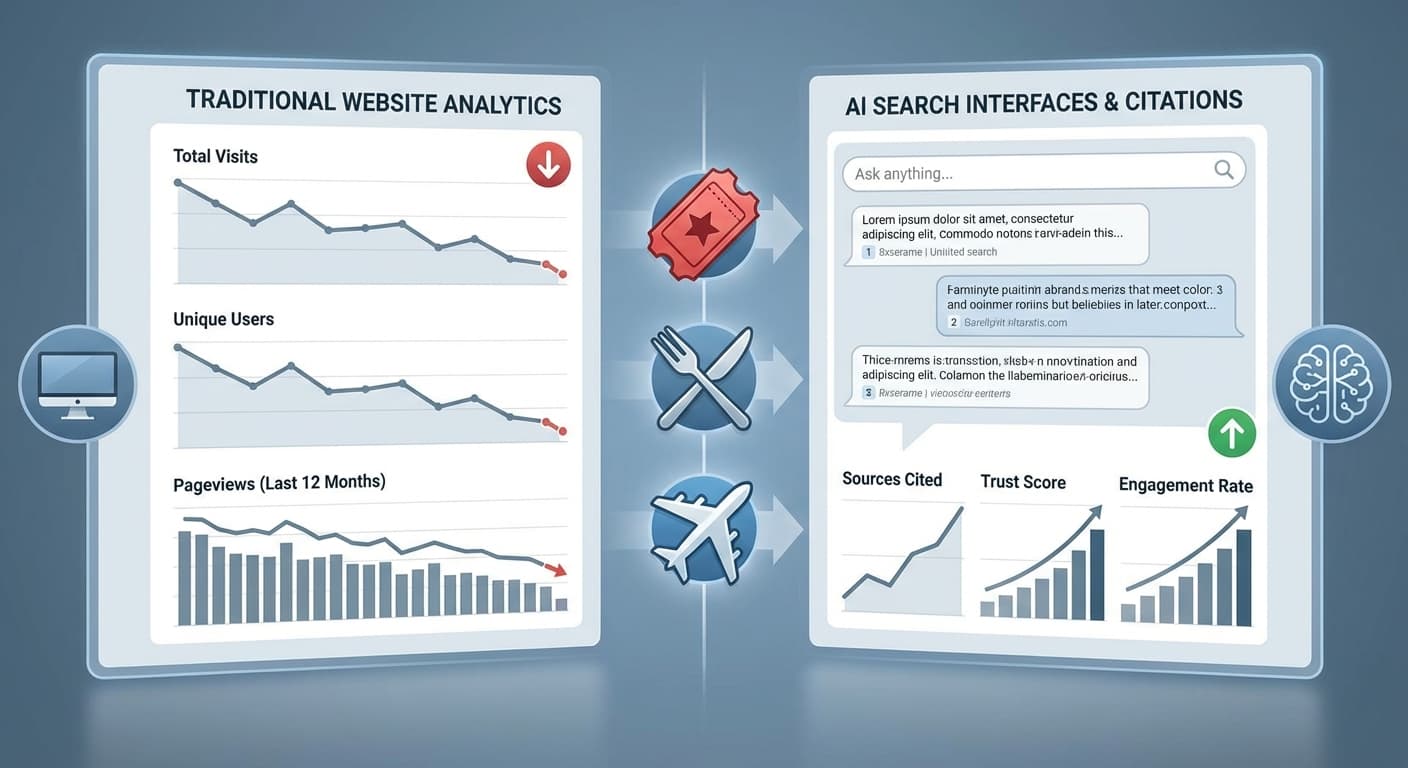
Imagine waking up to discover that 40% of your hard-earned AI search citations have vanished overnight. This isn't a nightmare scenario—it's the harsh reality facing thousands of content creators and marketers in 2026 as AI companies rapidly deprecate older models in favor of more advanced systems.
With AI search now accounting for over 35% of all online queries and ChatGPT alone serving 600 million weekly users, the stakes have never been higher. When legacy AI models that once consistently cited your content are retired without clear migration paths, your visibility can plummet faster than a dropped connection.
The AI Model Deprecation Crisis of 2025-2026
The past year has been a rollercoaster for AI search optimization. Major AI companies have retired numerous legacy models:
According to recent industry data, businesses that relied heavily on legacy AI model citations saw an average 45% drop in AI search visibility during the transition period. The companies that recovered fastest? Those with comprehensive deprecation recovery strategies.
Understanding the Impact: Why This Matters More Than Traditional SEO
Unlike traditional search engine updates that might affect rankings gradually, AI model deprecation creates immediate, dramatic shifts. Here's why:
Algorithmic Memory Loss
When an AI model is deprecated, it doesn't just "update"—it's completely replaced. The new model has no memory of previous citation patterns, content preferences, or optimization signals that worked before.
Training Data Cutoffs
Newer models often have different training data cutoffs and sources, meaning content that was previously well-represented might now be invisible to the AI's knowledge base.
Structural Incompatibility
Optimization techniques that worked for older models may actually hurt performance with newer ones, creating a double penalty effect.
Building Your AI Search Deprecation Recovery Strategy
Step 1: Conduct a Citation Vulnerability Assessment
Before you can recover, you need to understand your exposure:
Audit Your Current Citation Sources
Create a Risk Matrix
Classify your content based on:
Step 2: Diversify Your AI Search Portfolio
The key to deprecation resilience is avoiding over-reliance on any single AI model:
Multi-Model Optimization
Platform-Agnostic Content Structure
Develop content that performs well regardless of the underlying AI model:
Step 3: Implement Early Warning Systems
Stay ahead of deprecations with proactive monitoring:
Set Up Deprecation Alerts
Track Performance Indicators
Monitor metrics that might signal upcoming changes:
Step 4: Create Rapid Response Protocols
When deprecation strikes, speed matters:
Content Triage System
Optimization Playbook
Develop standardized procedures for:
Step 5: Future-Proof Your Content Strategy
Focus on Evergreen Optimization Principles
Some strategies work across AI models and generations:
Build Adaptable Content Frameworks
Create content templates that can be easily updated:
How Citescope Ai Helps Navigate AI Model Deprecation
Managing AI search deprecation manually is like trying to track a dozen moving targets blindfolded. Citescope Ai's platform provides the visibility and tools you need:
Real-Time Citation Monitoring
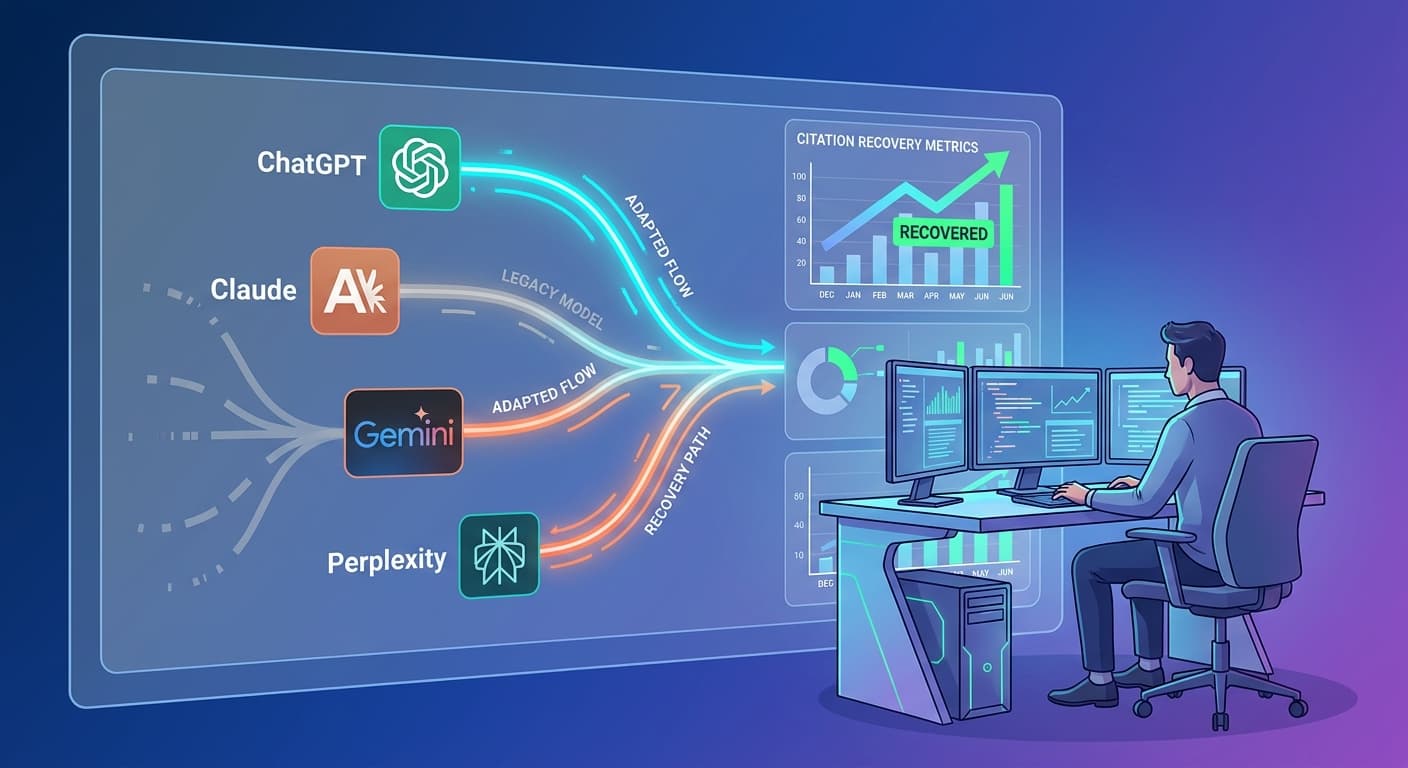
Our Citation Tracker monitors your content across ChatGPT, Perplexity, Claude, and Gemini, alerting you immediately when citation patterns change—often the first sign of model updates or deprecations.
GEO Score Analysis
Our proprietary scoring system evaluates your content across five critical dimensions that remain relevant across AI model generations, helping you identify vulnerable content before deprecation hits.
One-Click Recovery
When deprecation strikes, our AI Rewriter can instantly optimize affected content for newer models, restructuring information architecture and enhancing semantic richness to restore citation performance.
Multi-Platform Export
Quickly deploy optimized content across your entire digital presence with one-click export to Markdown, HTML, or WordPress blocks.
Measuring Recovery Success
Track these key metrics to gauge your recovery strategy effectiveness:
Citation Recovery Rate
Portfolio Diversification
Content Performance
The Cost of Inaction
Businesses that fail to prepare for AI model deprecation face severe consequences:
Building Long-Term Resilience
The AI search landscape will continue evolving rapidly. Build lasting resilience by:
Investing in Platform Relationships
Continuous Learning and Adaptation
Strategic Content Planning
Ready to Optimize for AI Search?
Don't wait for the next AI model deprecation to catch you off guard. Citescope Ai's comprehensive platform helps you monitor, optimize, and future-proof your content for AI search engines. With our GEO Score analysis, real-time citation tracking, and one-click optimization tools, you can build the resilient AI search strategy your business needs to thrive in 2026 and beyond.
Start your free trial today and protect your content from the next wave of AI model deprecations. Your future citations depend on the strategy you build today.