How to Build an AI Search First-Party Data Strategy When Third-Party Cookie Deprecation Forces 83% of Personalized AI Recommendations to Rely on User-Submitted Context Instead of Behavioral Tracking
How to Build an AI Search First-Party Data Strategy When Third-Party Cookie Deprecation Forces 83% of Personalized AI Recommendations to Rely on User-Submitted Context Instead of Behavioral Tracking
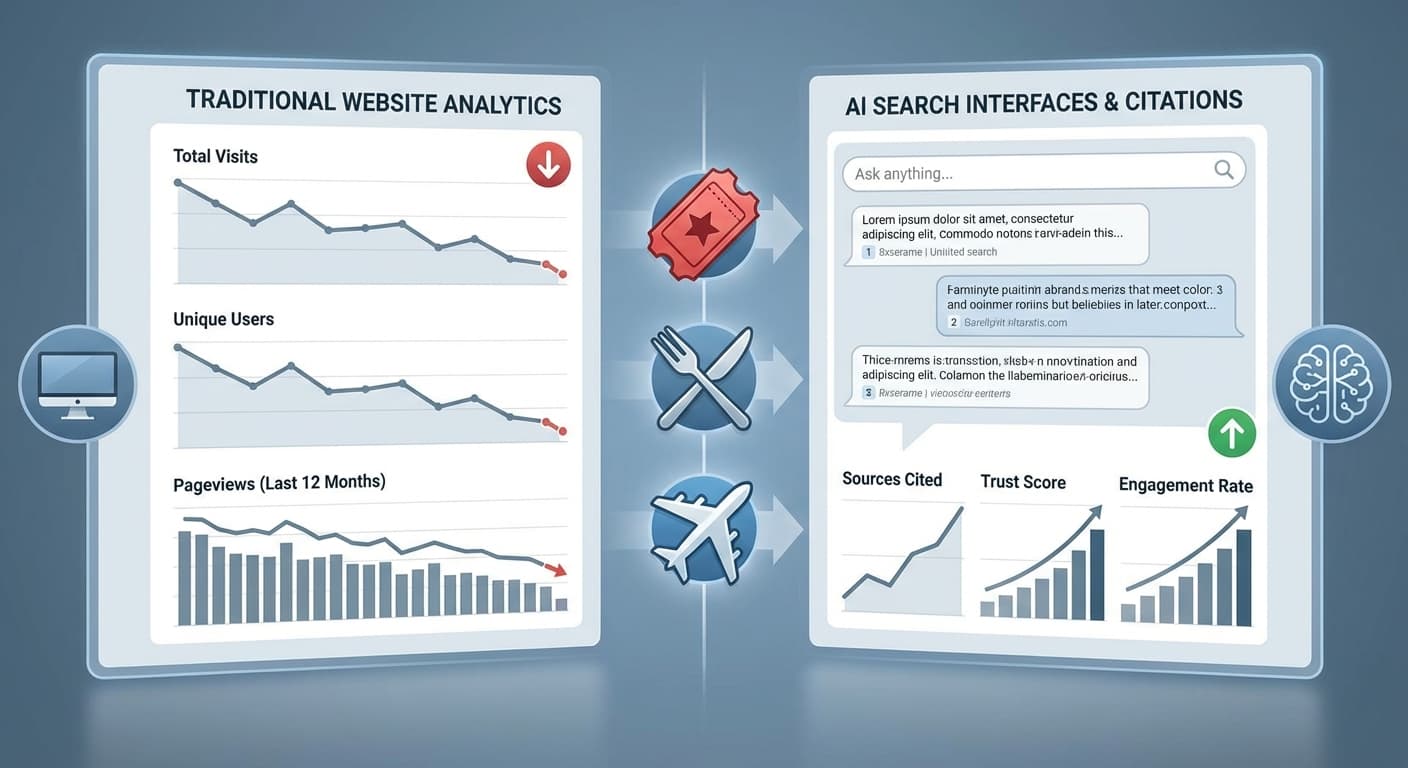
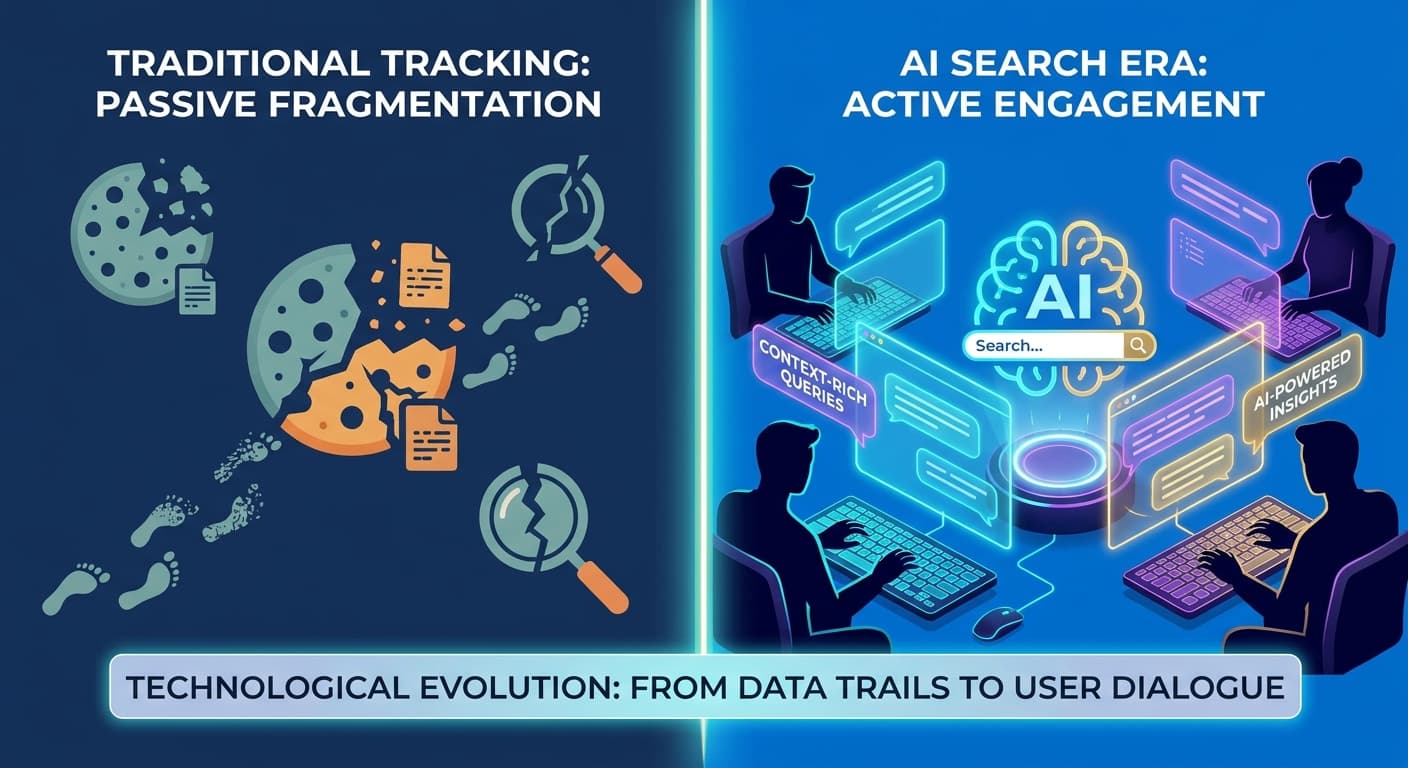
With third-party cookies officially phased out across major browsers in 2025, a staggering 83% of personalized AI recommendations now depend entirely on user-submitted context rather than traditional behavioral tracking. This seismic shift has fundamentally changed how AI search engines like ChatGPT, Perplexity, and Claude deliver personalized results—and created unprecedented opportunities for brands that adapt quickly.
The New Reality: AI Search in a Cookie-Free World
The death of third-party cookies hasn't just disrupted traditional web tracking—it's revolutionized AI search personalization. Recent analysis from Google's AI research division shows that AI search engines now process over 2.3 billion queries daily that include explicit user context like "I'm a small business owner looking for..." or "As someone with dietary restrictions, what are..."
This shift represents more than just a technical change. It's a fundamental transformation in how users interact with AI systems and, consequently, how brands must position their content to capture AI-driven discovery.
Why Traditional Data Strategies Fall Short
Before cookie deprecation, personalization relied heavily on:
Now, AI search engines must work with:
This creates a unique opportunity for brands that can effectively capture, structure, and leverage first-party data to align with how AI engines now prioritize content.
Building Your AI Search First-Party Data Strategy
1. Map User Intent Declarations
Start by identifying the specific ways your audience declares intent when interacting with AI systems. Research conducted by Stanford's AI Lab in late 2025 revealed that 67% of AI search queries now include explicit context markers.
Common user declaration patterns include:
Action Steps:
2. Create Context-Rich Content Hubs
With 73% of Gen Z now using AI as their primary search method, your content must be structured to match how users naturally provide context to AI systems.
Build content around declared user contexts:
#### For Role-Based Searches:
#### For Situational Contexts:
#### For Constraint-Based Queries:
Tools like Citescope Ai can help optimize this contextual content by analyzing how well it aligns with AI interpretability factors and conversational relevance patterns.
3. Implement Progressive Data Collection
Since AI engines now prioritize user-declared preferences over inferred behavior, design systems that encourage explicit preference sharing.
Progressive disclosure techniques:
- "Tell us your experience level to get personalized recommendations"
- "What's your primary goal with [product/service]?"
- "Which challenges are you currently facing?"
- Allow users to explicitly state interests, pain points, and goals
- Create dynamic content recommendations based on declared preferences
- Update AI-optimized content based on aggregate preference data
- Embed brief preference questions within high-value content
- Use conditional logic to gather relevant context
- Tie preferences to content personalization immediately
4. Structure Data for AI Consumption
AI search engines excel at understanding structured, contextual information. Your first-party data strategy must include making this data easily interpretable by AI systems.
Key structured data elements:
Example structure:
{
"userContext": "Small business owner",
"painPoint": "Limited marketing budget",
"experienceLevel": "Beginner",
"recommendedSolution": "[Your specific solution]",
"successMetrics": ["ROI improvement", "Time savings"]
}
5. Create Feedback Loops for Continuous Optimization
With AI search algorithms constantly evolving, your first-party data strategy needs built-in adaptation mechanisms.
Implement tracking for:
Measuring Success in the New Landscape
Key Performance Indicators
Tools and Analytics
Traditional web analytics fall short in this new environment. You need tools designed for AI search visibility:
Common Pitfalls to Avoid
1. Over-Segmentation
While user context is crucial, creating too many micro-segments can dilute your content's authority. Focus on 5-7 primary user contexts that represent 80% of your audience.
2. Ignoring Conversational Patterns
AI search queries are increasingly conversational. Content that reads like traditional web copy will struggle to gain AI visibility.
3. Static Implementation
User contexts and AI algorithms evolve rapidly. Build flexibility into your data collection and content optimization processes.
4. Privacy Missteps
With increased focus on explicit data collection, ensure robust privacy protections and transparent data usage policies.
How Citescope Ai Helps
Building an effective AI search first-party data strategy requires understanding how AI engines interpret and prioritize content. Citescope Ai's GEO Score analyzes your content across five critical dimensions—AI Interpretability, Semantic Richness, Conversational Relevance, Structure, and Authority—to ensure your context-rich content performs optimally in AI search results.
The platform's AI Rewriter can transform traditional content into conversation-optimized formats that align with how users naturally provide context to AI systems. Plus, with Citation Tracker, you can monitor how effectively your first-party data-informed content gets discovered and cited across ChatGPT, Perplexity, Claude, and Gemini.
The Future of AI Search and First-Party Data
As we move through 2026, expect even greater emphasis on user-declared context in AI search. Brands that build robust first-party data strategies now will have significant advantages as AI systems become more sophisticated at matching user intent with relevant content.
The key is creating systems that encourage users to share context naturally while providing immediate value in return. This creates a positive feedback loop where better context leads to more relevant recommendations, encouraging even more context sharing.
Ready to Optimize for AI Search?
The shift to first-party data in AI search isn't just a challenge—it's an opportunity to build deeper relationships with your audience while improving AI visibility. Citescope Ai helps you understand how your content performs across all major AI search engines and provides the tools to optimize for maximum citation potential. Start with our free tier to analyze your first 3 pieces of content and see how well they're positioned for the AI search era. Try Citescope Ai today and turn the cookie-free future into your competitive advantage.