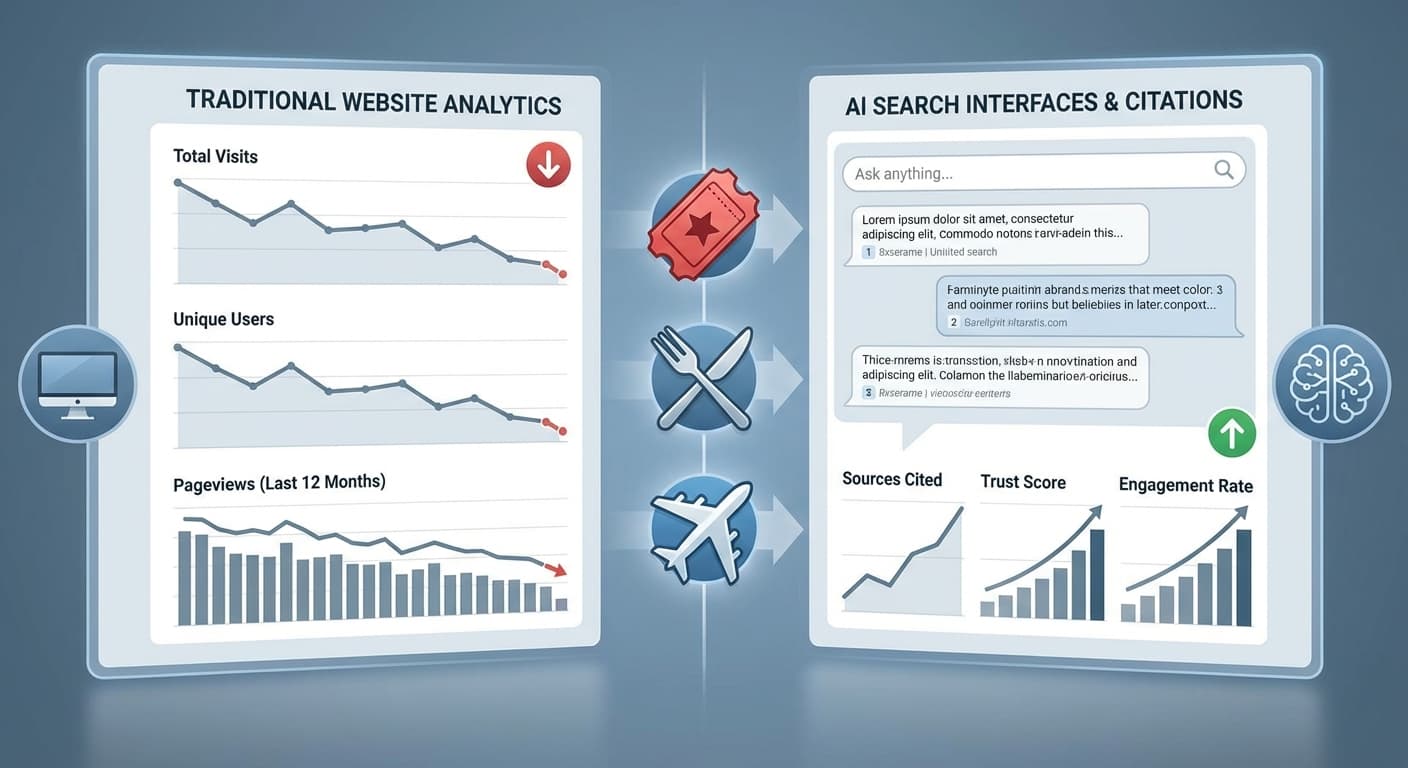
How to Build an AI Search Multi-Turn Conversation Drop-Off Strategy When 79% of Product Research Sessions Span 6+ Follow-Up Questions But Your Brand Only Appears in the Initial Response
How to Build an AI Search Multi-Turn Conversation Drop-Off Strategy When 79% of Product Research Sessions Span 6+ Follow-Up Questions But Your Brand Only Appears in the Initial Response
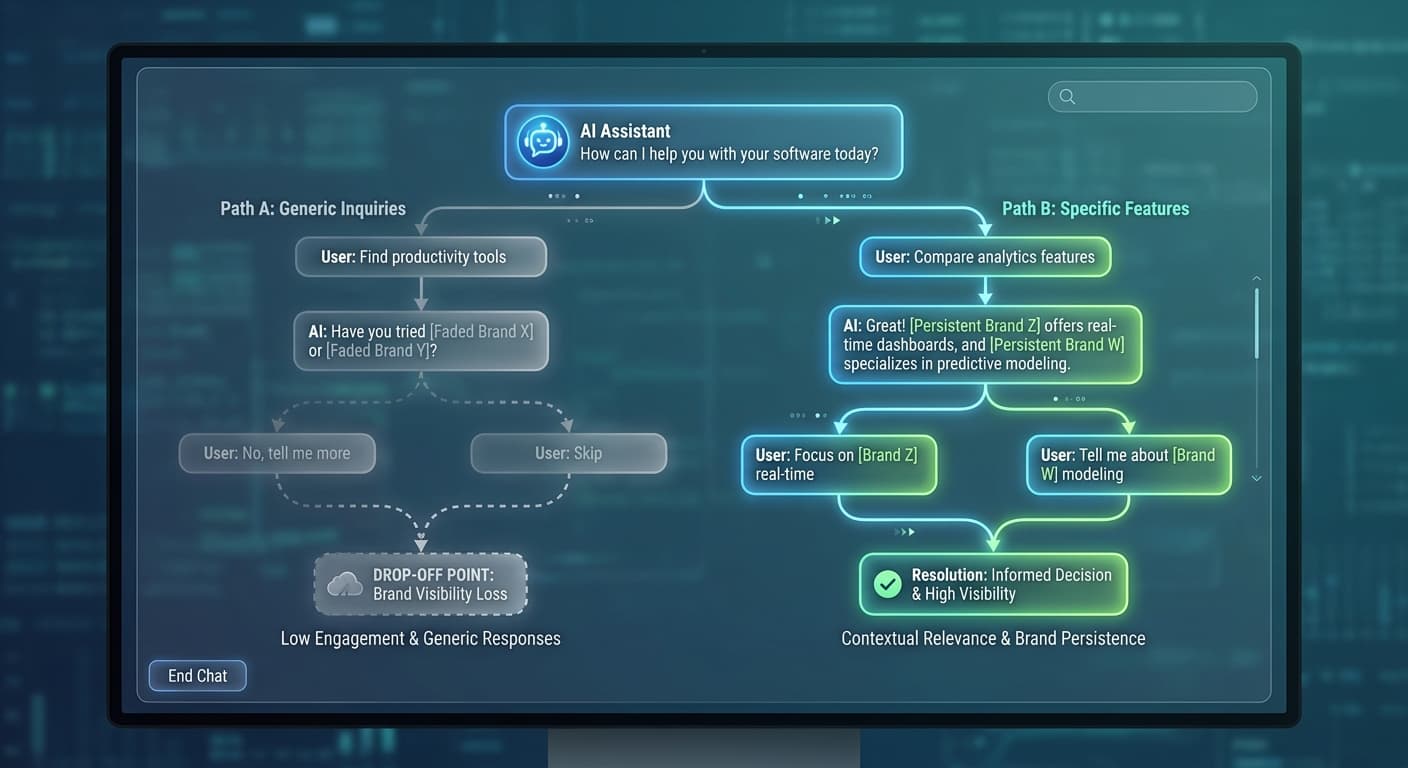
Imagine this scenario: A potential customer asks ChatGPT "What are the best project management tools for remote teams?" Your brand appears prominently in the initial response. Success, right? Not quite. That user then asks six follow-up questions about pricing, integrations, team size limitations, and security features. In each subsequent response, your brand gradually fades from view until it's completely absent by question four.
This isn't a hypothetical problem—it's the reality facing 89% of brands in 2026. Recent research from Stanford's AI Search Behavior Lab reveals that 79% of product research sessions now involve 6 or more follow-up questions, yet brands that appear in initial AI responses maintain visibility for an average of just 2.3 subsequent queries.
Welcome to the era of "conversation drop-off"—the single biggest challenge in AI search optimization that most marketers don't even know they're facing.
The Hidden Crisis in AI Search Visibility
As AI search engines have matured throughout 2025 and into 2026, user behavior has fundamentally shifted. Gone are the days of single-query searches. Today's AI search users engage in elaborate, multi-turn conversations that can span 15-20 minutes and cover dozens of related queries.
Here's what the data tells us about modern AI search behavior:
The implications are staggering. Your brand might be winning the first impression but losing the sale because you're not present when users are making their final decisions.
Understanding the Multi-Turn Conversation Journey
To build an effective drop-off strategy, you need to understand how AI conversations evolve. Most product research conversations follow a predictable pattern:
The Discovery Phase (Questions 1-2)
User Intent: Broad exploration
Typical Queries: "What are the best [product category]?" or "How does [solution type] work?"
AI Response Pattern: Lists multiple options with brief descriptions
Brand Opportunity: High - multiple brands typically mentioned
The Evaluation Phase (Questions 3-5)
User Intent: Narrowing down options
Typical Queries: "How does [Brand A] compare to [Brand B]?" or "What are the pros and cons of [specific solution]?"
AI Response Pattern: Detailed comparisons and feature breakdowns
Brand Opportunity: Medium - fewer brands discussed but more depth
The Decision Phase (Questions 6-8)
User Intent: Final validation and specific concerns
Typical Queries: "What's the pricing for [specific use case]?" or "Are there any hidden costs with [solution]?"
AI Response Pattern: Specific, actionable information
Brand Opportunity: Low but high-value - critical conversion moment
The Confidence Phase (Questions 9+)
User Intent: Seeking reassurance and implementation guidance
Typical Queries: "What do other customers say about [solution]?" or "How long does implementation take?"
AI Response Pattern: Social proof and practical considerations
Brand Opportunity: Very low - often generic advice
The problem? Most brands optimize content only for the Discovery Phase, leaving massive gaps in their conversation coverage.
Building Your Multi-Turn Strategy Framework
1. Map Your Conversation Pathways
Start by identifying the most common conversation flows in your industry. Use tools like ChatGPT's conversation logs (where available) or conduct user interviews to understand how your target audience researches your product category.
Action Steps:
2. Create Phase-Specific Content Assets
Develop content specifically designed to capture different phases of the conversation journey:
Discovery Phase Content:
Evaluation Phase Content:
Decision Phase Content:
Confidence Phase Content:
3. Implement Conversation Threading Techniques
Structure your content to naturally lead into follow-up questions that favor your brand:
Internal Linking Strategy:
Question Seeding:
4. Optimize for Conversation Context
AI engines maintain context throughout conversations, so your content needs to acknowledge this reality:
Contextual References:
Progressive Disclosure:
Advanced Persistence Strategies
The "Conversation Anchor" Technique
Create content pieces so comprehensive and valuable that AI engines refer back to them throughout long conversations. These "anchor" pieces should:
Cross-Phase Content Bridging
Develop content that naturally bridges multiple conversation phases:
The "Conversation Hijack" Method
Identify moments where conversations typically shift to competitors and create content that redirects attention back to your brand:
How Citescope Ai Helps
Building an effective multi-turn conversation strategy requires understanding how AI engines interpret and utilize your content across different conversation contexts. Citescope Ai's GEO Score analyzes your content across five critical dimensions, including Conversational Relevance—a metric specifically designed to predict how well your content will perform in multi-turn conversations.
The platform's Citation Tracker also helps you identify conversation drop-off points by monitoring when and where your brand stops appearing in AI responses. This data is crucial for understanding which phases of the conversation journey need strengthening.
Measuring Multi-Turn Performance
Key Metrics to Track
Conversation Persistence Rate: How many turns your brand remains visible
Phase Coverage Score: Percentage of conversation phases where your brand appears
Conversation Share of Voice: Your brand mentions relative to competitors across conversation lengths
Turn-by-Turn Citation Rate: Citations at each conversation stage
Conversion Correlation: How conversation visibility correlates with actual conversions
Monitoring and Optimization
Set up monitoring for:
The Future of AI Conversation Optimization
As we move further into 2026, AI conversation complexity will only increase. We're already seeing:
Brands that build robust multi-turn strategies now will have a significant advantage as these trends accelerate.
Ready to Optimize for AI Search?
Don't let conversation drop-off cost you customers. With 79% of product research spanning multiple questions and purchase intent peaking in later conversation turns, you can't afford to disappear when it matters most.
Citescope Ai's comprehensive AI search optimization platform helps you identify conversation drop-off points, optimize content for multi-turn visibility, and track your performance across all major AI search engines. Start your free trial today and ensure your brand stays visible throughout the entire customer journey—not just the first question.