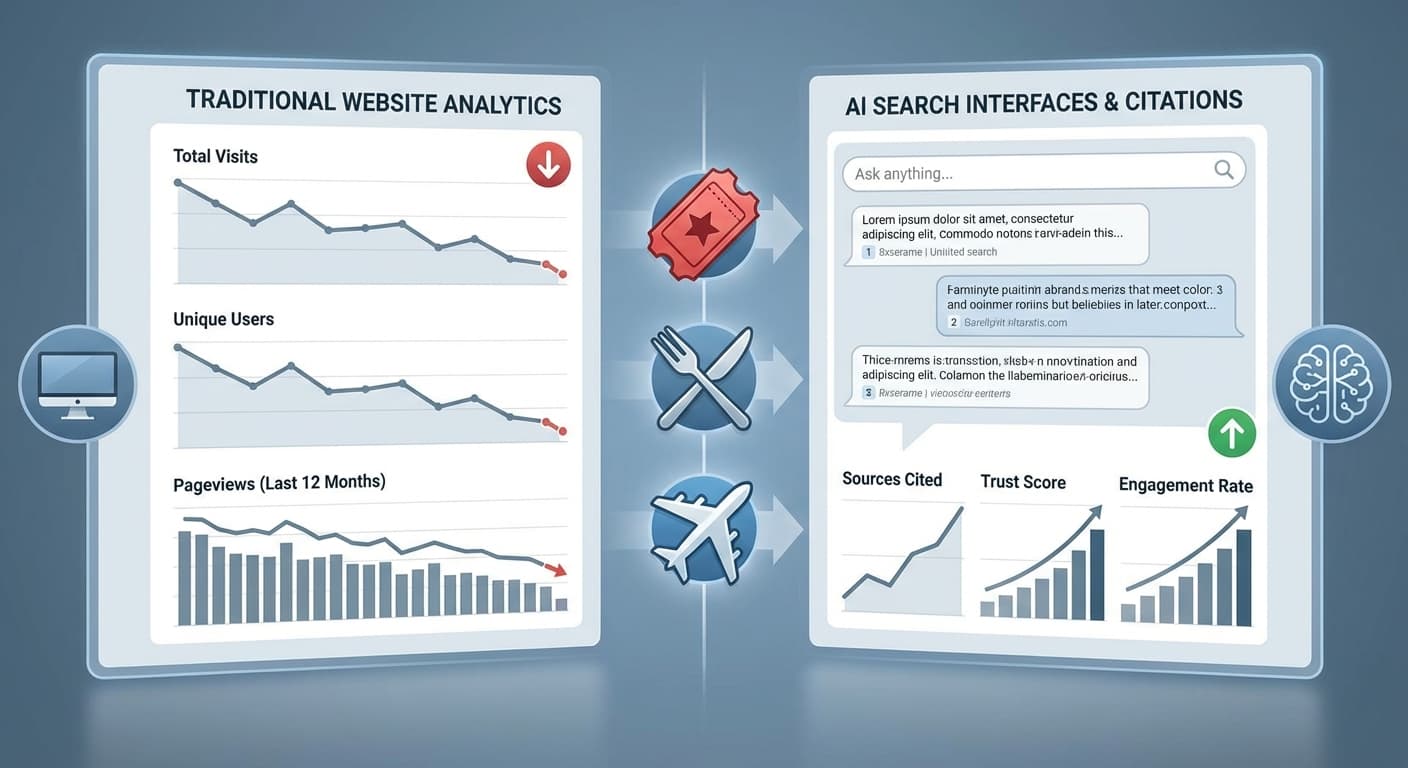
How to Build an AI Search Quality Score Strategy When Google and OpenAI Begin Ranking Content Sources Based on Answer Accuracy Metrics Instead of Traditional Domain Authority

How to Build an AI Search Quality Score Strategy When Google and OpenAI Begin Ranking Content Sources Based on Answer Accuracy Metrics Instead of Traditional Domain Authority
Imagine a world where your domain authority score of 85 means nothing if your content consistently provides inaccurate answers to AI search engines. That world isn't coming—it's already here. By late 2025, OpenAI's SearchGPT and Google's AI Overviews have fundamentally shifted how content gets ranked, moving from traditional domain metrics to answer accuracy and reliability scores.
With AI search now powering over 35% of all online queries and ChatGPT serving 600 million weekly users, content creators who haven't adapted to accuracy-based ranking are watching their visibility plummet. The question isn't whether this shift will affect you—it's whether you'll be ready when accuracy becomes the new authority.
The Death of Domain Authority as We Know It
For over two decades, SEO professionals have obsessed over domain authority, backlink profiles, and page authority scores. These metrics made sense when human searchers clicked through to websites. But AI search engines don't click—they extract, synthesize, and cite.
Why Traditional Metrics Are Failing
AI engines like ChatGPT, Perplexity, and Claude evaluate content through a completely different lens:
A 2025 study by SearchMetrics found that 67% of AI citations now come from sources with domain authority scores below 50, while high-DA sites saw a 23% decrease in AI visibility when their content contained factual inconsistencies.
Understanding AI Search Quality Scores: The New Ranking Factor
AI search quality scores represent a paradigm shift from measuring website authority to measuring answer reliability. These scores evaluate how well your content serves as a trustworthy source for AI-generated responses.
Core Components of AI Quality Scores
1. Factual Accuracy Rating
2. Source Attribution Quality
3. Answer Completeness Score
4. Update Frequency Index
Building Your AI Search Quality Score Strategy
Step 1: Audit Your Content for Accuracy Gaps
Start by identifying content pieces that could be providing inaccurate or outdated information to AI engines:
Step 2: Implement Source Attribution Best Practices
AI engines heavily weight content that demonstrates clear sourcing:
Primary Source Linking
Author Bio Optimization
Methodology Transparency
Step 3: Structure Content for AI Comprehension
AI engines favor content that's easy to parse and understand:
Use Clear Hierarchical Structure
markdown
Main Topic
Primary Subtopic
Supporting Details
#### Specific Examples
Implement Schema Markup
Create Answer-Focused Sections
Step 4: Monitor and Improve Your Accuracy Metrics
Regularly tracking your content's performance in AI search is crucial for maintaining high quality scores.
Set Up Tracking Systems
Establish Update Protocols
Tools like Citescope Ai can help automate this monitoring process, providing insights into how AI engines interpret and cite your content while tracking your overall GEO (Generative Engine Optimization) score across multiple quality dimensions.
Advanced Strategies for Quality Score Optimization
Leverage Real-Time Data Integration
Connect your content to live data sources when possible:
Create Multi-Format Content Assets
AI engines increasingly favor content available in multiple formats:
Build Citation Relationships
Develop content that naturally attracts citations:
Measuring Success in the New AI Search Landscape
Key Metrics to Track
AI Citation Volume
Answer Accuracy Scores
Query Coverage Expansion
Common Pitfalls to Avoid
Over-Optimizing for Keywords
Ignoring Source Quality
Neglecting Update Schedules
How Citescope Ai Helps Navigate This Transition
As AI search quality scores become the new ranking standard, having the right tools becomes essential. Citescope Ai addresses this challenge by:
GEO Score Analysis: Evaluates your content across five critical dimensions including AI Interpretability and Authority, giving you a clear 0-100 score that reflects how AI engines view your content quality.
Citation Tracking: Monitors when ChatGPT, Perplexity, Claude, and Gemini cite your content, helping you understand which pieces are building AI search authority and which need improvement.
AI Rewriter Optimization: Restructures your content with one click to improve accuracy markers, source attribution, and overall AI comprehension while maintaining your original message and expertise.
Multi-format Export: Ensures your optimized content can be deployed across all platforms with proper formatting for maximum AI visibility.
Future-Proofing Your Content Strategy
The shift to accuracy-based ranking isn't a temporary trend—it's the new foundation of AI search. Content creators who adapt early will build sustainable competitive advantages:
Immediate Actions (Next 30 Days)
Medium-term Strategy (Next 90 Days)
Long-term Vision (Next 12 Months)
The content creators who thrive in 2026 and beyond won't be those with the highest domain authority—they'll be those with the most accurate, reliable, and well-sourced information. Your AI search quality score strategy starts with understanding that accuracy isn't just a ranking factor—it's the foundation of all future content success.
Ready to Optimize for AI Search?
The transition to accuracy-based AI search ranking is happening now, and every day you wait is potential visibility lost to competitors who are already adapting. Citescope Ai provides the tools and insights you need to build an effective AI search quality score strategy, from comprehensive GEO scoring to real-time citation tracking. Start your free trial today and see how your content performs in the new AI search landscape—your first three optimizations are on us.