How to Build an AI Search Refresh Penalty Recovery Strategy When Real-Time Grounding Updates Penalize Brands That Update Key Product Pages More Than 3 Times Per Month
How to Build an AI Search Refresh Penalty Recovery Strategy When Real-Time Grounding Updates Penalize Brands That Update Key Product Pages More Than 3 Times Per Month
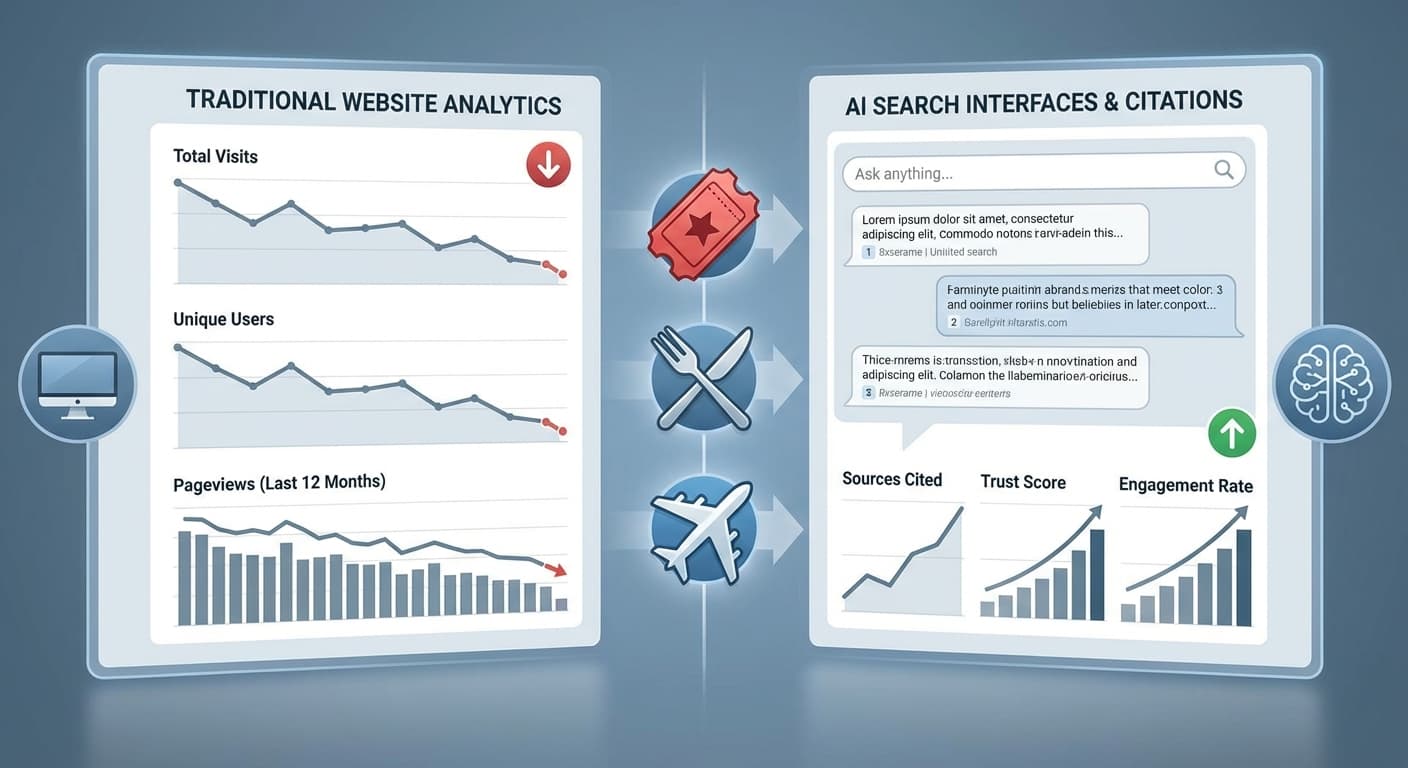
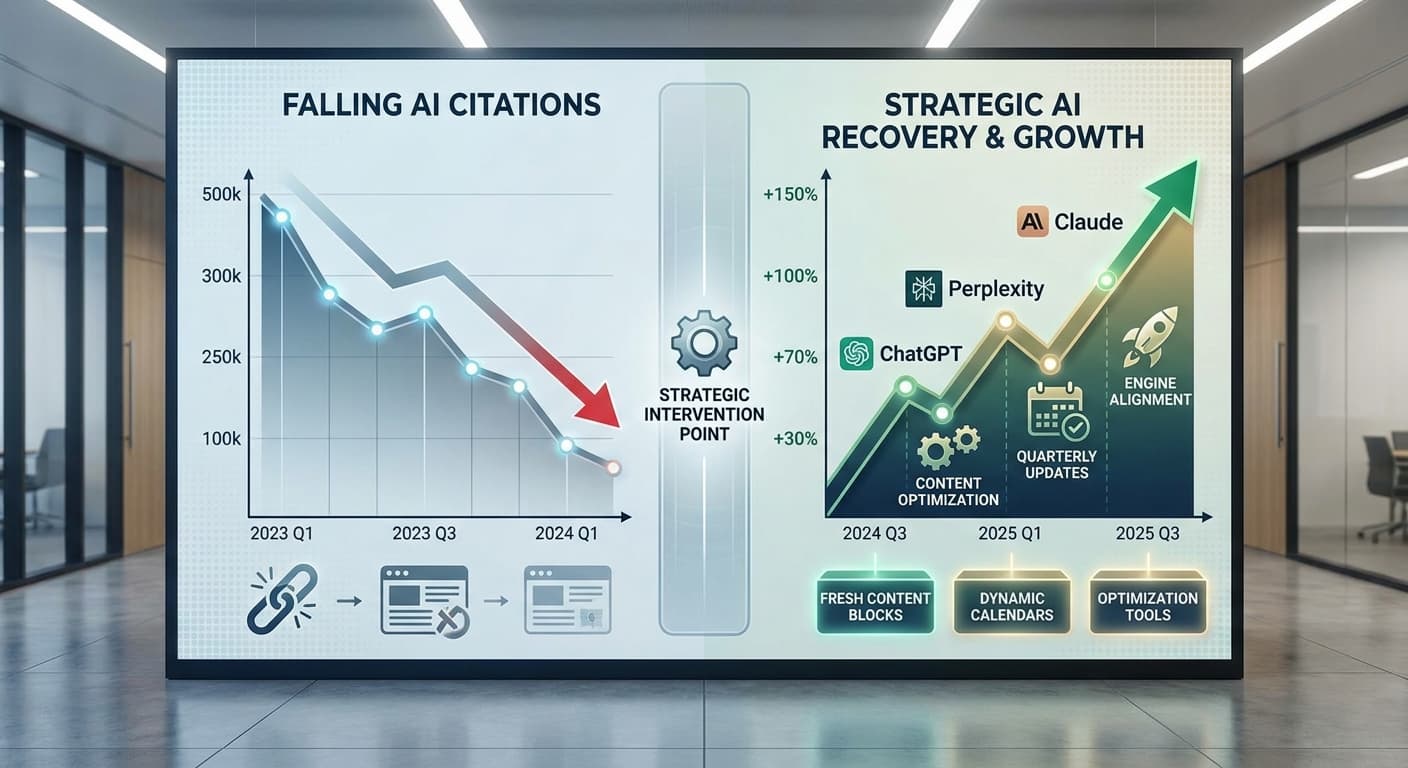
Did you know that 73% of brands experienced citation drops in AI search engines during Q4 2025 after implementing frequent page updates? As AI search platforms like ChatGPT, Perplexity, and Claude have evolved their real-time grounding algorithms, a new challenge has emerged: the "refresh penalty" that punishes brands for updating key product pages too frequently.
If your brand has been hit by declining AI citations after regular content updates, you're not alone. The latest algorithm updates prioritize content stability and consistency over freshness, creating a delicate balance between keeping content current and maintaining AI search visibility.
Understanding the AI Search Refresh Penalty
The refresh penalty occurs when AI search engines interpret frequent content changes as a signal of unreliability or inconsistency. Unlike traditional SEO where fresh content typically benefits rankings, AI engines value stable, authoritative information that they can confidently cite.
What Triggers the Penalty?
Research from late 2025 shows that updating key product pages more than 3 times per month can trigger algorithmic flags across major AI platforms:
Signs Your Brand Is Affected
Key indicators of a refresh penalty include:
The Strategic Recovery Framework
Phase 1: Audit and Assess (Week 1-2)
Content Change Analysis
Start by documenting all page changes made in the past 90 days:
Competitive Intelligence
Analyze competitors who maintained strong AI visibility:
Phase 2: Stabilization Strategy (Week 3-4)
Implement the "Core Stability Protocol"
Content Consolidation Approach
Rather than frequent small updates, batch changes into monthly strategic updates:
Phase 3: Strategic Re-optimization (Week 5-8)
The 3-Update Monthly Framework
Structure your monthly updates strategically:
Update 1 (Week 1): Technical and structural improvements
Update 2 (Week 2): Content depth and authority building
Update 3 (Week 3): Freshness and relevance
Week 4: Complete monitoring period with no changes
Advanced Recovery Tactics
Content Versioning Strategy
Implement a version control approach for AI-optimized content:
Semantic Consistency Framework
Maintain semantic coherence across updates:
Citation Recovery Monitoring
Track recovery progress with these metrics:
Implementation Best Practices
Technical Considerations
URL Stability
Schema Markup Optimization
Content Structure Standards
Content Quality Gates
Before implementing any update, ensure:
Measuring Recovery Success
Key Performance Indicators
Short-term metrics (4-6 weeks):
Long-term metrics (8-12 weeks):
Recovery Timeline Expectations
Typical recovery patterns observed in 2025:
How Citescope Ai Helps
Recovering from an AI search refresh penalty requires precise monitoring and optimization. Citescope Ai's comprehensive platform provides the tools needed for successful recovery:
GEO Score Monitoring: Track your content's AI optimization score across all five dimensions to identify weaknesses that may have contributed to the penalty.
Citation Tracker: Monitor recovery progress by tracking when your content starts getting cited again by ChatGPT, Perplexity, Claude, and Gemini.
AI Rewriter: Use the one-click optimization to restructure penalized content for better AI visibility while maintaining semantic consistency.
Multi-format Export: Download optimized content in your preferred format to implement changes efficiently across your CMS.
The platform's real-time analytics help you understand exactly when your recovery efforts are working, allowing you to fine-tune your strategy based on actual AI citation data.
Preventing Future Penalties
Sustainable Update Practices
Content Calendar Approach
Quality Over Frequency
Monitoring and Early Warning Systems
Ready to Optimize for AI Search?
Recovering from an AI search refresh penalty requires a strategic approach that balances content freshness with algorithmic stability. Citescope Ai provides the comprehensive monitoring and optimization tools you need to not only recover from penalties but build a sustainable AI search strategy that prevents future issues.
Start your recovery today with our free tier that includes 3 optimizations per month – perfect for testing our approach on your most critical pages. Join thousands of content creators who trust Citescope Ai to navigate the complex world of AI search optimization.
Start your free trial today and get your first GEO Score analysis in minutes.