How to Build an AI Search Traffic Quality Measurement System When Traditional Organic and AI-Driven Sessions Are Indistinguishable in GA4 and Search Console
How to Build an AI Search Traffic Quality Measurement System When Traditional Organic and AI-Driven Sessions Are Indistinguishable in GA4 and Search Console
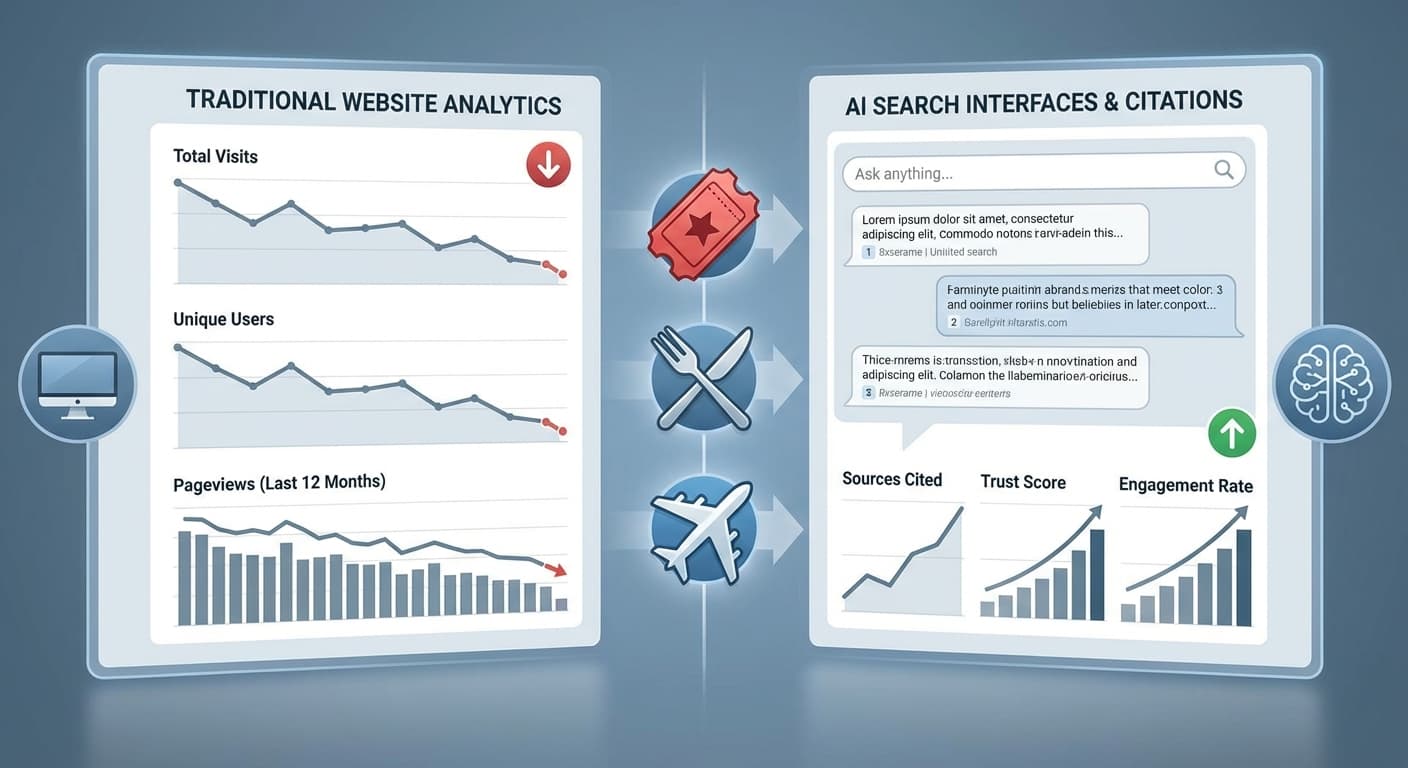
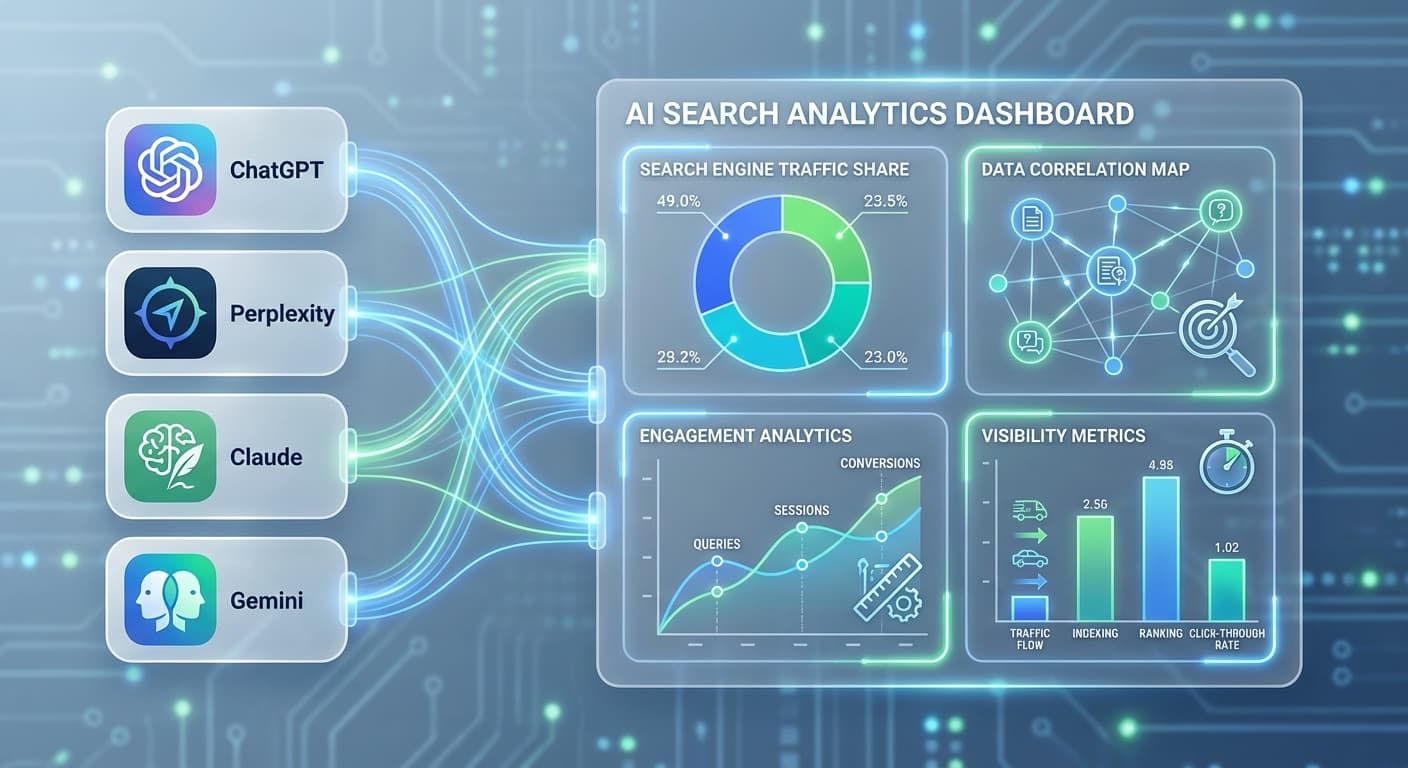
In 2026, over 35% of all search queries now involve AI-powered engines like ChatGPT, Perplexity, Claude, and Gemini. Yet here's the problem: your GA4 dashboard shows the same "organic search" traffic it always has, making it nearly impossible to distinguish between traditional Google clicks and AI-driven visits. How do you measure the quality and performance of traffic that might be coming from AI search citations?
The answer lies in building a comprehensive measurement system that goes beyond traditional analytics to capture the true value of AI search visibility.
Why Traditional Analytics Fall Short for AI Search Traffic
Google Analytics 4 and Search Console were designed for a world where Google dominated search behavior. But in 2026, users are increasingly starting their search journeys with AI engines that may or may not send direct traffic to your site.
The Attribution Gap
When ChatGPT cites your content, users might:
This creates a massive attribution gap that traditional tools can't bridge.
Quality vs. Quantity Challenges
AI search traffic often exhibits different characteristics:
Building Your AI Search Traffic Quality Measurement System
Step 1: Create AI-Specific UTM Parameters
Start by implementing a systematic approach to track potential AI search traffic:
Primary AI Search UTM Structure
utm_source=ai_search
utm_medium=citation
utm_campaign=ai_visibility_2026
utm_content=[specific_ai_engine]
Create variations for different scenarios:
utm_content=chatgpt_direct (when you can identify ChatGPT referrals)utm_content=perplexity_cite (for Perplexity citations)utm_content=ai_influenced (for suspected AI-influenced traffic)Step 2: Set Up Enhanced Event Tracking
Implement custom events in GA4 that help identify AI-influenced behavior:
Content Depth Events:
Intent Signal Events:
Step 3: Build a Citation Correlation Dashboard
Create a system that correlates citation mentions with traffic patterns:
Key Metrics to Track:
Tools like Citescope Ai's Citation Tracker can help monitor when your content gets cited across major AI engines, providing the citation data you need to correlate with traffic patterns.
Step 4: Implement Quality Scoring Metrics
Develop a quality scoring system specific to AI search traffic:
Engagement Quality Score (EQS):
Content Consumption Score (CCS):
Step 5: Create Attribution Models for AI Influence
Build custom attribution models that account for AI search influence:
Multi-Touch AI Attribution:
Time-Decay Model with AI Weight:
Advanced Measurement Techniques
Cohort Analysis for AI Search Users
Create user cohorts based on suspected AI search origins:
Cross-Platform Data Integration
Integrate data from multiple sources to build a complete picture:
Social Listening Integration:
Search Console Enhancement:
Conversion Path Analysis
Map out unique conversion paths for AI-influenced users:
AI-influenced users often have longer, more research-intensive paths to conversion.
Setting Up Automated Reporting
Weekly AI Traffic Quality Reports
Create automated reports that include:
Monthly Strategic Analysis
Develop monthly reports that analyze:
How Citescope Ai Helps
Building this measurement system requires robust citation tracking and content optimization data. Citescope Ai provides several key components:
Citation Tracking: Monitor when your content gets cited by ChatGPT, Perplexity, Claude, and Gemini, providing the citation data you need to correlate with traffic patterns.
GEO Score Analysis: Understand which content performs best in AI search contexts through comprehensive scoring across AI Interpretability, Semantic Richness, and other key dimensions.
Content Optimization: Use AI-powered rewriting to improve your content's citation potential, creating more opportunities for trackable AI search traffic.
Implementation Timeline and Best Practices
Week 1-2: Foundation Setup
Week 3-4: Data Collection
Month 2-3: Optimization
Ongoing: Analysis and Improvement
Common Pitfalls to Avoid
Over-Attribution: Not every spike in direct or organic traffic is AI-driven. Use correlation analysis, not assumption.
Ignoring Negative Signals: Monitor for cases where AI citations might be sending low-quality traffic or misrepresenting your content.
Static Measurement: AI search behavior evolves rapidly. Update your measurement criteria quarterly.
Tool Dependency: While tools help, understanding user behavior patterns is more valuable than any single metric.
Ready to Optimize for AI Search?
Building an effective AI search traffic measurement system starts with understanding what content gets cited and why. Citescope Ai provides the citation tracking, content analysis, and optimization tools you need to not only measure AI search impact but actively improve it.
Start with our free tier to track your first AI citations and see how your content performs across major AI engines. With 3 free optimizations per month, you can begin building better, more citable content while developing your measurement system.
Try Citescope Ai free today and start turning AI search visibility into measurable business results.