GEO Strategy

How to Build an AI Search Visibility Measurement Strategy When Traditional Keyword Rankings No Longer Apply
May 24, 20267 min read
How to Build an AI Search Visibility Measurement Strategy When Traditional Keyword Rankings No Longer Apply

How to Build an AI Search Visibility Measurement Strategy When Traditional Keyword Rankings No Longer Apply

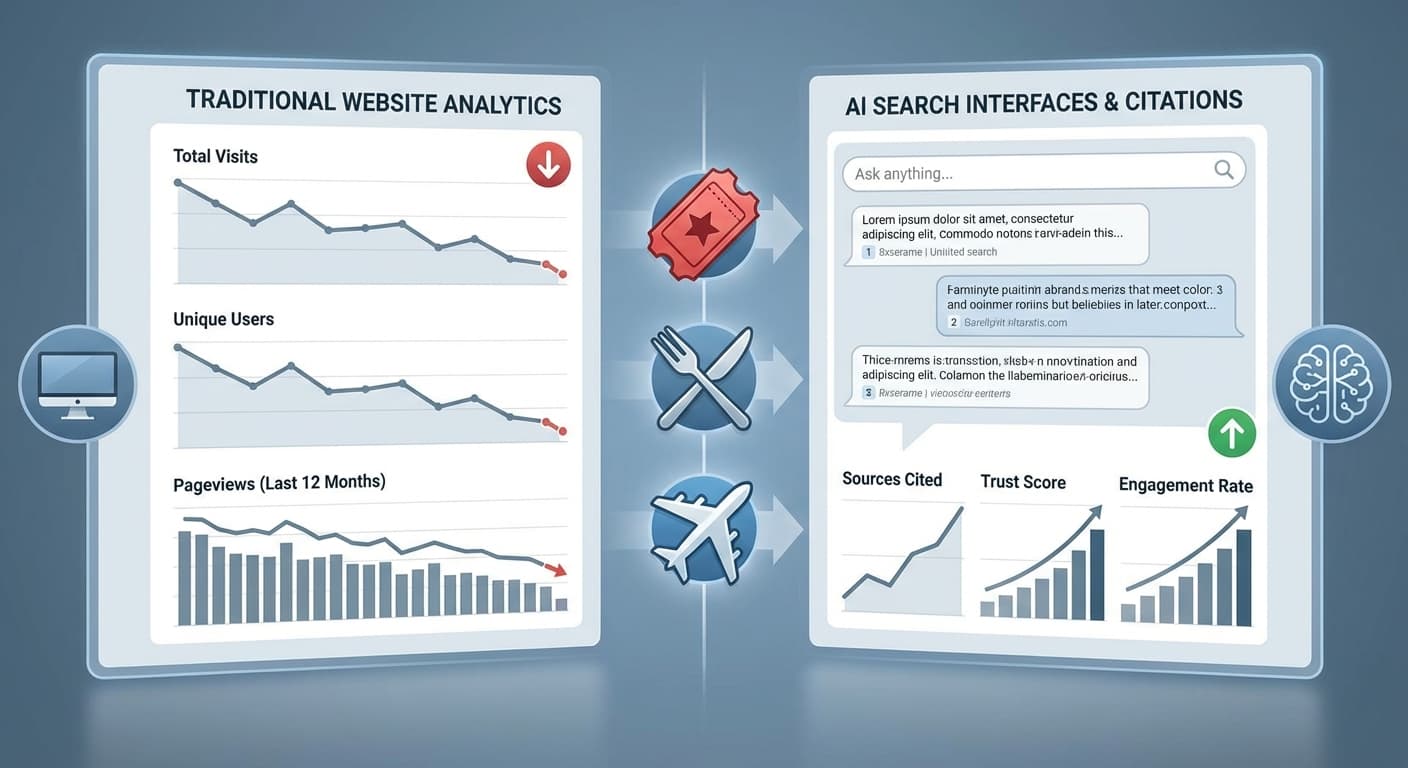
In 2026, traditional keyword rankings tell only half the story. With AI search now accounting for over 35% of all search queries and platforms like ChatGPT serving 600+ million weekly users, measuring visibility has become exponentially more complex. Unlike Google's predictable blue links, AI engines pull from multiple sources, synthesize information, and often don't show direct attribution—making it nearly impossible to track your content's performance using conventional SEO metrics.

The challenge is real: 73% of marketers report struggling to measure their AI search visibility, while 68% of Gen Z users now prefer AI-powered search over traditional engines. If you're still relying solely on keyword rankings and organic traffic, you're missing critical insights about how your content performs in the AI-first search landscape.

The New Reality: Why Traditional Metrics Fall Short

The Citation Economy Has Replaced Click-Through Rates

AI search engines don't just link to your content—they cite it, reference it, and weave it into comprehensive answers. When someone asks Claude about "sustainable marketing strategies," your blog post might influence the response without generating a single click to your site. This "zero-click" reality means traditional traffic-based metrics miss the majority of your content's impact.

Multi-Platform Fragmentation

Your content now needs to perform across:

  • ChatGPT (conversational queries)

  • Perplexity (research-focused searches)

  • Claude (analytical deep-dives)

  • Gemini (Google's AI integration)

  • Microsoft Copilot (workplace searches)
  • Each platform has different citation preferences, making unified measurement a nightmare without the right approach.

    Building Your AI Search Visibility Measurement Framework

    1. Define Your New Success Metrics

    Move beyond traditional rankings to track what actually matters in AI search:

    Primary Metrics:

  • Citation frequency: How often AI engines reference your content

  • Source authority: Your ranking among cited sources

  • Query coverage: Range of topics where you're mentioned

  • Platform distribution: Visibility across different AI engines
  • Secondary Metrics:

  • Assisted conversions: Users who discover you via AI, then convert

  • Brand mention sentiment: How AI engines frame your expertise

  • Content influence: When your insights shape AI responses
  • 2. Set Up Cross-Platform Monitoring

    Since there's no universal dashboard for AI search visibility, you need a multi-pronged approach:

    Direct Platform Monitoring:

  • Regularly query AI engines with your target keywords

  • Document when and how your content appears

  • Track changes in citation patterns over time
  • Indirect Tracking Methods:

  • Monitor referral traffic spikes from AI platforms

  • Track branded searches following AI interactions

  • Analyze social mentions that reference AI discoveries
  • Content Performance Analysis:

  • Identify which content formats get cited most

  • Map topics where you have strongest AI visibility

  • Track competitor citation patterns for benchmarking
  • 3. Create Content Quality Scorecards

    AI engines prioritize different content qualities than traditional search. Develop scorecards that evaluate:

    AI Interpretability (25% weight):

  • Clear structure and logical flow

  • Definitive statements and conclusions

  • Factual accuracy and source attribution
  • Semantic Richness (20% weight):

  • Comprehensive topic coverage

  • Related concept connections

  • Natural language patterns
  • Authority Signals (25% weight):

  • Expert credentials and experience

  • Original research and data

  • Industry recognition and mentions
  • Conversational Relevance (20% weight):

  • Answer-focused formatting

  • Question anticipation

  • Practical, actionable insights
  • Technical Structure (10% weight):

  • Schema markup implementation

  • Mobile optimization

  • Fast loading speeds
  • 4. Implement Assisted Conversion Tracking

    Since direct attribution is limited, track the broader customer journey:

    Setup Multi-Touch Attribution:

  • Use UTM parameters for any discoverable links

  • Implement first-party data collection

  • Track engagement patterns across touchpoints
  • Monitor Brand Discovery Patterns:

  • Survey customers about how they found you

  • Track branded search volume increases

  • Analyze social listening for AI-related mentions
  • Measure Long-Term Impact:

  • Track customer lifetime value by discovery method

  • Monitor authority building over time

  • Analyze market share in your topic areas
  • Advanced Measurement Techniques

    Competitive Citation Analysis

    Understand your visibility relative to competitors:

  • Topic Mapping: Identify key topics in your industry

  • Competitor Monitoring: Track which sources AI engines prefer for each topic

  • Gap Analysis: Find opportunities where competitors aren't being cited

  • Share of Voice: Calculate your percentage of total citations in your space
  • Content Influence Scoring

    Develop a system to score how much your content influences AI responses:

  • Direct Citation: Your content is explicitly referenced (10 points)

  • Paraphrased Content: Your ideas appear without direct attribution (7 points)

  • Influenced Response: AI answer reflects your unique perspective (5 points)

  • Topic Authority: You're cited as a go-to source (15 points)
  • Platform-Specific Optimization Tracking

    Each AI engine has preferences—track what works where:

    ChatGPT Optimization:

  • Conversational tone and structure

  • Step-by-step explanations

  • Real-world examples and cases
  • Perplexity Performance:

  • Research-backed claims

  • Statistical evidence

  • Academic-style citations
  • Claude Analytics:

  • Nuanced analysis and reasoning

  • Multi-perspective coverage

  • Logical argument structure
  • How Citescope Ai Simplifies AI Search Measurement

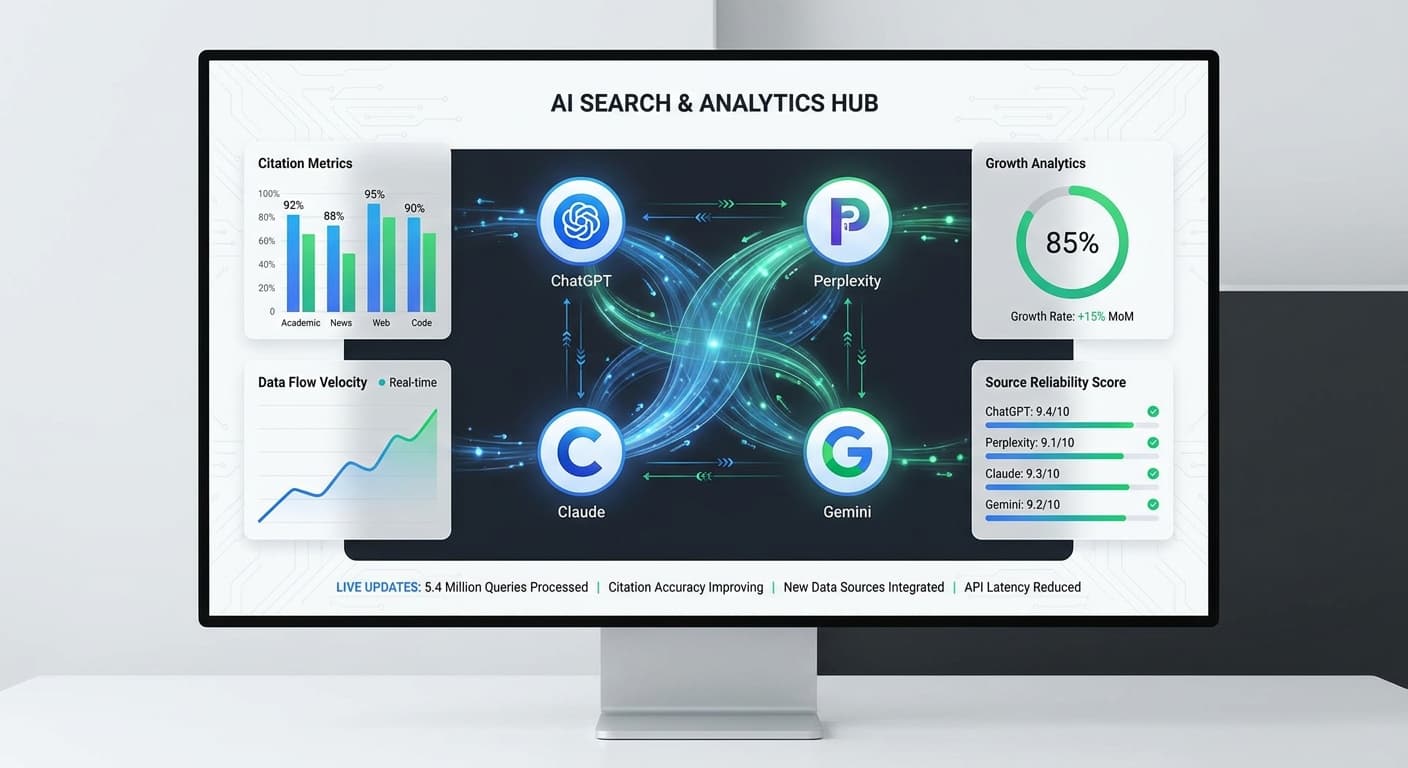
    Building this measurement framework manually is time-intensive and error-prone. Citescope Ai's Citation Tracker automates the heavy lifting by monitoring your content across ChatGPT, Perplexity, Claude, and Gemini simultaneously. Instead of manually checking each platform daily, you get automated alerts when your content gets cited, plus detailed analytics on your AI search performance.

    The platform's GEO Score also eliminates guesswork in content optimization, analyzing your content across all five dimensions that AI engines prioritize and providing a single 0-100 score that predicts citation likelihood.

    Building Your Measurement Dashboard

    Essential KPIs to Track Weekly

  • Total Citations: Raw number across all platforms

  • Citation Growth Rate: Week-over-week percentage change

  • Platform Distribution: Where your citations are coming from

  • Topic Authority Score: Your dominance in key subject areas

  • Competitive Citation Share: Your percentage vs. competitors
  • Monthly Deep-Dive Metrics

  • Content Performance Rankings: Which pieces get cited most

  • Query Coverage Expansion: New topics you're being cited for

  • Assisted Conversion Attribution: Revenue tied to AI discovery

  • Brand Authority Progression: Long-term reputation building
  • Quarterly Strategic Reviews

  • Platform Strategy Effectiveness: Which AI engines drive most value

  • Content Gap Analysis: Opportunities competitors are missing

  • ROI Assessment: Cost per citation vs. traditional cost per click

  • Future Opportunity Mapping: Emerging topics to target
  • Implementation Roadmap

    Week 1-2: Foundation Setup

  • Define your measurement framework

  • Set up basic tracking systems

  • Establish baseline metrics
  • Week 3-4: Content Audit

  • Score existing content using AI visibility criteria

  • Identify top-performing pieces for citation potential

  • Plan optimization priorities
  • Month 2: Advanced Tracking

  • Implement assisted conversion tracking

  • Begin competitive citation analysis

  • Start platform-specific optimization
  • Month 3+: Optimization & Scale

  • Refine measurement based on early results

  • Scale successful citation strategies

  • Expand to new AI platforms and topics
  • Ready to Optimize for AI Search?

    Building an effective AI search visibility measurement strategy requires the right tools and systematic approach. Citescope Ai eliminates the complexity of manual tracking while providing the insights you need to optimize for AI citations.

    Start with our free tier to track up to 3 content optimizations per month and see how your content performs across all major AI search engines. Get your GEO Score, optimize with our AI Rewriter, and start tracking your citations today.

    Try Citescope Ai Free →

    Ready to move beyond traditional keyword rankings? Your content's AI search success starts with proper measurement.

    AI search measurementcitation trackingAI visibility strategysearch optimization metricsAI search analytics

    Track your AI visibility

    See how your content appears across ChatGPT, Perplexity, Claude, and more.

    Start for Free