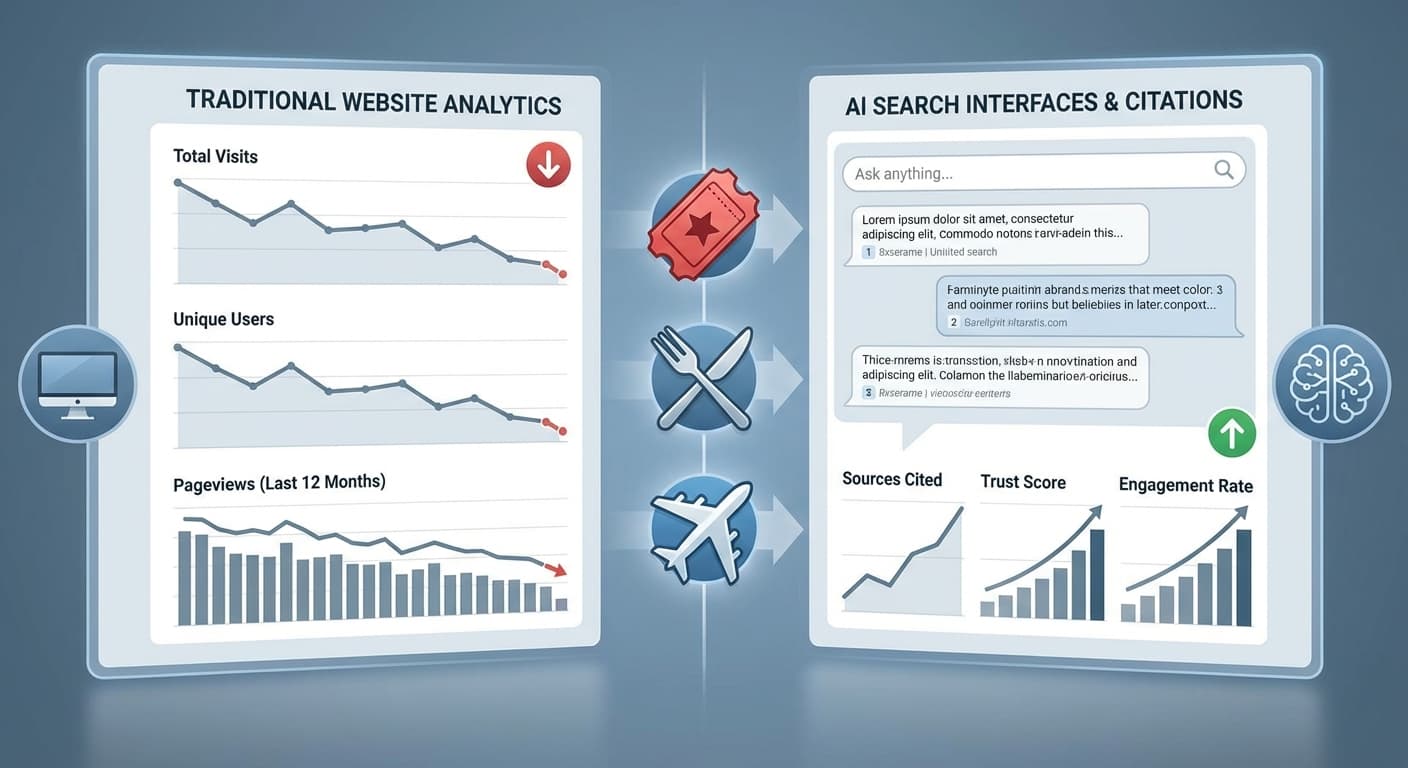
How to Build an AI Search Voice Commerce Interception Strategy When Smart Speaker Transactions Bypass Your Website Entirely
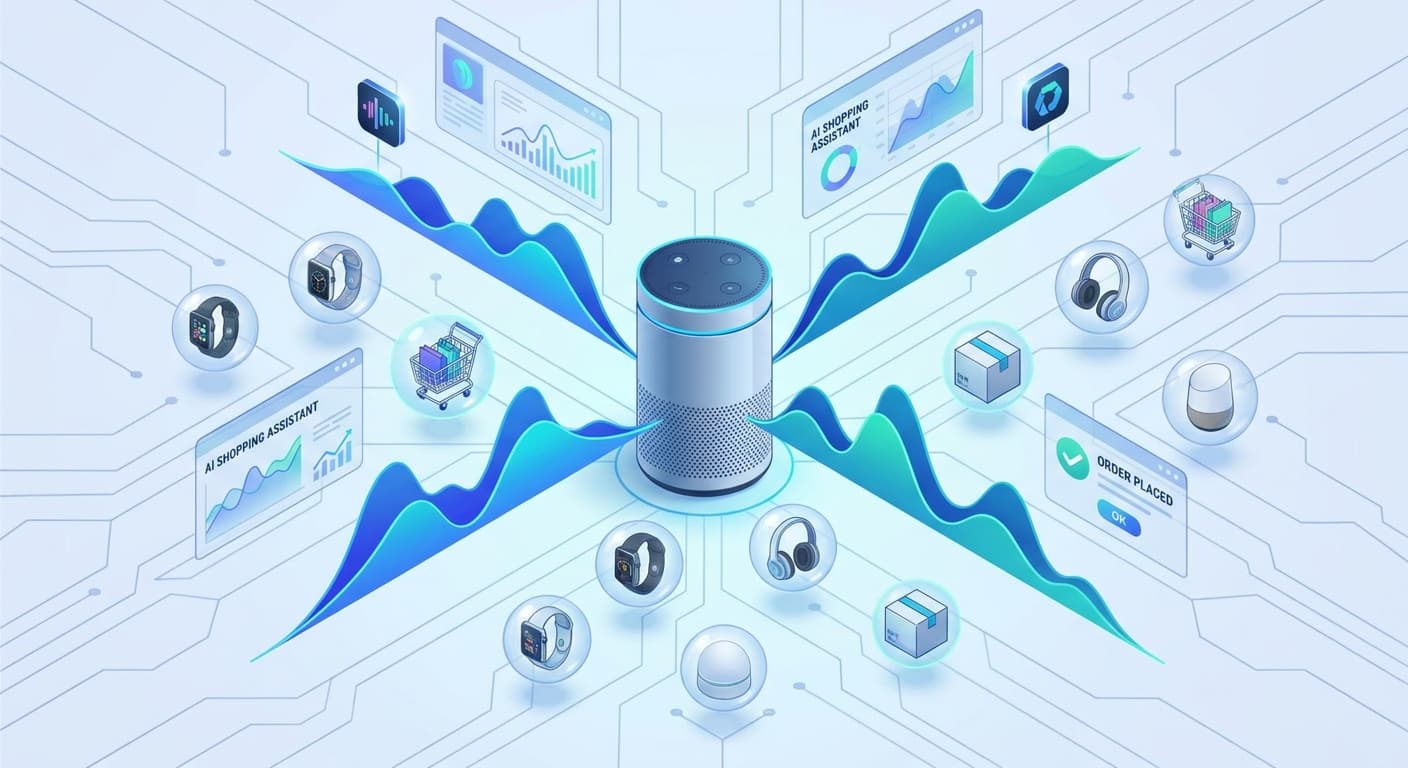
How to Build an AI Search Voice Commerce Interception Strategy When Smart Speaker Transactions Bypass Your Website Entirely
By 2026, voice commerce has fundamentally transformed how consumers discover and purchase products. With over 4.2 billion voice assistants in use globally and smart speaker transactions growing 310% year-over-year, we're witnessing a seismic shift in the customer journey. The most alarming statistic? 54% of voice-initiated purchases never show your brand in the consideration set, meaning customers are buying without ever knowing you exist.
This invisible commerce revolution is creating a new category of "ghost transactions" – purchases that happen entirely within AI ecosystems, bypassing traditional websites and search results. If your brand isn't optimized for AI-powered voice commerce, you're not just losing visibility; you're being systematically excluded from the future of retail.
The Voice Commerce Invisibility Crisis
When someone asks Alexa, "Order organic coffee beans," or tells Google, "Buy running shoes for flat feet," the AI doesn't browse your website or read your product descriptions. Instead, it synthesizes information from various sources and makes recommendations based on factors you may have never considered:
The problem isn't just that voice commerce bypasses traditional SEO – it's that it operates on an entirely different content interpretation framework. Your perfectly optimized product pages might be invisible to the AI systems making purchase recommendations.
Understanding the Voice Commerce Customer Journey
The traditional e-commerce funnel (awareness → consideration → purchase) has collapsed into what researchers call the "micro-moment decision loop" in voice commerce:
Phase 1: Intent Expression
User voices a need: "I need protein powder for muscle recovery"
Phase 2: AI Processing
The AI assistant:
Phase 3: Recommendation Synthesis
AI presents 1-3 options, often without revealing the full consideration set
Phase 4: Transaction Completion
User confirms purchase, often within the same conversation
The entire process takes 30-90 seconds, leaving traditional marketing touchpoints completely obsolete.
Building Your Voice Commerce Interception Strategy
1. Optimize for Conversational Queries
Voice searches are fundamentally different from typed searches. People don't say "best running shoes 2026" – they say "What are the best running shoes for someone with flat feet who runs 5 miles daily?"
Action Steps:
2. Implement Comprehensive Schema Markup
AI assistants rely heavily on structured data to understand your products and services. Without proper markup, your content becomes invisible to voice commerce systems.
Essential Schema Types for Voice Commerce:
3. Create AI-Digestible Content Hierarchies
Traditional keyword-focused content doesn't work for voice commerce. AI systems need clear, hierarchical information they can quickly parse and synthesize.
Content Structure Framework:
4. Build Citation-Worthy Authority Content
Since AI assistants often cite sources when making recommendations, becoming a frequently-cited authority in your space dramatically increases your voice commerce visibility.
Authority Building Tactics:
5. Optimize for Local Voice Commerce
Nearly 70% of voice commerce queries have local intent. "Find organic grocery stores near me" or "Order pizza from the closest Italian restaurant" represent massive opportunities.
Local Optimization Essentials:
Advanced Voice Commerce Strategies
Semantic Content Clustering
Group related products and services into semantic clusters that help AI understand your complete offering. Instead of optimizing individual product pages in isolation, create interconnected content ecosystems.
Predictive Query Modeling
Use AI tools to predict future voice queries in your industry. Analyze seasonal trends, emerging product categories, and changing consumer behaviors to stay ahead of voice search evolution.
Cross-Platform AI Presence
Ensure your content is optimized for multiple AI platforms – ChatGPT, Perplexity, Claude, and voice assistants all have different content interpretation algorithms.
How Citescope Ai Helps
Building an effective voice commerce interception strategy requires understanding exactly how AI systems interpret and prioritize your content. Citescope Ai's GEO Score analyzes your content across five critical dimensions that directly impact AI visibility:
The platform's Citation Tracker also monitors when your content gets referenced by ChatGPT, Perplexity, and other AI systems, giving you direct insight into your voice commerce visibility.
Measuring Voice Commerce Success
Traditional e-commerce metrics don't capture voice commerce performance. Focus on these key indicators:
Primary Metrics:
Secondary Metrics:
Common Voice Commerce Optimization Mistakes
1. Keyword-Stuffing for Voice Queries
Voice search optimization isn't about cramming long-tail keywords into your content. AI systems prioritize natural, helpful information over keyword density.
2. Ignoring Product Context
Describing features without explaining benefits or use cases makes your products invisible to AI recommendation engines.
3. Incomplete Structured Data
Partial schema implementation is often worse than none at all, as it can confuse AI interpretation.
4. Platform-Specific Optimization
Focusing only on one voice assistant while ignoring others limits your total addressable voice commerce market.
The Future of Voice Commerce Interception
As AI systems become more sophisticated, voice commerce interception strategies must evolve beyond basic optimization. Emerging trends include:
Ready to Optimize for AI Search?
Voice commerce is reshaping how customers discover and purchase products, and traditional SEO strategies simply aren't enough anymore. You need a comprehensive approach that makes your content visible and valuable to AI systems across all platforms.
Citescope Ai gives you the tools to analyze, optimize, and track your AI search performance. Our GEO Score helps you understand exactly how AI systems see your content, while our Citation Tracker shows when your brand gets mentioned in AI responses.
Start with our free tier and optimize up to 3 pieces of content per month, or upgrade to Pro for $39/month to scale your AI search strategy. Don't let 54% of your potential customers buy from competitors they discover through voice commerce – take control of your AI visibility today.
Start your free Citescope Ai account and begin intercepting voice commerce opportunities.