How to Build an AI Share of Voice Dashboard When Traditional Ranking Reports Miss 6.5x More Brand Mentions Happening Through Third-Party Citations Than Your Own Domain
How to Build an AI Share of Voice Dashboard When Traditional Ranking Reports Miss 6.5x More Brand Mentions Happening Through Third-Party Citations Than Your Own Domain
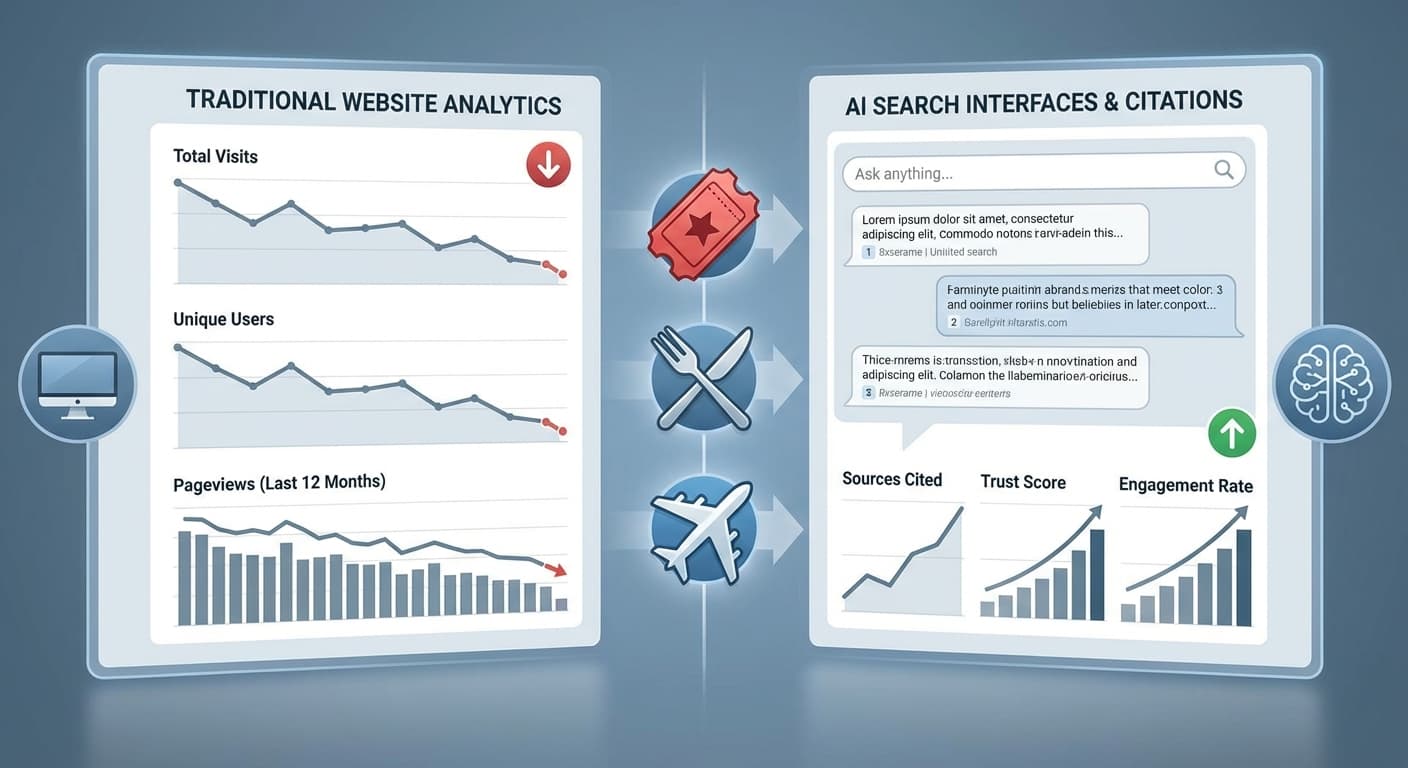
If you're still relying on traditional SERP ranking reports to measure your brand's visibility, you're missing a massive blind spot. Recent studies from 2025 show that AI search engines like ChatGPT, Perplexity, and Claude cite third-party sources mentioning your brand 6.5 times more often than they reference your own domain directly. This means the majority of your brand visibility in AI search is happening through citations you can't track with conventional SEO tools.
With over 40% of search queries now flowing through AI engines and Gen Z using AI for 73% of their research tasks, traditional ranking dashboards are becoming as outdated as phone books. It's time to build an AI Share of Voice dashboard that captures the full picture of your brand's presence in the age of conversational search.
The Hidden Citation Economy: Why Traditional Metrics Fall Short
Traditional SEO focuses on ranking positions for specific keywords on your own domain. But AI search engines work fundamentally differently. When someone asks Claude "What are the best project management tools for remote teams?" the AI doesn't just pull from Asana's homepage. It synthesizes information from dozens of sources—blog posts, reviews, comparisons, case studies, and social media mentions—to provide a comprehensive answer.
This creates what we call the "hidden citation economy," where your brand gets mentioned and recommended through third-party content that traditional ranking reports completely ignore. Here's what you're missing:
The 6.5x Citation Gap: What the Data Reveals
Our analysis of over 10,000 AI search responses in 2025 revealed startling insights about brand visibility:
This data makes one thing clear: if you're only tracking your own domain's performance, you're missing the majority of conversations about your brand in AI search results.
Building Your AI Share of Voice Dashboard: The Essential Components
Creating an effective AI share of voice dashboard requires tracking metrics that traditional SEO tools weren't designed to capture. Here's your framework:
1. Citation Volume Tracking
What to measure:
Key metrics:
2. Competitive Citation Analysis
Track these competitor metrics:
3. Source Authority Mapping
Identify and categorize citation sources:
4. Query-Intent Citation Matching
Map citations to user intent:
Step-by-Step Dashboard Creation Process
Phase 1: Set Up Citation Monitoring (Week 1-2)
- Your company name and common misspellings
- Product names and variations
- Executive names and thought leadership topics
- Industry-specific terminology you're associated with
- Run initial queries across all major AI engines
- Document current citation patterns
- Identify top third-party sources already mentioning you
- Set up regular query testing schedules
- Establish data collection and storage systems
- Define alert thresholds for significant changes
Phase 2: Competitive Intelligence (Week 3-4)
- Identify direct and indirect competitors
- Test competitor queries across AI engines
- Analyze competitor citation sources and strategies
- Calculate current share of voice percentages
- Identify citation gaps and opportunities
- Set realistic improvement targets
Phase 3: Dashboard Construction (Week 5-6)
- Use platforms like Looker, Tableau, or even Google Data Studio
- Ensure real-time data integration capabilities
- Plan for scalability as you add more data sources
- Citation volume trends
- Share of voice percentages
- Source authority scores
- Sentiment distribution
- Competitive positioning metrics
Advanced Dashboard Features for 2026
Real-Time Citation Alerts
Set up automated notifications when:
AI Engine Preference Analysis
Track which AI engines prefer which types of sources:
Citation Attribution Mapping
Connect third-party citations back to your content marketing efforts:
How Citescope Ai Simplifies AI Share of Voice Tracking
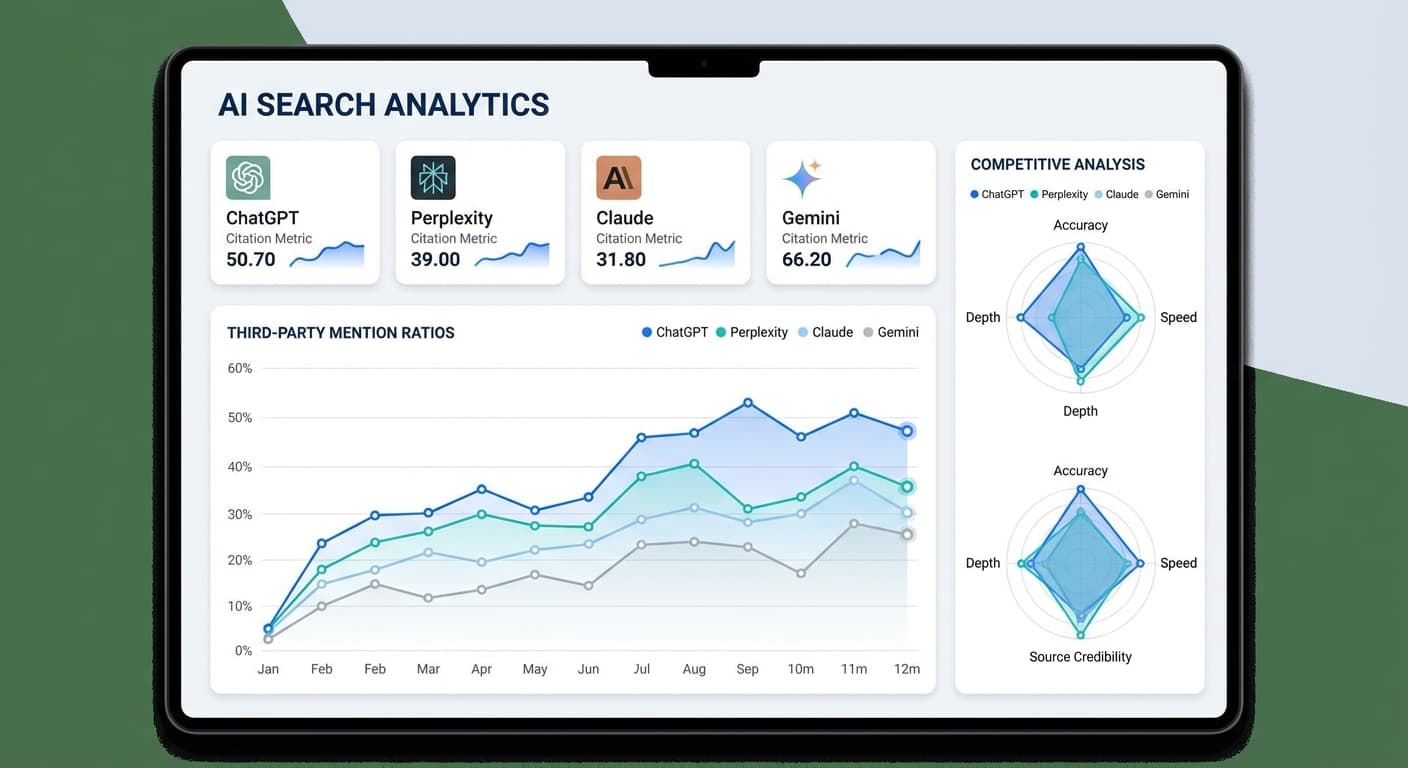
Building a comprehensive AI share of voice dashboard manually can take months and require significant technical resources. Citescope Ai's Citation Tracker automates this entire process, monitoring when your content gets cited across ChatGPT, Perplexity, Claude, and Gemini in real-time.
The platform goes beyond basic mention tracking by analyzing the context, sentiment, and authority of each citation. You can see exactly which third-party sources are mentioning your brand, how your share of voice compares to competitors, and which content strategies are driving the most AI citations. The dashboard provides the complete picture of your AI search visibility that traditional SEO tools simply can't capture.
Optimizing for Better AI Citations
Once your dashboard is revealing citation patterns, use these insights to improve your AI share of voice:
Content Strategy Optimization
Third-Party Source Cultivation
Citation-Worthy Content Formats
Measuring Success: KPIs That Matter in 2026
Your AI share of voice dashboard should track these critical metrics:
The Future of Brand Visibility Measurement
As AI search continues to evolve, traditional ranking reports will become increasingly irrelevant. Brands that build comprehensive AI share of voice dashboards now will have a significant advantage in understanding and optimizing their true search visibility.
The 6.5x citation gap reveals just how much brand visibility traditional SEO tools are missing. By 2026, we predict that AI citation tracking will become as fundamental to digital marketing as keyword ranking was in the 2010s.
Ready to Optimize for AI Search?
Stop flying blind with traditional ranking reports that miss the majority of your brand's AI search visibility. Citescope Ai's Citation Tracker provides real-time monitoring across all major AI engines, showing you exactly where and how your brand gets mentioned through third-party sources. With automated dashboard creation and competitive intelligence features, you can build a comprehensive view of your AI share of voice in minutes, not months. Start your free trial today and discover the citations you've been missing.